Key Points: What can infants see?
- Newborns can only see clearly within 20–30 cm and respond best to bold, high-contrast patterns.
- Babies begin to see colour at around 2–3 months, with red being the first they can perceive.
- By 4–6 months, infants develop depth perception and recognise faces from further away.
- Vision milestones progress rapidly, with nearly full colour vision by six months.
- Parents can support healthy visual development with high-contrast toys, face-to-face play, and brightly coloured objects.
One of the first questions many parents ask after birth is: “Can my baby see me? What can infants see?”
Research shows newborns can see their parents’ faces when held close (about 20–30 cm away), so yes – they can see you, but only within that range.
In the early weeks, their eyesight is blurry, but it quickly develops – from recognising faces up close to spotting colourful toys across the room.
This guide breaks down each stage of infant vision development, explains when babies begin to see colour, and shares practical tips to support your child’s baby vision milestones. By the end, you’ll know exactly how to encourage baby eyesight development while enjoying special bonding moments.
What Can Infants See?
In the very first weeks of life, your baby’s eyesight is still developing. They can see clearly only within about 20–30 cm – the perfect distance for feeding or cuddles. Beyond that, the world is fuzzy and out of focus.
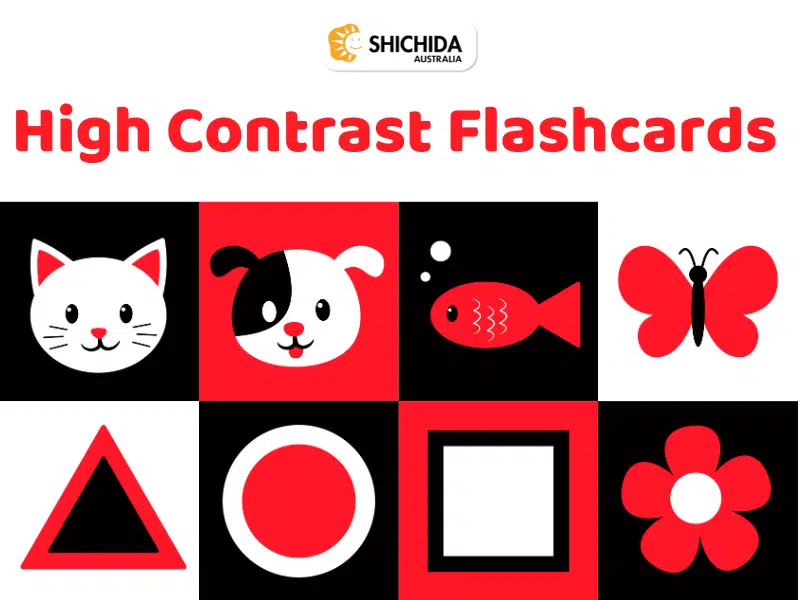
Newborns respond best to bold, high-contrast visuals like black-and-white stripes, checkerboard patterns, or simple shapes. These stand out far more than the soft pastels adults often choose. Offering toys, books, or blankets with strong contrast gives your baby something stimulating to focus on.
Most importantly, newborns are drawn to faces. Looking into your baby’s eyes, smiling, or raising your eyebrows helps them practise focusing while beginning to understand expressions and connection.
That’s why your face is the first thing they recognise, make eye contact often!
Newborn eyesight stages:
- Focuses best at 20-30 cm.
- Begins tracking slow movement.
- Prefers bold contrasts and human faces.
When Do Babies Start Seeing Colour?
In the first few weeks, your baby’s world is mostly shades of grey. Their eyes can detect light, but their brain isn’t yet processing colour signals. This is completely normal.
By around 2–3 months, babies begin to notice brighter shades, with red often being the first colour they see. Over the following months, their vision sharpens, and they gradually pick up more colours until they can see the full spectrum by about six months.
At What Age Do Babies See Colour?
| Age | Colour Vision Milestone |
|---|---|
| 2-3 months | First signs of colour vision, especially red |
| 4 months | Green and blue become clearer |
| 6 months | Full spectrum of colours visible |
Parent tip: Start with red or black-and-white toys in the early months, then add bright toys as colour vision develops.
What Can Babies See at 1-3 Months?
Vision at 1 Month
Your baby can now focus more steadily on close objects, especially faces. Their eye movements may still look jerky or even slightly cross-eyed – this is completely normal in early eyesight development.
Vision at 2-3 Months
By two months, babies begin to track objects more smoothly and show interest in things further away. Early colour vision is also improving, with red and green usually the first colours they can detect.
If your baby isn’t tracking smoothly by three months, it’s often still normal – but mention it at your next check-up for reassurance.
Vision at 4-6 Months
During this stage, babies make big leaps in sensory and visual development:
- Sharper detail recognition: They start noticing finer facial features.
- Depth perception: Around 5–6 months, babies begin to see in 3D, helping them reach, roll, and grasp toys more accurately.
- Eye coordination: Both eyes work together, making it easier to follow a moving ball or toy.
Parent Tips for Babies:
- Games like peek-a-boo or rolling a soft ball help build visual tracking, hand–eye coordination, and early cognitive skills.
- Explore these free resources on sensory play and cognitive development for use at home for your baby.
- If you’re not sure you’re doing enough at home, Shichida baby classes are a great place to start.

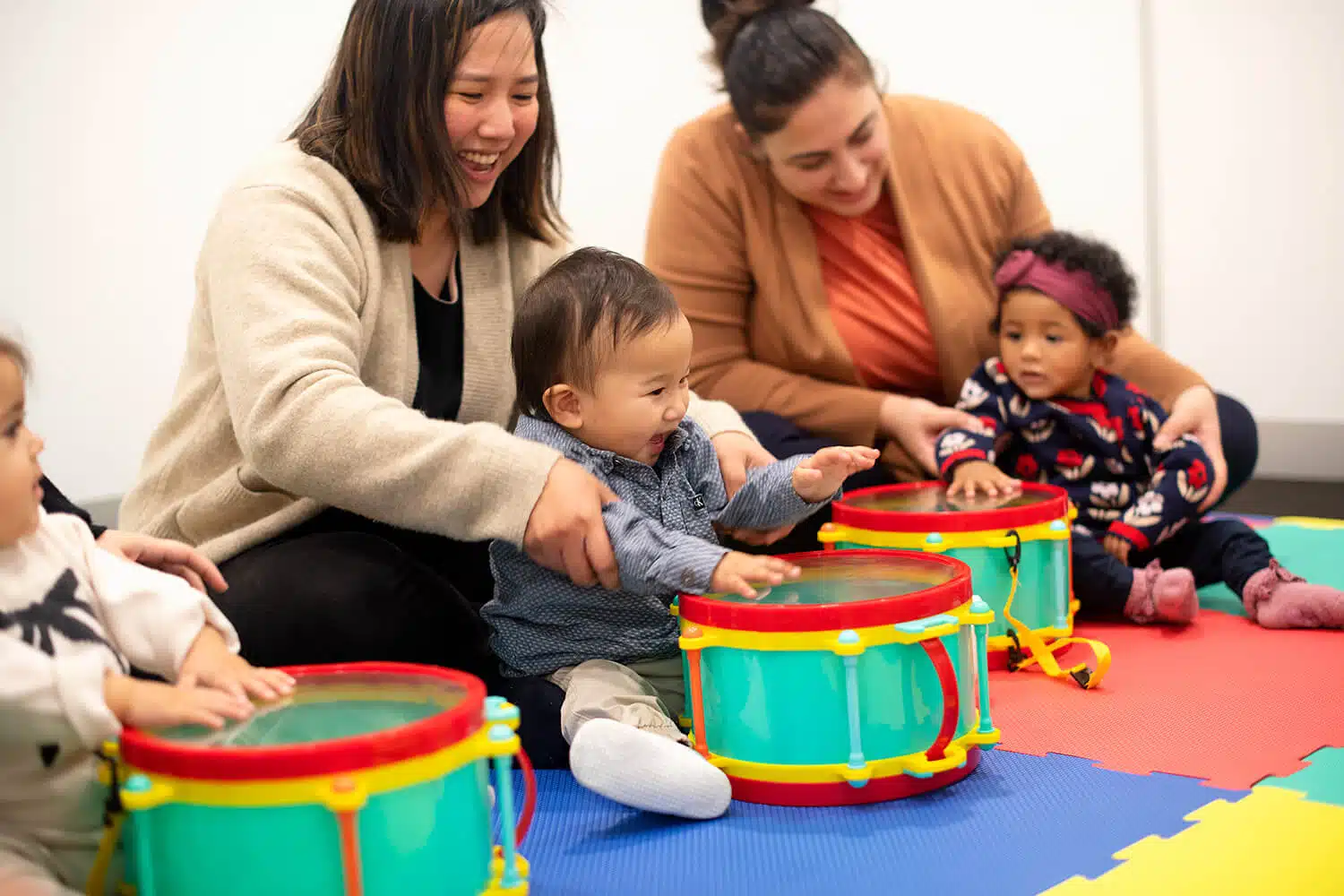
Photo from Shichida Australia: Our baby and toddler classes support sensory development through fun, age-appropriate activities. Parents also learn simple ways to nurture their child’s spatial awareness, fine motor skills, and overall cognitive growth.
Tips to Support Your Baby’s Vision
Healthy vision grows through interaction and play. Here are parent-tested strategies:
✅Use black-and-white toys and books in the newborn stage.
✅Encourage tummy time to strengthen head, neck, and vision together.
✅Show faces and mirrors often, babies are wired to love faces!
✅Introduce primary colours like red, yellow, and blue gradually.
✅Play peek-a-boo and tracking games to build attention and visual memory.
Want more ways to stimulate your baby’s learning? Explore our sensory classes for infants to support both vision and brain development.
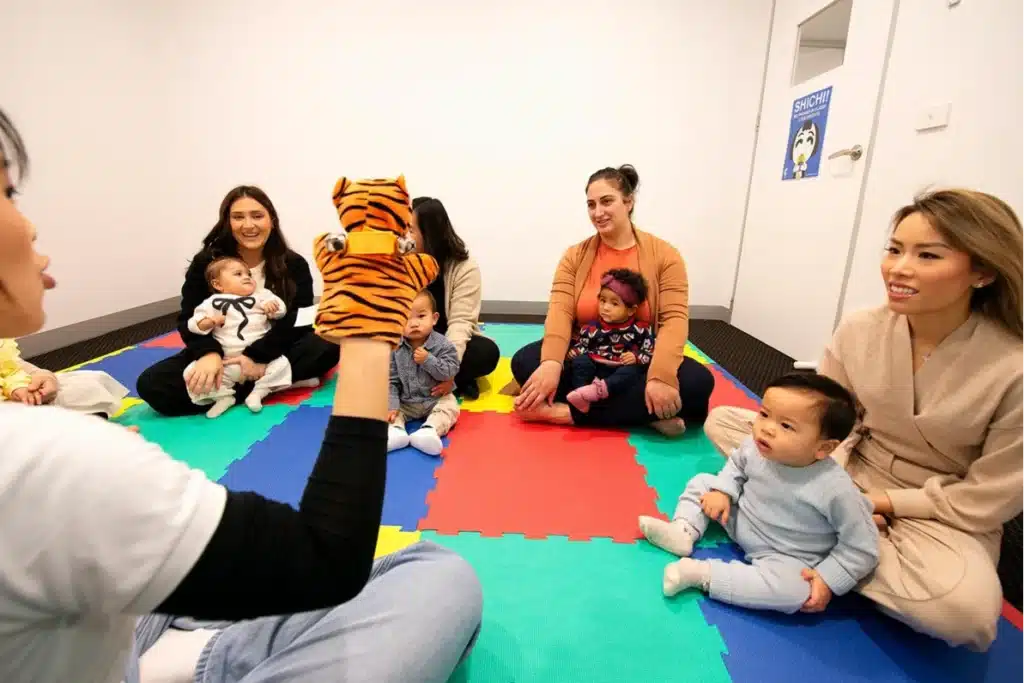
Photo from Shichida Australia: Our fun early learning classes support expanding your child’s field of vision through fun field of vision exercises – these pave the way for fast and accurate eye tracking required for eventual reading.
Summary For Baby Vision
From blurry beginnings to bright colours, your baby’s vision changes dramatically in the first six months. They progress from recognising faces up close to spotting toys across the room and smoothly tracking movement.
The good news? Supporting vision milestones is easy! Simple everyday interactions – eye contact, tummy time, play, and colourful toys – all encourage healthy cognitive and visual skills.
Nurture Early Brain Development with Shichida
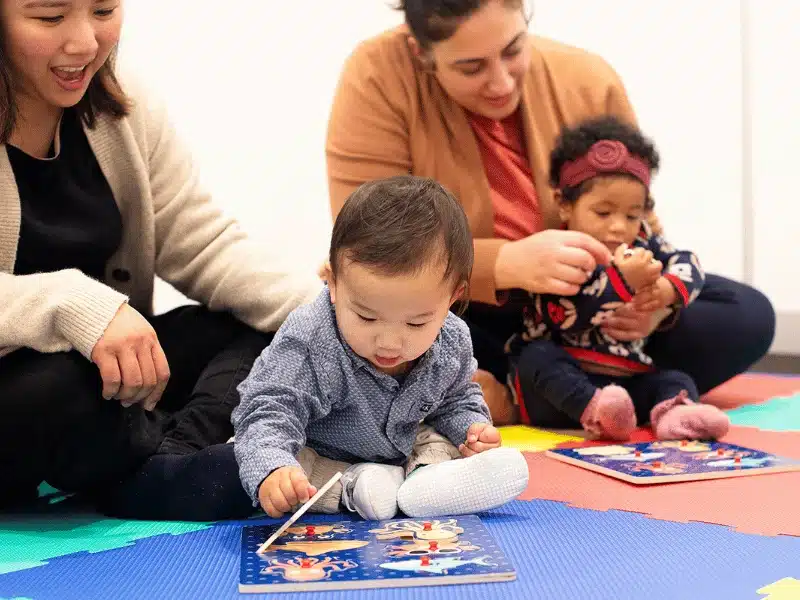
At Shichida, we believe learning should be joyful. Through playful activities, you can nurture your baby’s eyesight development and develop a lifelong love of learning.
Curious about more than just what your baby can see? Our baby classes are designed to support vision, brain development, and parent–child connection – and they’re loved by families across Australia.
Book a Shichida trial class today and see how our unique activities help your little one thrive from the very start!
FAQ's: About Infant Vision - What Can Infants See
From the very start. In the newborn stage, babies recognise faces at close range. By 3–4 months, they can identify familiar faces from across a room.
Newborns see only 20–30 cm clearly, just enough to recognise faces during cuddles and feeding. By 6 months, most babies have much clearer vision with depth perception.
Babies begin to notice colours at around 2–3 months, with red usually being the first. By 6 months, most babies can see the full colour spectrum.
From birth, babies can see close-up faces. If you hold your baby within arm’s length and they look back at you or track your movement, it’s a sign their vision is developing normally.
High-contrast toys, black-and-white books, and brightly coloured rattles or blocks help babies practise focusing and recognising patterns. Face-to-face play and tummy time are just as important.
If your baby’s eyes constantly look crossed, or if by 3 months they aren’t tracking moving objects at all, mention it to your doctor or child health nurse. Most babies develop at their own pace, but a check-up can give peace of mind.
Yes. Shichida Australia offers baby classes designed to build early vision, sensory skills, and brain development through playful, age-appropriate activities. Parents also learn practical ways to keep supporting milestones at home.
No. Newborns see mainly in black, white, and grey. By around 3 months, they can perceive red, and by 6 months, most babies see the full spectrum.
Offer high-contrast patterns, colourful toys, tummy time, and interactive games. Most importantly, smiling, talking, and making eye contact are the best ways to support your baby’s vision development.
1 month: Vision is blurry, with clarity only at close range.
3 months: Babies begin tracking smoothly, see red, and notice shapes across the room.
6 months: Vision is much clearer, with depth perception and full colour recognition.