

Home | About Shichida |
Home | About Shichida |
The early years are an important stage of a child’s development. During this time, the brain is developing rapidly and being shaped by a child’s experiences, environment and relationships.
At Shichida, we refer to these important early years, particularly from birth to around three years of age, as the Golden Period.
While “Golden Period” is Shichida terminology rather than a scientific term, developmental research supports the broader principle behind it: there are stages of development when particular brain circuits are especially responsive to certain experiences. These are known as sensitive periods.[1]
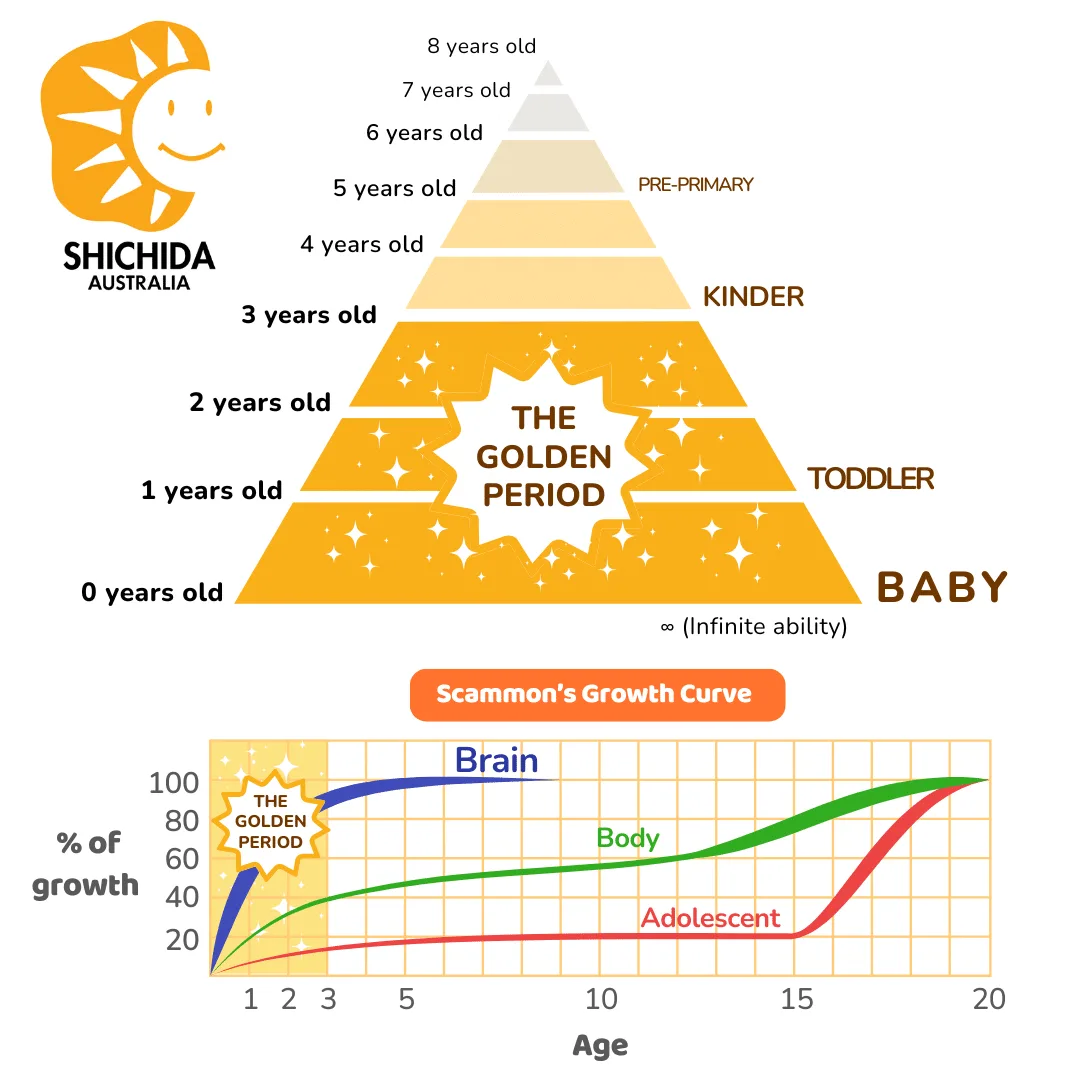
The Golden Period is the term Shichida uses to describe the important early years of a child’s development, particularly from birth to around three years old.
During these years, children experience significant development across many areas, including:
Early experiences contribute to the foundations on which later learning and development are built.
Importantly, this does not mean that development stops at age three. Different brain systems develop on different timelines, and children continue to learn and develop throughout childhood and beyond.[1]
A sensitive period is a stage of development when particular neural circuits are especially responsive to certain types of experience and environmental influence.
The National Scientific Council on the Developing Child at Harvard University explains that specific experiences affect specific brain circuits during specific stages of development, referred to as sensitive periods.[1]
Different brain circuits mature at different times. This means there is not one single sensitive period for every ability.
For example, research has identified different developmental timelines for areas including sensory processing, language and responses to social experiences.[1]
Experiences during these sensitive periods can play an important role in shaping the development of the corresponding brain circuits.
The Golden Period and Sensitive Period are related concepts, but they are not exactly the same thing.
Golden Period is the term Shichida uses to describe the particularly important early years of childhood, especially from birth to around three years old.
Sensitive period is a scientific concept referring to specific developmental windows when particular neural circuits are especially responsive to experience.[1]
Research into sensitive periods helps explain why the timing and quality of experiences during early childhood matter.
The Harvard research also emphasises that children need appropriate experiences at the right stages of development, because different brain circuits mature at different times.[1]
This principle aligns closely with the way Shichida approaches early learning: experiences and activities change as children grow and develop.
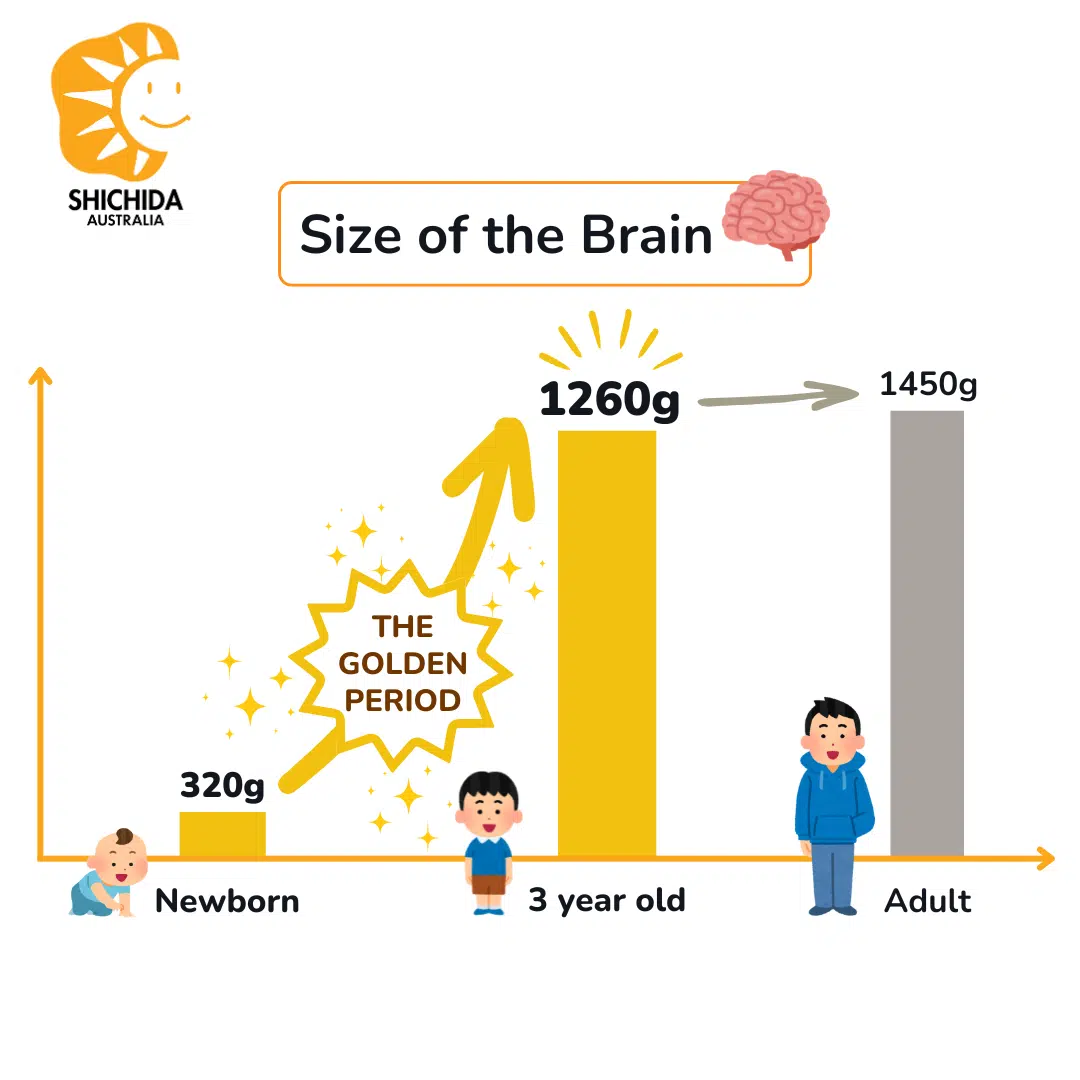
The first three years are a period of significant cognitive, language, motor, social and emotional development.
Research also shows that the quality of a child’s interactions and experiences during these early years can make a meaningful difference.
A global systematic review and meta-analysis published in PLOS Medicine examined 102 randomized controlled trials across 33 countries involving parenting interventions delivered during the first three years of life.[2]
The review found improvements across several areas of child development, including:
The interventions also improved parenting knowledge, parenting practices and parent-child interactions.[2]
Programs that included responsive caregiving showed greater effects in several areas, including child cognitive development and parent-child interaction.[2]
This reinforces an important principle of early development: children benefit not simply from being exposed to more information, but from positive, responsive and developmentally appropriate experiences with the adults around them.
Children do not develop every ability at the same time.
Different neural circuits mature according to different developmental timelines, which means the experiences that are appropriate for a baby may be very different from those suited to a toddler or preschool-aged child.[1]
Early learning should therefore not simply be about introducing advanced material as early as possible.
Instead, children benefit from experiences that are appropriate to their current stage of development.
As children grow, new abilities emerge and they become ready for increasingly complex experiences.
This is why Shichida activities change progressively with the child.
Shichida classes are designed to provide children with a broad range of age-appropriate learning experiences while involving parents directly in the learning process.
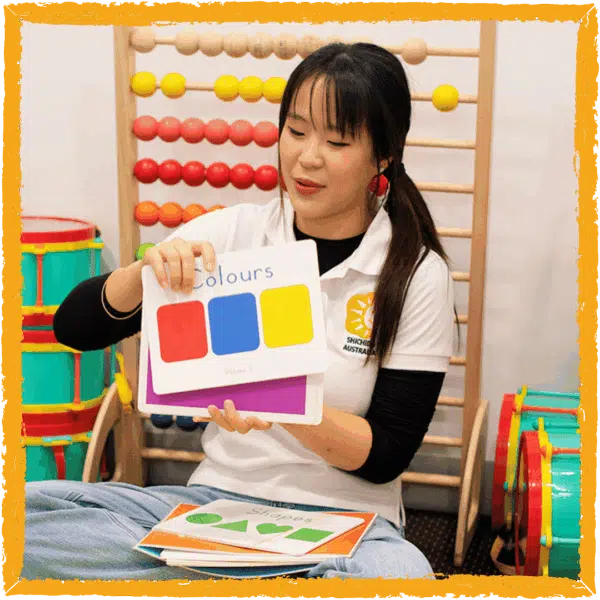
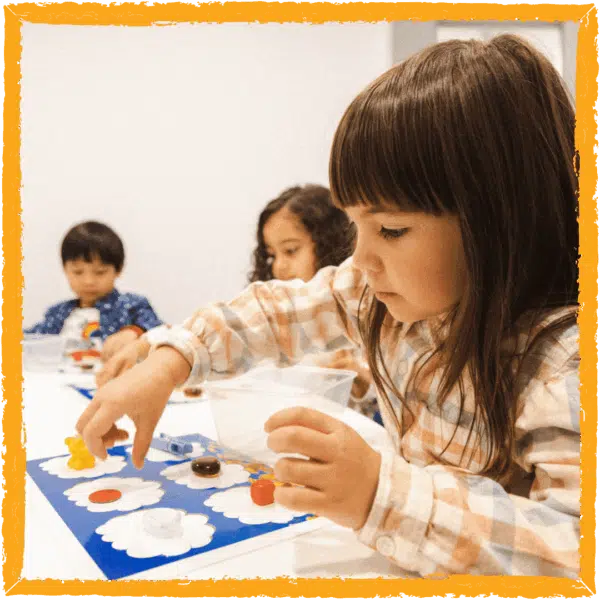
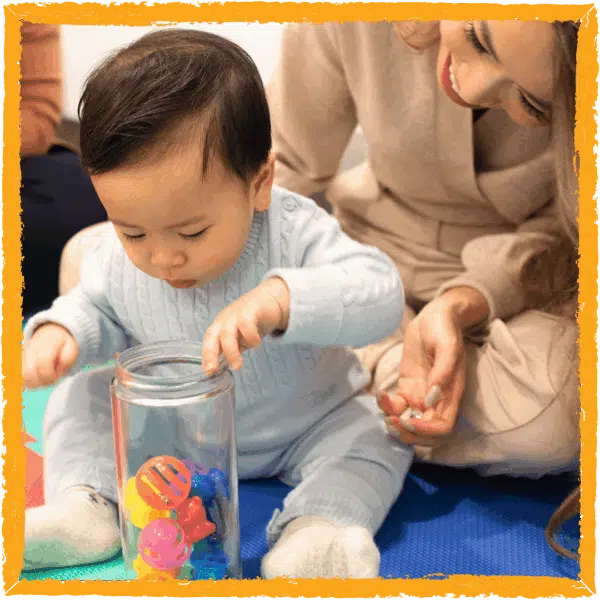
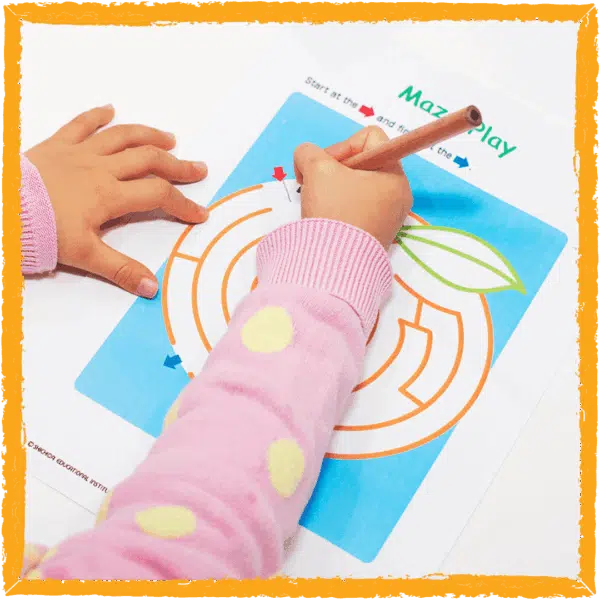
Depending on the child’s age and developmental stage, activities may include:
As children grow, the activities and level of challenge change with them.
Rather than expecting children of different ages to learn in the same way, the Shichida curriculum is designed to progress alongside their development.
Parents and caregivers play an important role in a child’s early development.
The PLOS Medicine systematic review found that parenting interventions delivered during the first three years improved not only child development outcomes, but also parenting knowledge, parenting practices and parent-child interactions.[2]
Programs that included responsive caregiving also showed greater effects in several areas.[2]
This is one reason Shichida classes involve a parent or caregiver alongside the child.
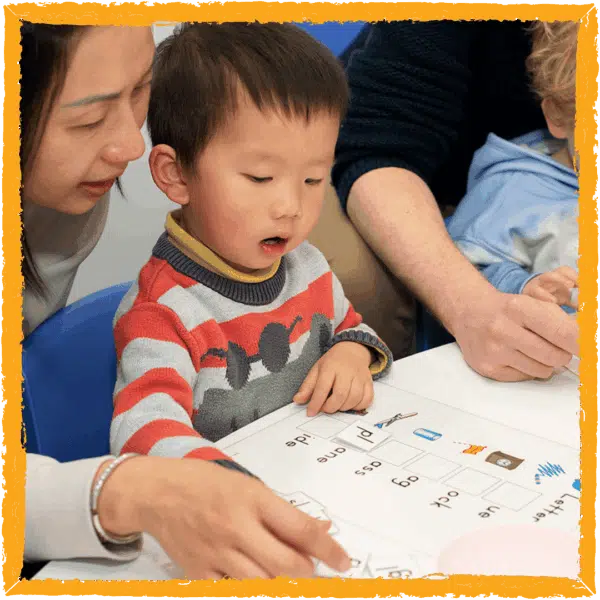
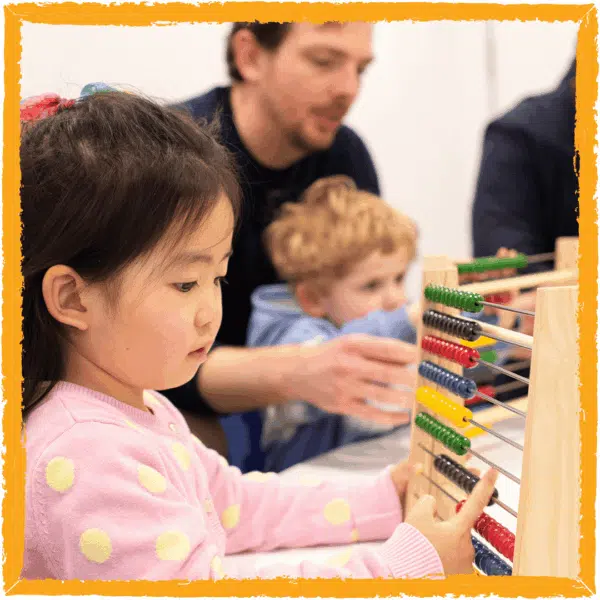
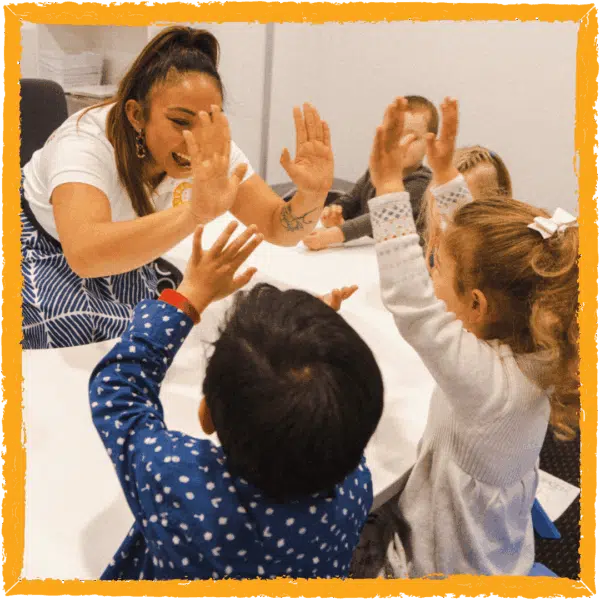
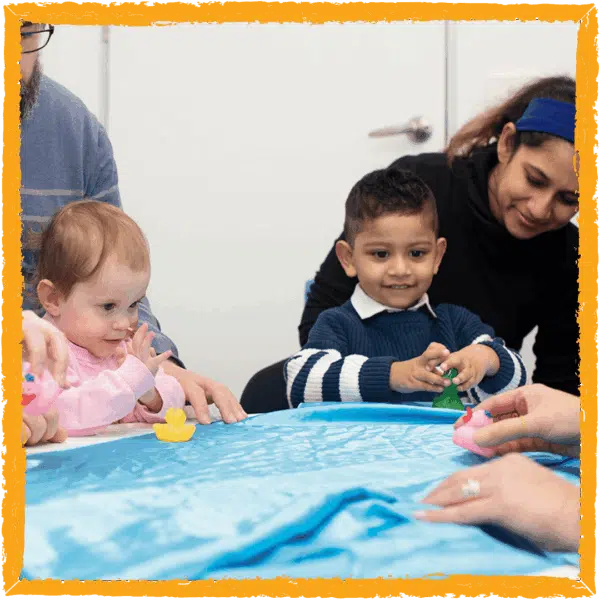
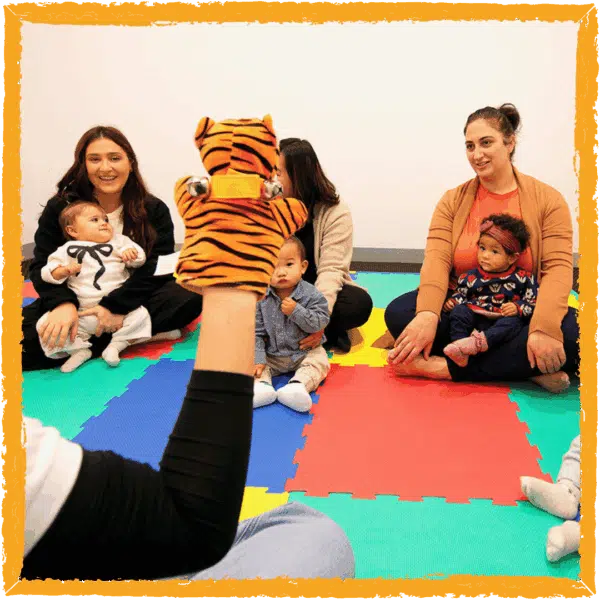
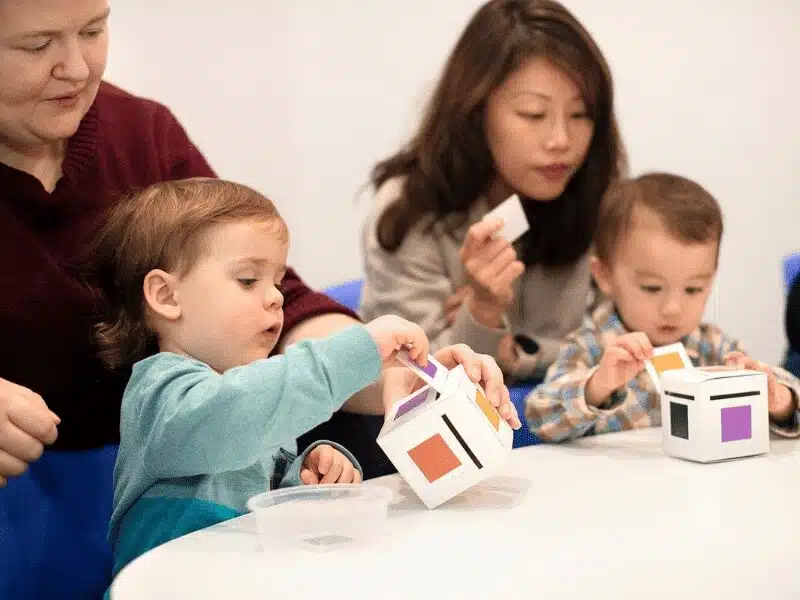
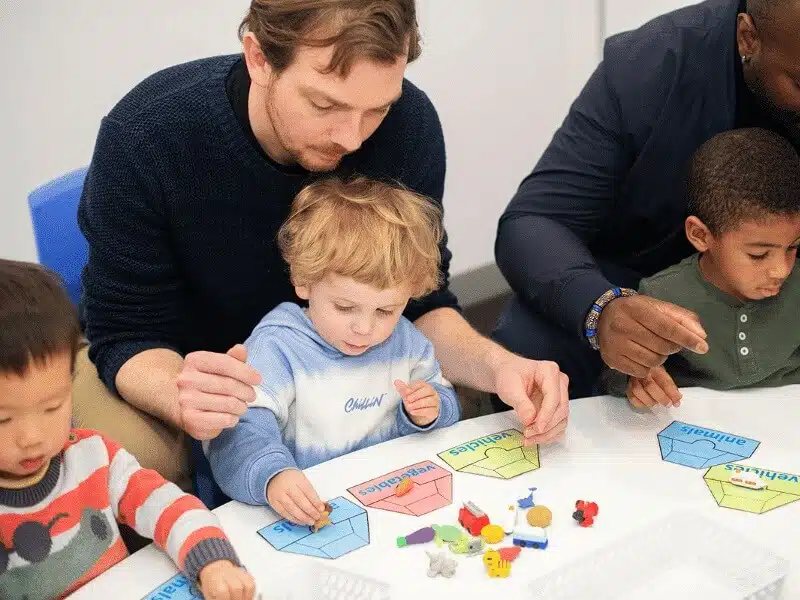
During class, parents participate in activities with their child, observe how teachers introduce new concepts and gain practical ideas they can continue at home.
The goal is not to turn home into another classroom.
It is to help parents understand how they can interact, play and learn with their child in ways that are positive, purposeful and appropriate to their stage of development.
Early childhood development is much broader than learning to read, write or count.
Children are developing across many interconnected areas at the same time, including communication, movement, memory, attention, social interaction, emotional skills, creativity and problem-solving.
That is why Shichida exposes children to a wide variety of learning experiences rather than concentrating on one narrow academic skill.
Our classes provide opportunities to develop skills such as:
Memory • Communication • Concentration • Creativity • Curiosity • Problem-Solving • Fine Motor Skills • Early Literacy • Early Numeracy • Confidence
within an engaging parent-child learning environment.
Calling the early years the Golden Period does not mean that a child’s opportunity to learn disappears after age three.
Different neural circuits have different developmental timelines, and brain plasticity continues beyond the early years.[1]
The early years are important because they help establish foundations on which later abilities can develop.
As children grow, they continue to build increasingly sophisticated skills and abilities.
This is why the Shichida program continues beyond the toddler years, with learning experiences becoming progressively more challenging as children develop.
There is an extraordinary amount of development taking place during the first few years of your child’s life.
Shichida gives parents and children 50 purposeful minutes together each week, combining a broad range of age-appropriate learning experiences in one parent-child class.
See what a Shichida class is like for yourself.
The National Scientific Council on the Developing Child explains that brain architecture develops through interactions between a child’s genes, experiences, relationships and environment.
Different neural circuits pass through sensitive periods at different stages of development, meaning the timing and quality of early experiences matter.[1]
National Scientific Council on the Developing Child.
The Timing and Quality of Early Experiences Combine to Shape Brain Architecture: Working Paper No. 5.
Center on the Developing Child at Harvard University.
Read the research:
https://developingchild.harvard.edu/resources/working-paper/the-timing-and-quality-of-early-experiences-combine-to-shape-brain-architecture/
A systematic review and meta-analysis published in PLOS Medicine examined 102 randomized controlled trials across 33 countries and found that parenting interventions delivered during the first three years improved several child development and parenting outcomes.[2]
Jeong, J., Franchett, E. E., Ramos de Oliveira, C. V., Rehmani, K., & Yousafzai, A. K. (2021).
Parenting interventions to promote early child development in the first three years of life: A global systematic review and meta-analysis.
PLOS Medicine, 18(5), e1003602.
Read the research:
https://journals.plos.org/plosmedicine/article?id=10.1371/journal.pmed.1003602
The Golden Period of Child Development refers to the early years of a child’s life, usually from birth to around 3 years old. During this stage, the brain develops rapidly and children absorb information through everyday experiences, play, language, movement and interaction.
The first three years are important because a child’s brain is forming connections at a very fast rate. The experiences children receive during this time can support language, memory, emotional development, problem-solving, movement and early learning skills.
Activities that support brain development from birth to 3 years old include talking, singing, reading, movement games, sensory play, flashcards, memory games, fine motor activities and simple problem-solving tasks. These activities work best when they are fun, short, consistent and shared with a parent or caregiver.
The Golden Period refers to the early years, usually from birth to around 3 years old, when a child’s brain develops rapidly. The Sensitive Period refers to specific windows of time when children are especially receptive to certain types of learning, such as language, movement, sensory input or social interaction.
Yes, but learning activities for babies should be gentle, playful and age-appropriate. Babies learn through songs, movement, touch, sound, visual stimulation, repetition and parent interaction. Early learning is not about pressure; it is about giving your baby rich experiences during an important stage of development.
No. The Golden Period is not just about academic learning. It is also about building confidence, emotional connection, communication, curiosity, memory, focus, movement and social awareness. Early learning works best when it supports the whole child, not just literacy and numeracy.
The Shichida Method supports the Golden Period through parent-child classes that include flashcards, memory activities, sensory play, music, numeracy, literacy, fine motor tasks and thinking games. These activities are designed to stimulate whole-brain learning during the early years of rapid development.
Yes. Shichida Australia offers classes for babies from 6 months old. The program is designed to suit each developmental stage, with age-appropriate activities that help babies and toddlers learn through play, repetition, movement, music and parent interaction.
Shichida activities can support early language development by exposing children to songs, vocabulary, stories, flashcards, rhythm, repetition and parent-child conversation starters. These experiences help children become familiar with sounds, words and communication patterns in a fun and engaging way.
Parents can support brain development at home by talking to their child often, reading daily, singing songs, playing memory games, offering sensory experiences, encouraging movement, using simple flashcards and spending focused time together. Small, consistent interactions can make a big difference.
It is never too late to support your child’s learning. While the first three years are an important developmental window, children continue to grow, learn and build new skills well beyond this stage. Shichida offers programs for children up to 9 years old.
The best way to understand whether Shichida is right for your baby or toddler is to attend a trial class. You will see how the activities work, how your child responds, and how the Shichida Method supports early learning through fun, fast-paced, parent-child activities.
Shichida Australia has seven early learning centres in Victoria and New South Wales. Victorian centres are located in Chadstone, Doncaster, Highpoint and Glen Waverley. New South Wales centres are located in Chatswood, Parramatta and Burwood.
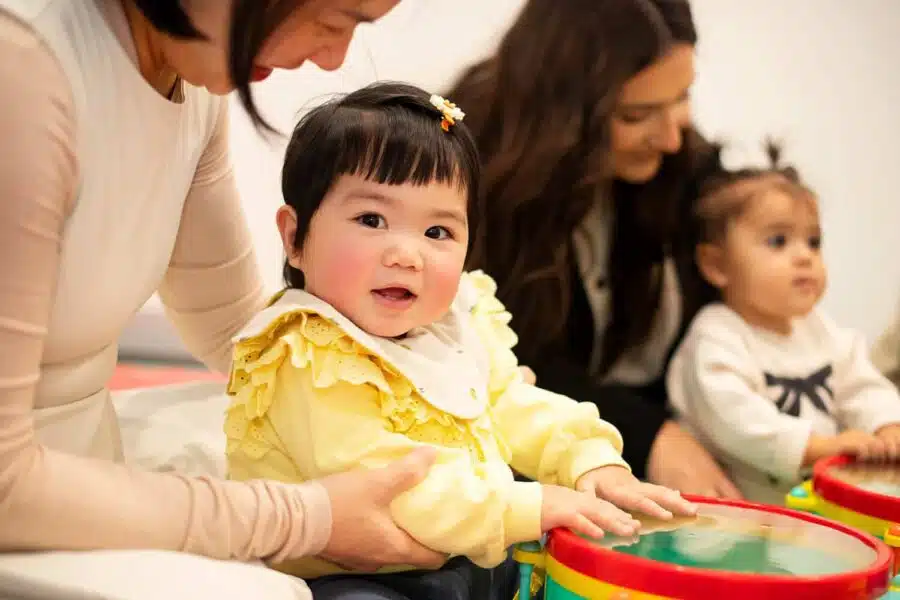

Your child will develop a variety of essential skills – explore 15 ways Shichida supports your child’s success!