Key Points
- Visual learning is one of the primary ways young children absorb and process information.
- It includes several connected skills such as tracking, attention, discrimination, memory, and literacy that work together.
- Most children rely heavily on visual input in their earliest years, making targeted activities especially valuable.
- Play-based visual tracking activities are one of the most effective and enjoyable ways to build these skills.
- Strong visual learning skills directly support reading, writing, and overall school readiness.
Visual learning is one of the earliest ways children make sense of the world around them. It helps build reading readiness, problem-solving, movement, communication, and growing confidence.
The encouraging news for parents is that these skills do not need expensive resources or formal lessons to develop. Some of the richest learning happens through simple, playful moments woven into everyday life.
One important part of visual learning is visual tracking – the ability to follow movement with the eyes and shift focus from one point to another.
This is why simple activities like following bubbles, rolling balls, or tracing lines can be so helpful. They build the eye control and focus needed for reading, writing, movement, and everyday learning.
Designed for families with children up to 5 years old.
What Is Visual Learning?
Visual learning refers to the way children process, interpret, and use visual information to understand the world around them. It begins when a child takes in information through the eyes, then the brain makes sense of shapes, colours, movement, distance, patterns, and symbols.
Over time, children also use visual memory to recall what they have seen and apply it later. In early childhood, visual learning is involved in many everyday moments, including:
- Recognising letters, numbers, and shapes
- Following pictures in a book
- Matching colours, patterns, and objects
- Moving safely through rooms or playgrounds
- Watching and copying gestures or actions
Strong visual learning skills help children develop fine motor control, early literacy, focus, and classroom readiness.
What is Visual Tracking?
Visual tracking sits inside this wider group of visual learning skills. While visual learning includes recognising, remembering, comparing, and interpreting what children see, visual tracking focuses more specifically on how the eyes move and follow information.
Visual learning and visual tracking are connected because children need smooth eye movement to follow a story in a book, copy from a board, complete puzzles, and eventually read across a page.
How Visual Learning Fits Into Different Learning Styles
You may have heard of learning styles visual auditory kinesthetic tactile. These describe common ways children take in information:
- Visual: learns through pictures, demonstrations, charts, symbols
- Auditory: learns through listening, songs, spoken instructions
- Kinesthetic: learns through movement and active exploration
- Tactile: learns through touch, hands-on materials, sensory play
Most children use a mix of all four. They are not limited to one style. However, visual learning is often especially strong in early childhood because children are naturally drawn to movement, faces, colour, and visual cues before language is fully developed.
Why Visual Learning Skills Are Important for Young Children
Visual learning supports many core developmental areas:
- Reading readiness through visual tracking and letter recognition
- Writing development through hand-eye coordination
- Focus and attention during tasks and storytime
- Problem-solving through patterns and spatial reasoning
- Social understanding by reading faces and body language
For example, a child recognising the first letter of their name or sorting toys by shape is already building visual skills that support later school success.
Field of Vision in Child Development
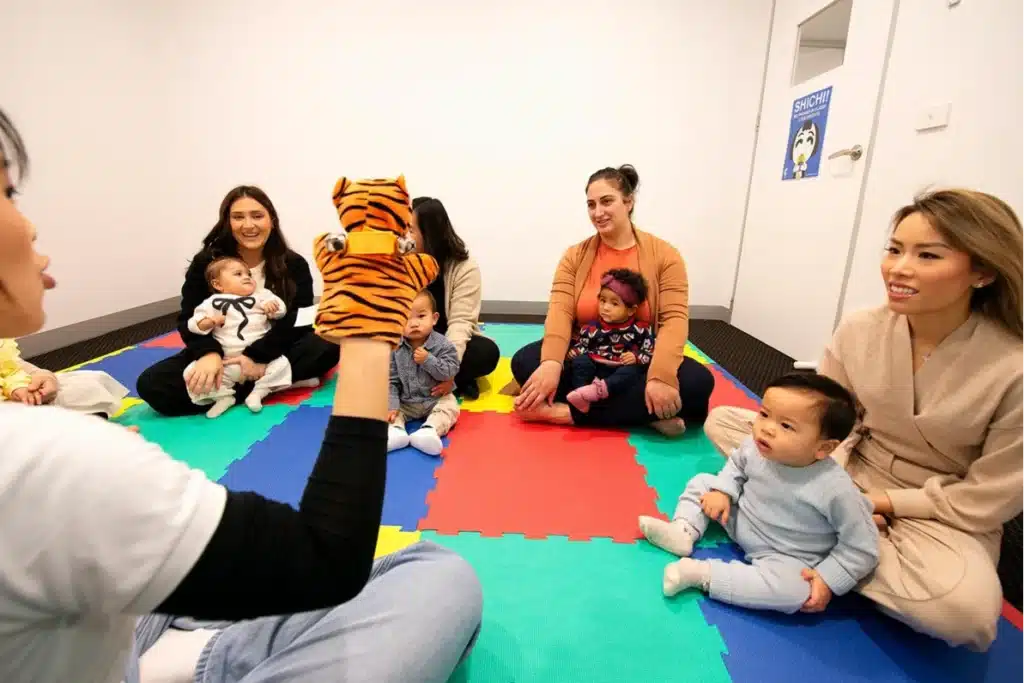
Image by Shichida Australia: Babies enjoying a visual tracking exercise during a Shichida Baby Class.
Visual tracking is one important part of visual learning. While visual learning describes how children understand and use what they see, visual tracking focuses on how their eyes move to follow objects, scan pictures, and move across a page. These skills work together because children need to move their eyes smoothly while also noticing what is happening across their wider field of vision.
At Shichida, visual tracking activities often include field of vision exercises, where children practise following, scanning, and noticing visual information through play. This helps connect simple eye movement with broader visual learning skills, supporting focus, reading readiness, coordination, and confidence.
Want to see how visual tracking, memory, focus, and early learning skills come together in a fun classroom setting? Book a Shichida trial class and experience our play-based approach in action.
Key Visual Learning Skills, Including Visual Tracking
Visual learning is not one single skill. It is a group of connected abilities that develop through play, movement, and experience. These skills work together to support both academic learning and physical coordination.
Visual Tracking
Visual tracking is the ability of the eyes to smoothly follow a moving object or scan across a space. In babies, this may look like watching a parent’s face move from side to side or following a toy. In toddlers and preschoolers, it may include following bubbles, rolling balls, tracing paths, or scanning pictures in a book.
These visual tracking activities are important because they help prepare children for reading from left to right, following a teacher’s demonstration, catching or kicking a ball, and keeping their place on a page.
Visual Attention
Visual attention activities help children focus on important visual information while ignoring distractions. This supports concentration in class, puzzle completion, and following visual instructions. Better visual attention often means better task persistence.
Visual Discrimination
Visual discrimination activities for preschoolers help children notice similarities and differences between shapes, letters, colours, and patterns. This is important for reading accuracy and sorting tasks. Examples include telling apart b and d, matching socks, or finding the odd shape in a group.
Visual Memory
Visual memory is the ability to remember what has been seen, immediately or later. It supports spelling, recognising words, remembering where objects belong, and following picture-based instructions.
Visual Literacy
Visual literacy for kids means understanding and communicating through pictures, symbols, maps, diagrams, and visual stories. It supports reading comprehension, creativity, and navigating a world full of visual information.
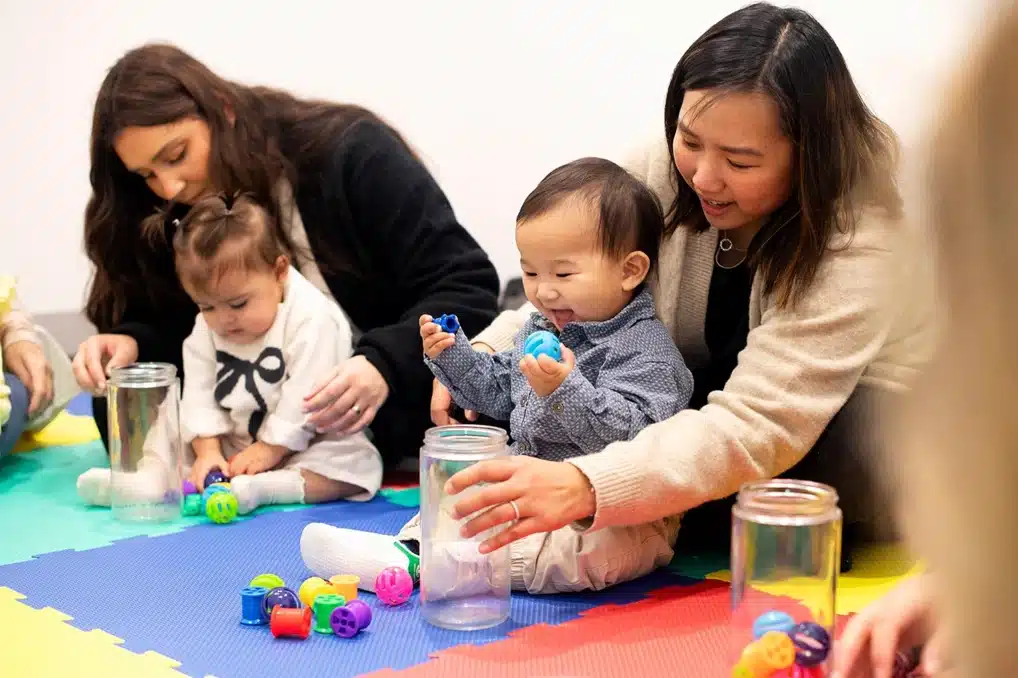
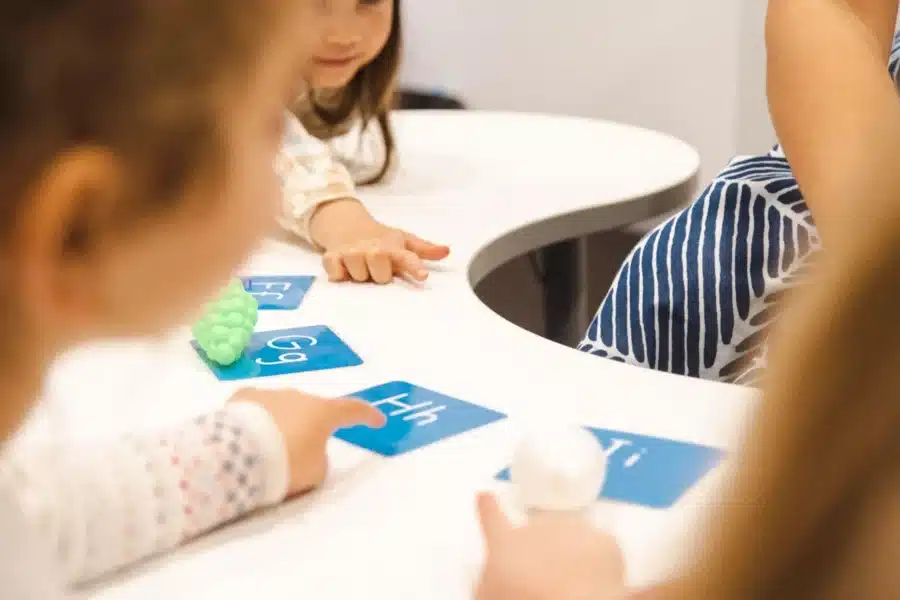
Image from Shichida Australia: Guided play-based visual tracking activities help babies strengthen focus, follow movement with their eyes, and build early attention skills through hands-on learning with a parent.
Visual Learning Activities by Age Group
Because visual tracking is one of the earliest visual skills to develop, many visual learning activities begin with simple eye-following games. As children grow, these activities can expand into matching, memory, sorting, tracing, and picture-based tasks that build wider visual learning skills.
Children develop visual skills gradually. Choosing activities that match your child’s stage keeps learning fun and effective.
Visual Activities for Babies (0-12 Months)
Babies are learning to focus, track, and coordinate their eyes.
Try:
- Following a slow-moving toy with their eyes
- High-contrast flashcards
- Reaching for objects within sight
- Gazing at faces during feeding or play
- Watching a mobile move gently overhead
These early visual processing activities for children help strengthen eye control and attention.
Visual Activities for Toddlers (1-3 Years)
Toddlers learn best through repetition and hands-on discovery.
Try:
- Shape sorters
- Colour matching games
- Pointing to pictures in books
- Copying simple movements
- Stacking blocks by size or colour
- Large-piece puzzles
These build visual motor skills for kids, discrimination, and spatial awareness.
Visual Activities for Preschoolers (3-5 Years)
Preschoolers are preparing for reading, writing, and classroom routines.
Try:
- Drawing and tracing shapes or letters
- Completing patterns
- Spot the difference games
- Memory card matching
- Talking about picture books
- Cutting and pasting using templates
These visual perception activities preschool children enjoy directly support school readiness.
10 Fun Visual Tracking and Visual Learning Activities for Kids
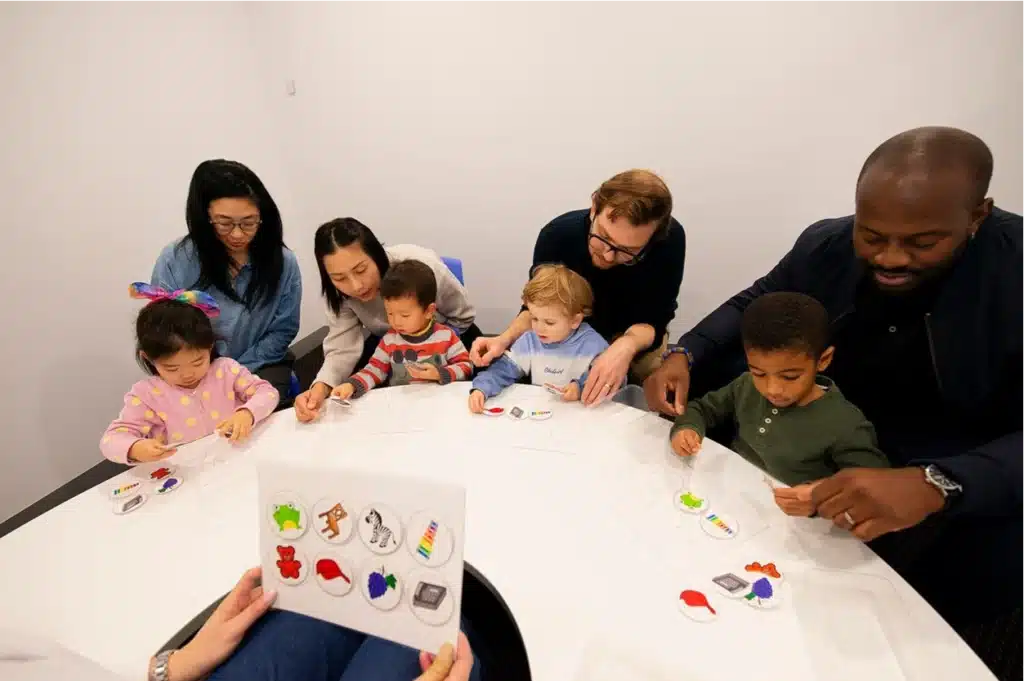
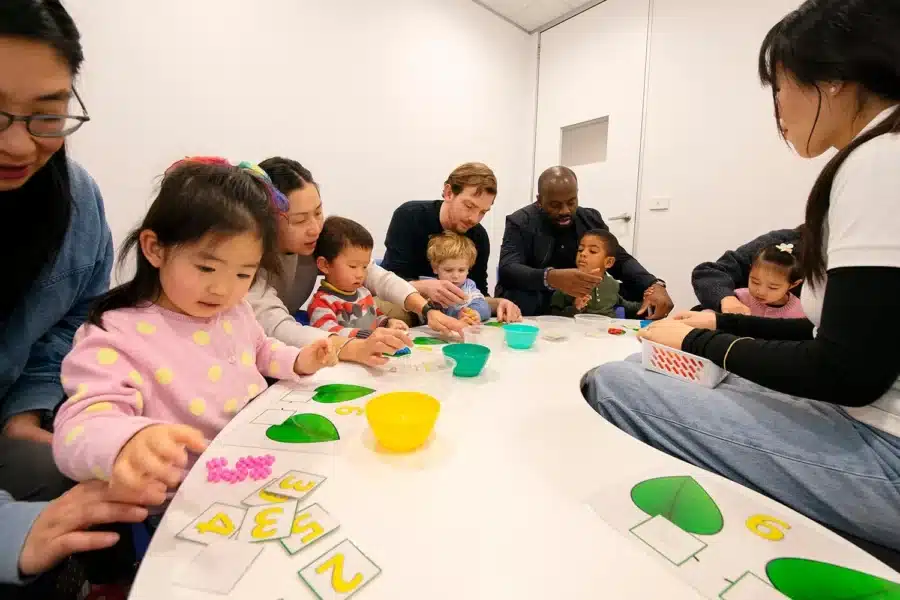
Image from Shichida Australia: Preschoolers playing a visual memory game alongside their parents during a Shichida class.
1. Tracking Moving Objects
Roll a ball slowly or blow bubbles to follow with the eyes.
Builds: visual tracking
Age: 6 months+
2. Spot the Difference Games
Use printed pictures or homemade drawings.
Builds: attention to detail, discrimination
Age: 3+
3. Memory Card Matching
Turn over pairs and match pictures.
Builds: visual memory, concentration
Age: 3+
4. Shape and Colour Sorting
Sort blocks, lids, or toys into groups.
Builds: categorisation, discrimination
Age: 2+
5. Picture Book Discussions
Ask, “What do you see?” or “What happens next?”
Builds: visual literacy, comprehension
Age: 2+
6. Drawing and Tracing Activities
Trace lines, shapes, then letters.
Builds: visual-motor integration
Age: 3+
7. Pattern Completion Puzzles
Create red-blue-red-blue patterns with beads or blocks.
Builds: sequencing, logic
Age: 3+
8. I Spy Games
“I spy something round.”
Builds: visual scanning activities and focus
Age: 3+
9. Obstacle Courses and Movement Paths
Use arrows, cones, or markers.
Builds: visual spatial skills for children
Age: 3+
10. Threading and Bead Sorting
Thread large beads by colour or size.
Builds: fine motor and visual discrimination
Age: 4+ with supervision
Want more ideas? Shichida has plenty!

Signs a Child May Need More Visual Learning Support
Every child develops at their own pace. These signs do not automatically mean something is wrong. They simply suggest areas where more play-based support may help.
- difficulty tracking text or objects
- trouble with letter or shape recognition
- short attention span during visual tasks
If concerns persist, discuss them with your GP, child health nurse, optometrist, or paediatric professional.

Tips for Supporting Visual Learning at Home
- Make it playful: Children learn best when activities feel fun, not pressured.
- Use colour and contrast: Bright colours and clear contrasts naturally attract attention.
- Build activities into daily routines: Point out signs, shapes, or colours while shopping or walking.
- Gradually increase complexity: Start simple, then progress from matching two objects to sorting many.
- Combine with movement: Tracking balls, following dance cues, or navigating paths can strengthen visual skills faster than seated tasks alone.
How Visual Learning Supports Long-Term Development
Early visual skill development lays the groundwork for future success in many areas:
- Reading fluency and comprehension
- Handwriting and writing accuracy
- Maths through patterns, graphs, and spatial thinking
- Art, design, and creativity
- Sports and physical coordination
When children feel capable in visual tasks, they often gain confidence, independence, and enthusiasm for learning overall. Small daily activities now can create meaningful long-term benefits.
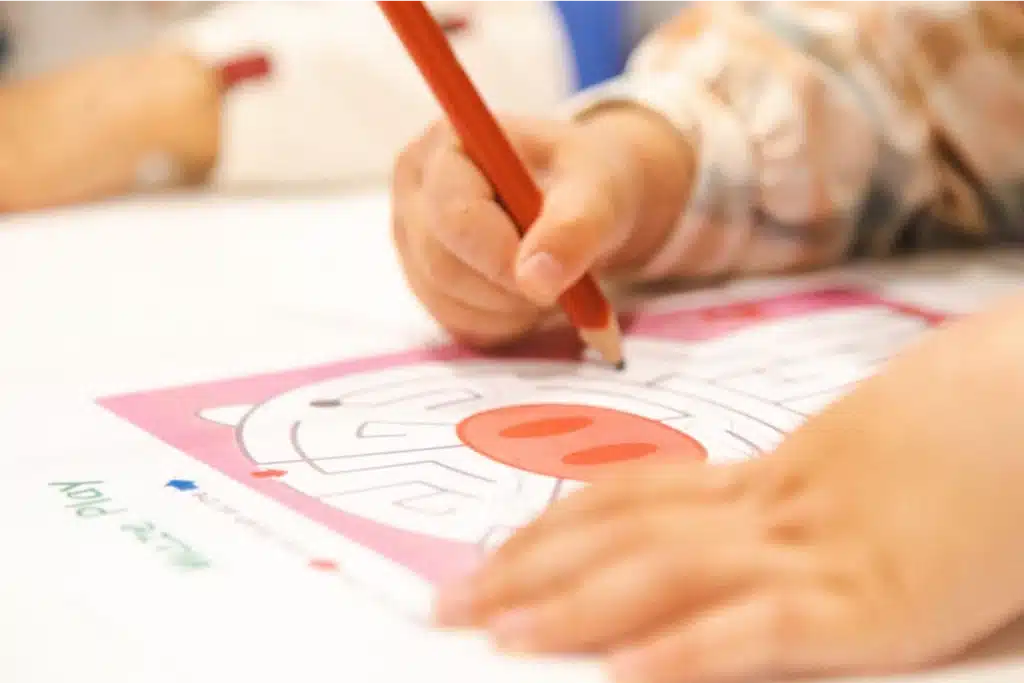
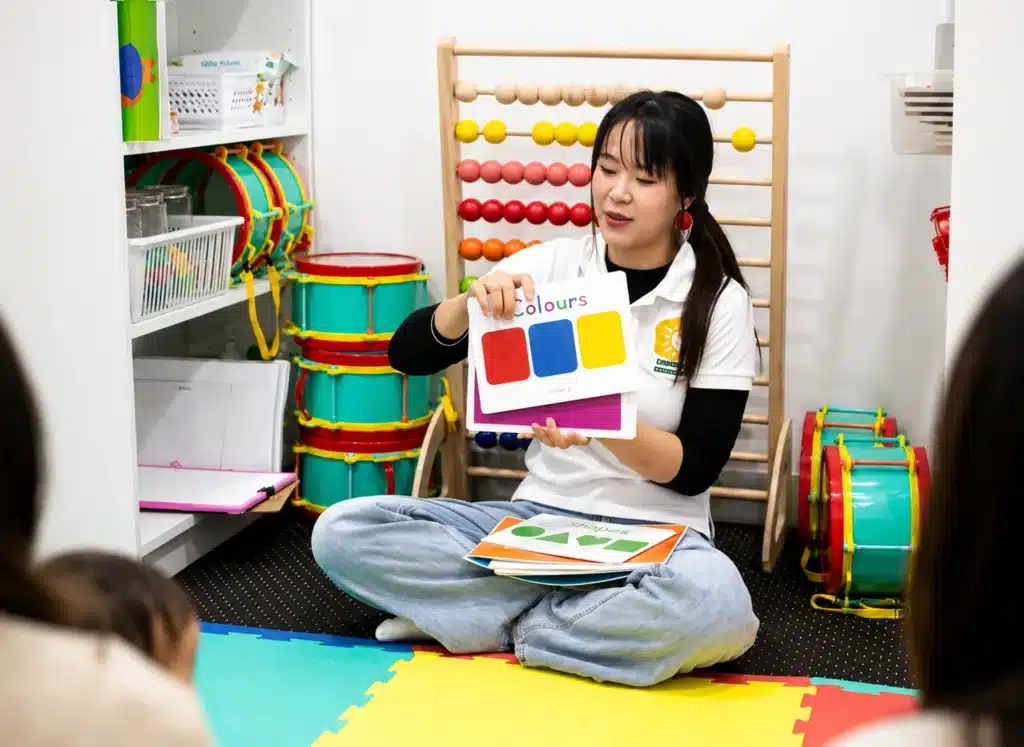
Image from Shichida Australia: Structured visual tracking activities prepare preschoolers for reading and writing by strengthening left-to-right eye movement, focus, and visual processing skills.
Strengthen Your Child’s Visual Learning Skills with Shichida
At Shichida Australia, our engaging classes help children build focus, memory, visual tracking, and confidence through proven early learning methods. Each lesson is designed to support whole-child development through guided, play-based experiences. In a warm and encouraging environment, your child can learn with joy and confidence. Book a trial class and see the difference for yourself.
Experience Shichida Today
Help your child build strong fine motor skills with Shichida Australia’s hands-on, fun brain-boosting activities! Our gentle approach supports coordination, confidence, early maths, reading, writing and more!
Book a trial class and see how these strategies come to life!
FAQ’s: Visual Tracking Activities for Kids
Visual learning is how children learn by seeing and making sense of pictures, movement, patterns, symbols, colours, and demonstrations. In early childhood, it helps children notice details, remember what they see, follow actions, and build skills that support reading, writing, and everyday learning.
Visual learning is important because it supports many early skills at once, including focus, memory, coordination, problem-solving, and pre-literacy. When children learn to track, compare, and interpret what they see, they are better prepared for classroom tasks such as recognising letters, following instructions, and completing puzzles.
Some of the best visual tracking activities for toddlers include rolling a ball back and forth, watching bubbles float, following a torch light on the wall, and tracking a moving toy with their eyes. These simple games help strengthen eye movement control, attention, and early reading readiness.
A child may show strong visual learning preferences if they enjoy picture books, puzzles, drawing, matching games, watching demonstrations, or copying what they see before trying something themselves. Most young children learn through a mix of styles, but many rely heavily on visual input in the early years.
Visual learning uses sight, auditory learning uses listening, kinesthetic learning uses whole-body movement, and tactile learning uses hands-on touch and sensory exploration. Most children use all four, but visual learning is especially important in early childhood because children learn so much by watching people, objects, and patterns around them.
Visual discrimination activities help preschoolers notice differences and similarities between shapes, letters, colours, pictures, and patterns. Good examples include matching games, sorting tasks, spot-the-difference puzzles, and letter recognition games, all of which support reading accuracy and school readiness.
You can build visual attention at home with short, playful activities such as puzzles, I Spy games, picture searches, matching cards, and simple sorting games. It also helps to reduce distractions, keep sessions short, and choose activities that match your child’s age and attention span.
Visual literacy is the ability to understand meaning from pictures, symbols, diagrams, and other visual information. Parents can build visual literacy through picture books, maps, signs, storytelling from illustrations, and simple conversations about what a child notices in an image.
Visual learning skills begin developing from birth and grow quickly through the first five years. Babies start by focusing on faces and tracking movement, while toddlers and preschoolers build more advanced skills such as matching, sorting, visual memory, and picture-based understanding.
Yes, visual learning activities can strongly support school readiness. They help children build the eye control, focus, visual memory, and pattern recognition needed for reading, writing, classroom attention, and following instructions with more confidence.
Visual learning is the broader process of understanding and using what we see, while visual tracking is one specific skill within it. Visual tracking refers to the eyes moving smoothly to follow objects, scan pictures, or move across a page, which is important for reading, writing, and coordinated movement.
At Shichida Australia, children develop visual learning skills through play-based activities that build focus, memory, visual tracking, and confidence. These experiences are designed to support whole-child development and help young children strengthen the foundations they need for later learning.