
Key Takeaways
- Attention span develops gradually in early childhood and improves with practice, patience, and consistency.
- The best way to improve attention span in children is through short, hands-on activities that feel playful and achievable.
- Simple routines, clear instructions, and predictable daily rhythms help children settle into focused tasks more easily.
- Too much fast-paced screen time and overstimulation can make slower real-world activities feel harder to focus on.
- Sleep, nutrition, movement, and a calm environment all play an important role in supporting concentration.
- Parents can build focus through everyday activities like reading, puzzles, matching games, pretend play, and movement-based games.
- Long-term habits are more effective than quick fixes when helping children strengthen attention span.
If you’re wondering how to improve attention span in children, it helps to start with what attention really looks like in the early years. It isn’t always quiet sitting or finishing a task perfectly. Sometimes, it begins with a busy, curious child exploring the world around them.
Focus grows through repetition, connection, routine, and play. With the right support, everyday moments can help your child slowly build the ability to concentrate, listen, and stay engaged for longer.
Designed for families with children up to 5 years old.

What Is Attention Span and Why It Is Important in Early Learning
When people talk about attention span, they’re really talking about your child’s ability to stay focused on one thing for a period of time. This could be listening to a story, completing a puzzle, or simply staying engaged during play.
This skill is more important than it might seem. When your child can focus, they are better able to learn new things, remember information, and build language skills. Focus also supports problem-solving, because your child needs to stay engaged long enough to think through challenges.
At the heart of this is something called executive function. These are the brain skills that help your child manage attention, remember instructions, and control impulses. You can think of it as the control system that helps everything else work.
It is important to remember that attention is not something your child is born with fully developed. It grows over time. That means you have a real opportunity to support and strengthen it through your daily interactions.
How Attention Span Develops in Early Childhood
In the early years, attention grows slowly and naturally.
If you have a toddler, you might notice they can only focus for two to five minutes at a time. That’s completely normal. At this stage, their brain is wired for exploration, not long periods of concentration.
As your child moves into the preschool years, you’ll start to see longer periods of focus, usually around five to fifteen minutes. This often happens when they are interested in what they’re doing.
What matters most here is not pushing your child to focus longer too quickly. Instead, your role is to give them repeated opportunities to practise focusing in ways that feel manageable and enjoyable.
Factors That Affect a Child’s Attention Span
Your child’s ability to focus is influenced by many everyday factors, many of which are within your control.
Sleep is one of the biggest. If your child is tired, their brain simply cannot concentrate well. Nutrition also plays a role, as the brain needs steady energy to stay engaged.
Screen exposure is another important factor. Fast-paced content can make it harder for your child to focus on slower activities like reading or building.
Take a look at your child’s environment as well. Too much noise, clutter, or activity can overwhelm their attention. Emotional security matters just as much. When your child feels calm and safe, they are far more able to focus.
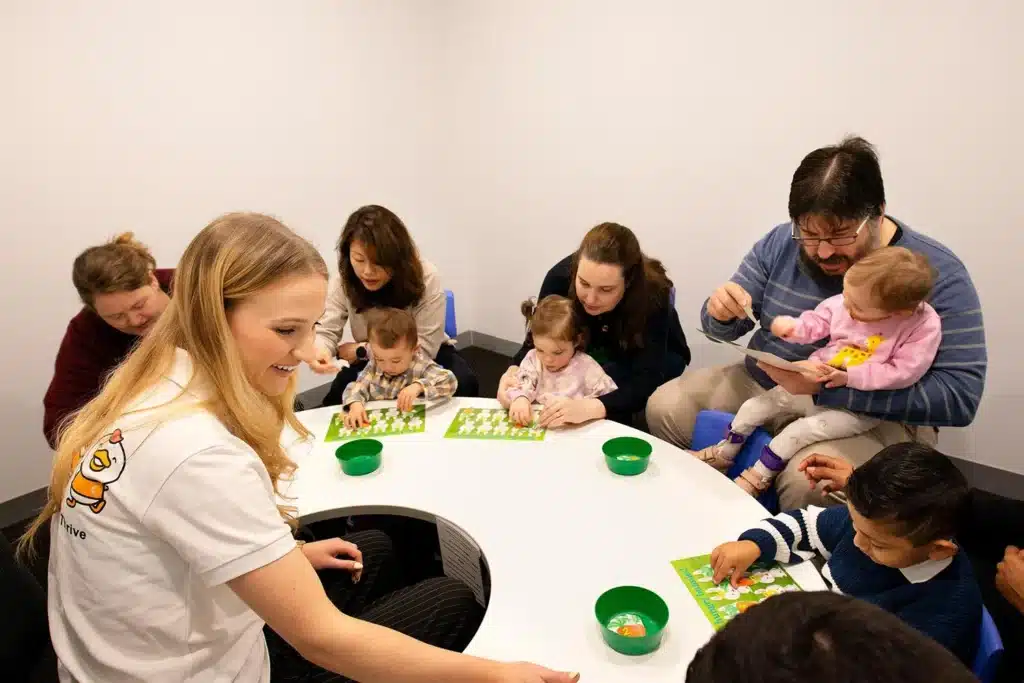
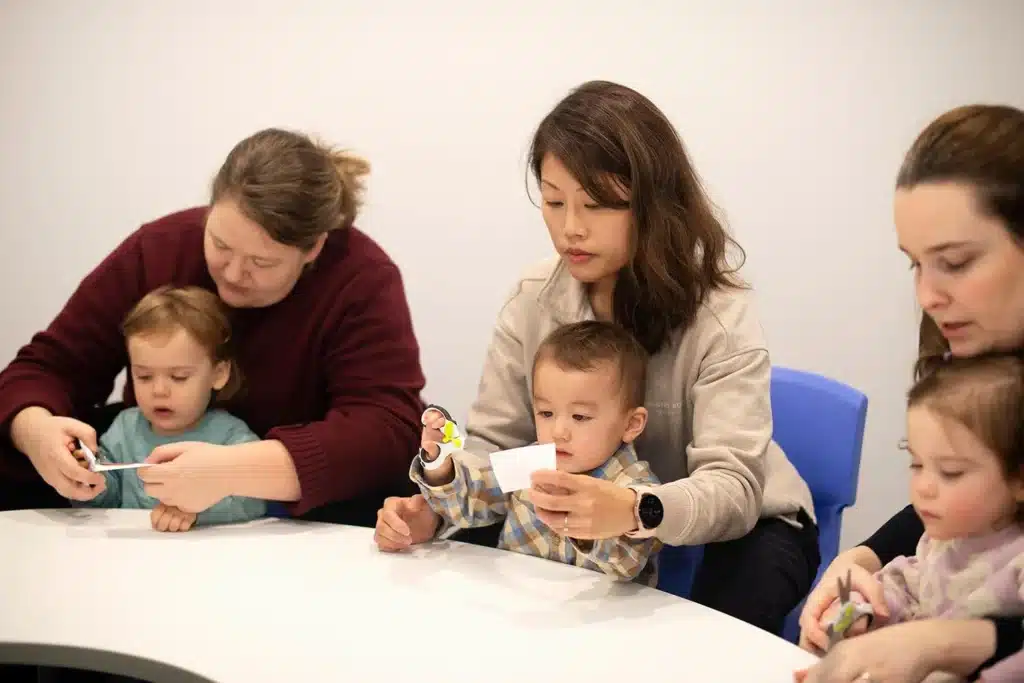
Image by Shichida Australia: A small group class where children and parents participate in guided learning activities with an instructor. Structured, play-based sessions demonstrate how to improve attention span by combining routine, interaction, and brain-based learning techniques.
Common Causes of Short Attention Span in Children
If you’re concerned about your child’s focus, it helps to understand what might be affecting it. In most cases, short attention spans are not a problem. They are simply a reflection of your child’s age, environment, and daily habits.
Excessive Screen Time and Overstimulation
If your child spends a lot of time watching fast-paced shows or using digital devices, their brain can become used to constant stimulation.
This makes everyday activities feel slower and less engaging, which can reduce their ability to stay focused.
Lack of Structured Routine
Children thrive on predictability. If your child’s day feels inconsistent, it can be harder for them to settle into activities and stay engaged.
Simple routines give your child a sense of security, which supports better focus.
Developmental Stage vs Real Concern
It’s important for you to remember that short attention spans are normal in early childhood.
However, if your child consistently struggles to follow simple instructions, seems unusually impulsive, or cannot stay engaged even in activities they enjoy, it may be worth paying closer attention.
Proven Ways to Improve Attention Span in Children
If you’re looking for practical ways to improve attention span in children, the key is to start small and stay consistent.
Break Tasks Into Smaller Steps
When you give your child a large task, it can feel overwhelming.
Instead, break it down. Ask them to complete one small step at a time. For example, instead of “clean your room,” start with “put your toys in the basket.”
This helps your child stay focused and feel successful.
Use Timed Focus Activities
You can introduce short focus sessions based on your child’s age.
Set a timer and encourage your child to stay engaged in one activity during that time. Knowing there is an end point makes it easier for them to focus. Start with your child’s age plus one minute. Staying engaged with your child and doing the activity with them will also keep their attention for longer.
Build Consistent Daily Routines
Your child benefits from knowing what comes next.
Simple routines like having a set time for meals, play, and sleep help your child’s brain settle into each activity more easily. Over time, this improves their ability to concentrate.
Encourage Active, Hands-On Learning
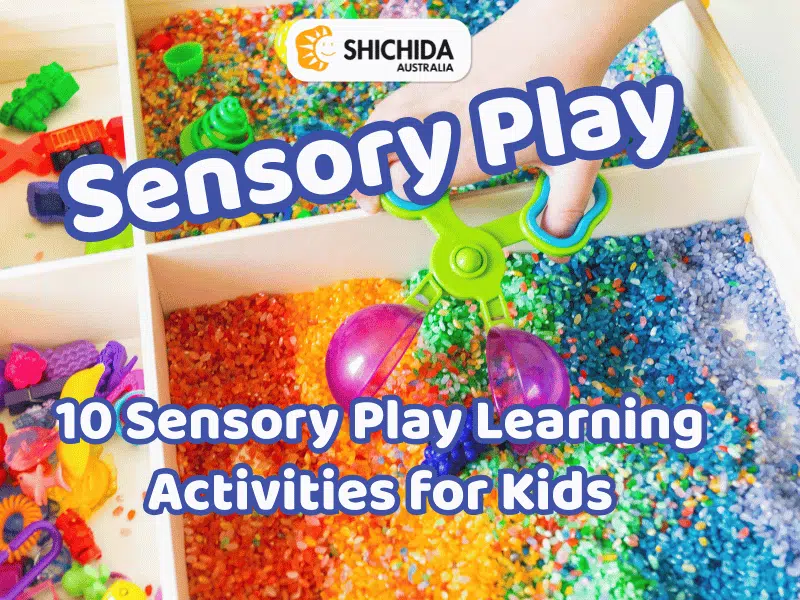
Children learn best when they are actively involved. Sensory play is a good way to learn through play.
Instead of passive activities, choose ones that require your child to touch, move, build, or create. These naturally increase focus in kids because they are engaging multiple senses.
Sensory play can help nurture resilience and development. Download a free sensory play guide here.
If your child enjoys these types of activities, a Shichida trial class is a great way to see how structured play can support coordination, focus, memory and early learning confidence.
Book a trial class or contact us to find your nearest centre.
Early Learning Activities That Build Attention Span
If you want to improve attention span in children, one of the most effective approaches is through play. Young children are not designed to sit still and focus for long periods. They build concentration best through short, engaging activities that feel fun, achievable, and active.
The goal is not to force your child to focus for longer than they are ready for. Instead, start with simple activities, keep them short, and slowly build their ability to stay engaged over time.
1. Memory and Matching Games
You can start with simple matching games using cards, pictures, colours, shapes, or everyday objects.
Place a few items in front of your child, ask them to look carefully, then cover one item and ask, “What’s missing?” You can also use matching cards and ask your child to find pairs. For younger children, start with just two or three pairs. For older preschoolers, gradually add more.
These games help children practise looking carefully, remembering information, and staying focused long enough to complete the task. This strengthens working memory and helps improve concentration in children.
There are many ways to develop memory through play. At Shichida Australia, memory games are part of our fast-paced, play-based classes, helping children practise focus while staying curious and engaged. Book a trial class to see how these activities work in action.

Image by Shichida Australia: How to improve attention span in children? Through targeted hands-on fun and games! Here kids solving a fun tangram based puzzle during a Shichida class.
2. Puzzle and Problem-Solving Activities
Puzzles are one of the best focus activities for kids because they encourage children to stay with a task until they reach a result.
Start with simple knob puzzles, shape sorters, or two-piece matching puzzles. As your child becomes more confident, you can introduce jigsaw puzzles, pattern blocks, tangrams, or simple sequencing games.
You can support your child by asking gentle questions such as, “Where do you think this piece goes?” or “What shape are we looking for?” This helps them think through the problem without you doing it for them.
Problem-solving activities build attention because your child has to pause, observe, compare, and try again. These are important early learning skills that support focus, patience, and logical thinking.
3. Creative Play and Imagination Exercises
Creative play helps children focus because they are emotionally invested in what they are creating.
Give your child time to draw, build stories, act out scenes, or enjoy pretend play. They might run a pretend shop, care for a doll, build a zoo, or create a story with toy animals.
You can join in by asking simple questions like, “What happens next?” “Who is coming to visit?” or “What should we build now?” These questions help your child extend the play and stay engaged for longer.
Creative play supports attention, language, memory, and problem-solving because your child has to hold ideas in their mind while building on them.
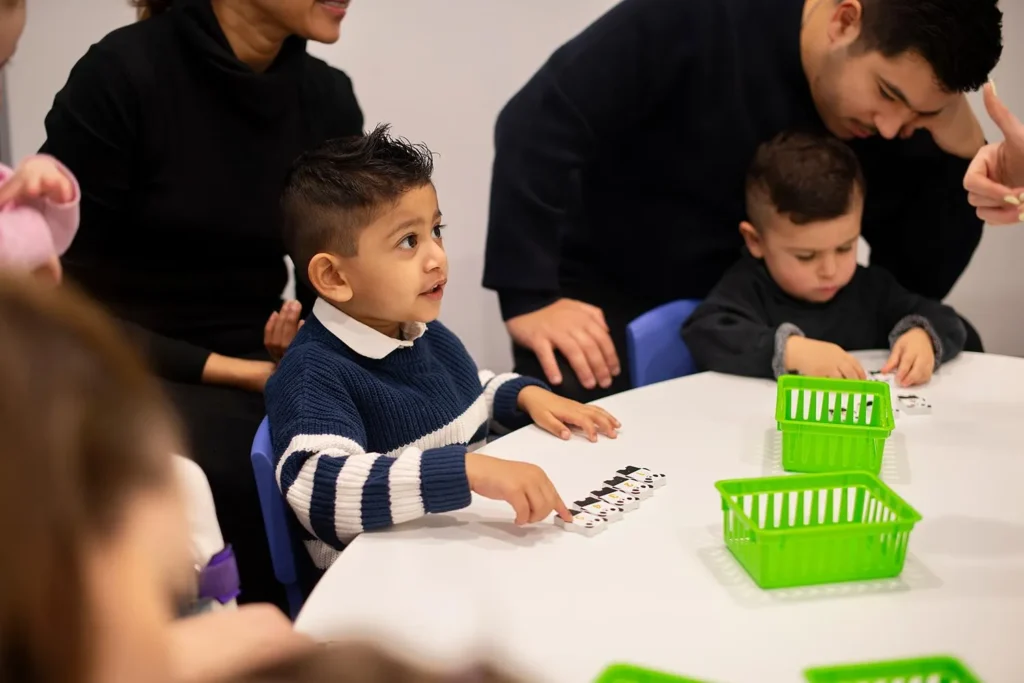
Image by Shichida Australia: A pre-schooler lining up panda math dominoes, developing fine motor skills, early math sequencing and focus.
4. Sorting and Categorising Games
Sorting games are great for building attention.
Give your child a small group of objects and ask them to sort them by colour, size, shape, texture, or type. For example, they might sort blocks into colours, toy animals into land and sea animals, or buttons into big and small groups.
This helps your child focus on one rule at a time. They have to notice details, make decisions, and stay engaged until the sorting is complete.
To make it more interesting, change the rule after one round. You might say, “Now let’s sort them by size instead.” This keeps the activity fresh while helping your child practise flexible thinking.
5. Movement-Based Activities
If your child struggles to sit still, movement can actually help improve their focus.
Try balancing games, animal walks, simple yoga poses, obstacle courses, throwing and catching, hopping games, or Simon Says. These activities support brain development in early childhood and help regulate energy levels.
For example, in an obstacle course, your child might need to crawl under a chair, jump over a cushion, balance on a line, and place a toy in a basket. This keeps them active while still requiring attention and sequencing.
Movement-based activities are especially helpful for children who find quiet table activities difficult. They help regulate energy levels and prepare the brain for more focused learning afterwards.
6. Building and Construction Play
Blocks, magnetic tiles, Lego, stacking cups, and construction toys are wonderful for focus and critical thinking.
When children build, they have to plan, balance, adjust, and try again. They also learn to stay with a task when something falls down or does not work the first time.
You can give your child small challenges such as, “Can you build the tallest tower?” “Can you make a bridge?” or “Can you copy this pattern?”
These activities build concentration, spatial awareness, problem-solving, and persistence.
7. Reading and Story Retelling
Reading is one of the best daily habits for improving attention span in children.
Start with short books that have clear pictures and simple stories. As your child’s focus improves, slowly increase the length of the stories. You can pause and ask questions like, “What do you think will happen next?” or “Can you find the dog on this page?”
This helps build listening skills, memory, language, and sustained attention.
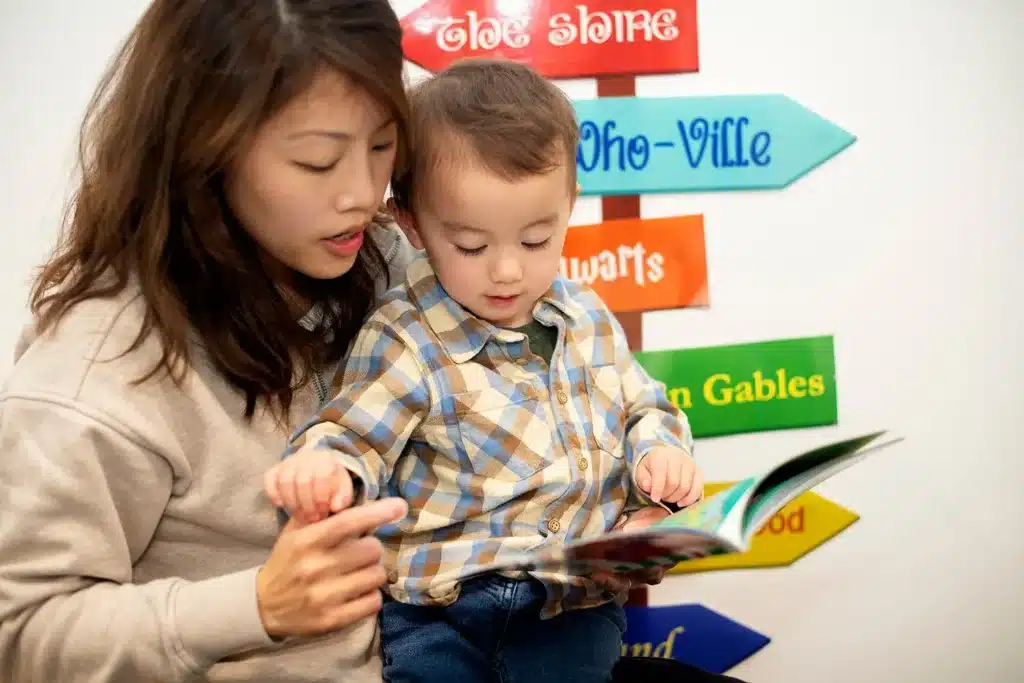
Image by Shichida Australia: A parent and child sitting together, engaged in a quiet reading or hands-on activity while they wait for their Shichida class. Moments like this reflect how to improve attention span by building focus through connection, routine, and consistent, meaningful interaction.
The Role of Environment in Supporting Focus
Your home environment plays a big role in your child’s ability to concentrate.
Minimising Distractions
If your child is easily distracted, look around their space.
Too much noise, too many toys, or frequent interruptions can make it hard for them to stay focused. Simplifying their environment can make a noticeable difference.
Creating a Focus-Friendly Space
You don’t need a perfect setup. A small, calm, and organised space is enough.
When your child associates that space with focused activities, it becomes easier for them to concentrate there.
The Importance of Calm and Emotional Security
Your child’s emotional state directly affects their attention.
When they feel safe, supported, and calm, their brain is more open to learning. Your presence and patience are powerful tools in helping them focus.

Image by Shichida Australia: Young children and their parents, spending quality time with purpose, during a fun Shichida toddler class.
Long-Term Habits That Strengthen Attention
If you’re thinking long-term, focus on building habits that support attention over time.
Reading and Storytelling
Reading with your child every day is one of the most effective ways to build focus.
Start with short stories and gradually increase the length. This helps your child practise sustained attention in a natural way. Repeating favourite books often is completely fine, children learn a lot through repetition.
Mindfulness and Simple Breathing Exercises
You can introduce simple breathing exercises even with young children.
For example, ask your child to take slow, deep breaths before starting an activity. This helps calm their mind and improve focus.
Breathe in through the nose, and out through the mouth! Here is a cute way to explain to your young child how to do it: “Smell the flowers, then blow out the candles.”

Mistakes to Avoid When Improving Attention Span
As you support your child, there are a few common mistakes to watch out for.
Expecting Long Focus Too Early
It’s easy to expect your child to sit and focus for long periods, especially if you’re thinking ahead to school.
But young children are not designed for that yet. Keep your expectations aligned with their age.
Overloading With Activities
More is not always better.
If your child has too many activities or toys, it can actually reduce their ability to focus. Keep things simple and manageable.
Relying Too Much on Screens
Screens may seem like they hold your child’s attention, but they do not build real focus skills.
Real-world, hands-on experiences are far more effective.
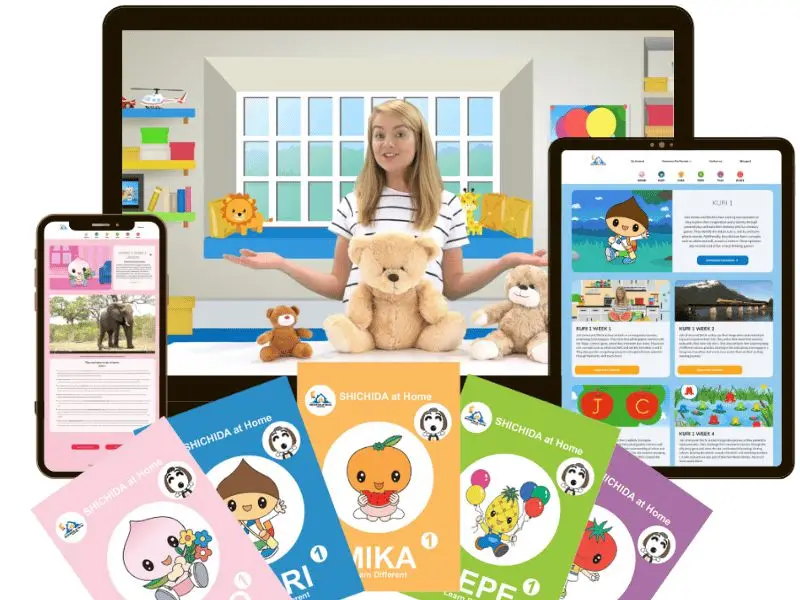
If you do want to include screens in your child’s routine, then always choose educational content that is designed for your child’s age.
SHICHIDA at Home is designed for children aged 1 to 5 years old, and is engaging and safe for kids, offering flashcards, songs and interactive content hosted by a Shichida teacher.
When to Seek Professional Support
In most cases, your child’s attention will improve with time and support. However, there are situations where you may want to seek guidance.
You may want to look more closely if your child shows persistent inattention, extreme impulsivity, or difficulty following simple instructions across different settings.
If you’re concerned, start with your pediatrician. You can also speak with a child psychologist or early childhood educator who can provide more specific guidance.
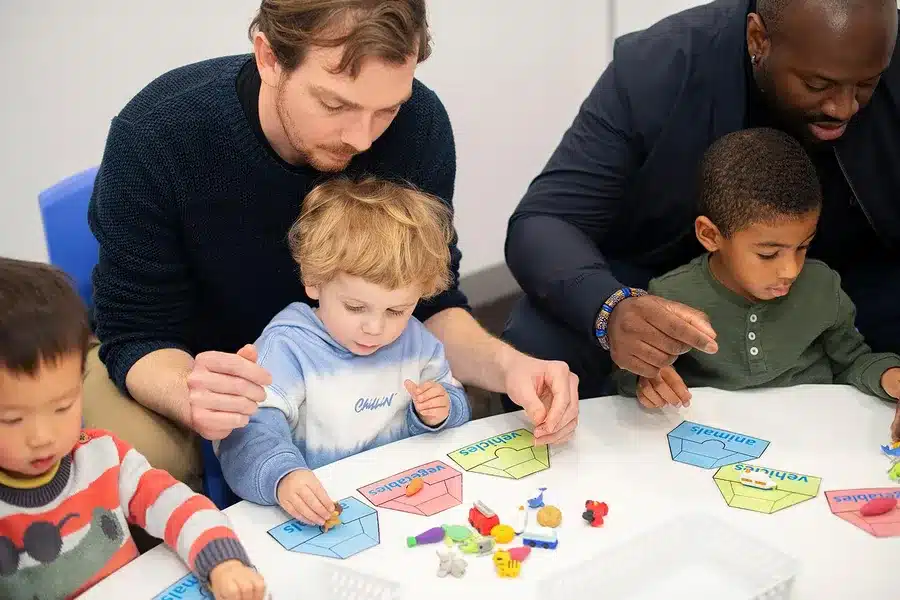
Image by Shichida Australia: Engaging sorting games like this teach several skills at once, including fine motor skills, critical thinking and attention span.
Summary: Building Strong Attention Skills in Early Childhood
As a parent, it’s natural to want your child to focus, learn, and succeed. The good news is that attention is something you can build together over time.
By creating simple routines, offering engaging activities, and supporting your child’s environment and wellbeing, you are already helping them develop strong focus skills.
Start small. Stay consistent. Be patient with the process.
Every moment your child spends engaged, curious, and learning is helping them build the foundation for lifelong attention and learning.

Image by Shichida Australia: This pre-schooler is finishing a task, while her mum encourages her, during a Shichida kinder class.
Improve Your Child’s Attention and Focus With Shichida
Shichida Australia uses a research-based approach to support attention, memory, and overall brain development through fun, structured activities.
Our fun learn-through-play classes will help you discover simple, effective ways to guide your child’s focus at home while creating meaningful learning experiences together. Each session is designed to work with your child’s natural development, nurturing early development with guidance.
Take the next step in supporting your child’s growth. Book a trial class today and experience how the right activities can make focus feel natural and enjoyable.
FAQs: How to Improve Attention Span in Children
A helpful Shichida guide is to plan activities for roughly your child’s age plus one minute, especially for younger children. For example, a 3-year-old may be able to focus well on one activity for about four minutes before needing a change. This is why short, varied activities often work better than expecting young children to sit still and concentrate for long periods.
The best activities are short, hands-on, and engaging. Matching games, puzzles, memory games, building blocks, songs, movement games, and pretend play can all help improve focus. Shichida Australia uses this kind of variety in class to keep children curious, engaged, and ready for the next challenge.
Young children are naturally curious and active, so short activities often work better than expecting them to sit still for long periods. At Shichida Australia, classes use a fast-paced rotation of activities to keep children engaged while exposing them to memory games, problem-solving, movement, language, numeracy, and creative thinking.
Yes, especially fast-paced or highly stimulating content. When children become used to quick visual changes and constant entertainment, slower real-world activities like reading, puzzles, or problem-solving may feel harder to focus on. Hands-on activities are usually better for building real attention skills.
Start with activities that match your child’s age and interest. Keep them short, give simple instructions, and gently move to a new activity when their focus begins to fade. This is similar to the Shichida approach, where children practise focus through quick, varied, hands-on activities rather than pressure or repetition.
Yes. Short attention spans are normal in toddlers and preschoolers. Young children are still learning how to control their attention, listen, wait, and complete tasks. Focus improves gradually through repetition, routine, play, and positive adult guidance.
Balanced meals with protein, healthy fats, whole grains, fruit, and vegetables can support steady energy and concentration. Sleep, hydration, movement, and a calm environment are just as important for helping children stay focused.
There is no exact timeline, because attention develops gradually. With consistent routines, short focus activities, active play, and reduced overstimulation, many parents may start noticing small improvements over a few weeks or months.
It may be worth seeking professional advice if your child consistently struggles to follow simple instructions, shows extreme impulsivity, or cannot stay engaged even in activities they enjoy. A paediatrician, child psychologist, or early childhood educator can help you understand whether the behaviour is part of normal development or needs extra support.
Shichida classes are designed to support attention, memory, listening, problem-solving, and learning confidence through short, varied, age-appropriate activities. Rather than expecting young children to focus on one task for too long, each class moves through a range of engaging activities to help children practise concentration in a positive and enjoyable way.