Key Points
- Confidence in early learning supports your child’s cognitive, social, and emotional development.
- Self-esteem building activities should be age-appropriate, gradually increasing in complexity as your child grows.
- Include a mix of social, emotional, physical, and cognitive activities to build well-rounded self-esteem.
- Integrate confidence-building into daily routines at home and in school for consistent growth.
- Avoid overpraising, comparing, or overloading your child, which can undermine genuine confidence.
- Focus on effort, persistence, and celebrating small achievements, not just the outcomes.
As a parent it is important to remember that confidence isn’t something children are born with; it develops through everyday experiences, encouragement, and opportunities to try, fail, and try again. By actively supporting your child’s self-esteem through confidence building activities for kids, you give them the tools to thrive, feel capable, and engage positively with others.
This guide will show you practical, research-backed strategies to help your child grow into a confident, resilient, and independent learner.
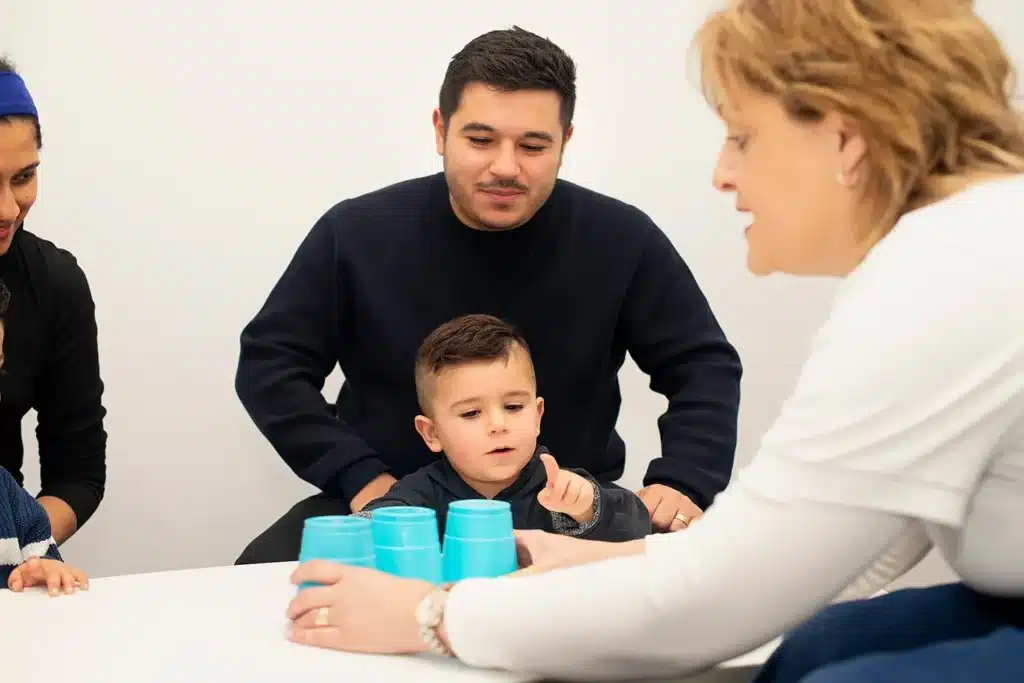
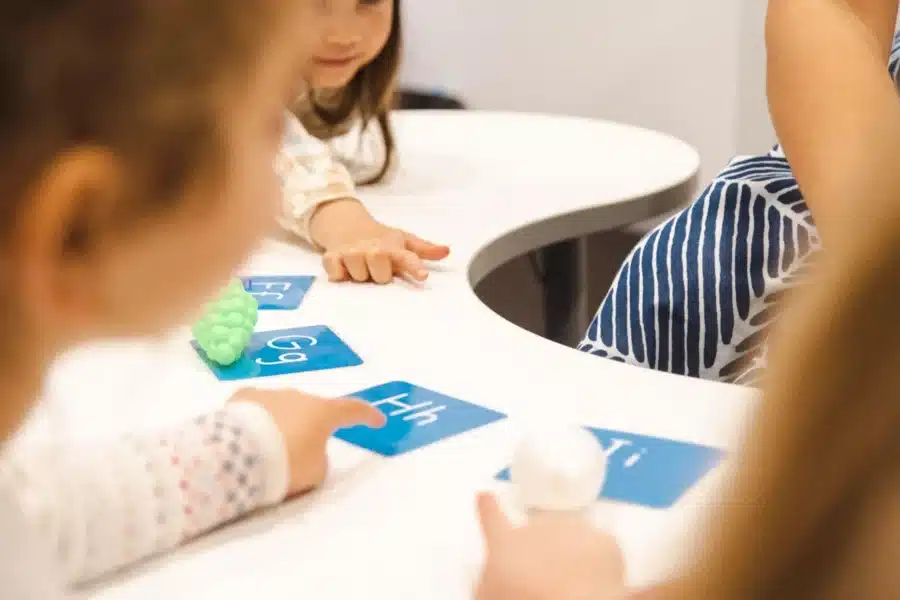
Image by Shichida Australia: A preschooler playing a decision-making game during a Shichida play-and-learn class. Practising decision-making builds confidence, supports problem-solving, and leads to strong outcomes for young children.
Why Confidence Matters in Early Learning
When your child believes in themselves, everything changes. Confident children are more willing to try new things, are more resilient to setbacks, ask questions, and stick with tasks that feel challenging. According to the Child Mind Institute, supporting self-esteem early has lasting benefits boosting motivation, resilience, and mental health as they grow.
Think about your child in a social setting: when they feel capable, they engage with peers, try their ideas, and bounce back from setbacks. Confidence also fuels curiosity, problem-solving, and independence. By helping your child feel secure in their abilities now, you’re laying a foundation for lifelong learning and social success.
Self-Confidence and Social Development
Have you noticed how children who feel confident are usually the ones initiating conversations or joining group games? That’s no accident. Confidence helps your child connect with others, share ideas, and work as part of a team. These early social experiences build empathy, cooperation, and leadership skills that will benefit them well beyond the playground.
Self-Confidence and Cognitive Growth
When your child believes they can figure things out, they’re more likely to explore, ask questions, and keep going when something feels tricky. This kind of curiosity supports learning across reading, maths, and problem-solving. By encouraging safe risk-taking – whether it’s making decisions or trying new ideas – and celebrating their effort, you show your child that giving things a go, even when it’s hard, is something to be proud of.
Parent tip: Sensory play is a great way to encourage safe risk-taking. As children explore different textures, materials, and actions, they make decisions, test limits, and learn what happens when they try something new.
Sensory play can help nurture resilience and development. Download a free sensory play guide here.
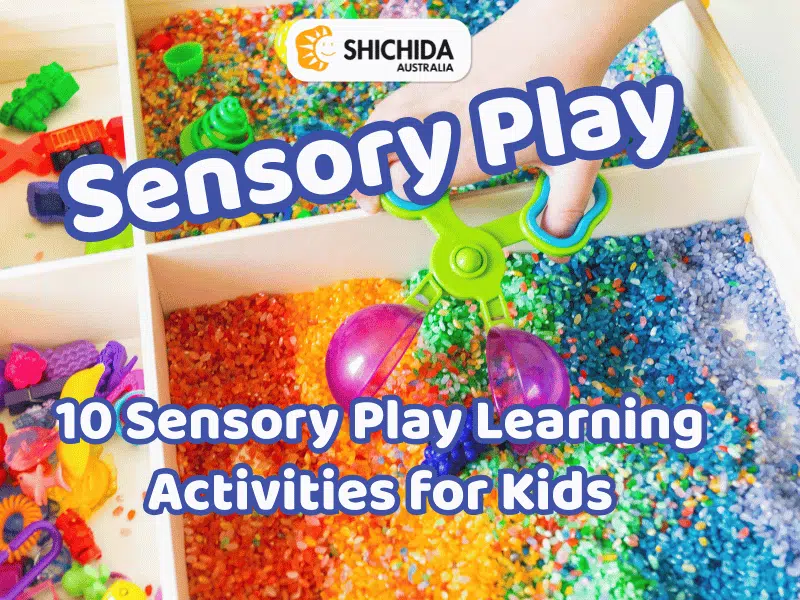
If your child enjoys these types of activities, a Shichida trial class is a great way to see how structured play can support coordination, focus, memory and early learning confidence.
Book a trial class or contact us to find your nearest centre.
Types of Confidence-Building Activities
You don’t need fancy tools or hours of prep to help your child feel capable. Confidence building activities for kids can be broken into four simple categories: social, emotional, physical, and cognitive. These can all fit naturally into your daily routines, whether at home, in early learning environments, or during playtime.
Social Confidence Activities
Helping your child engage with others can be as simple as:
- Group games: Team-based games teach cooperation and taking turns.
- Sharing exercises: Practice sharing toys or ideas to nurture empathy.
- Cooperative tasks: Small projects where everyone has a role strengthen teamwork.
- Show and tell: Let your child share something special with family or friends – it gives them a safe way to express themselves.
These activities show your child that their contributions matter, boosting their sense of belonging.
Emotional Confidence Activities
You can help your child understand and express their feelings through:
- Journaling or reflection prompts: For younger kids, drawings or simple words work wonders.
- Celebrating achievements: Recognise every small success, not just big wins.
- Gratitude exercises: Encouraging your child to notice what they appreciate builds a positive mindset.
When your child learns to identify emotions and celebrate themselves, they develop resilience and self-belief.
Physical Confidence Activities
Movement is a natural way to feel capable and strong. Try:
- Obstacle courses: Build coordination, problem-solving, and persistence.
- Dance sessions: Encourage self-expression, self-esteem and body awareness.
- Team sports or movement games: These teach collaboration and the confidence to try new physical challenges.
Physical mastery helps your child trust their abilities and take on new experiences without fear.
Cognitive Confidence Activities
You can strengthen your child’s belief in their thinking abilities through:
- Problem-solving tasks: Puzzles, patterns, and sequencing games.
- Memory games: Boost attention, recall, and mental confidence.
- Creative projects: Art, building blocks, or storytelling encourages experimentation and pride in accomplishments.
Every time your child succeeds or figures something out, their confidence grows.
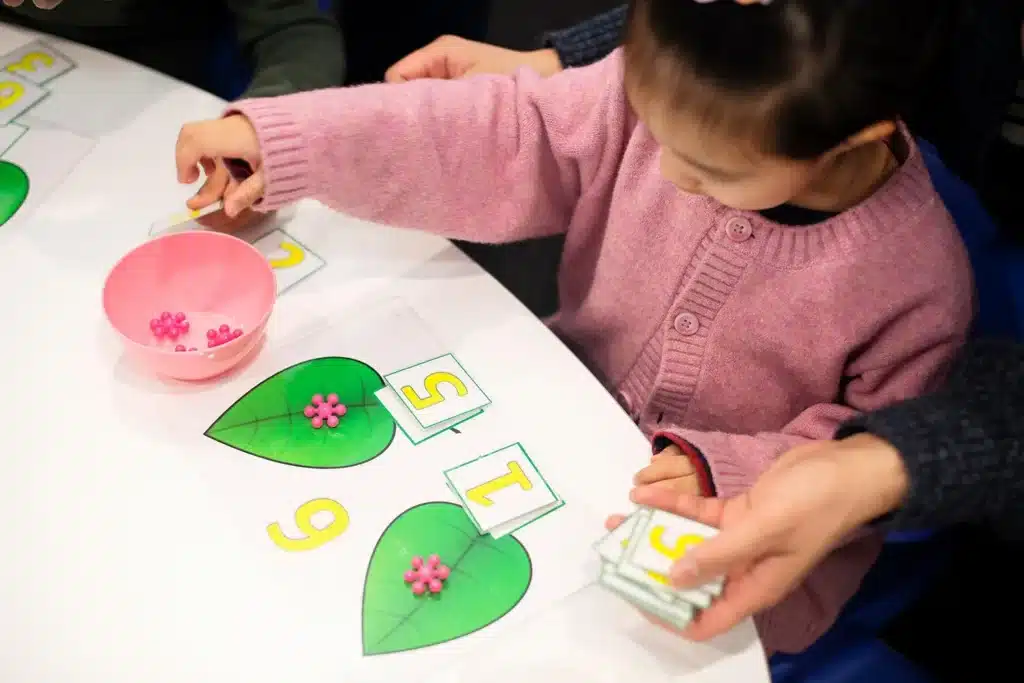
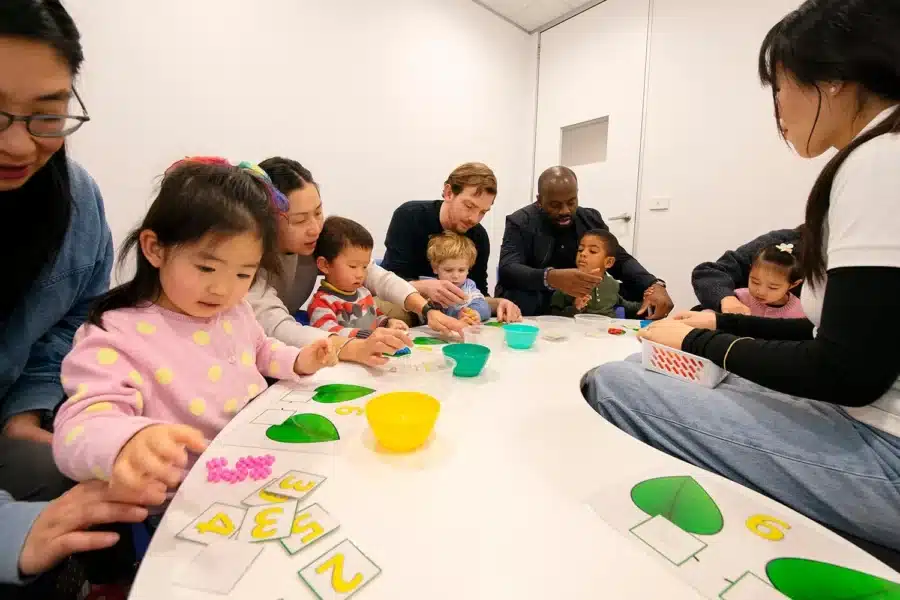
Image by Shichida Australia: A parent supporting their child through a number matching task. Hands-on confidence building activities for kids strengthen problem-solving, persistence, and a sense of accomplishment.
Age-Appropriate Strategies for Early Learners
Not every activity works for every age. Adjusting complexity and the level of guidance ensures your child succeeds without frustration.
Toddlers (1-3 Years)
- Offer simple choices, like picking a snack or selecting a book.
- Use positive reinforcement for small achievements.
- Encourage independent exploration in safe spaces.
- Celebrate minor milestones, they matter more than you think.
Preschoolers (3-5 Years)
- Encourage group play and collaborative problem-solving.
- Use storytelling and role-play to help them express ideas and emotions.
- Support decision-making, like setting up games or choosing materials for projects.
Early Primary School (5-6 Years)
- Offer leadership opportunities, like guiding peers or presenting a project.
- Introduce goal-setting and tracking for small challenges.
- Encourage structured persistence exercises, helping your child stick with tasks and build resilience.
This is what Shichida specialises in – helping young children practise problem-solving through maths and language play, while building a love of learning, a healthy sense of confidence, and resilience, all through play. Try a Shichida trial class and see what it’s about.

Image by Shichida Australia: Teachers use confidence building activities for kids that keep them engaged and excited to learn, like songs, flashcards, and hands-on games.
Integrating Confidence-Building into Daily Routines
Confidence can grow in small, everyday moments from morning routines to playtime.
Morning Routines
Let your child take some responsibility for dressing themselves, organising their belongings, and following simple routines. Completing these tasks first thing in the morning gives them a sense of accomplishment and independence. Ensure to keep their responsibilities age-appropriate.
Learning and Playtime
Include small challenges and cooperative games. For instance, solving a puzzle together or taking turns leading a game nurtures both cognitive and social confidence. Simple boardgames are a great way to practise turn taking and following game rules.
Reflection and Celebration
End the day with a moment to reflect and praise effort. Ask what they enjoyed or learned, and highlight persistence and progress. Even acknowledging the tiniest steps develops long-lasting self-esteem.
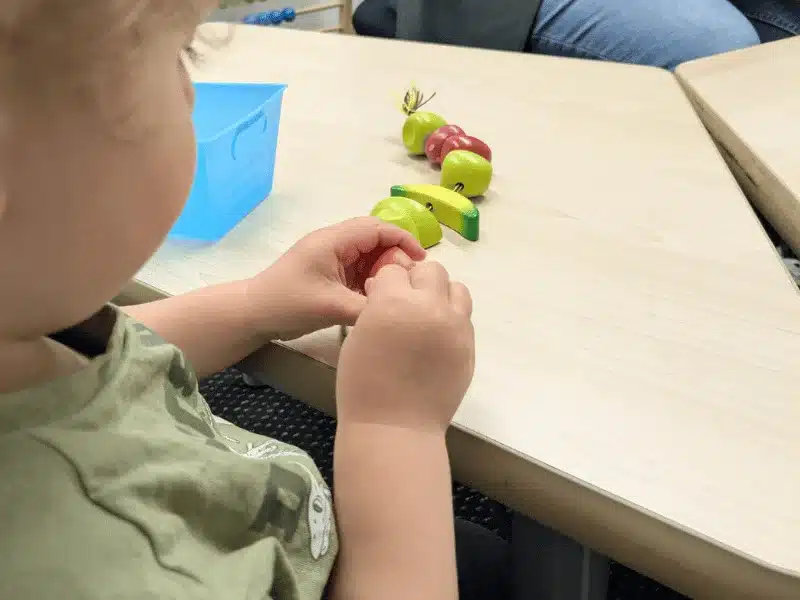
Image by Shichida Australia: A toddler practising stringing beads during a Shichida class. The same activity is repeated over time, but the challenge increases – strings become softer and beads get smaller. What starts as a simple task with firm string and large beads gradually builds into a more advanced skill, supporting steady progress through play.
Common Mistakes to Avoid When Building Confidence
It’s easy to unintentionally undermine your child’s self-belief. Avoid these pitfalls:
Overpraising or Inflated Rewards
Constantly praising or giving rewards for every little thing can reduce motivation. Encourage your child to value effort and persistence, not just external validation.
Negative Comparisons
Never compare your child to siblings or peers. Focus on individual growth and personal milestones.
Pushing Too Hard
Setting unrealistic expectations can create anxiety. Offer challenges that are achievable and gradually increase difficulty as your child grows.

Image by Shichida Australia: Parents are a core pillar of the Shichida philosophy. By being present during play-and-learn sessions, children’s confidence grows as they receive encouragement and feedback in the moment – turning quality time together into meaningful, purposeful learning.
Measuring Progress and Encouraging Persistence
You can track your child’s confidence by observing behaviour and celebrating effort.
Observational Indicators
Notice when your child volunteers for tasks, initiates play, tries new activities, or shares ideas or observations. These are strong signs that confidence is developing.
Encouraging Effort Over Outcome
Focus praise on how your child tries, experiments, and solves problems, rather than only on results. Statements like “I love how you kept going” teach them that persistence matters more than perfection.
Combining Confidence Building Activities with Early Learning Curriculum
You can weave confidence-building into reading, math, and social-emotional learning. When children feel capable, they participate actively and stay curious.
Literacy Integration
- Storytelling and role-play help your child express themselves and build verbal confidence.
- Reading aloud or performing small skits nurtures courage in front of others.
Numeracy Integration
- Problem-solving games and hands-on math tasks teach decision-making while strengthening cognitive confidence.
- Group challenges like building patterns or counting games combine learning with social engagement.
Social-Emotional Learning
- Peer collaboration, empathy exercises, and self-regulation tasks reinforce emotional resilience and self-belief.
- Encourage reflection on successes, emotions, and teamwork achievements to solidify confidence.
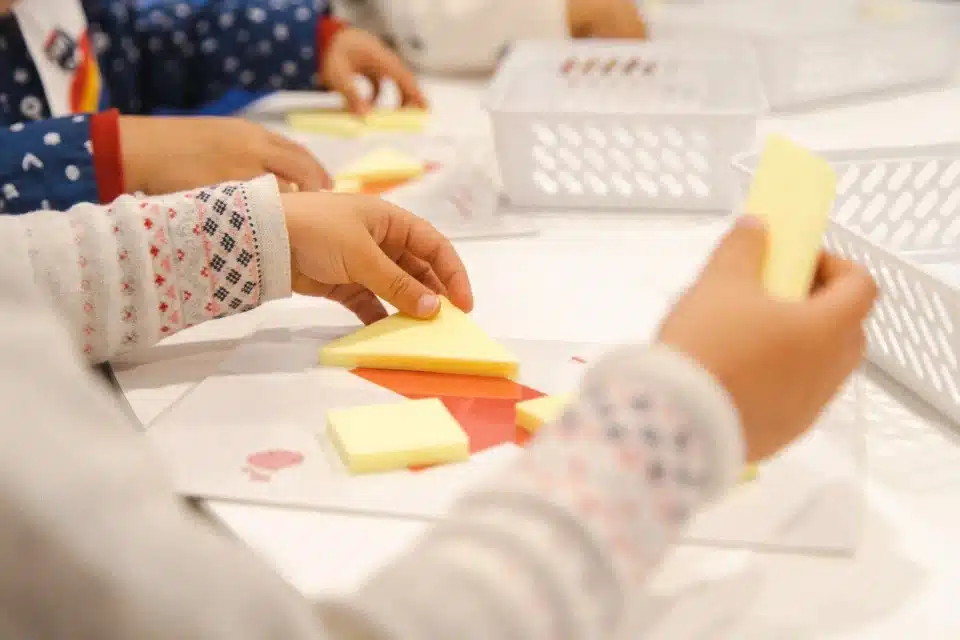
Image by Shichida Australia: preschoolers solving a fun tangram puzzle challenge during a shichida class.
Build Your Child’s Confidence Through Play with Shichida
Shichida Australia offers programs that combine guided play, confidence building activities for kids, creative challenges, and early learning strategies to nurture self-esteem, resilience, and social skills. Your child will gain the confidence to explore, solve problems, and express themselves with pride. Give them the tools to thrive both at home and in the classroom. Book a trial class now and watch their confidence grow!
FAQ’s: Confidence Building Activities for Kids
Focus on a mix of social, emotional, physical, and cognitive activities. Examples include cooperative games, storytelling, journaling, puzzles, and team challenges. These activities help your child feel capable while developing key skills.
Offer simple choices, celebrate small wins, encourage independent exploration, and provide consistent positive feedback. These small steps show your toddler that their decisions and efforts matter.
Both are important. Group activities help your child develop social skills and collaboration, while individual tasks build independence and a sense of personal mastery. A balance of both works best.
Self-esteem is your child’s overall sense of self-worth. Confidence is the belief in their ability to perform specific tasks. Both grow together but can be nurtured in different ways.
Focus on effort, persistence, and problem-solving instead of only results. This helps your child develop intrinsic motivation and long-lasting confidence.
Yes. Activities that encourage teamwork, empathy, and sharing not only boost self-confidence but also strengthen social competence.
Consistency matters more than frequency. Short, daily opportunities embedded in routines are more effective than occasional long sessions.
Model confident behaviour, provide age-appropriate challenges, encourage reflection on efforts, and celebrate progress regularly. These habits make confidence a natural part of daily life.