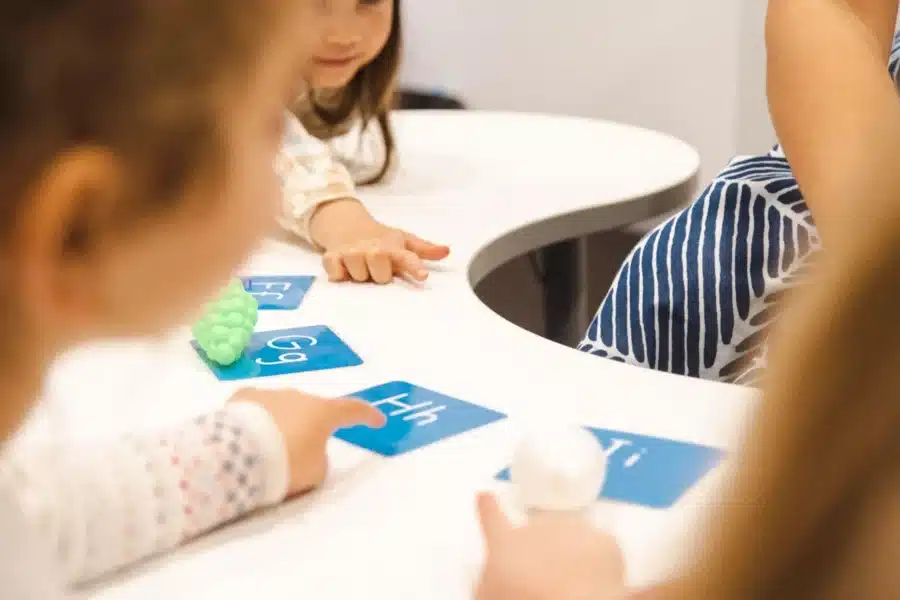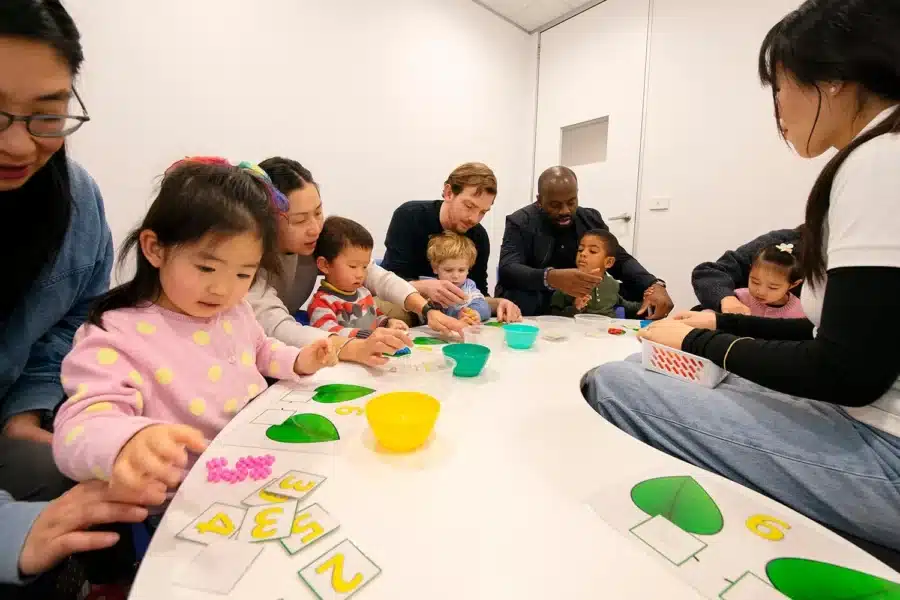
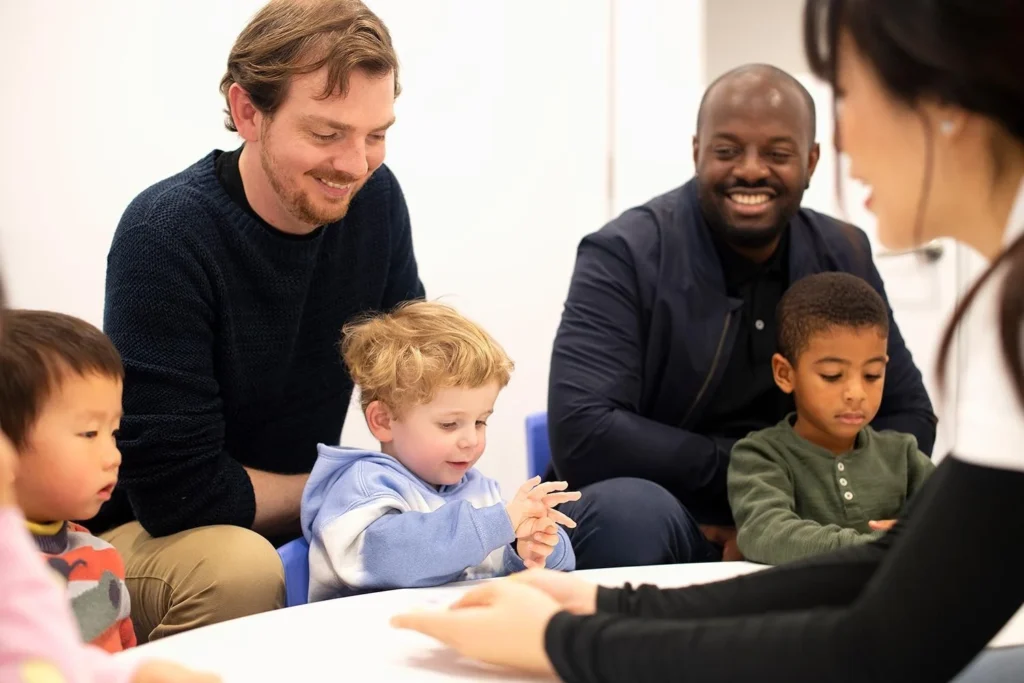
Key Points: What is Play-Based Learning?
- Play-based learning is an educational approach where children learn through exploration, imagination, and hands-on activities.
- It supports cognitive, social, emotional, and physical development.
- Educators intentionally design environments to guide learning through play.
- The approach encourages creativity, curiosity, collaboration, and problem-solving.
- Play-based learning is widely used in modern early childhood education frameworks.
Early childhood is a time of curiosity, imagination, and discovery. One of the most powerful ways young children learn is through play. But what exactly is play-based learning, and why is it so central to early childhood education?
This guide explores the meaning, principles, benefits, and practical examples of play-based learning, giving parents actionable insights to support their children’s development both at school and at home.
Sensory play is one of the easiest ways to introduce play-based learning at home, helping children develop curiosity, concentration, and problem-solving skills while learning through hands-on discovery.
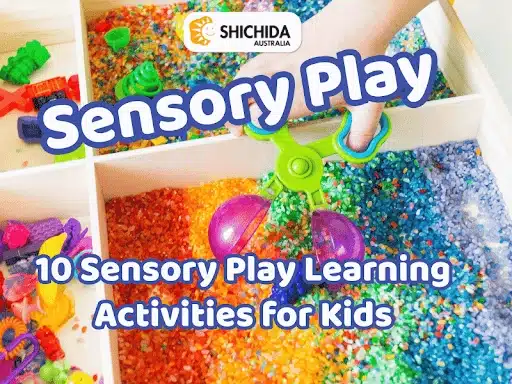
To help you get started, you can download our free Sensory Play Guide, filled with simple activity ideas for babies, toddlers, and preschoolers.
What Is Play-Based Learning?
Play-based learning is an educational approach where children learn through exploration, imagination, experimentation, and hands-on interaction with materials, peers, and adults. Unlike traditional learning, which often relies on direct instruction, play-based learning allows children to engage with concepts in a natural, engaging, and meaningful way.
Although play may appear spontaneous, educators intentionally design environments and experiences to guide children toward learning goals. For example, a preschool classroom might include building blocks, art materials, and sensory stations to foster problem-solving, creativity, communication, and collaboration.
Play-based learning is recognised globally and is a foundational element in frameworks such as the Early Years Learning Framework (EYLF). Through guided exploration and hands-on activities, children develop critical skills that form the foundation for lifelong learning.
It is widely used in early childhood education programs around the world.
Want to see how your child responds to this? The Shichida Method specialises in learning through play. Try a class.
Definition of Play-Based Learning
Play-based learning is a child-centred approach in which children actively construct knowledge through curiosity, discovery, experimentation, and play. Learning occurs as children interact with materials, peers, and their environment, rather than simply receiving information from a teacher.
Why Play Is Central to Early Childhood Education
Play is a natural way for children to explore ideas and understand the world. Through play, children experiment, take risks, test solutions, and develop new concepts, all while building confidence, social skills, and emotional awareness.
Examples of Play-Based Learning Activities
Some popular examples of play-based learning include:
- block building
- pretend shop play
- sensory bins
- puzzles
- music and movement
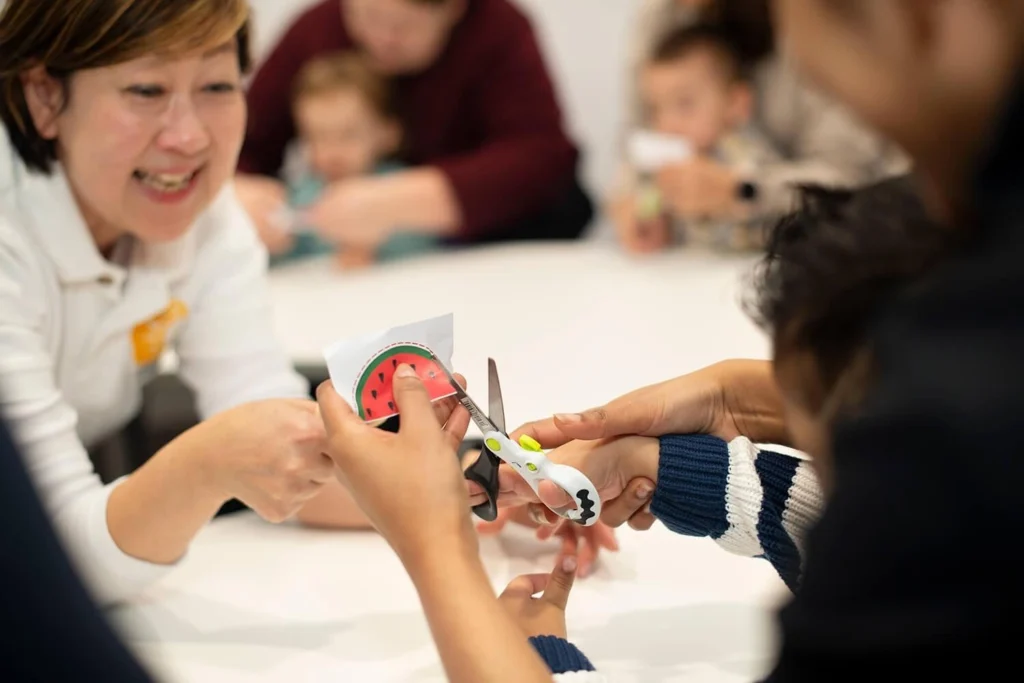
Image by Shichida Australia: A child practises cutting a rounded edge, during a guided play activity, strengthening fine motor skills, coordination, and concentration through hands-on learning.
What Is Guided Play-Based Learning?
Guided play-based learning is a balanced approach that combines child-led exploration with intentional adult guidance. While children are free to explore materials, ideas, and activities, educators or parents gently shape the experience to support specific learning goals.
Unlike completely free play, guided play introduces purposeful interaction. Adults may ask questions, introduce new materials, or suggest challenges that extend a child’s thinking while still allowing the child to remain actively engaged in the activity.
For example, during a building activity, a teacher might ask:
- “How many blocks can you count in your tower?”
- “Can you copy my building pattern?”
- “Can you build a pattern with these colours?”
These prompts encourage children to think critically, experiment, and problem-solve while still enjoying the natural curiosity of play.
Guided play is widely recognised in early childhood education because it combines the engagement of play with the benefits of intentional teaching. Research suggests that this balanced approach helps children develop deeper understanding, stronger language skills, and more advanced problem-solving abilities.
Many high-quality early learning programs combine play-based exploration with guided teaching to help children develop memory, focus, language, and problem-solving skills.
Why Play-Based Learning Is Important
Play-based learning is not just fun; it is essential for holistic development. It supports cognitive, social, emotional, and physical growth, preparing children for school and life. By engaging in play, children develop critical thinking, problem-solving, communication, fine motor skills, and emotional regulation.
Key developmental areas supported by play include:
- Cognitive development
- Social and emotional development
- Physical development
- Language and communication skills
Cognitive Development
Through play, children enhance problem-solving abilities, critical thinking, memory, and executive function skills. Hands-on exploration allows them to connect ideas, test hypotheses, and develop reasoning abilities that form the foundation for academic learning.
Social and Emotional Development
Playing with peers teaches empathy, cooperation, negotiation, and conflict resolution. Social play also nurtures confidence, emotional regulation, and a sense of belonging.
Physical Development
Play develops both gross and fine motor skills. Activities like climbing, drawing, building, or manipulating objects help children refine coordination, balance, and dexterity.
Key Principles of Play-Based Learning
High-quality play-based learning combines child-led exploration with intentional educator guidance. Effective environments provide stimulating, safe, and meaningful experiences that encourage discovery, creativity, and problem-solving.
Key principles include:
- Child-initiated exploration
- Educator facilitation
- Meaningful real-world experiences
- Safe, stimulating environments
- Learning through discovery
Intentional Teaching
Educators play an active role in guiding play by asking questions, introducing materials, and extending learning opportunities. This intentional support helps children reach their developmental goals.
Learning Through Real Experiences
Hands-on experiences, like building, baking, role-playing, or storytelling, allow children to learn concepts through doing, rather than just observing.
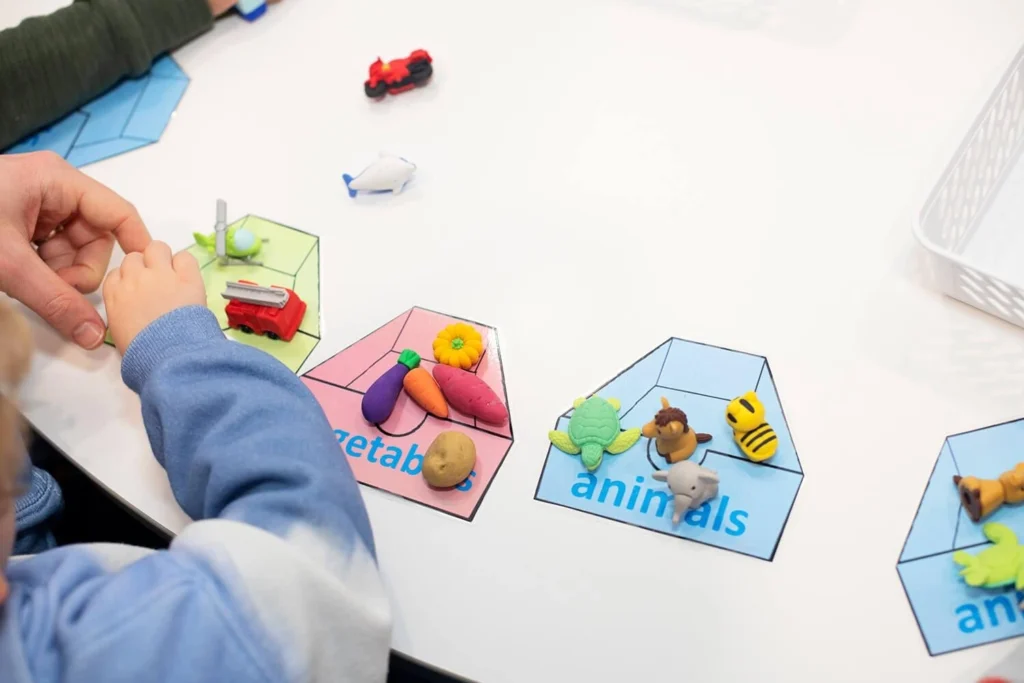
Image by Shichida Australia: A child sorts miniature objects into categories during a guided play activity, strengthening language development, early classification skills, and cognitive thinking through hands-on learning.
What Play-Based Learning Looks Like in Practice
In early childhood classrooms, play-based learning is visible in thoughtfully arranged environments. Teachers provide open-ended materials, exploration stations, and opportunities for social interaction. Children move freely between activities, engage with peers, and explore concepts through play.
High-quality early learning programs combine play-based exploration with intentional teaching to help children develop memory, focus, creativity, and problem-solving skills.
Classroom Play-Based Activities
Some common examples include:
- Building with blocks or Lego
- Imaginative role-play and dress-up
- Puzzles and problem-solving games
- Storytelling and dramatic play
- Music, movement, and dance
- Sensory exploration with sand, water, or textures
Activities such as puzzles, drawing, and building blocks also help strengthen fine motor skills in children.
Everyday Learning Through Play
Even routine activities like cooking, gardening, shopping games, or storytelling can become rich learning experiences. Children practice counting, language, motor skills, and problem-solving in playful, meaningful contexts.
Types of Play in Play-Based Learning
Different types of play support different areas of development:
Imaginative or Dramatic Play
Pretend games, storytelling, and role-playing encourage creativity, language, and social understanding.
Constructive Play
Building with blocks, Lego, or recycled materials strengthens spatial reasoning, problem-solving, and fine motor skills.
Physical Play
Movement games, climbing, running, and jumping improve gross motor skills, coordination, and physical fitness.
Sensory Play
Activities involving textures, sounds, or tactile materials stimulate senses and neural development, supporting cognitive and sensory integration.
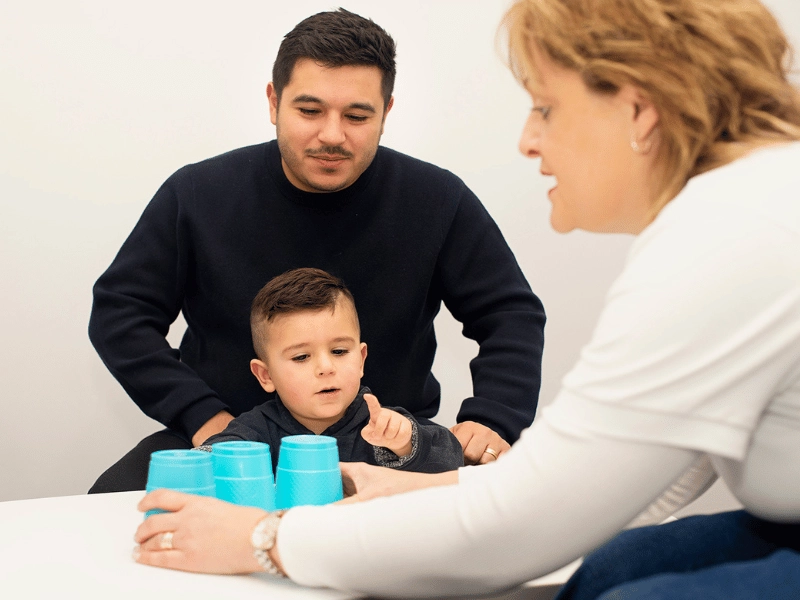
Image by Shichida Australia: A Shichida teacher guides a preschooler through an intuition-based game, offering gentle encouragement as the child practises quick decision-making through play.
The Role of Teachers and Educators in Play-Based Learning
Educators are essential in guiding, observing, and extending learning through play. They create environments that encourage curiosity while ensuring children develop essential skills. Teachers carefully design play experiences to meet developmental milestones and learning goals.
Observing and Supporting Children’s Interests
Educators watch children’s play patterns to identify interests and learning opportunities. Observations guide how teachers introduce new materials, activities, or challenges.
Asking Questions That Extend Learning
Teachers use open-ended questions to encourage problem-solving, critical thinking, and creativity. For example, asking, “What else could happen if we build this tower taller?” prompts exploration and reasoning.
Benefits of Play-Based Learning for Children
Play-based learning offers a wide range of long-term benefits, supporting intellectual, social, and emotional growth.
Builds Confidence and Independence
Children gain confidence as they explore ideas, make choices, and test solutions independently.
Encourages Creativity and Curiosity
Open-ended play nurtures imagination, innovation, and a natural curiosity to explore and learn.
Develops Lifelong Learning Skills
Through play, children develop resilience, adaptability, and a love for learning that supports academic and personal success.
Play-Based Learning vs Traditional Learning
While traditional learning often relies on teacher-directed instruction, play-based learning focuses on child-led exploration and hands-on experiences.
| Feature | Play-Based Learning | Traditional Learning |
| Teaching Style | Child-centered, guided exploration | Teacher-centered, direct instruction |
| Engagement | High engagement through play | Often passive or structured learning |
| Classroom Setup | Open-ended materials, activity stations | Desks in rows, structured lessons |
| Learning Outcomes | Critical thinking, creativity, social-emotional skills | Academic knowledge and memorisation |
Child-Centered vs Teacher-Centered Learning
Play-based learning prioritises children’s interests and curiosity, giving them agency over their learning. Traditional approaches tend to follow structured lessons and predetermined curricula.
Exploration vs Structured Instruction
Children in play-based environments experiment and learn through discovery. Traditional classrooms often rely on guided instruction, worksheets, and repetition.
Guided Play
Guided play combines child-led exploration with intentional teaching. Children remain actively engaged in play while educators or parents gently guide the experience through questions, prompts, or new materials. This approach allows play to remain enjoyable and creative while also supporting meaningful learning outcomes such as problem-solving, language development, and critical thinking.
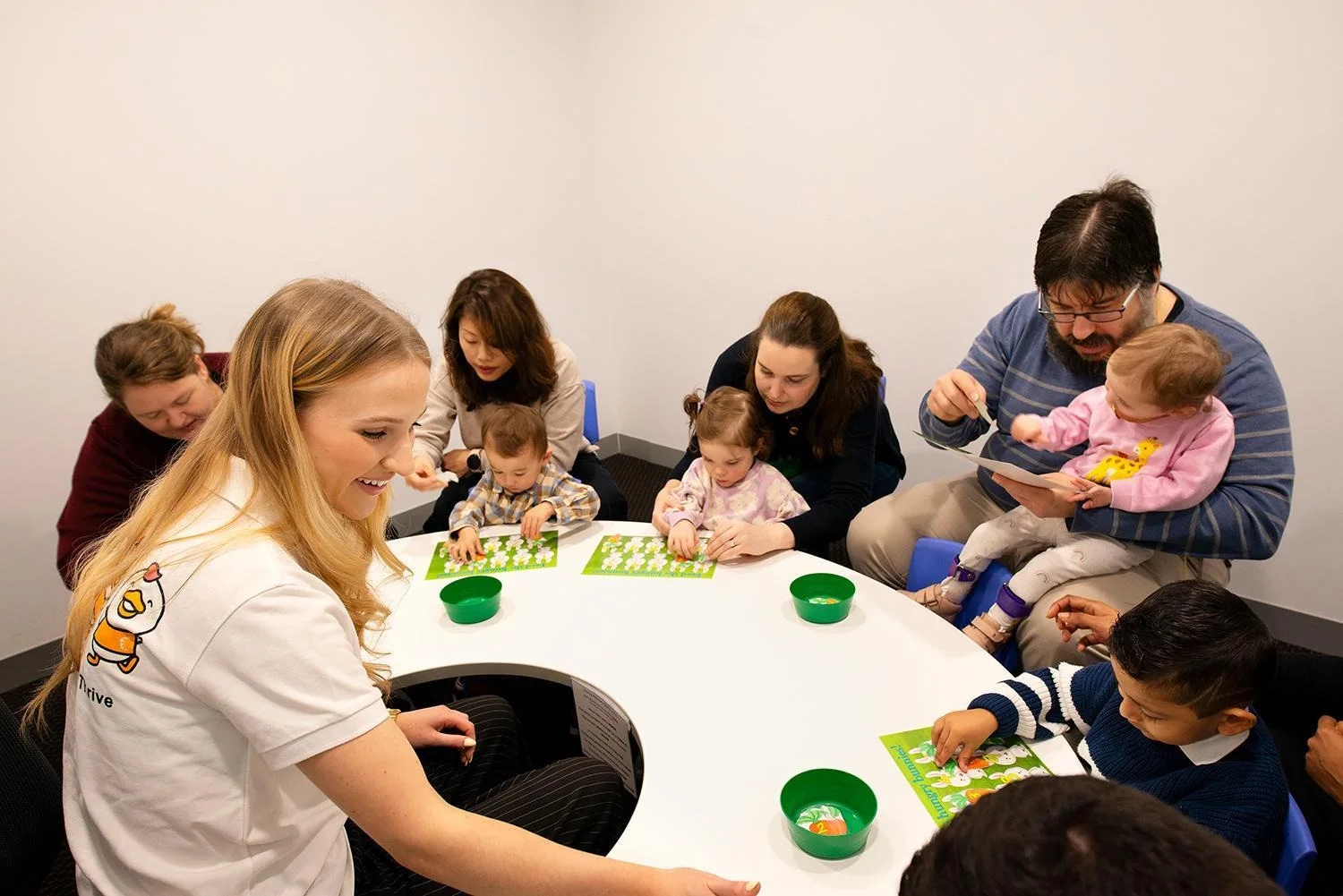
Photo from Shichida Australia: Engaging activities can become meaningful learning experiences when children are encouraged to explore, imagine, and experiment.
How Parents Can Encourage Play-Based Learning at Home
Parents can extend the benefits of play-based learning beyond the classroom by providing environments and activities that nurture curiosity and creativity.
Create a Play-Friendly Environment
Provide open-ended materials like blocks, art supplies, and sensory toys. Spaces should allow children to explore safely and freely.
Encourage Imagination and Creativity
Support pretend play, storytelling, and creative projects. Celebrate curiosity and experimentation, even when outcomes are unpredictable.
Balance Guided and Free Play
Offer a mix of structured activities and unstructured play, ensuring children experience both learning goals and independent discovery.
Try a Guided Play-Based Learning Program!
If you’re looking for ways to support your child’s curiosity, creativity, and confidence, play-based learning environments can make a powerful difference.
At Shichida Australia, children explore, experiment, and develop essential skills in a nurturing, guided environment. Give your child the opportunity to learn through hands-on, engaging activities that build a strong foundation for lifelong learning. Experience the benefits of child-led exploration and expert guidance firsthand. Book a trial class today and see your child thrive through play!
FAQ: What is Play-Based Learning
Yes. Many early childhood programs use play-based learning as part of their teaching approach. For example, the Shichida Method combines hands-on activities, games, and guided learning experiences to help children develop cognitive, social, and emotional skills while learning in an engaging and playful environment.
Play-based learning encourages children to learn through exploration, creativity, and hands-on activities. Traditional learning often relies more on teacher-led instruction, structured lessons, and direct teaching of academic content.
Play-based learning is a child-centred approach where children learn through exploration, imagination, and hands-on interaction with materials, people, and their environment.
Play-based learning supports cognitive, social, emotional, and physical development. It helps children build problem-solving skills, confidence, creativity, and curiosity while developing a positive attitude toward learning.
Common play-based learning activities include building with blocks, imaginative role-play, puzzles, music and movement, sensory play, storytelling, and outdoor exploration.
Play-based learning strengthens many areas of development, including language skills, problem-solving, creativity, social interaction, motor skills, and emotional regulation.
No. Free play is unstructured and led entirely by the child, while play-based learning includes intentional guidance from educators or parents to support specific learning goals.
Guided play combines child-led exploration with gentle adult guidance. Educators or parents may ask questions, introduce materials, or suggest challenges that extend learning while the child remains actively engaged in play.
Teachers observe children’s interests, create engaging environments, introduce materials, ask open-ended questions, and guide play experiences to support learning and development.
Play-based learning is most common in early childhood education, particularly for children aged 2–6 years. However, playful learning approaches can support creativity and problem-solving at many ages.
Parents can support play-based learning by providing open-ended materials such as blocks, puzzles, art supplies, and sensory activities, while encouraging imagination, exploration, and creative play.