Dealing with stuck zips or buttons every morning is a bit of a headache, isn’t it? Using fine motor activities for preschoolers makes these tasks much easier and builds real independence. It’s all about strengthening those tiny hand muscles for better pencil control later. We’ve got some easy games to help your little one get school-ready through simple play.
Key Takeaways
- Small muscles have a big impact. Stronger hands lead to better pencil control and easier self-care.
- Consistency is everything. You don’t need fancy toys. Daily items like tongs and stickers work wonders.
- Watch for the markers. Look for ease with buttons and cutlery as signs of progress.
- Play builds logic. Good dexterity is a proven predictor of future success in maths and reading.
What Are Fine Motor Skills?
Fine motor skills are the small, precise movements your child makes with their hands and wrists. You see these skills in action when they hold a spoon, turn a doorknob, or use a pencil. These movements are the building blocks for school and daily life. You can build them through enjoyable, hands-on fine motor activities in your everyday routine.
To see how these physical milestones fit into your child’s wider growth, explore our stages of child development guide.
Why These Skills Matter Now
Focusing on activities for fine motor skills early helps your child feel much more capable. Stronger hands mean they can handle classroom tools without getting tired or upset. These skills are also a huge part of your child’s future academic confidence. Improving hand coordination is linked to early literacy and numeracy. When a child isn’t struggling to hold a tool, their brain is free to focus on the actual learning task. This physical foundation is a major part of their cognitive growth.
To learn more about the specific steps of learning to write, check out our guide on pencil grip development.
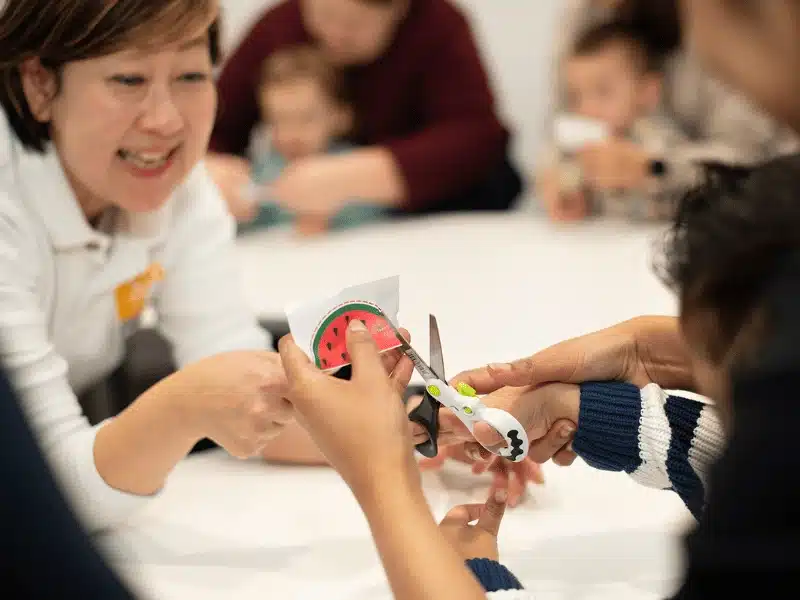
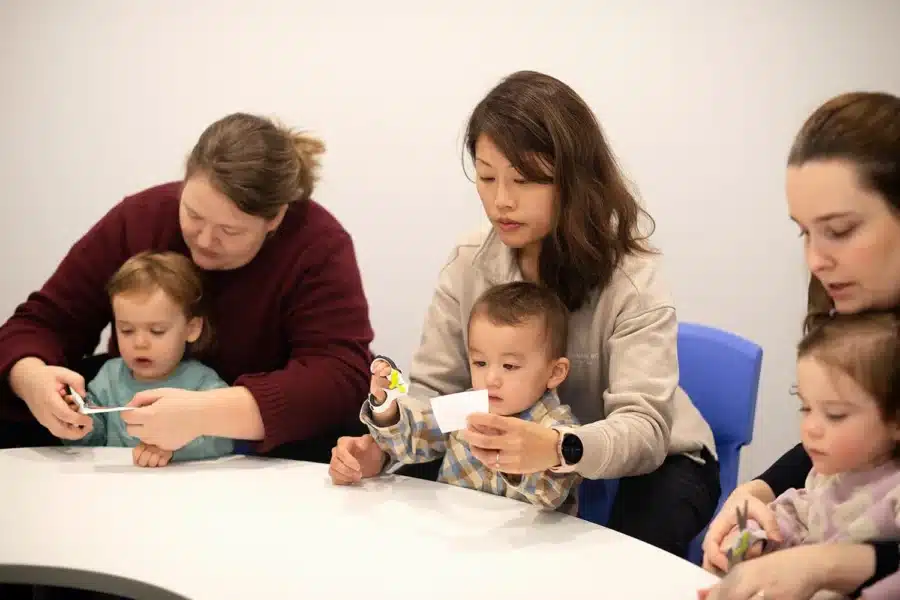
Image by Shichida Australia: Cutting along a curved line with teacher support – a great example of fine motor activities for preschoolers in action during a Shichida toddler class.
Age-Appropriate Activities to Build Strength
Every child develops at their own pace, but we can offer specific fine motor skill activities to support their current milestones. These games should feel like a natural part of their day.
Looking for engaging fine motor skills activities for preschoolers? Join us at Shichida Australia – book a trial class and experience it firsthand.
For Infants (0 to 12 Months)
At this stage, babies are focusing on grasping and exploring objects.
- Tummy Time Reaching: Place small toys in front of them to motivate reaching and grabbing.
- Transferring Objects: Use finger puppets to encourage your baby to move objects from one hand to the other.
- Texture Exploration: Let your baby touch fabrics like silk or wool to promote sensory awareness.
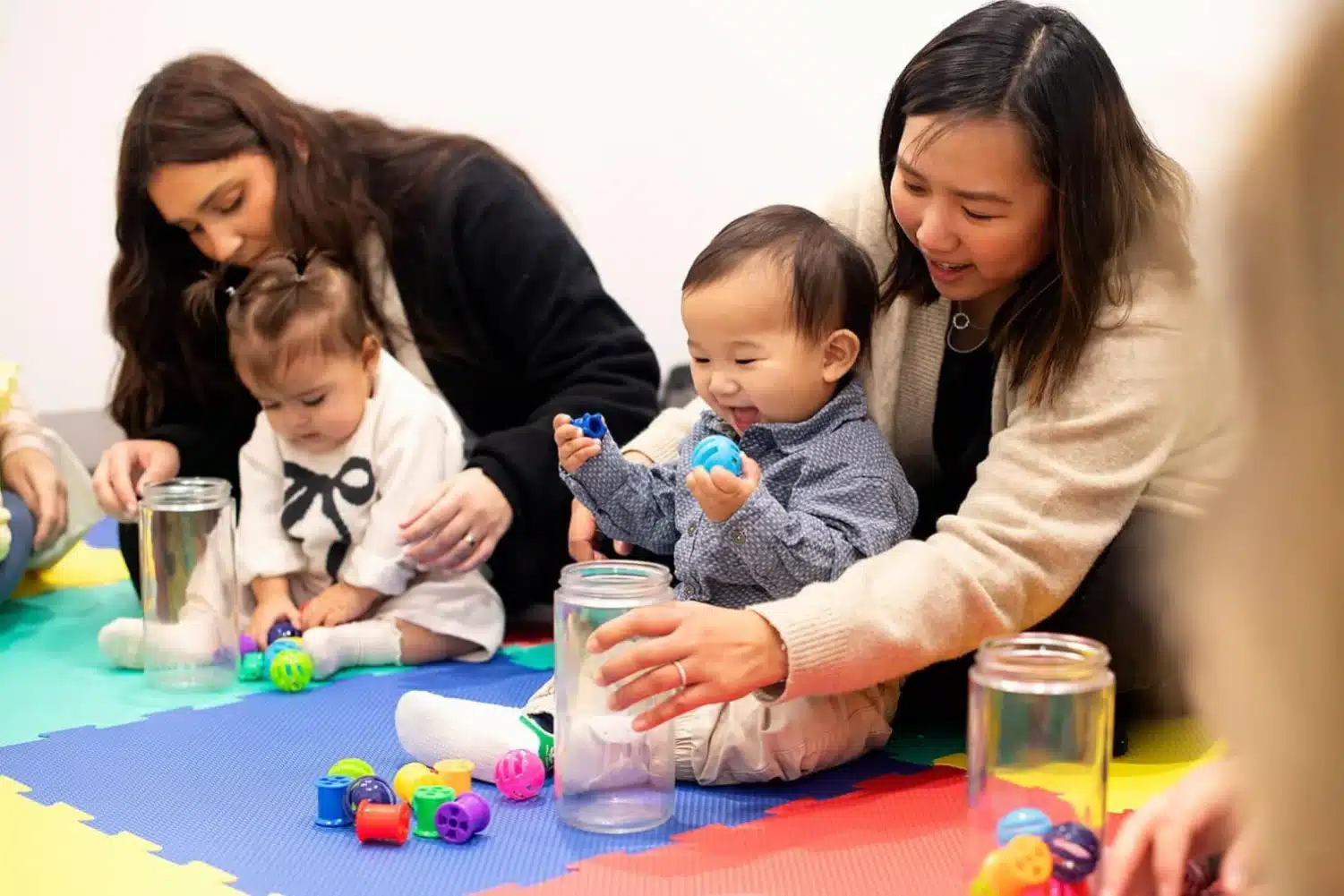
Image by Shichida Australia: Exploring grasping and hand movements with guidance during a Shichida baby class – introducing fine motor skills activities from the very beginning!
For Toddlers (1 to 3 Years)
Toddlers strengthen their hand muscles through tasks that encourage movement and control. This is the peak time for fine motor activities for toddlers.
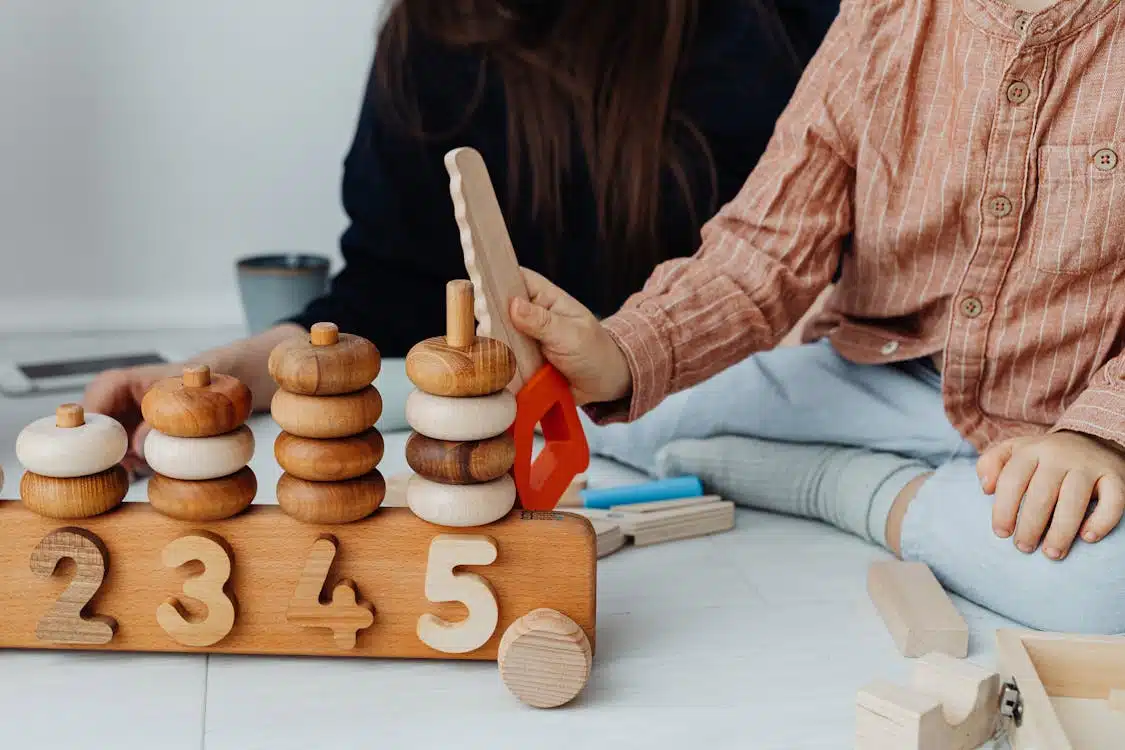
- Stacking Blocks: Building towers develops grip strength and hand control.
- Pulling Stickers: Use large stickers to let them practise grasping and pulling.
- Scooping and Pouring: Provide cups to transfer rice or water between containers.
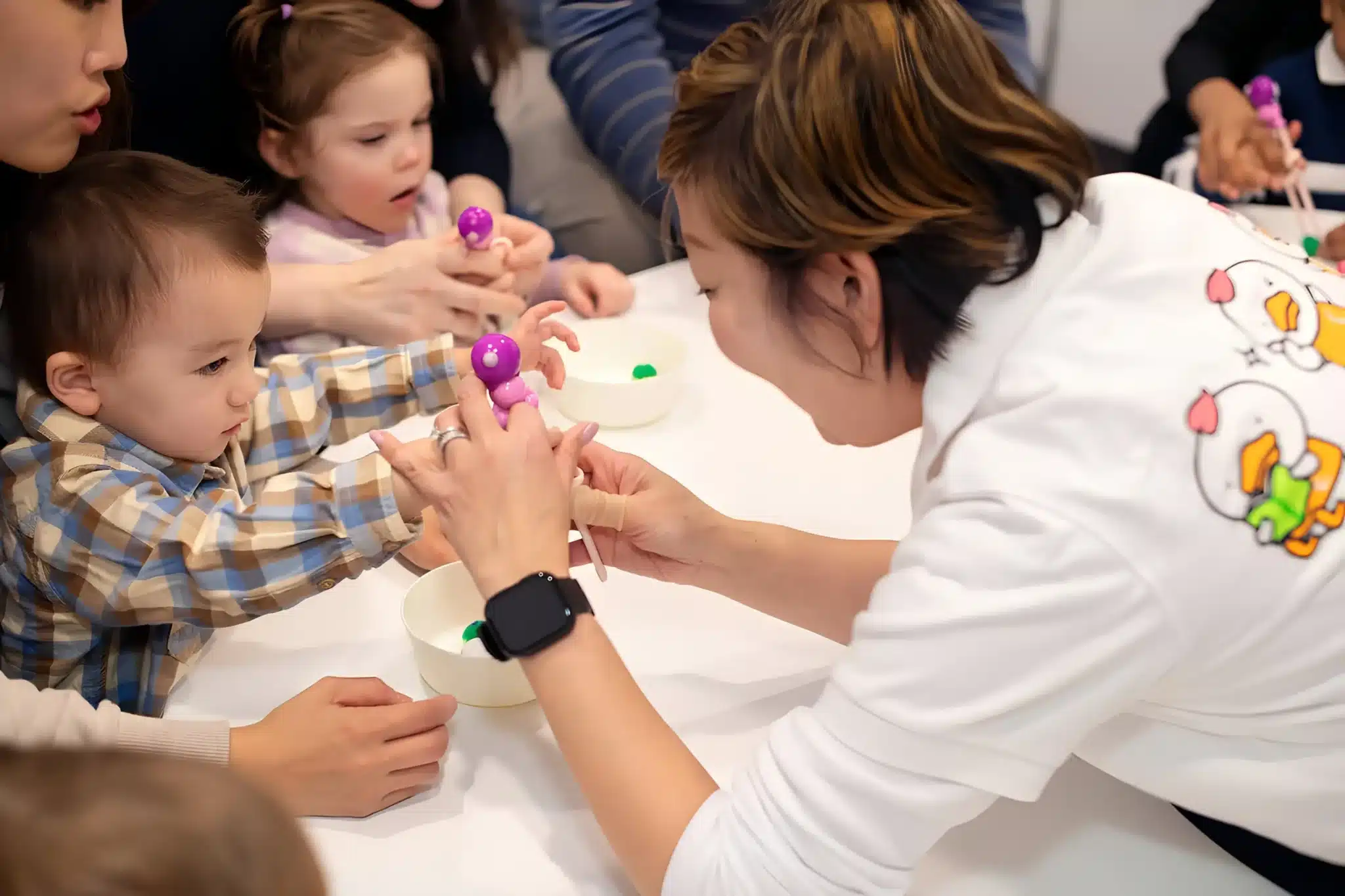
Image by Shichida Australia: Practising control and coordination with chopsticks while transferring small objects during a Shichida toddler class – a fun way to build independence through fine motor activities for toddlers.
For Preschoolers (3 to 5 Years)
These fine motor tasks for preschoolers can help them become more agile as they prepare for big school.
- Cutting Along a Line: Use child-safe scissors to cut straight or zigzag lines.
- Threading Beads: String large beads onto pipe cleaners or shoelaces.
- Tweezer Sorting: Use large plastic tweezers to pick up cotton balls and move them between bowls.
For 50 more ideas on building physical strength through play, check out our fun fine motor activities for kids.
Looking for a weekly baby, toddler or preschooler activity with fine motor activities and developmental benefits? Shichida offers fun, guided classes across Melbourne, with centres in Doncaster, Glen Waverley and Highpoint. Families in Sydney can also join us at Burwood, Chatswood and Parramatta.
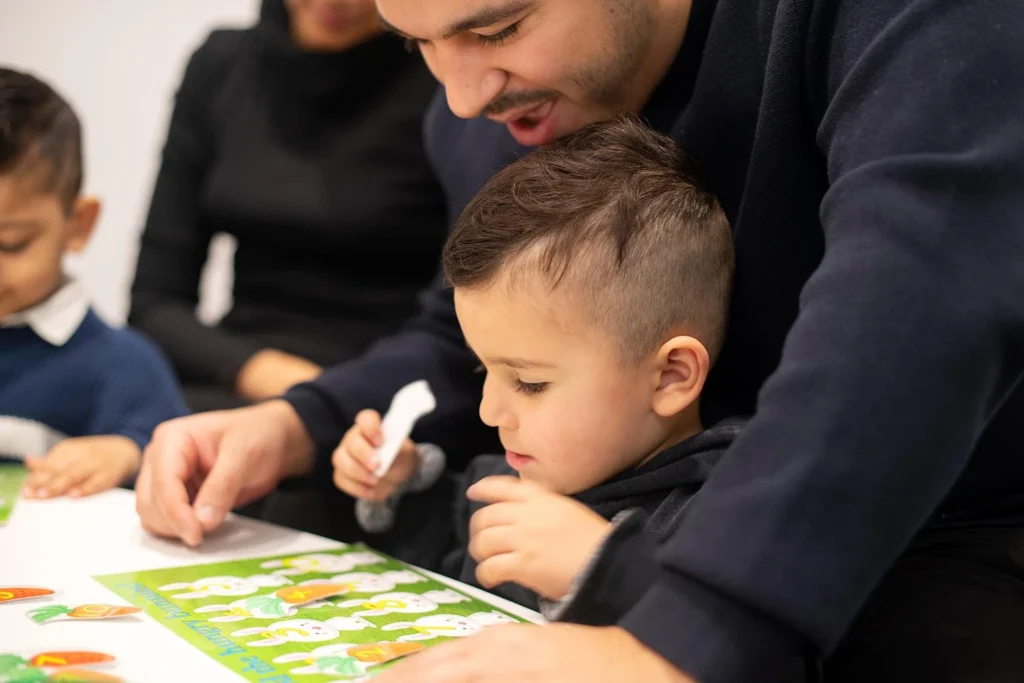
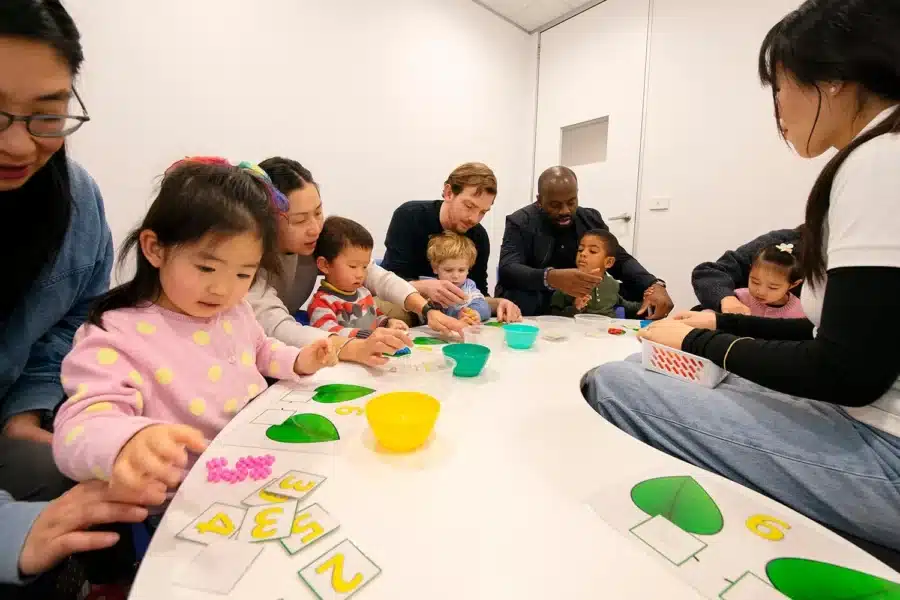
Image by Shichida Australia: Practising a hands-on numeracy activity with parent support during a Shichida Kinder class – building focus, confidence, and coordination through fine motor activities for preschoolers
Easy Fine Motor Activity Preschool Ideas
Plenty of household items make fun fine motor activities for kids.
- Kitchen Tongs: Have them move marshmallows or pom-poms between bowls to build the pincer grasp.
- Colander Threading: Stick pipe cleaners through the holes of a kitchen colander.
- Stickers: Peeling and sticking is a great fine motor activity preschool teachers use for precision.
- Tearing Paper: Ripping up old magazines for a collage builds great finger strength.
Integrating these fine motor skills activities for preschoolers into your daily routine turns chores into a game. Using these simple tools is often more effective than buying expensive kits. These tasks are easy to set up and very rewarding for little hands.
To find more detailed tips on using tools safely, check out our essential scissor skills guide.
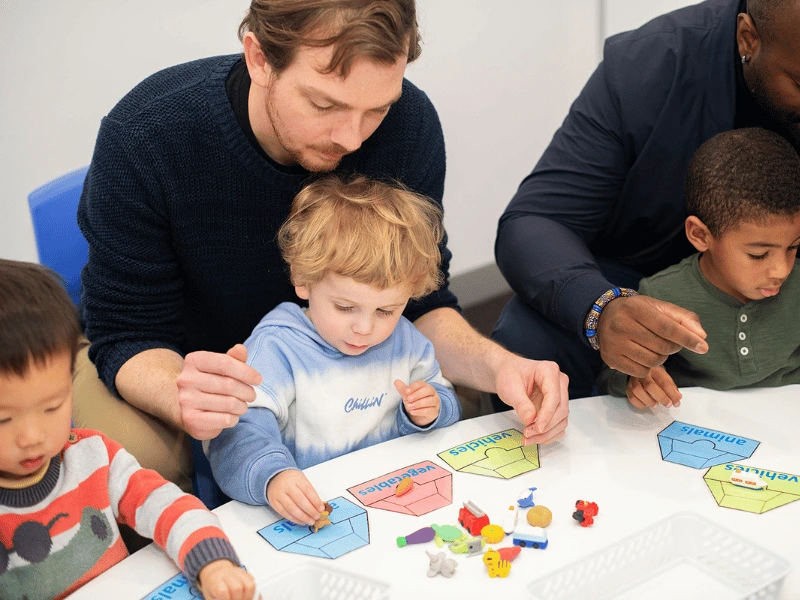
Image by Shichida Australia: Classes run once a week for 50 minutes, with one parent attending alongside each child. Each class is limited to 6 children, catering to ages 6 months to 5 years.
Nurture Your Child’s Potential with Shichida
It is amazing watching them finally master something they have been working on, isn’t it? A bit of practice now really does save a lot of frustration later on! We build these exact fine motor activities for kids into our learn -through-play sessions using games, songs and activities that kids actually love.
If you are curious about how we do it in person, come join us for a session. Book a Shichida Trial Class today and see those little hands in action.
Frequently Asked Questions: Fine Motor Activities for Preschoolers
Fine motor skills involve any precise movement using the small muscles in the hands and fingers. Common examples include buttoning a shirt, using a pencil to write, or cutting along a line with scissors. We use these movements for almost every self-care and school task your child faces.
Yes, because these tasks strengthen the exact hand muscles needed for a steady pencil grip. Engaging in preschool activities fine motor skills like tracing or playdough play makes the eventual move to writing much smoother. It helps your child control the pencil without getting tired or frustrated.
Development starts from birth through simple grasping and continues throughout childhood. While every child is different, focus on fine motor skills activities between ages one and three. This is when they transition from using their whole hand to using their fingers for precise tasks.
The best fine motor activities for preschoolers involve a mix of precision and strength. Activities like threading beads, using safety scissors, and playing with LEGO are excellent. These tasks keep them engaged while building the dexterity they need for the classroom.
Yes, our classes include a variety of fine motor skills activities for preschoolers designed to build hand strength, coordination, and focus. At Shichida Australia, we guide children through engaging, age-appropriate tasks while also showing parents how to continue these activities at home.
Strong motor control helps children handle a full day of classroom activities. When the hand muscles are strong, the brain can dedicate more energy to cognitive tasks like reading and writing. This physical foundation is a key part of your child being ready for big school.
Yes, you can use many household items for fine motor tasks. Try letting them “paint” with water on dark construction paper or sort dry pasta shapes into different bowls. These simple games are highly effective for building concentration and hand control indoors.