Key Points
- Confidence building activities for preschoolers support early childhood emotional development and school readiness.
- Curiosity in early childhood and confidence are closely linked.
- Play-based learning and positive reinforcement for kids build self-confidence.
- Age-appropriate activities support preschool self-esteem and independence.
- Strong confidence supports long-term learning, social skills, and creativity.
Confidence building takes shape during the small risks your child takes, the way they recover from frustration, and the encouragement they receive along the way.
If you’ve ever questioned whether you’re doing enough, it helps to know this: confidence grows through simple, consistent interactions, not perfect parenting.
This parenting guide will show you practical, research-informed ways to support your child’s confidence through play, curiosity, and meaningful connection.
Designed for families with children up to 5 years old.

What Is Confidence in Early Childhood?
Confidence in early childhood is a child’s belief in their ability to try, learn, and succeed, even when something feels challenging.
It often follows a simple process. A child attempts something new, like stacking blocks or putting on their shoes. They receive encouragement or experience success through effort. Over time, their brain reinforces a positive sense of “I can do this.”
This process happens quickly in the early years. Children are constantly exploring, testing limits, and learning through experience. Everyday moments become powerful opportunities to build self-belief, such as completing a puzzle on their own, helping tidy up toys, choosing what to play, expressing feelings, or trying unfamiliar foods.
These small experiences build a strong foundation. Confident children are more resilient, socially engaged, curious, and better prepared for school. The most effective way to support this growth is through play-based activities and warm, responsive relationships with adults.
Why Confidence Matters in Early Learning
Confidence shapes how children approach learning. A confident child is more willing to try new activities, speak up in group settings, and attempt early writing or drawing tasks. It supports emotional regulation, helps children manage frustration, and strengthens peer relationships. When children believe they can try, they are more likely to stay engaged and keep going.
When Does Confidence Develop in Children?
Confidence begins early and grows over time. Infants build trust through secure attachment and consistent care. Toddlers begin to assert independence, making choices and testing boundaries. Preschoolers develop confidence as they master skills, socialise, and express their ideas.
At every stage, confidence grows when children are given safe opportunities to try, make mistakes, and succeed with gentle guidance.
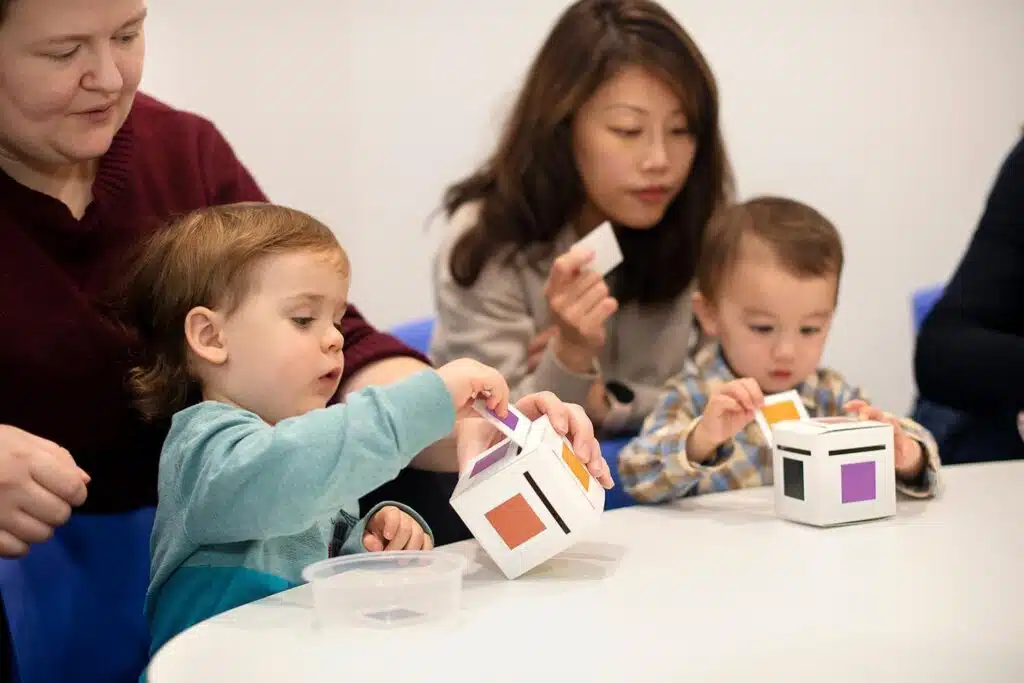
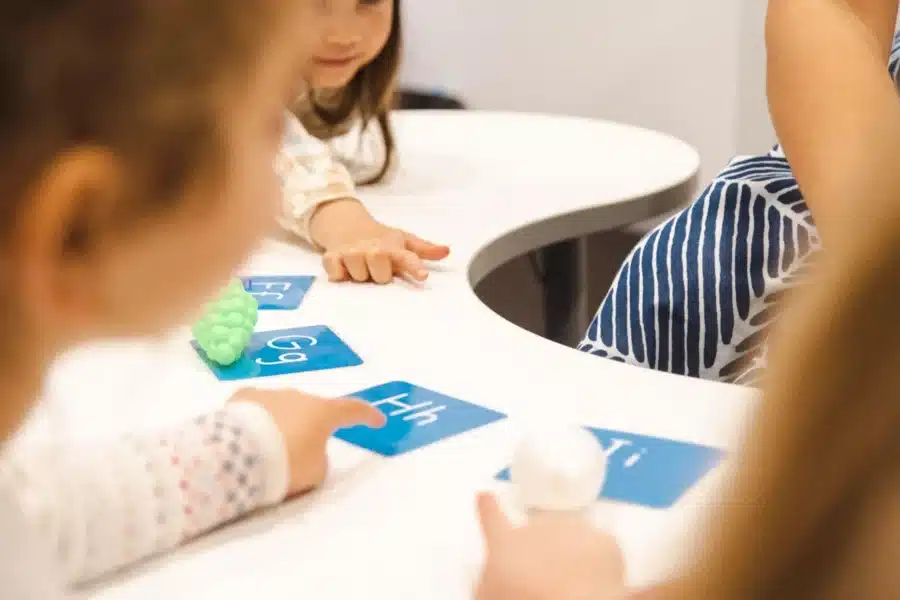
Image by Shichida Australia: Games like colour matching gives toddlers and preschoolers the chance to practise thinking, decision-making, and persistence – all through play.
The Connection Between Curiosity and Confidence
Confidence and curiosity are closely linked in early childhood. A curious child is naturally motivated to explore, ask questions, and try new things. These experiences build both knowledge and self-belief.
When children feel safe to ask “why” and “how,” they become more engaged learners. Exploration through play strengthens their understanding of the world while reinforcing their ability to figure things out. Each successful attempt, no matter how small, builds confidence.
Your response matters here. When you welcome questions and show interest in their ideas, you send a powerful message: their thoughts are valuable. This strengthens both confidence and curiosity in early childhood.
How to Describe a Curious Child
A curious child is often easy to recognise. They ask many questions, notice small details, and become deeply engaged in topics they enjoy. They love to explore, experiment, and figure things out. Many are creative problem-solvers who think in unique ways.
These traits are not something to worry about. They are strong signs of healthy cognitive and emotional development.
How to Handle a Curious Child
If constant questions feel overwhelming, you’re not alone. Instead of feeling pressure to have all the answers, try saying, “Let’s find out together.” This keeps learning collaborative.
Create space for exploration without rushing or judging. Follow your child’s interests during play and treat questions as opportunities rather than interruptions. Over time, this approach builds both confidence and a love of learning.
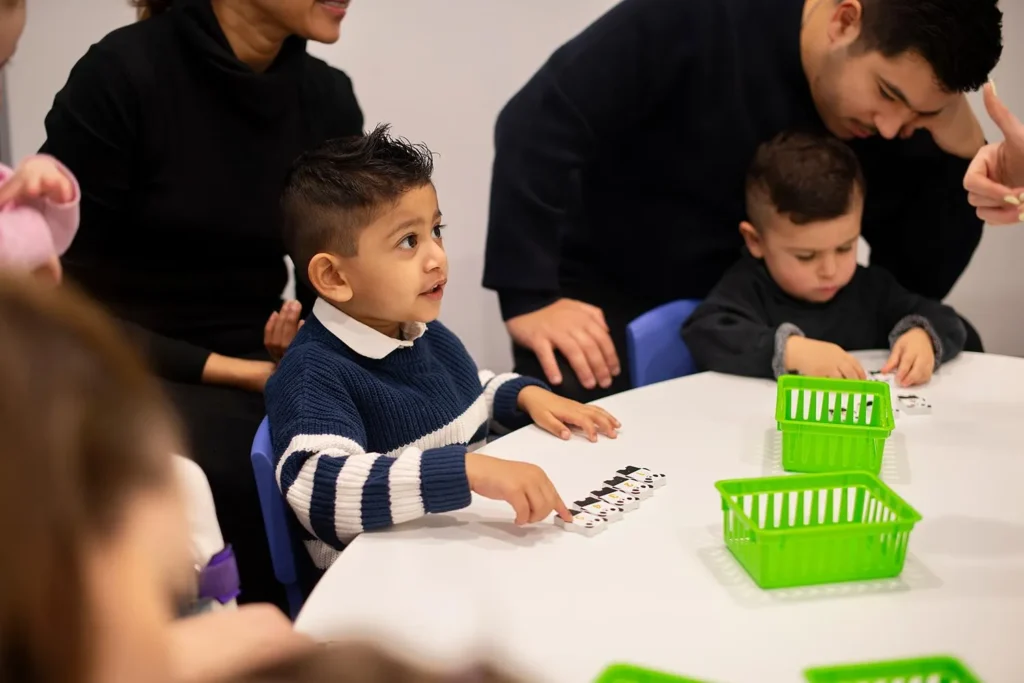
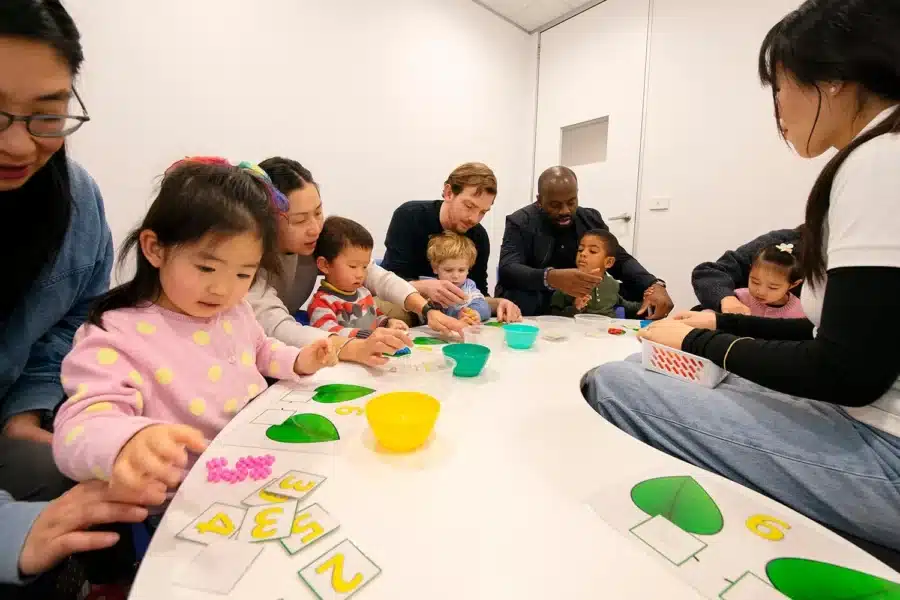
Image by Shichida Australia: Confidence grows when children can see their progress right in front of them. Lining up number pandas in order helps preschoolers practise counting, sequencing, problem-solving, and independence – all through play.
How to Raise a Curious Child
Understanding how to raise a curious child can transform the way you approach daily routines. Curiosity thrives in environments where children feel safe, supported, and free to explore.
Start by offering open-ended play opportunities. Materials like blocks, art supplies, or sensory play invite children to think creatively. Provide age-appropriate challenges that are achievable but still require effort. This balance builds both curiosity and confidence.
Your own behaviour matters too. When children see you asking questions, exploring ideas, and showing interest in the world, they learn to do the same. Celebrate their questions, even when they seem repetitive. Curiosity is not something to manage. It is something to nurture.
Creating an Environment That Encourages Exploration
Your home environment plays a big role in shaping curiosity. Provide simple, open-ended materials like crayons, building toys, sand, or water play. Create a safe “yes space” where your child can explore freely. Limit passive screen time and make time for outdoor experiences where children can observe and discover naturally.
Encouraging Curiosity
You don’t need elaborate activities to support curiosity. Ask questions like, “Why do you think that happened?” during daily routines. Read together and pause to explore ideas. Involve your child in cooking or gardening. Even a walk in the park can become a learning moment when you slow down and notice what’s around you.
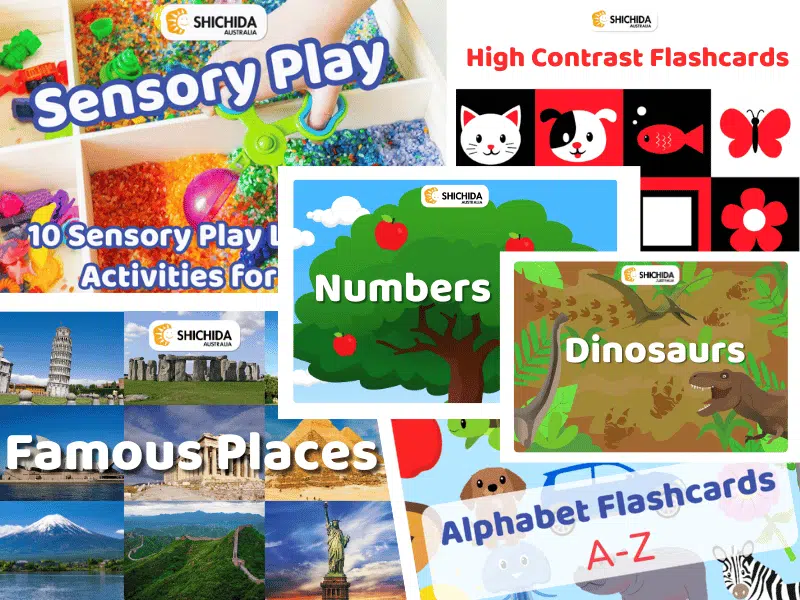
Need some creative ideas? Shichida has plenty!
Key Benefits of Confidence Building Activities for Children
Confidence building activities for preschoolers do more than boost self-esteem. They support a wide range of developmental skills.
Through play, children learn to manage emotions, solve problems, and interact with others. These experiences strengthen social emotional learning for preschoolers while supporting cognitive development.
When children practise building self-confidence in children through everyday activities, they develop resilience, independence, and a willingness to try. These are essential skills for both school and life.
Builds Emotional Resilience
Confidence helps children cope with challenges and setbacks. When they learn that mistakes are part of learning, they become more willing to try again. This resilience supports long-term emotional wellbeing.
Supports Social Skills and Communication
Confident children are more likely to start conversations, express their needs, and build friendships. These skills are important for classroom participation and positive peer relationships.
Encourages Independent Thinking and Problem-Solving
Confidence gives children the courage to make decisions and try new approaches. Instead of relying on adults for every answer, they begin to think independently and learn from their experiences.
Confidence Building Activities by Age
Choosing age-appropriate activities helps children build confidence in a way that feels achievable and enjoyable.
Activities for Babies (0-12 Months)
Simple interactions make a big difference. Make eye contact, mirror your baby’s sounds, and respond to their cues. Offer tummy time and introduce different textures through safe sensory play. Consistent, warm caregiving helps babies feel secure, which is the foundation of early confidence.
Activities for Toddlers (1-3 Years)
Toddlers thrive when given choices. Let them pick between two activities or help with simple tasks like putting toys away. Praise effort rather than results. Encourage open-ended art and pretend play. These experiences support independence and early decision-making.
Activities for Preschoolers (3-5 Years)
Preschoolers benefit from more structured activities. Try show-and-tell, role play, or simple independent projects. Positive affirmation activities and cooperative games help build both self-esteem and social skills. These are important school readiness activities that prepare children for group learning environments.
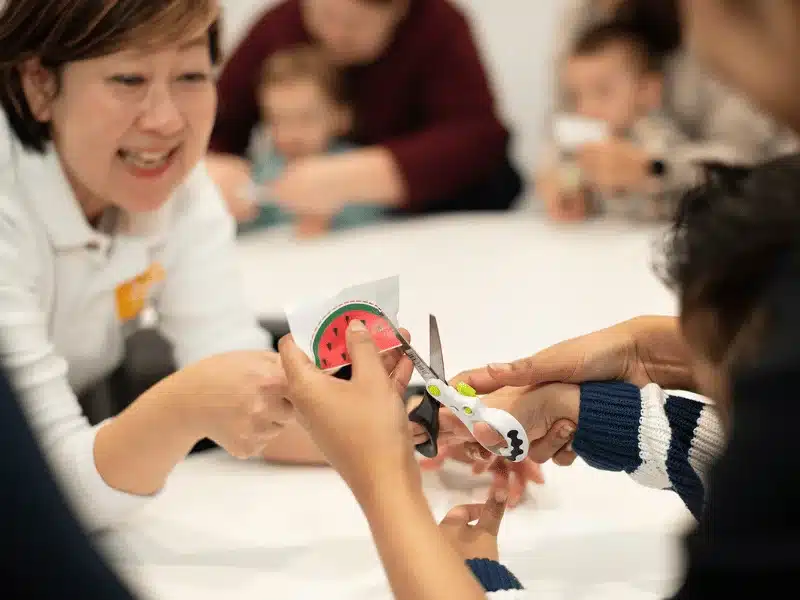
Image by Shichida Australia: Cutting a rounded edge with safety scissors helps preschoolers build fine motor skills, hand-eye coordination, concentration, and confidence in their own abilities.
10 Fun Confidence Building Activities for Early Learners
Here are ten simple and effective confidence building activities for preschoolers you can try at home:
- ‘I Can’ Jar Activity: Children add notes about things they’ve achieved. Builds self-awareness and positive self-talk. Best for ages 3-6.
- Role Play and Pretend Play: Children act out real-life scenarios. Builds communication and social confidence. Ages 2-6.
- Sensory Exploration Stations: Hands-on play with sand, water, or textures. Encourages curiosity and exploration. Ages 1-5.
- Building and Construction Play: Blocks or LEGO-style play. Develops problem-solving and persistence. Ages 2-6.
- Sharing and Show-and-Tell: Children talk about favourite items. Builds verbal confidence and connection. Ages 3-6.
- Simple Cooking Tasks: Mixing or pouring ingredients. Encourages independence and responsibility. Ages 2-5.
- Art Without Rules: Open-ended drawing or painting. Builds creativity and self-expression. Ages 2-6.
- Obstacle Courses: Indoor or outdoor challenges. Builds physical confidence and resilience. Ages 3-6.
- Emotion Cards or Drawing Feelings: Helps children express emotions safely. Builds emotional awareness. Ages 3-6.
- Puzzle Challenges: Completing puzzles independently. Strengthens focus and problem-solving. Ages 2-5
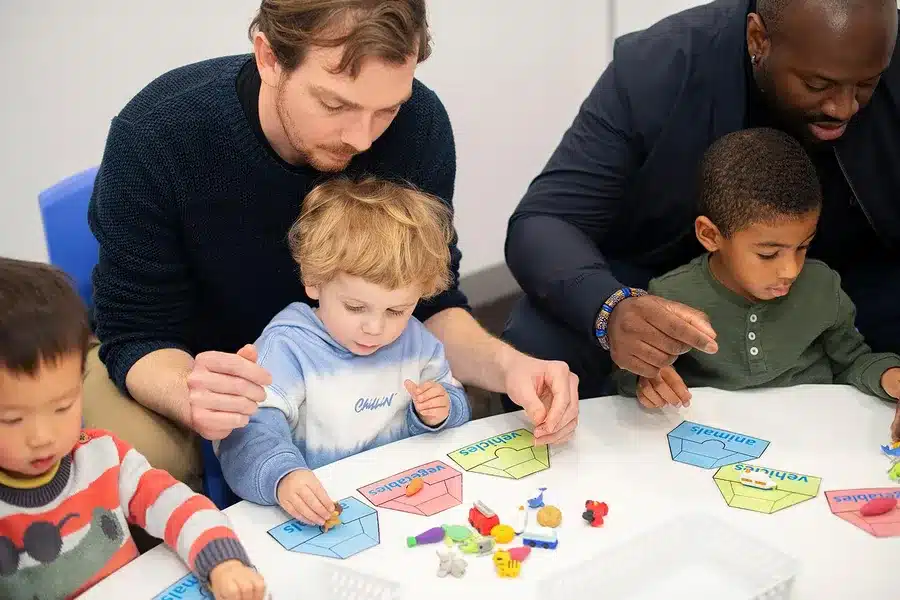
Image by Shichida Australia: When preschoolers group items by category, they practise logic, language, focus, and confidence in their own choices.
Indoor vs Outdoor Confidence Building Activities
A mix of indoor and outdoor experiences helps children develop a wide range of skills. Variety keeps learning engaging and supports both physical and emotional growth.
Indoor Confidence Building Activities
Indoor play can focus on creativity and quiet concentration. Try art projects, dress-up games, puzzles, or simple cooking activities. Drawing or journaling feelings also helps children understand and express emotions.
Outdoor Confidence Building Activities
Outdoor play offers space to move and explore. Obstacle courses, nature scavenger hunts, and gardening encourage independence and curiosity. Free play outdoors allows children to take safe risks and build confidence naturally.
Signs a Child May Need More Confidence Support
- Reluctance to try new activities
- Frequent negative self-talk
- Difficulty with social situations
All children develop at their own pace, but some may need extra support in building confidence.Gentle support through social emotional learning activities can help them feel more comfortable.
Tips for Helping Children Build Confidence
Praise Effort, Not Just Outcomes
Focus on effort by saying things like, “You worked really hard on that.” This encourages persistence and a growth mindset for young children.
Allow Age-Appropriate Independence
Give children opportunities to make choices and solve problems. Step in when needed, but allow space for them to try first.
Model a Growth Mindset
Children learn by watching you. Show curiosity, talk about challenges, and normalise mistakes. This helps children see effort as part of learning.
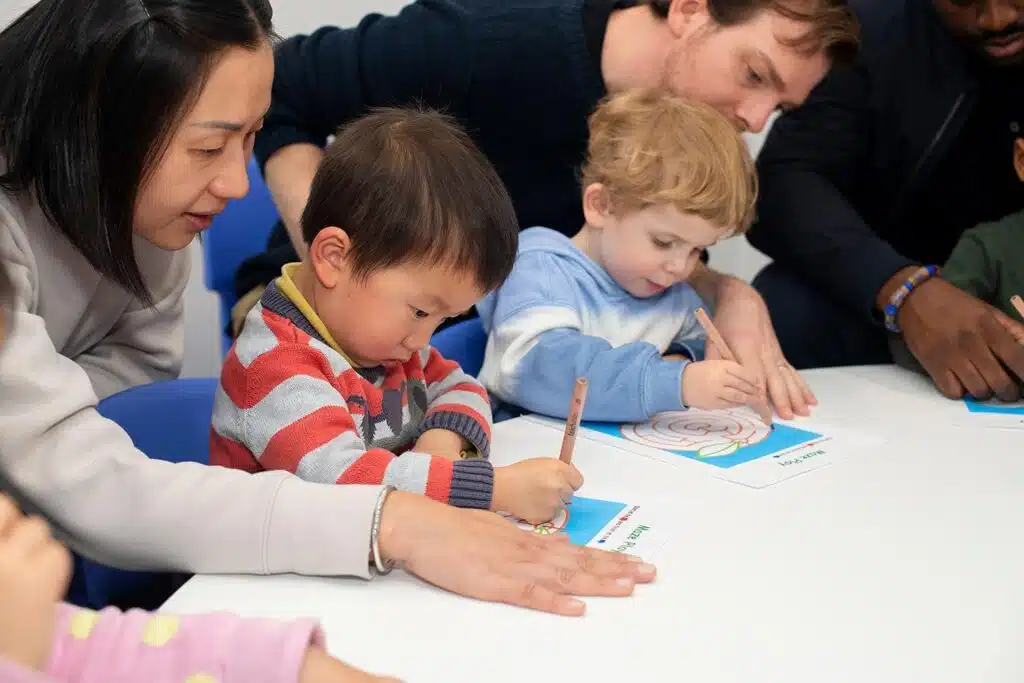
Image by Shichida Australia: Finding the way through a maze takes focus, patience, and a little problem-solving magic. Maze activities help preschoolers build confidence, concentration, fine motor control, pencil grip and the courage to keep trying.
How Confidence Supports Long-Term Learning
Early confidence has a lasting impact. Children who feel capable are more engaged in school, more willing to participate, and more open to learning new skills.
Confidence supports social and emotional wellbeing, helping children build relationships and navigate group settings. It also plays a role in physical activities, creative expression, and problem-solving.
When children develop confidence early, they build intrinsic motivation. They learn because they want to, not because they have to. This love of learning often continues into adulthood, shaping how they approach challenges and opportunities throughout life.
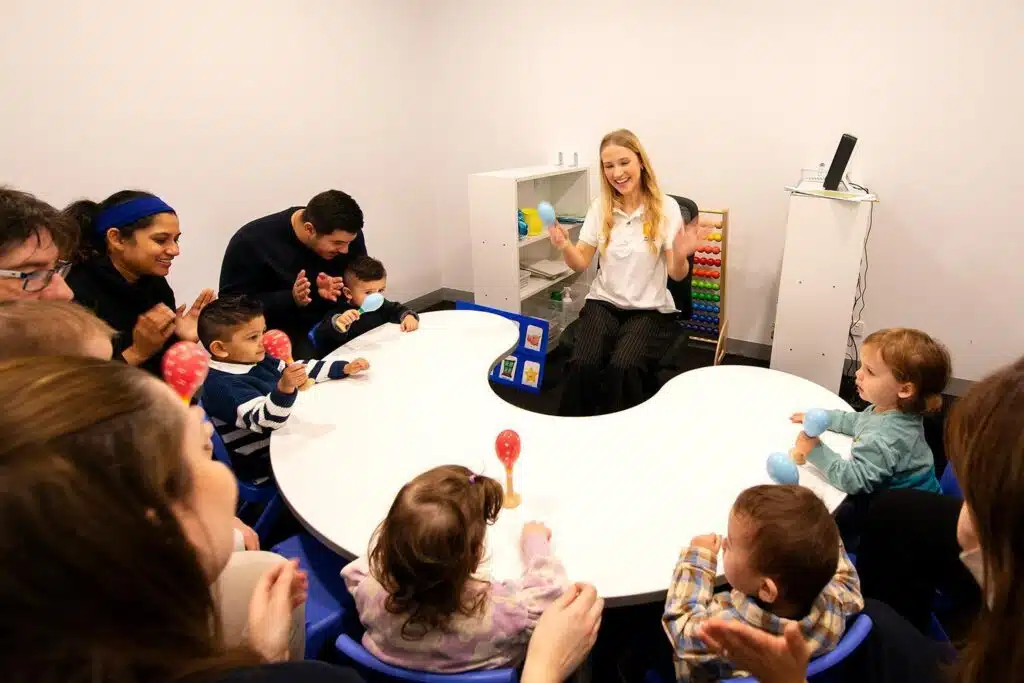
Image by Shichida Australia: When children play instruments along to songs, they practise listening, timing, coordination, and the confidence to take part.
Develop Confidence Through Play With Shichida
Give your child the chance to experience confidence building activities for preschoolers and young children in a supportive environment designed to nurture both curiosity and self-belief.
Shichida uses proven learning tools like flashcards, songs and hands-on games and activities – children learn without even knowing it! Parents get guided during each class, and can continue the fun learning at home.
Book a trial class today and see the Shichida Method in action!
FAQs: Confidence Building Activities for Preschoolers
Confidence building activities for preschoolers are play-based tasks that help children feel capable, independent, and willing to try. These may include puzzles, role play, show-and-tell, memory games, building blocks, movement games, and simple problem-solving challenges.
At Shichida, preschoolers build confidence through structured, age-appropriate activities that support communication, focus, memory, social skills, and emotional development.
Confidence helps preschoolers participate, ask questions, try new tasks, and recover when something feels difficult. It also supports school readiness because confident children are more likely to engage with teachers, interact with peers, follow instructions, and approach learning with a positive attitude.
Confidence also connects closely with emotional development, communication, resilience, and problem-solving, which are all important in the preschool years. Shichida’s early learning content frames EQ and IQ together, linking emotional intelligence with memory, attention, learning ability, and social confidence.
Some of the best confidence building activities for preschoolers include:
- Show-and-tell
- Pretend play
- Puzzles and matching games
- Building with blocks
- Memory card games
- Drawing, tracing, cutting, and pasting
- Singing and movement games
- Simple chores and self-help tasks
- Outdoor obstacle courses
- Group games that involve turn-taking
These activities help children practise independence, communication, persistence, and problem-solving in a fun, low-pressure way.
To raise a confident and curious preschooler, give your child safe opportunities to ask questions, try new things, make choices, and solve small problems. Use open-ended questions such as, “What do you think will happen?” or “How could we try this another way?”
Curiosity builds confidence because children learn that their ideas matter. Shichida’s curiosity content also highlights hands-on learning, play-based problem-solving, multi-sensory activities, and parent-child interaction as ways to support curious, confident learners.
When your preschooler asks constant questions, try to treat their questions as learning opportunities rather than interruptions. You can answer briefly, ask what they think, or involve them in finding the answer.
For example, if they ask, “Why do leaves fall?” you could say, “That’s a great question. What do you notice about the trees today?” This helps your child build language, thinking skills, and confidence in their own ideas.
Confidence begins developing in infancy and continues to grow through the toddler and preschool years. During the preschool stage, children often become more independent, more imaginative, and more socially aware.
The 3 to 5 year age group is especially important because children are learning to share, take turns, follow rules, express ideas, and try more complex tasks. Shichida’s developmental content describes early childhood as a key period for creativity, language growth, social learning, turn-taking, and understanding rules.
Open-ended toys and games are especially helpful because they allow children to create, experiment, and succeed in different ways. Good options include blocks, puzzles, pretend play sets, memory games, craft materials, dress-ups, sorting games, and simple board games.
These toys help preschoolers practise decision-making, fine motor skills, imagination, problem-solving, and communication.
Preschoolers can practise confidence building activities every day through normal play, routines, and conversations. This does not need to feel like formal learning.
Simple daily moments such as helping set the table, choosing clothes, completing a puzzle, greeting someone, sharing a toy, or explaining their drawing can all build confidence over time.
A preschooler may be struggling with self-confidence if they often avoid new activities, say “I can’t” before trying, become very upset by mistakes, withdraw from group play, rely heavily on adults to answer for them, or avoid speaking in social situations.
Shichida helps preschoolers build confidence through fun, structured, whole-brain activities that support both emotional and cognitive development. In class, children practise skills such as memory, focus, communication, turn-taking, problem-solving, creativity, and self-expression.
Shichida’s approach focuses on the whole child, helping children build emotional intelligence, social confidence, resilience, and thinking skills together.
Yes. Shichida classes are designed for young children from 6 months old, with age-appropriate activities that support each stage of development. For preschoolers, this can include memory games, flashcards, songs, puzzles, rhythm-based learning, communication tasks, sensory play, and activities that help build focus, confidence, and social interaction.