Key Takeaways
- Object permanence in babies is the understanding that people and objects still exist when they are out of sight.
- Babies usually begin developing object permanence around 4–7 months, with stronger signs appearing between 8–12 months.
- Most toddlers develop more advanced object permanence skills by 18–24 months.
- Peek-a-boo, hidden-toy games, lift-the-flap books, container play, and hide-and-seek all support object permanence.
- Separation anxiety is often connected to object permanence and can be a sign of healthy cognitive development.
- Object permanence supports memory, language, problem-solving, emotional development, and early symbolic thinking.
Some of the smallest baby moments can reveal the biggest developmental leaps.
Your baby may suddenly cry when you leave the room, search for a toy hidden under a blanket, or laugh with delight during peek-a-boo. These seemingly simple moments are actually signs of major cognitive development milestones.
In this guide, we’ll explain when object permanence develops, the signs to look for, how it connects to separation anxiety, and simple activities you can use to support your baby’s learning at each stage.
Quick Answer
Object permanence is a baby’s understanding that people and objects continue to exist even when they can’t be seen, heard, or touched. Babies typically begin developing object permanence between 4 and 7 months, with full mastery emerging between 18 and 24 months.
Looking for simple ways to support your baby’s early learning and development at home?
Download our free Sensory Play Guide for easy, hands-on activity ideas that help babies and toddlers build attention, curiosity, memory, fine motor skills, and early problem-solving through play.
Sensory play can help nurture resilience and development. Download a free sensory play guide here.
If your child enjoys these types of activities, a Shichida trial class is a great way to see how structured play can support coordination, focus, memory and early learning confidence.
Book a trial class or contact us to find your nearest centre.
What Is Object Permanence in Babies?
Object permanence refers to the understanding that something continues to exist even when it is no longer visible. Before developing this skill, a baby may act as though an object has vanished completely when it disappears from sight. As cognitive abilities mature, babies begin to realise that hidden objects still exist and can be found.
Why It Matters for Cognitive Development
Object permanence is far more than a simple game of finding hidden toys. It forms the foundation for several important developmental skills:
- Memory and recall
- Early problem-solving
- Language development
- Emotional regulation
- Understanding relationships and routines
For example, when your child hears the word “ball,” they eventually understand that the ball still exists even when it is stored away in a cupboard. This ability to mentally represent objects is a major step in both baby cognitive development and later toddler cognitive development.
Object Permanence and Piaget’s Sensorimotor Stage
Swiss psychologist Jean Piaget identified object permanence as one of the key achievements of the Piaget sensorimotor stage, which spans birth to approximately two years.
Piaget observed that young infants often lose interest in an object as soon as it disappears. Older babies, however, actively search for hidden items. This shift signals that they are beginning to build mental representations of the world around them.
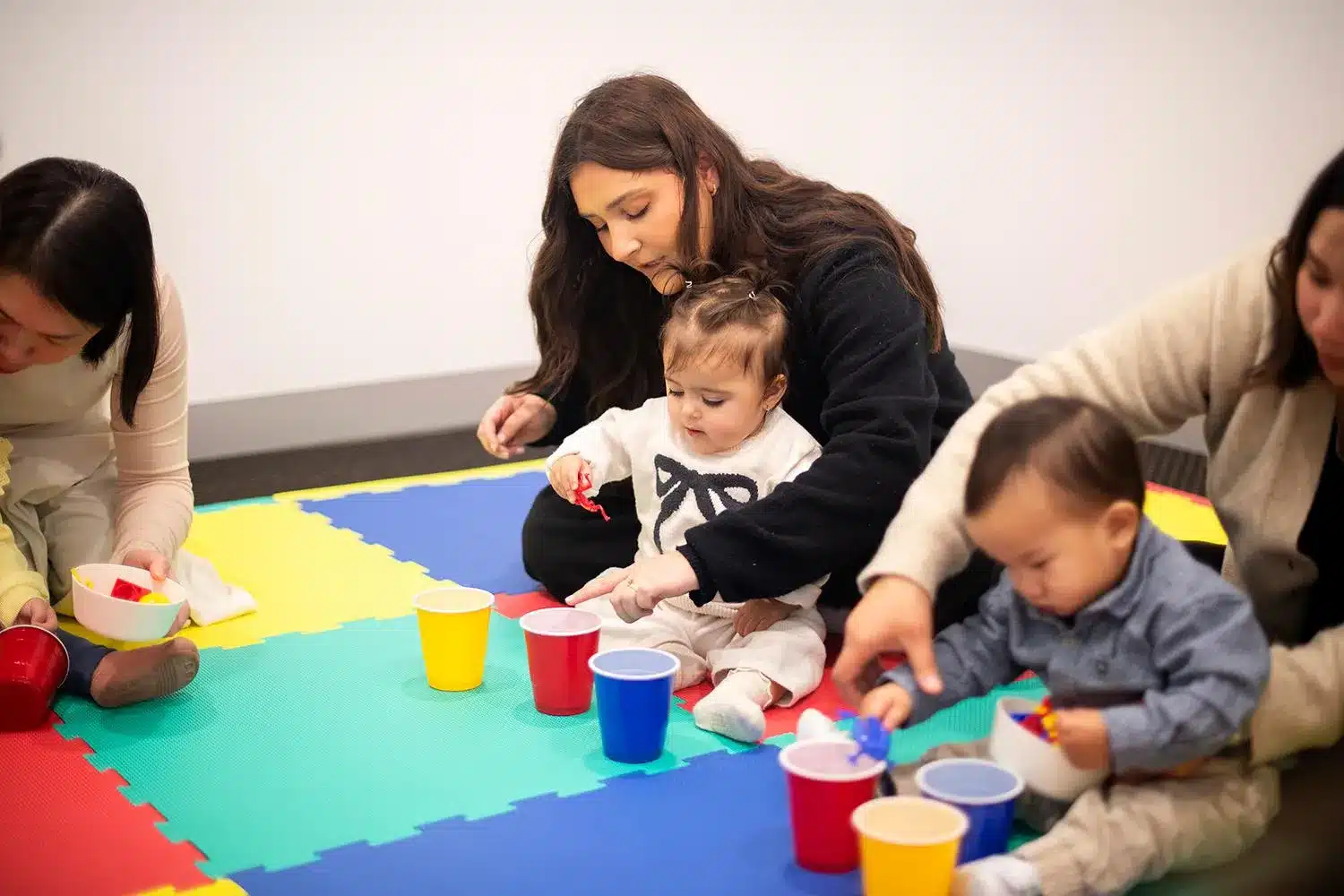
Image by Shichida Australia: Babies practise early problem-solving as they match coloured objects to cups, building attention, memory, coordination, and the understanding that objects can move, disappear, and be found again.
When Does Object Permanence Develop in Babies?
Every child develops at their own pace, but object permanence generally emerges gradually throughout the first two years of life.
0-4 Months: Out of Sight, Out of Mind
During the earliest months, babies can track moving objects with their eyes for short periods. However, if a toy disappears behind a blanket, they typically stop searching and quickly move on to something else.
At this stage, their understanding of the world is based primarily on what they can directly see and experience.
This is a good time to introduce high contrast flashcards or pictures to your baby.
4-8 Months: The First Signs
Between four and eight months, many babies begin showing the earliest signs of object permanence.
They may:
- Look briefly toward where an object disappeared
- Anticipate something reappearing
- Become fascinated by peek-a-boo
This growing sense of expectation shows that babies are beginning to understand that things continue to exist beyond their immediate view.
8-12 Months: Active Searching
This is often when parents notice significant changes.
Your baby may:
- Lift a cloth to uncover a toy
- Search for a dropped object
- Follow where an object has gone
- Anticipate hidden objects reappearing
Around nine months, many babies can pass Piaget’s classic hidden-object test by uncovering a toy hidden beneath a blanket.
This period is also closely connected to separation anxiety and object permanence. Your baby now understands that you still exist when you leave the room, but they do not yet fully understand that you will return.
12-18 Months: Visible Displacement
Toddlers become better at tracking objects that move from one visible location to another.
For example, if they watch you move a toy from under one cup to another, they can usually follow the movement with their eyes and locate the correct cup.
This demonstrates growing memory and problem-solving abilities.
18-24 Months: Full Mastery and Mental Representation
By around two years of age, most toddlers have developed strong object permanence skills.
They can often find objects even when the hiding process occurs out of sight. This reflects the emergence of mental representation in toddlers, the ability to hold an image, person, or idea in mind without directly seeing it.
This milestone supports imagination, language development, pretend play, and more advanced problem-solving.

Signs Your Baby Is Developing Object Permanence
You may notice several everyday behaviours that signal growing object permanence:
- Watches the spot where a dropped toy fell
- Lifts a blanket to find a partially hidden object
- Enjoys peek-a-boo and anticipates the reveal
- Looks toward the door when you leave
- Searches for a toy hidden under a cup
- Becomes upset when you leave the room
- Starts playing simple hiding games
- Retrieves toys hidden in containers
Key Insight
Separation anxiety isn’t a setback. It’s a sign your baby’s cognitive understanding is growing. They now know you exist even when you’re not there. The next step is learning that you’ll always come back.
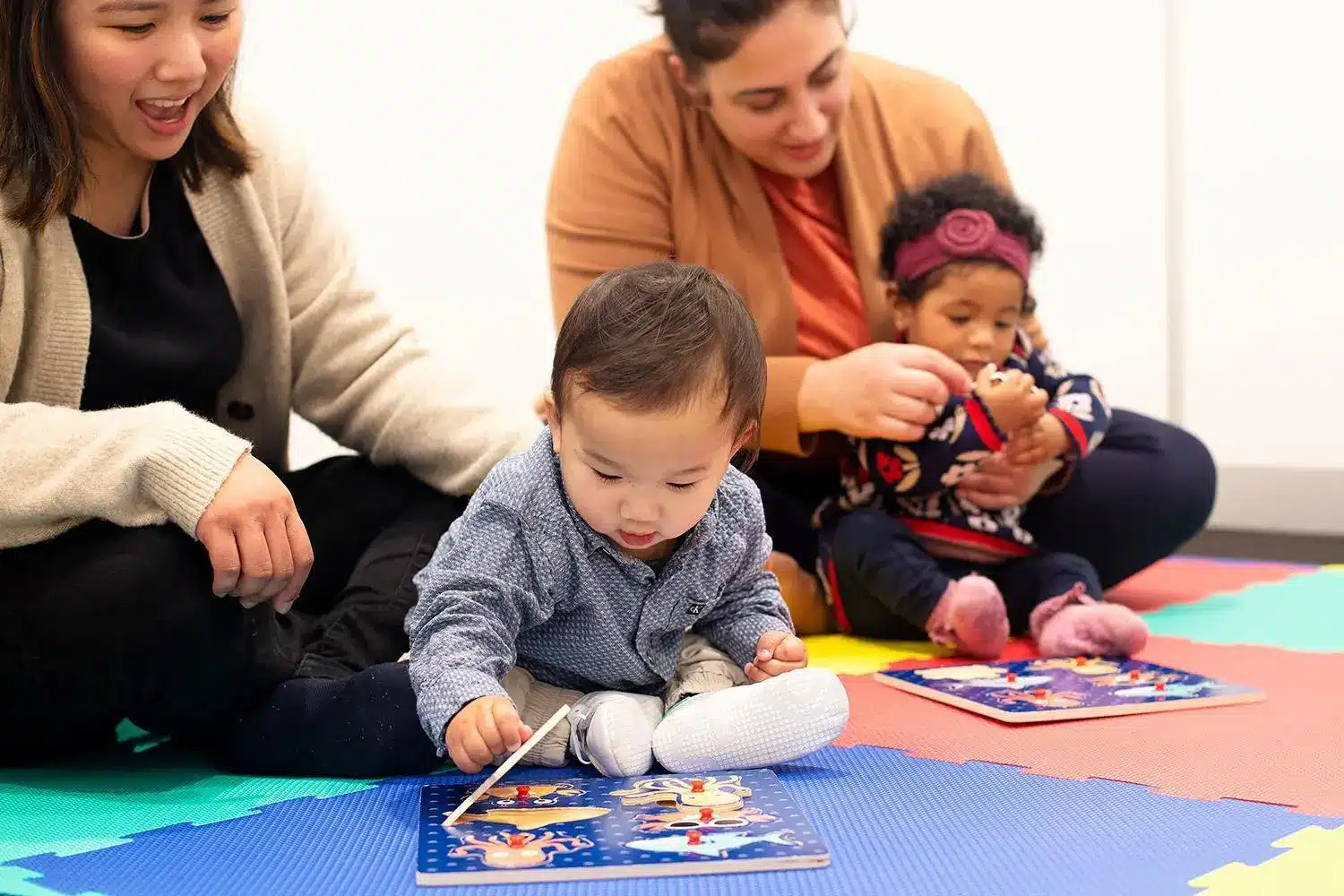
Image by Shichida Australia: Knob puzzles help babies practise memory, focus, fine motor control, and early problem-solving as they work out where each piece belongs. As babies lift, move, and replace puzzle pieces, they begin to understand that objects can change position while still existing – an important step in object permanence and early cognitive development.
Understanding the Cognitive Learning Stages in Babies and Toddlers
To understand where object permanence fits, it helps to look at the broader cognitive learning stage your child is moving through.
Piaget’s Four Stages of Cognitive Development
Sensorimotor Stage (Birth to 2 Years)
Children learn about the world through their senses, movement, and direct interactions with their environment. During this stage, they begin to understand that objects continue to exist even when they cannot be seen.
Preoperational Stage (2 to 7 Years)
Language develops rapidly, and children begin using symbols, images, and pretend play to represent ideas. Their thinking becomes more imaginative, although it is still largely centred on their own perspective.
Concrete Operational Stage (7 to 11 Years)
Children start to think logically about real-life situations and can understand concepts such as cause and effect, conservation, and classification. Problem-solving skills become more organised and systematic.
Formal Operational Stage (11 Years and Older)
Abstract reasoning develops, allowing children and adolescents to think about hypothetical situations, future possibilities, and complex concepts that are not directly tied to concrete experiences.
Object permanence develops during the Sensorimotor stage, making it one of the earliest and most important cognitive achievements in early childhood development.
The Six Substages of the Sensorimotor Period
Piaget divided the sensorimotor period into six substages that show how babies gradually build their understanding of the world:
- Reflexes (0-1 month): Learning through automatic responses such as sucking and grasping.
- Primary Circular Reactions (1-4 months): Repeating actions centred on their own body, such as sucking their thumb.
- Secondary Circular Reactions (4-8 months): Repeating actions that create interesting effects in the environment.
- Coordination of Reactions (8-12 months): Beginning intentional actions and searching for hidden objects.
- Tertiary Circular Reactions (12-18 months): Experimenting and exploring different ways to achieve results.
- Mental Representation (18-24 months): Thinking about objects and events without directly seeing them.
Object permanence develops gradually across these stages and reaches its most advanced form during the final stage.
From Cognitive Understanding to Skilled Action
Once babies understand that objects continue to exist, they spend months practising that knowledge through play. Games of peek-a-boo and finding hidden toys helps strengthen memory, attention, and problem-solving skills.
This is why simple play experiences are so powerful for early learning!
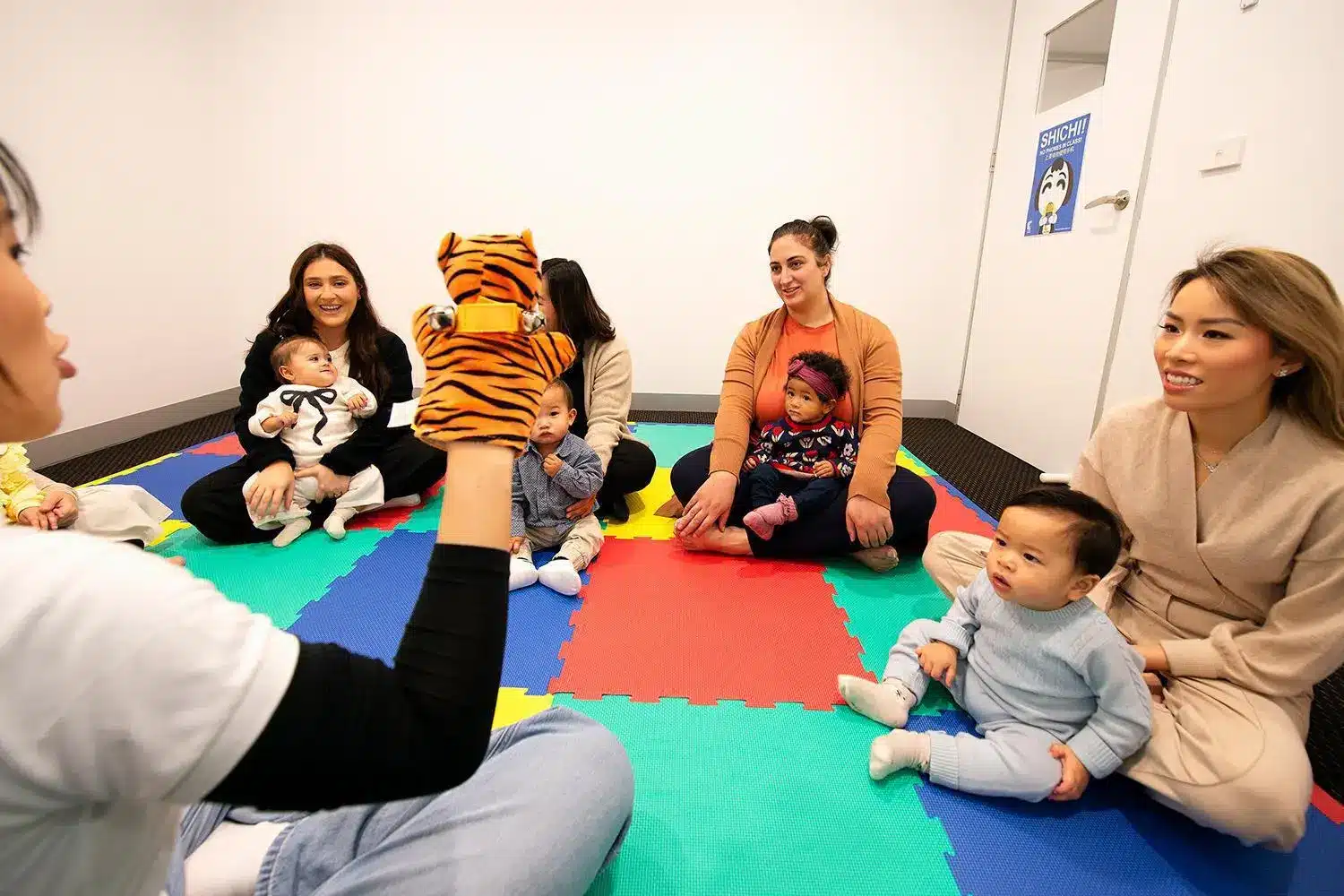
Image by Shichida Australia: Babies practise visual tracking as they follow the puppet with their eyes, helping strengthen focus, attention, and field of vision during early development. Following a moving puppet helps babies practise visual tracking, attention, and anticipation – early skills that support object permanence as babies learn to notice where people and objects move.
Object Permanence Activities for Babies (0-12 Months)
The best object permanence activities are simple, playful, and easy to repeat throughout the day.
Classic Peek-a-Boo
Peek-a-boo is one of the earliest and most effective object permanence games. Start by covering your face with your hands. As your baby grows, hide behind a cloth or around furniture before reappearing.
Play peek-a-boo during nappy changes or tummy time for a quick cognitive boost!
Hiding a Toy Under a Cloth
Place a favourite toy under a lightweight scarf while your baby watches. Around 7-9 months, many babies will begin lifting the cloth to retrieve it.
Pop-Up Toys
Simple pop-up toys help babies experience the exciting pattern of “gone” and “back again”. This strengthens their understanding that objects continue to exist even when temporarily hidden.
Lift-the-Flap Books
Books with flaps provide built-in object permanence practice. Your baby learns that something hidden behind the flap is still there waiting to be discovered.
Rolling a Ball Behind a Cushion
Slowly roll a ball behind a cushion or small obstacle. Encourage your baby to look for where it went. Use a brightly coloured ball and exaggerate your movements to keep your baby engaged.
Object Container Play
Place toys into a container and tip them back out. This simple activity helps babies understand that objects can move between locations while continuing to exist.
Calling From Another Room
Briefly step just out of sight and call your baby’s name before returning with a smile. This gentle game helps build trust alongside cognitive understanding.
Mirror Disappearance Play
Cover and uncover your baby’s reflection with a cloth. Many babies find this fascinating and entertaining.
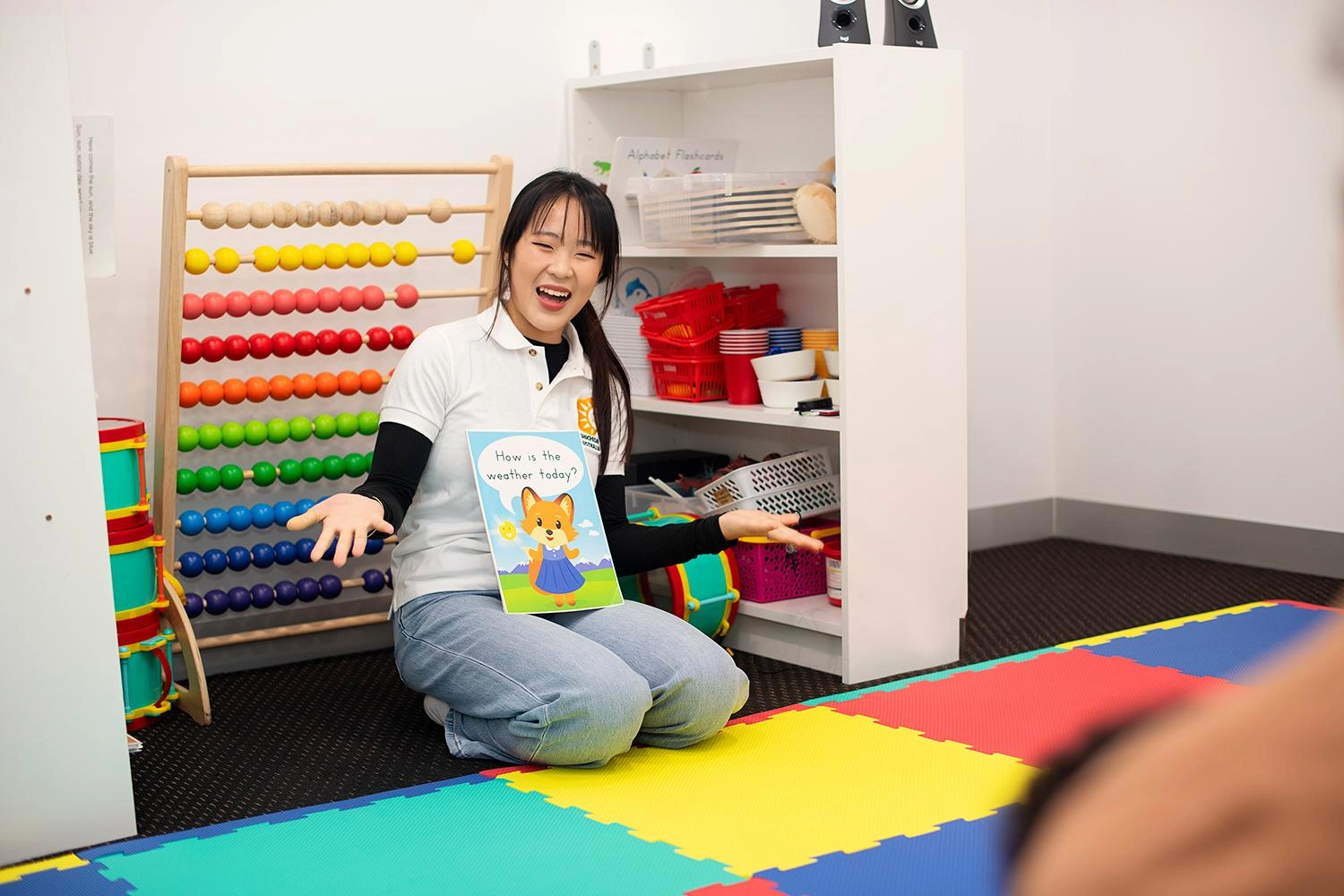
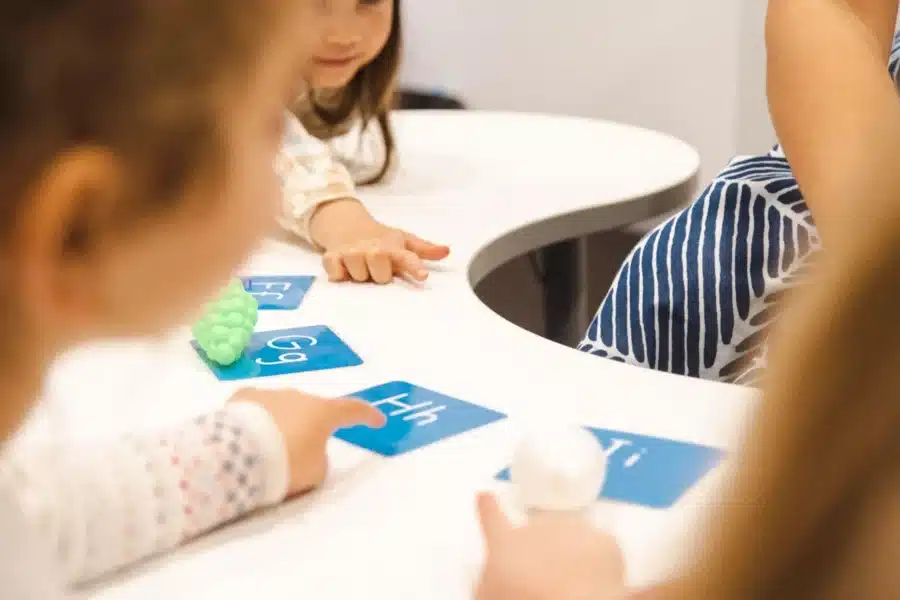
Image by Shichida Australia: Familiar songs and flashcard routines help babies build memory and anticipation as they learn to expect what comes next.
Object Permanence Activities for 1-Year-Olds
By age one, object permanence is becoming well established. Activities can now focus on memory, problem-solving, and exploration.
Object Permanence Boxes
These simple boxes allow toddlers to drop a ball into a hole and retrieve it from a drawer below. They encourage prediction, memory, and persistence.
Container and Lid Matching
Offer several containers and matching lids. Toddlers enjoy hiding objects, finding them again, and experimenting with different combinations.
Hide and Seek with People
Hide behind a doorway or curtain and encourage your toddler to come looking for you.
Stacking and Knocking Down
Building towers and knocking them down helps toddlers explore cause and effect while strengthening attention and coordination.
Simple Shape Sorters
Shape sorters encourage problem-solving while reinforcing the idea that objects continue to exist when placed inside a container.
Pointing and Naming Games
Ask questions such as “Where’s Daddy’s shoe?” or “Where’s your teddy?” Finding absent objects demonstrates growing mental representation skills.
Brain Development Toys for 1-Year-Olds

Image by Shichida Australia: Posting games help toddlers practise colour matching, fine motor control, memory, and problem-solving as they work out where each piece belongs and where it goes once posted inside the box
When choosing brain development toys for 1 year old children, focus on open-ended play rather than flashing lights or complicated features.
Helpful options include:
- Object permanence boxes
- Lift-the-flap books
- Push-button pop-up toys
- Soft balls and containers
- Wooden shape sorters
- Stacking rings
- Treasure baskets filled with safe household objects
Key Insight
The best brain development toys aren’t expensive or screen-based. They’re simple, open-ended, and allow your child to repeat the same actions many times. Repetition is how learning becomes lasting understanding.
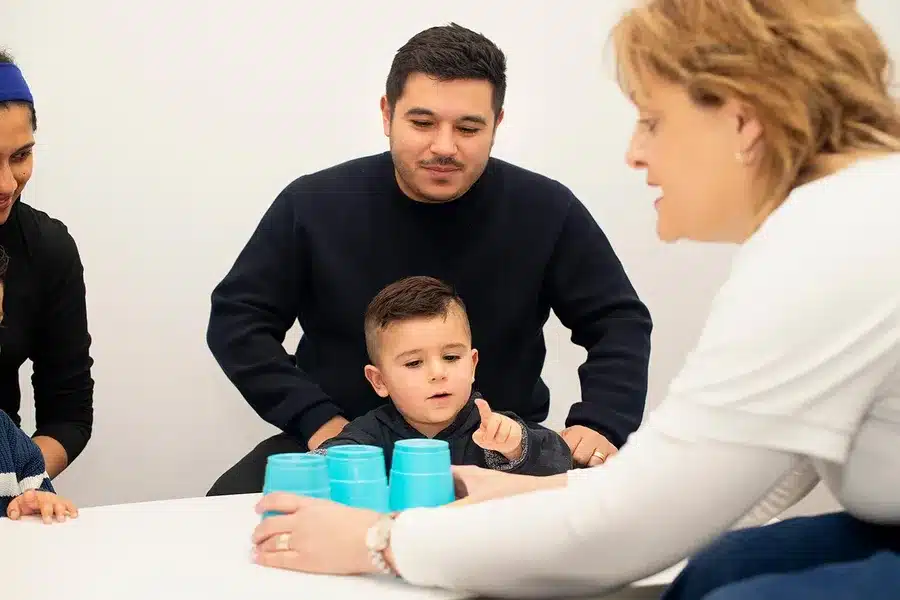
Image by Shichida Australia: Quick hidden-object intuition games help children practise decision-making as they tune into their first response, build confidence in their choices, and strengthen focus through playful learning.
Object Permanence and Memory Activities for 2-Year-Olds
By age two, the focus shifts beyond object permanence toward memory, language, sequencing, and symbolic thinking.
Memory Matching Games
Start with just two to four pairs of picture cards. Matching games strengthen attention and working memory.
Three-Cup Hide Game
Hide a toy under one of three cups while your toddler watches. Encourage them to track and locate the toy.
Imaginative Object Play
Ask questions such as “Where does teddy sleep?” or “Can you put teddy to bed?” Symbolic play shows increasingly sophisticated thinking.
Sequencing Daily Routines
Use picture cards or simple instructions such as “First we wash hands, then we eat lunch.” This helps toddlers understand events across time.
Hide and Seek with Time Delay
Hide an object, briefly leave the room, then return and encourage your child to find it. This strengthens memory retention.
Posting and Sorting Games
Posting boxes, coin banks, and sorting activities encourage toddlers to predict where objects have gone and retrieve them later.
Language Games for Absent Objects
Ask your toddler about a grandparent, favourite toy, or recent outing that is not currently present. Talking about absent people and events demonstrates strong mental representation skills.
Object Permanence, Separation Anxiety, and Emotional Development
Many parents first encounter object permanence through separation anxiety.
Separation anxiety often begins between 8 and 14 months and may peak between 14 and 18 months. While it can be challenging, it is usually a sign of healthy development.
Your baby now understands that you continue to exist when you’re not visible. What they have not yet fully mastered is the understanding that you will reliably return.
Helpful strategies include:
- Keeping goodbyes short and predictable
- Using comfort objects during separations
- Playing hide-and-seek games
- Following consistent daily routines
- Practising brief separations and reunions
Key Insight
Object permanence can contribute to separation anxiety because your baby understands that you still exist when you leave. Over time, consistent routines and repeated reunions help your child feel more secure and learn that you come back.
When to Speak to a Child Health Professional
Developmental milestones vary widely, and every child develops at their own pace.
However, it may be worth speaking with your Maternal and Child Health (MCH) nurse or GP if:
- By 12 months, your baby shows no interest in hidden objects
- Your child never searches for toys that disappear
- By 18 months, there are no signs of pretend or symbolic play
- Previously acquired skills are lost
- You have concerns about eye contact, response to name, or social engagement
These are conversation starters, not diagnoses. A health professional can provide reassurance or recommend further assessment if needed.
Supporting Your Baby’s Cognitive Development with Shichida

Object permanence is just one of many important milestones that develop during the first two years of life. During this time, babies are building memory, attention, language, emotional awareness, and problem-solving skills.
The Shichida Method supports early development through structured, multi-sensory learning experiences. Shichida Australia’s infant and toddler programs combine sensory activities, language exposure, music, movement, memory games, and parent-child interaction to complement learning at home.
Ready to continue your child’s learning journey? Book a trial class or find your nearest Shichida centre today!
FAQs About Object Permanence in Babies and Toddlers
Object permanence in babies is the understanding that people and objects still exist even when they cannot be seen, heard, or touched. For example, when a toy is hidden under a blanket, your baby gradually learns that the toy has not disappeared and can be found again.
Babies usually begin developing object permanence between 4 and 7 months. Stronger signs often appear between 8 and 12 months, such as searching for hidden toys or looking for a parent who has left the room. More advanced object permanence skills usually continue developing between 18 and 24 months.
Your baby may be developing object permanence if they look for dropped toys, lift a cloth to find a hidden object, enjoy peek-a-boo, search for you when you leave the room, or become curious about where things have gone. These behaviours show that your baby is beginning to understand that people and objects still exist when out of sight.
Yes. Peek-a-boo is one of the simplest ways to support object permanence in babies. When your face disappears and then reappears, your baby begins to learn that you still exist even when they cannot see you. It also supports attention, anticipation, social connection, and early memory.
Simple object permanence activities include peek-a-boo, hiding a toy under a cloth, using lift-the-flap books, rolling a ball behind a cushion, playing with containers, and gently calling your baby’s name from another room before reappearing. These games help babies practise remembering, searching, and predicting what will happen next.
Yes. Separation anxiety is often connected to object permanence. Once babies understand that a parent still exists after leaving the room, they may become upset because they want that parent to return. This can be challenging, but it is also a normal sign of healthy cognitive and emotional development.
Toys that support object permanence include object permanence boxes, lift-the-flap books, pop-up toys, stacking cups, soft balls, containers with lids, shape sorters, and simple hiding toys. The best toys are usually simple, hands-on, and repeatable, allowing babies to explore where objects go and how to find them again.
Object permanence supports brain development by helping babies build memory, attention, problem-solving skills, language understanding, and emotional security. When babies search for hidden objects or anticipate someone returning, they are practising early thinking skills that support later learning.
Shichida supports object permanence and early learning through structured, multi-sensory activities that help babies and toddlers build memory, attention, language, problem-solving skills, and emotional confidence. In Shichida classes, children experience songs, movement, sensory play, flashcards, memory games, hands-on activities, and parent-child interaction, all of which support early cognitive development.
Every child develops at their own pace, but it may be worth speaking with your Maternal and Child Health nurse or GP if your baby shows no interest in hidden objects by around 12 months, does not search for toys that disappear, loses previously developed skills, or you have concerns about eye contact, response to name, or social engagement.