Key Takeaways:
- An early numeracy skills checklist helps parents understand what maths development looks like at each stage. It gives you a practical way to spot milestones, support learning at home, and notice when your child may need extra help.
- Early numeracy is about much more than counting. It includes number recognition, comparing quantities, recognising patterns, sorting, identifying shapes, and understanding size, order, and measurement.
- Children build early maths skills gradually through everyday life. Counting snacks, sorting toys, spotting numbers outside, and singing number rhymes all help strengthen early numeracy in natural, meaningful ways.
- An early numeracy skills checklist can help you track age-based milestones from toddlerhood through the early years of school. Each stage builds on the one before it, from early number awareness to more advanced concepts like skip counting.
- Hands-on activities are one of the best ways to support numeracy at home. Kitchen maths, toy sorting, outdoor number hunts, storybooks, and rhymes all make learning more engaging and easier to understand.
- Visual tools can make abstract maths concepts easier for children to grasp. Number lines, flashcards, posters, and simple progress trackers can help reinforce learning and keep children motivated.
Helping your child develop a strong foundation in maths begins long before they enter school. From recognising shapes to counting snacks, children engage with numbers every day. These early interactions form the basis of what’s known as early numeracy skills – a key component of learning and everyday problem-solving.
Understanding how your child’s maths abilities unfold over time can help you better support them through everyday play and conversation. This comprehensive early numeracy skills checklist outlines age-specific numeracy milestones, engaging activities and practical tips to make early maths both fun and meaningful.
Designed for families with children up to 5 years old.
Understanding Early Numeracy
What Is Early Numeracy?
Early numeracy refers to a child’s first experiences with mathematical thinking and problem-solving. It’s more than just counting for kids, it includes recognising numbers, comparing quantities, identifying patterns, and understanding basic maths concepts through play and exploration.
Here are some foundational early numeracy skills:
- Recognising and naming numbers
- Counting objects and understanding quantity
- Comparing concepts like more vs. less
- Identifying shapes and patterns
- Understanding size, order and basic measurement
- Beginning to estimate, sort and group items
According to the Australian Early Years Learning Framework, early numeracy includes number sense, pattern recognition, spatial awareness, and measurement – all of which begin developing in the first five years.
These foundational skills form the foundation for future maths learning like addition and subtraction. They also build the groundwork for everyday problem-solving, logical reasoning, and even scientific thinking.
Why Early Numeracy Matters
Early maths development is often linked to later academic confidence and success. According to experts from Raising Children Network, children who are exposed to numeracy from a young age tend to perform better in school mathematics, and also show stronger critical thinking and spatial awareness.
Just like early literacy, numeracy affects how your child makes sense of the world. A solid grasp of numbers during the early years builds confidence, supports curiosity, and enhances logical thinking – skills that benefit your child not just in school, but in everyday life.

DIY early numeracy skills example: A fun cup stacking numbers game helps children learn to recognise numerals, count, and sequence in a hands-on, engaging way.
Age-by-Age Numeracy Skills Checklist
As your child grows, their understanding of maths develops step by step. From toddlerhood to early primary years, they reach important numeracy milestones that form the foundation for lifelong learning. Understanding what to expect at each age helps you support your child’s early math development in natural, fun ways.
Below is a breakdown of math skills by age, what to look out for, and how you can encourage these skills at home.
1–2 Years: Early Number Awareness
At this stage, toddlers begin to notice quantities and explore simple math concepts through everyday routines and play.
Toddler Numeracy Milestones:
- Enjoying counting songs and rhymes
- Pointing to objects while you count
- Exploring stacking toys, shape sorters and blocks
- Using number words like “one” and “two”
- Understanding “gone” or noticing “more”
3–4 Years: Building Confidence with Numbers
During the preschool years, children begin applying math concepts in daily life.
Preschool Numeracy Milestones:
- Counting up to 10, often by memory (rote counting)
- Sorting and matching by size, shape, or colour
- Recognising numbers 0–10
- Grasping “more,” “less,” and “same”
- Completing and creating simple patterns
5–6 Years: Developing Foundation (Prep) Maths Skills
This age marks the beginning of formal schooling in Australia, typically called the Foundation Year or Prep. Children begin solving basic math problems and using tools like number lines.
Early Primary Numeracy Milestones:
- Counting beyond 20
- Solving simple addition and subtraction problems
- Using fingers or objects to work out answers
- Understanding shapes and spatial terms (e.g., “behind,” “next to”)
- Identifying coins and understanding basic measurements (e.g., “shorter,” “heavier”)
6–7 Years: Applying Maths to the Real World
By early primary school, children begin using maths vocabulary and problem-solving skills more fluently.
School Aged Numeracy Milestones:
- Skip counting by 2s, 5s, and 10s
- Recognising odd and even numbers
- Grouping objects (early multiplication)
- Using diagrams and number lines
- Understanding time, money and common units of measurement

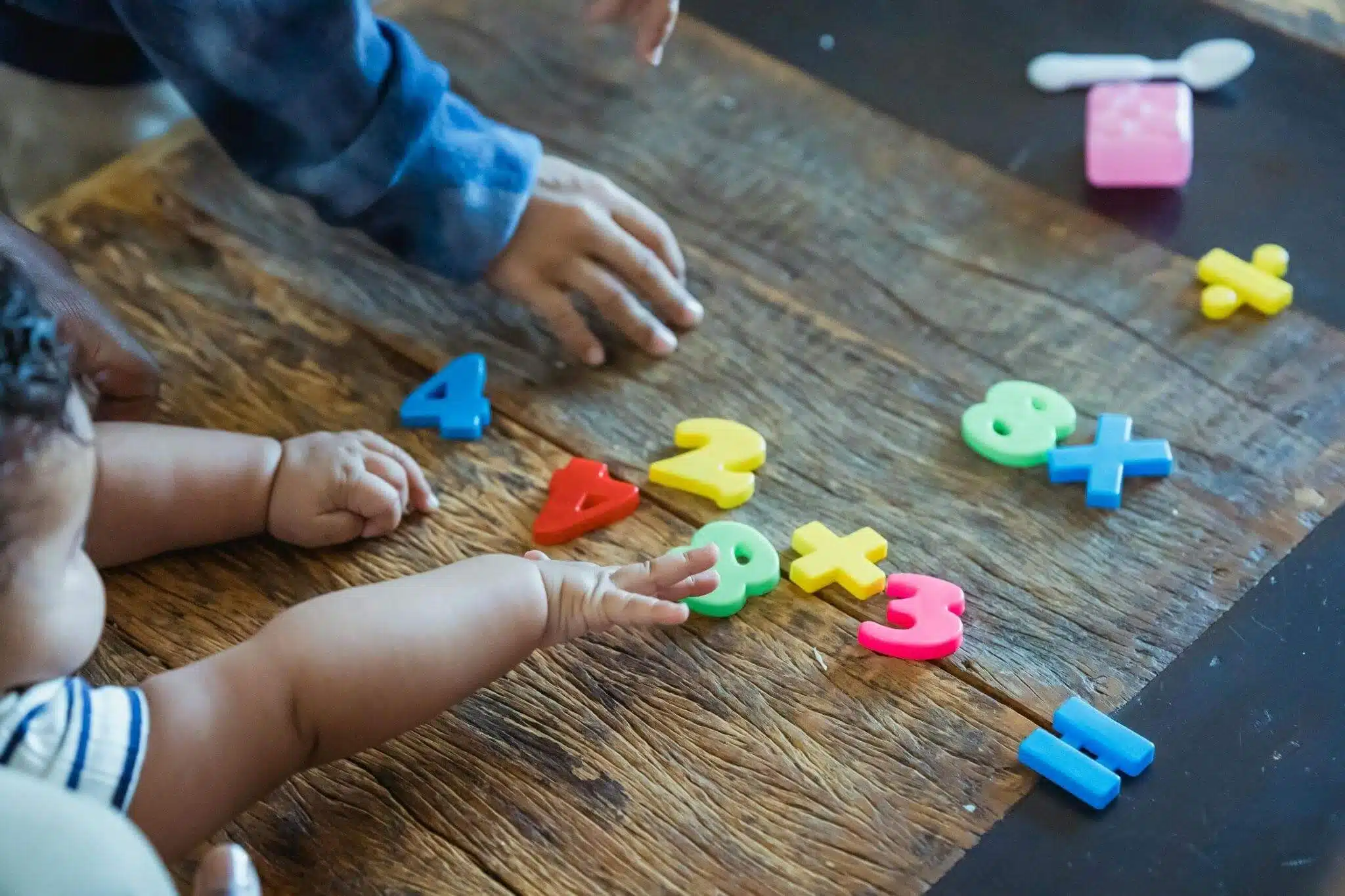
Image by Shichida Australia: Lining up number dominoes in numerical order builds number recognition and sequencing, fine motor control, and confidence in a playful way.
Activities to Boost Numeracy at Home
Learning early maths doesn’t require worksheets or screens. Many preschool math activities can be done using everyday items and a little creativity. These hands-on ideas help reinforce early numeracy skills at home in simple, meaningful ways.
Everyday Math in the Kitchen
Cooking is a great way to introduce maths concepts in a fun, practical setting:
- Measure ingredients using cups and spoons
- Set timers and read the numbers aloud
- Count items like berries, pasta pieces, or biscuits
Number Play with Toys
Toys offer natural opportunities to build number sense:
- Count toys as your child lines them up or puts them away
- Sort blocks by colour, size, or shape
- Use stacking cups to explore ideas like “bigger” and “smaller”
Outdoor Numeracy Activities
The outdoors is an excellent environment for early maths learning:
- Count steps on a walk
- Look for numbers on signs or letterboxes
- Collect and sort natural objects like leaves, stones, or sticks
- Create simple patterns using items found outside
Storybooks and Rhymes
- Counting for kids becomes more engaging when wrapped in stories and music:
- Read picture books with numbers or maths-related themes
- Sing songs like “Five Little Ducks” or “Ten in the Bed”
- Use finger movements and actions to bring counting rhymes to life
Not sure if your doing enough at home? Shichida can show you how to develop early math and literacy skills through fun games and activities. Book a trial class and see what Shichida can do for you.
Printable and Visual Tools for Parents
Structured visuals make abstract maths ideas easier to understand. Using downloadable tools and visuals can help your child build skills and stay motivated. Flashcards are a good example of a visual tool that is great for early numeracy skills development.
Free DIY Flashcards
Shichida offers a free resources library that includes DIY printable flashcards on a variety of topics.
Create your own Numeracy Skills Checklist
A well-structured checklist can help you monitor your child’s development and guide everyday learning in practical ways.
What to include:
- Key numeracy milestones for your child’s age
- Progress Tracker – to record observations and notes
- Spaces for stamps or stickers after a job well done
Visual Posters
Hang helpful maths posters in your child’s room or learning space, for example:
- Number lines
- Shape and colour charts
- Number charts
- Maths vocabulary cards (e.g., more/less, before/after
Signs Your Child May Need Extra Support
Every child develops at their own pace, but recognising early signs of difficulty in numeracy can help you provide timely support. Early maths skills are essential for future academic success, so knowing when to take action matters.
If your child regularly struggles with the following, they may benefit from extra help:
- Trouble recognising or naming numbers
- Difficulty understanding quantities (e.g., which group has more or fewer)
- Avoiding number-related games, puzzles, or tasks
- Little or no progress with basic counting or number recognition over several months
These challenges may appear in day-to-day routines like sorting toys, counting snacks, or identifying shapes.
If you’re concerned, speak with your child’s pediatrician or your GP. Early intervention can lead to better outcomes. Many children simply need more repetition, different strategies, or a more hands-on learning approach.
Final Thoughts and Encouragement for Parents
Supporting your child’s early numeracy development is one of the most valuable investments you can make in their education. But it’s important to remember – there’s no single path or pace. Some children count everything in sight. Others may take a little longer to grasp new concepts. That’s normal.
The key is to make maths part of everyday life. Keep it playful, positive, and connected to real experiences.
You don’t need to aim for perfection. Instead, focus on:
- Making numbers a natural part of conversations and routines
- Celebrating small wins and progress
- Encouraging curiosity and problem-solving
With time, patience, and the right support, your child will develop strong number skills that extend beyond schoolwork and into everyday decision-making and confidence.

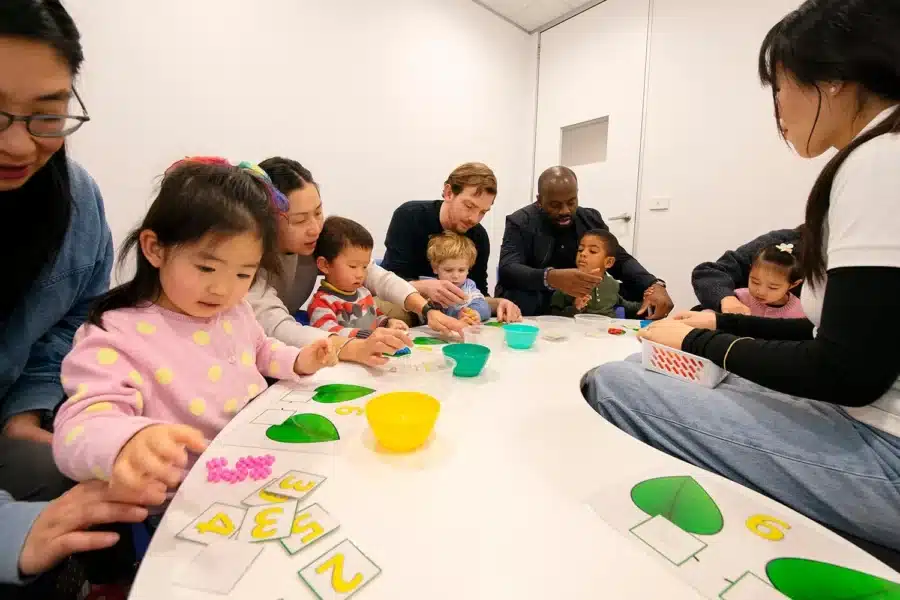
Photo by Shichida Australia: Building early numeracy skills through meaningful play – Shichida classes support hands-on learning with number games that make maths fun and interactive.
Develop a Love for Numbers with Shichida
Want to go beyond an early numeracy skills checklist?
Your child is already learning maths – while pouring cereal, lining up toys or singing rhymes. At Shichida Australia, our classes nurture:
- Early numeracy and number sense
- Focus and memory
- Creative thinking and logic
- And much more!
Book a Trial Class and see how our hands-on, brain-boosting program builds strong foundations for lifelong learning – starting from the very first years!
FAQ: Early Numeracy Skills Checklist for Kids
An early numeracy skills checklist should include age-based milestones such as number recognition, counting, understanding quantity, sorting, pattern recognition, shape identification, and early measurement concepts. It should also leave space for notes on what your child enjoys, what they find tricky, and how they apply maths in everyday life.
Early numeracy skills are a child’s first understanding of numbers and patterns. They include number recognition, counting, comparing quantities, identifying shapes, and beginning problem-solving. These skills form the foundation for later maths learning at school and in everyday life.
Most children can count to 10 by the age of 3 to 4. By 5 to 6 years old – typically in preschool or foundation – they often count to 20 or beyond and begin solving simple addition problems using fingers or objects.
You can tell your child is on track with numeracy if they are gradually building age-appropriate skills such as recognising numbers, counting objects, comparing quantities, identifying shapes, and understanding simple patterns. Steady progress matters more than perfection, and using an early numeracy skills checklist can help you track milestones over time.
Numeracy milestones by age usually begin with early number awareness in toddlerhood, such as enjoying counting songs and noticing “more” or “gone.” By ages 3 to 4, many children can count to 10, sort by shape or colour, and recognise simple numbers. By ages 5 to 7, children often begin solving simple addition and subtraction problems, skip counting, and using maths in real-world situations like time, money, and measurement.
You can support toddler maths development by making everyday routines more interactive. Try counting snacks together, sorting toys by size or colour, singing number songs, or pointing out shapes while reading books or going for a walk.
Counting is just one part of early numeracy. Early numeracy also includes recognising numbers, comparing more and less, spotting patterns, sorting objects, understanding shapes, and using basic problem-solving skills. In other words, counting is one skill within a much broader foundation for maths learning.
There are many educational apps that introduce counting and number games for young children. However, hands-on learning – like measuring, stacking, and comparing real objects – helps children understand concepts more deeply. Use apps to supplement, not replace, physical play. SHICHIDA at Home offers a digital learning platform that is suitable for ages 1 to 5 – and offers a free 30-day trial.
All children develop at different rates, and it’s normal to see some variation. If your child avoids number activities or shows limited progress over several months, speak with a teacher, health professional, or early childhood educator for advice and support strategies.
Everyday activities that build early numeracy skills include counting snacks, sorting toys, measuring ingredients while cooking, spotting numbers on signs, comparing sizes, singing number rhymes, and creating simple patterns with household items. These small daily moments help children learn maths in a natural, meaningful way.
Yes. Programs like Shichida Australia offer early learning classes designed to build strong numeracy skills through whole-brain learning. These classes use hands-on activities, songs, puzzles, and games to help children understand maths concepts in a fun and age-appropriate way.