Key Takeaways
- Your child’s brain forms over one million new neural connections every second in the first five years of life. That window doesn’t stay open forever.
- Brain activation exercises for kids don’t require special equipment or structured lessons. The best neuroplasticity exercises look exactly like play.
- The right activity depends on the age. A sensory bin works brilliantly for a toddler and does almost nothing for a seven-year-old.
- Repetition matters more than variety. Returning to the same activities builds stronger neural connections than constantly introducing new ones.
Most parents searching for brain activation exercises for kids already do three of them before breakfast. They just don’t know it.
Shichida has spent 15 years helping Australian families understand what builds a child’s brain during the golden period, birth to age nine, and the answer is almost never what parents expect.
This guide shares the neuroplasticity exercises that genuinely work, organised by your child’s age, so you can stop guessing and start growing together.

What are brain activation exercises?
Brain activation exercises are activities that stimulate the formation and strengthening of neural pathways. They include movement, sensory play, pattern recognition, language games, and music. Any experience that asks the brain to process, respond, and adapt counts.
The science behind them is neuroplasticity: the brain’s ability to physically change and grow in response to experience. According to Harvard’s Center on the Developing Child, a child’s brain forms over one million new neural connections every second in the early years. That rate never happens again.
Why early childhood is the critical window
Shichida calls the period from birth to age three the golden period, when the brain is most flexible and most receptive to the kind of stimulation that builds lasting capacity. Starting early doesn’t mean pushing harder. It means choosing the right activities at the right time.
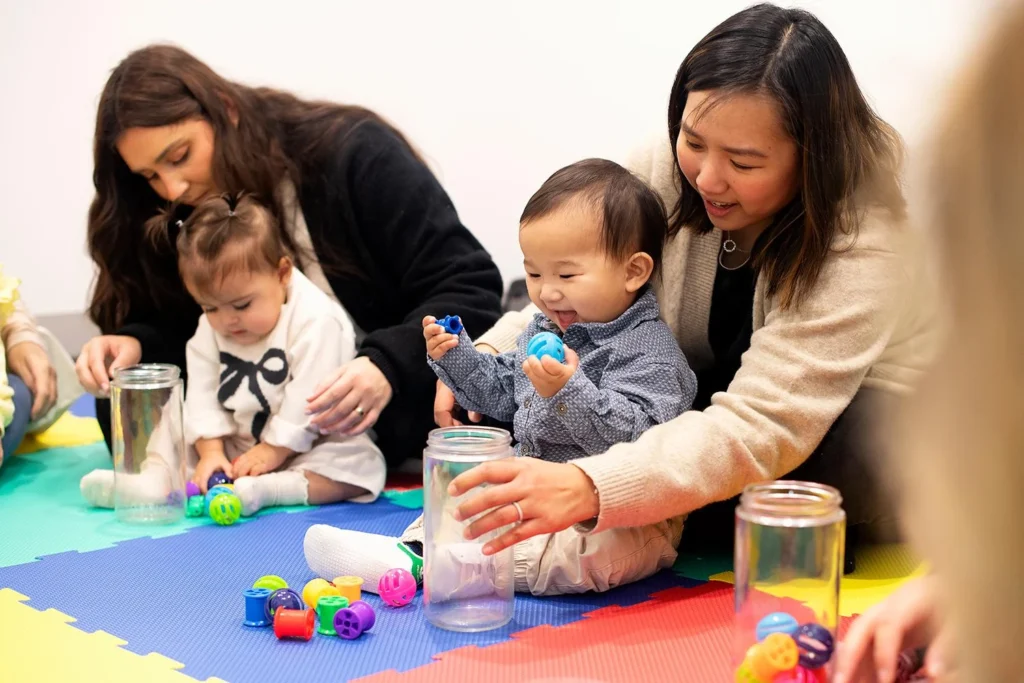
Photo by Shichida Australia: Babies playing games during a Shichida Baby Class – stimulating brain developmnet through play alongside a parent.
What brain activation exercises work best for babies and toddlers?
At this age, the brain grows faster than at any other point in life. Activities need to be sensory, repetitive, and parent-led. Toddlers don’t need an exercise program. They need texture, movement, and your voice.
- Sensory bins: Fill a container with rice, sand, or water and hide small objects inside. Tactile input builds neural pathways for motor planning and sensory processing.
- High-contrast visual play: Bold patterns and Shichida-style flashcards stimulate the visual cortex during its most sensitive developmental window. Brief, high-speed sequences are more effective than slow ones.
- Animal walks: Crawling like a bear or waddling like a duck activates both brain hemispheres simultaneously. Cross-body movement is one of the most well-evidenced early brain activation exercises.
- Rhythm and music: Clapping games, nursery rhymes, and simple percussion build neural pathways through repetitive auditory and motor input.
- Back-and-forth conversation: Research from the University of Washington found that conversational turn-taking at five months old predicts stronger language development later. Even before your child has words, they’re practising the neural circuits for communication.
Explore how we use these brain activation activities in our baby classes and toddler classes.
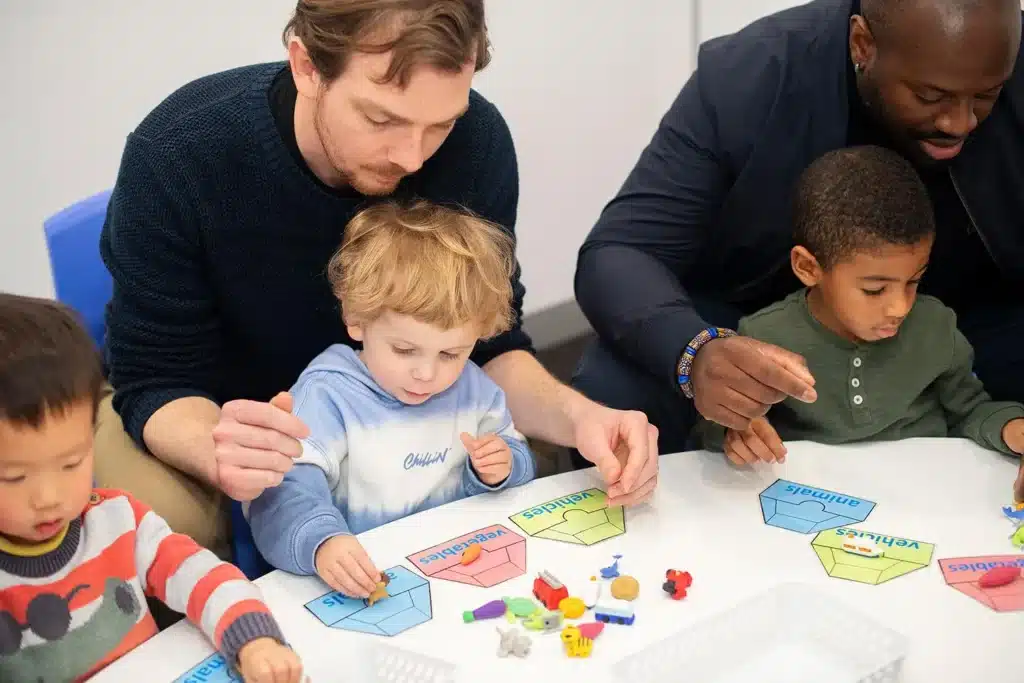
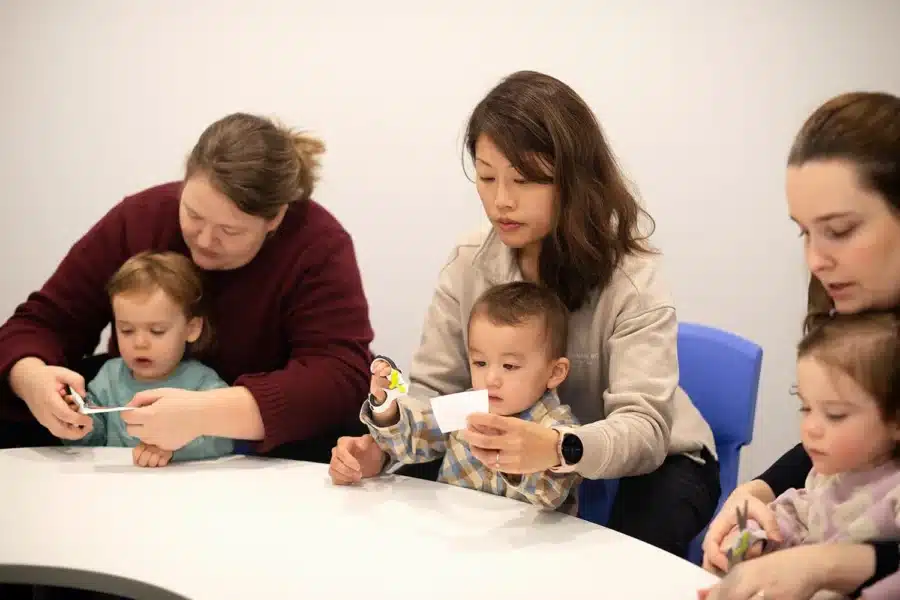
Photo by Shichida Australia: Toddlers having fun – sorting and category matching games are powerful neuroplasticity exercises for kids, enhancing memory, problem-solving, vocabulary and pattern recognition through fun, brain-building play!
What brain activation exercises work best for preschoolers?
Preschoolers can handle more structured challenges. This is when pattern recognition, language games, and imaginative play produce the strongest neural development.
- Puzzle games and shape sorting: Matching and sequencing build pattern recognition and cognitive flexibility. The brain is learning to predict, think critically and problem-solve.
- Memory matching games: Simple pairs games build working memory, the capacity that most strongly predicts later academic performance. Memory training is one of Shichida’s core program techniques for exactly this reason.
- Storytelling and word games: Rhyming, making up stories, and reading aloud build neural connections in speech and comprehension areas.
- Music and rhythm: A study in Frontiers in Psychology found that music-based activities significantly improved attention control in preschool children. Clapping patterns and echo songs are enough.
- High-speed flashcards: Brief, fast-paced visual sequences build processing speed and right-brain activation, the Shichida flashcard techniques parents see used in every class.
| Activity | Brain area | Best age |
| Sensory bins | Motor cortex, sensory processing | 0 to 3 |
| High-speed flashcards | Visual cortex, right brain | 0 to 9 |
| Memory matching games | Working memory | 3 to 7 |
| Music and rhythm | Both hemispheres | All ages |
| Animal walks | Cerebellum, attention | 1 to 5 |
See how these activities are structured for preschoolers at our Shichida kinder classes.
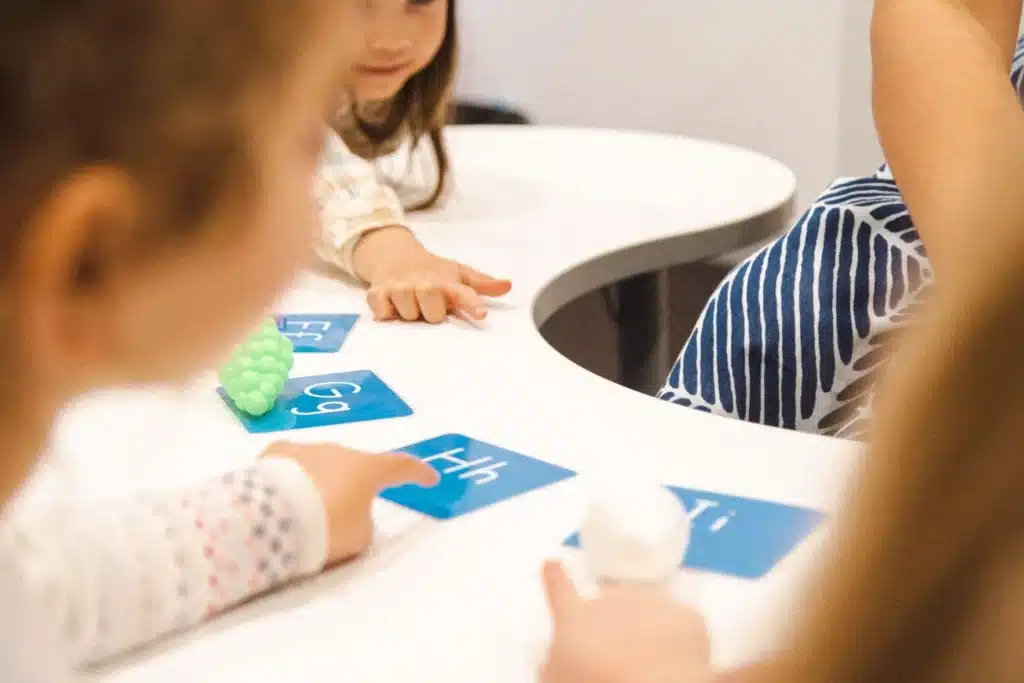
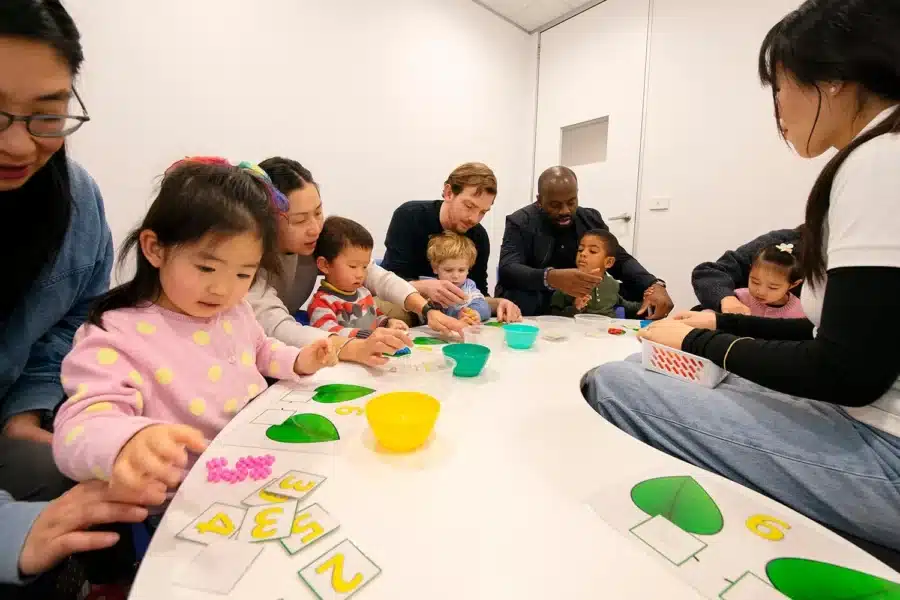
Photo by Shichida Australia: Preschoolers playing a phonics matching game during a Shichida Kinder Class.
What brain activation exercises work best for school-age children?
By school age, the brain is ready for cognitively layered challenges. Activities that combine planning, sequencing, and working memory at the same time produce the strongest results.
- Strategy games and logic puzzles: Chess, tangrams, and sequencing games build executive function and cognitive flexibility.
- Learning a musical instrument: The strongest single evidence base for neuroplasticity in school-age children. Playing an instrument engages motor, auditory, and visual brain regions simultaneously.
- Speed reading and visual chunking: Shichida’s speed reading technique builds eye tracking, processing speed, and reading fluency at the same time.
- Mindfulness and deep breathing: Brief structured mindfulness strengthens prefrontal cortex connections. Two to three minutes before school or before bed is enough.
Explore how we develop these skills at Pre-Primary classes (ages 5 to 7) and Primary classes (ages 7 to 9).
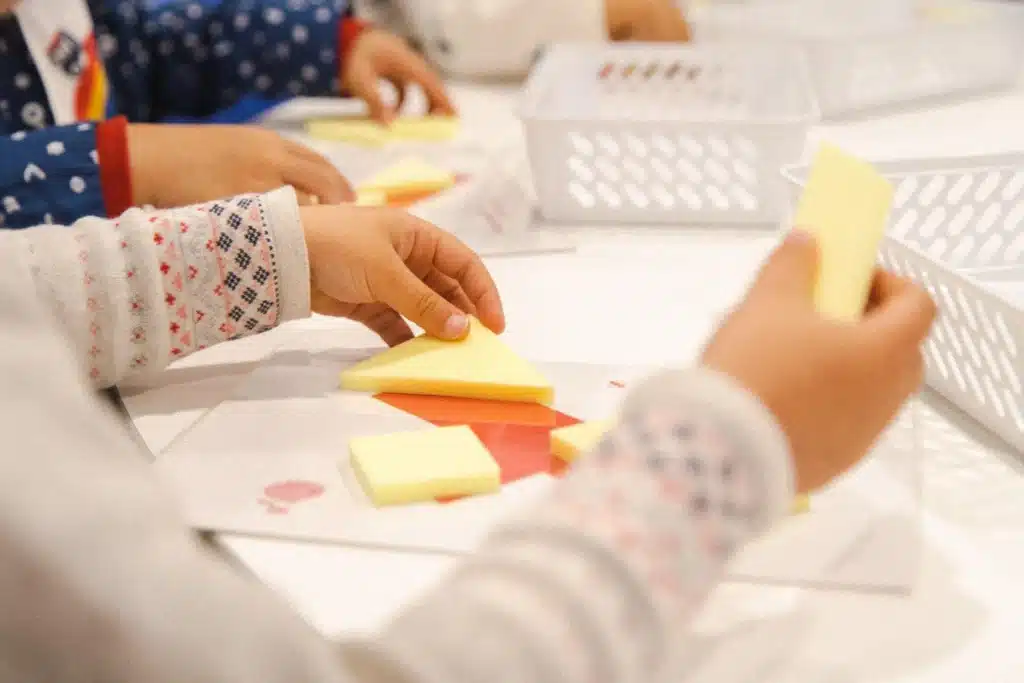
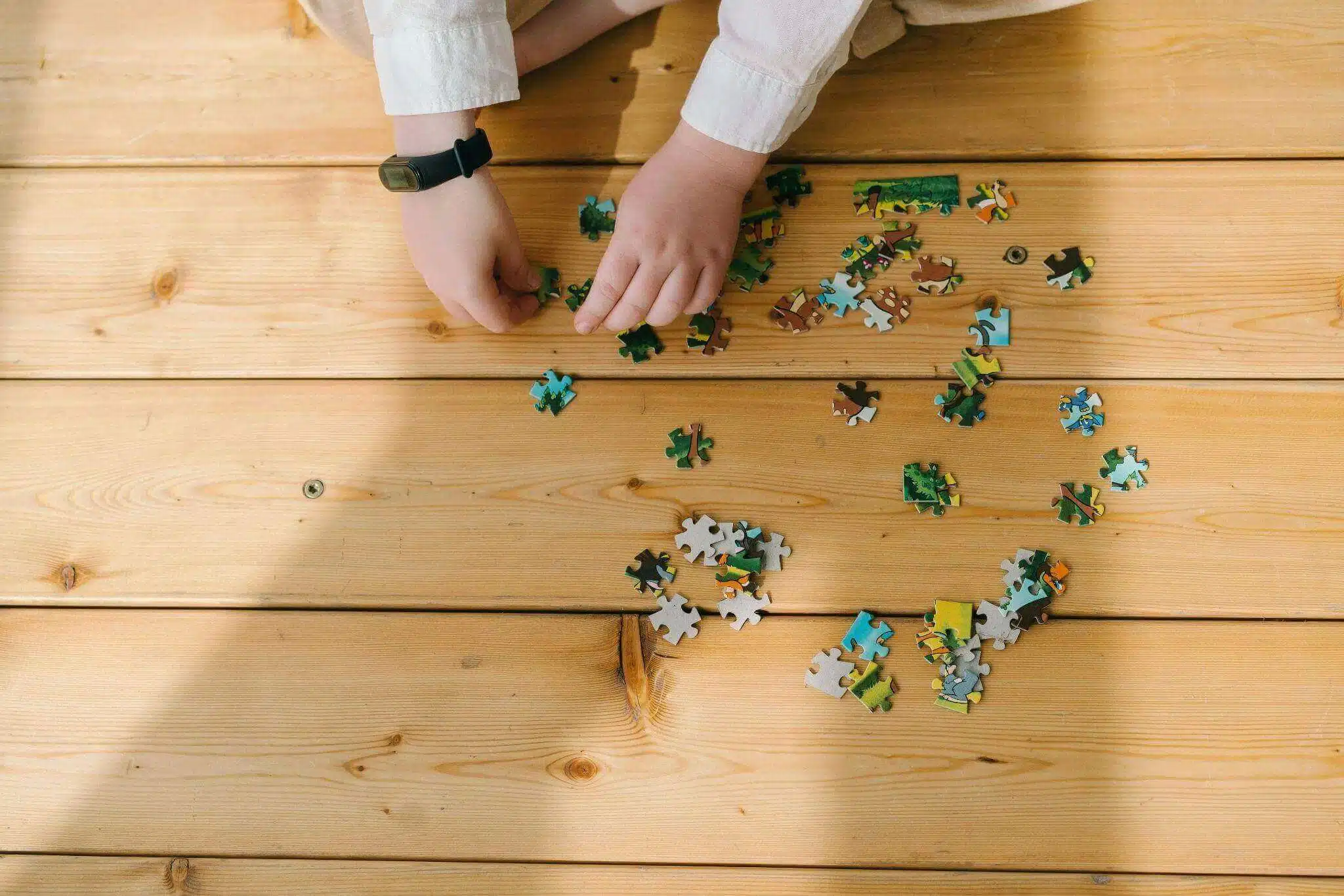
Photo by Shichida Australia: Tangram puzzle challenges are great learning fun for kids!
How does Shichida use neuroplasticity principles in every class?
Shichida delivers these activities in the right sequence, at the right age, with the right repetition. And you’re in the room for every session, experiencing your child’s joy while they learn!
Classes are capped at six children, combining flashcard work, memory training, and right-brain activation techniques built around the golden period. This window, birth to age three, is when the brain is most receptive. It won’t come around again.
FAQs: Neuroplasticity exercises for kids - Questions parents ask about brain activation exercises
They’re activities that stimulate neural pathway formation, including sensory play, memory games, music, and movement. Any experience that asks a young brain to process, respond, and repeat is doing this work.
From birth. The first three years are when the brain grows fastest, and even simple sensory play and back-and-forth conversation build lasting neural capacity.
Daily short sessions beat weekly long ones. Repetition is the mechanism, and the same activity done regularly builds stronger connections than a new one every time.
Yes. A study in Frontiers in Psychology found that rhythmic movement and music training significantly improved attention control in preschool children. The research on sensory play, language environments, and working memory training all point the same way.
It’s the brain’s ability to physically change and grow in response to experience. Every time your child practises a skill, the neural pathway for that skill gets stronger.
Shichida’s program is built specifically around the golden period, birth to age nine, when neuroplasticity is at its peak. Every class combines memory training, flashcard work, and right-brain activation techniques designed for your child’s specific age.