Key Takeaways:
- Sensory Differences: Research shows that 5-8% of young children exhibit sensory differences, and early intervention can improve long-term outcomes.
- The Importance of Play: A study found preschool children were sedentary 73% of the time, highlighting the need for sensory play to support physical development.
- Learning & Engagement: A study on multi-sensory toys found they significantly increase children’s engagement time and learning improvements.
From the moment they’re born, babies start learning about the world through their senses.
This is why sensory play is so vital for early brain development. This article shares the science- backed benefits of sensory play for infants and how it can help to build the foundations for a lifetime of learning.
What Is Sensory Play?
Sensory play is any activity that engages and stimulates a child’s senses, which is key for sensory stimulation for infants.
- The Five Senses: This includes touch, sight, sound, smell, and taste, explored through things like feeling a soft blanket or listening to a rattle.
- Proprioception and Vestibular Senses: These involve a child’s body awareness and balance, developed through activities like rocking or tummy time.
- Active vs. Passive: Active sensory play (a baby grabbing a toy) is more beneficial for sensory development than passive stimulation (background noise).
To understand different types of sensory play, explore our article: Stimulating Senses with Sensory Play
Why Sensory Play Matters in Early Development
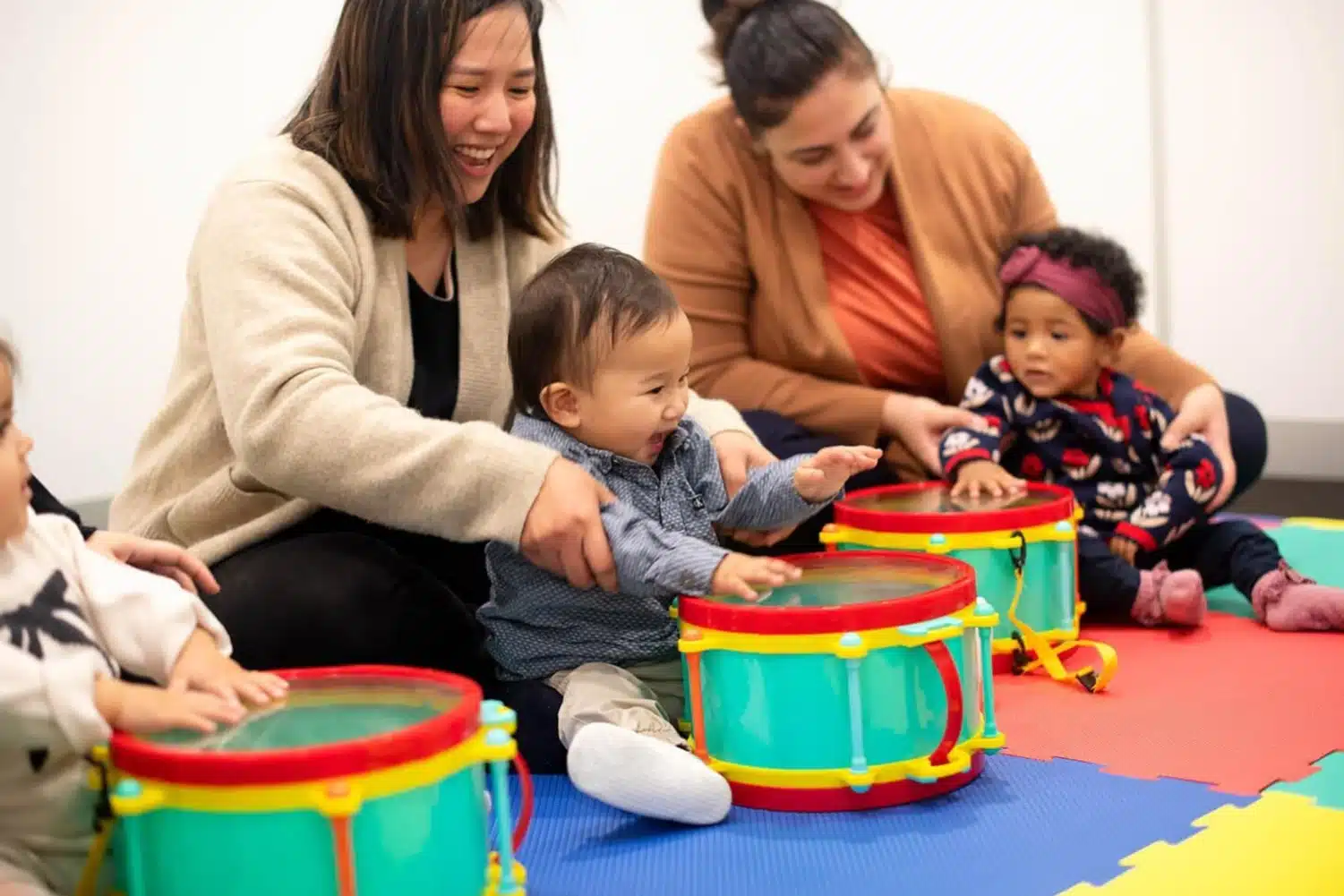
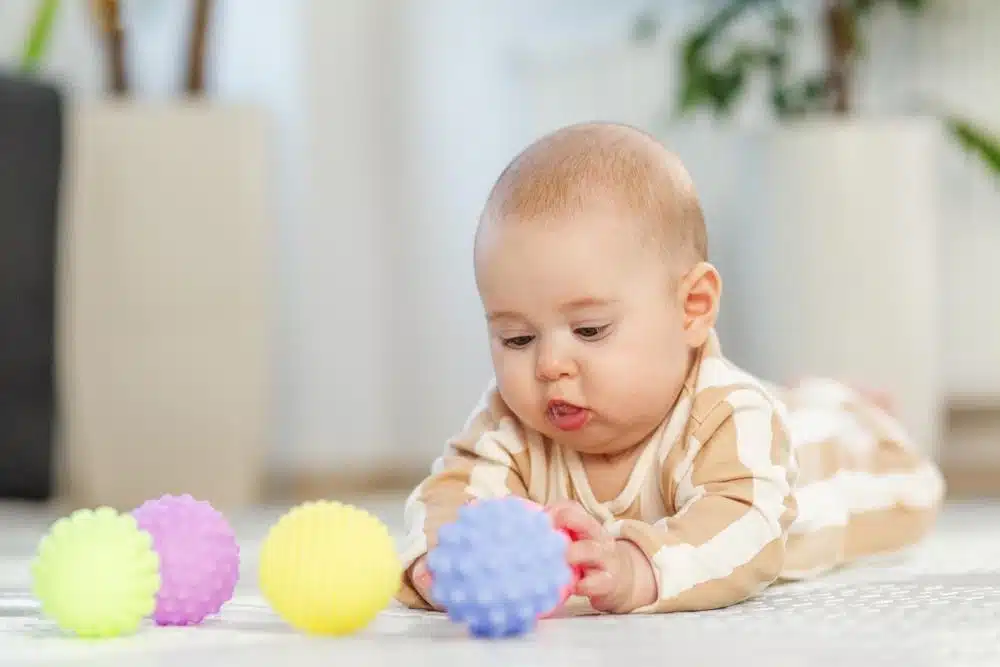
Image by Shichida Australia: The benefits of sensory play for infants include building brain connections, strengthening muscles, and sparking curiosity from the very start.
Understanding the importance of sensory play in early development is vital for your baby’s brain growth.
- Brain Building: Every new sensory experience helps create and strengthen the neural connections in your baby’s brain, which is vital for all future learning.
- Early Skills: It supports cognitive and emotional growth while boosting curiosity, attention, and social skills.
- Problem-Solving: Sensory play lays the groundwork for early problem-solving as your baby learns to explore their environment and figure out cause and effect.
- Calming Effects: It can also be incredibly soothing, providing a sense of calm that can help reduce fussiness.
4 Evidence-Based Benefits of Sensory Play
The benefits of sensory play for babies aren’t just a theory. They’re backed by research that shows just how powerful these simple activities can be for long-term development.
1. Enhances Sensory Processing
Early sensory play builds crucial brain connections and can help prevent sensory integration difficulties. Studies show that about 5-8% of young children experience sensory differences, and early, sensory-based interventions can significantly improve long-term development.
2. Supports Motor Skills
Active sensory play gives infants a vital opportunity to move and build coordination. Research has underscored the need for such play to support physical development, with one study finding that preschool children were sedentary 73% of the time.
3. Promotes Language & Cognitive Growth
Interactive, sensory-rich experiences promote language development and cognitive skills. Studies show that multi-sensory educational toys can significantly increase a child’s engagement and learning improvements.
4. Builds Emotional Security
Interactive sensory play reinforces parent-child bonding, which is linked to better developmental outcomes and helps a baby build trust and emotional security.

Photo from Shichida Australia: A Shichida baby class in action! Little ones discovering the world through touch, sound, and movement – the perfect example of the benefits of sensory play for infants.
Age-Appropriate Sensory Play Ideas
Ready to dive in? Here are some simple, age-appropriate baby sensory activities you can easily do at home.
For newborns to 3 months
For this age, simple, gentle interactions are key to providing essential sensory stimulation for infants.
- Soft Touch: Gently stroke your baby with a variety of soft, safe fabrics.
- Visuals: Hold black-and-white cards 8-12 inches (20-30 cm) away to encourage visual tracking and focus.
- Tummy Time: Place your baby on different textures, like a plush mat or smooth towel, for their supervised tummy time.
- Sound: Talk, sing, or play soft music to help them recognize sounds and voices.
For 3 to 6 months
As your baby becomes more active, you can introduce new types of stimulation for infants with these simple activities:
- Textured Toys: Offer cloth books or crinkly toys with varied textures to grasp and explore.
- Water Play: Supervise them as they splash in a small tub to feel the new sensation.
- Mirror Play: Use a baby-proof mirror to help them see their reflection and practice visual tracking.
- Sound & Cause-Effect: Offer rattles that make noise when shaken to encourage them to discover cause and effect.
For 6 to 12 months
As your baby becomes more mobile and curious, these activities will help continue their crucial sensory development:
- Edible Sensory Play: Let your baby safely explore food textures like yogurt or banana with their hands.
- Container Play: Give your baby containers and lids to practice opening, closing, and filling.
- DIY Sensory Bags: Fill a sealed bag with safe items for a mess-free way to explore textures.
- Crawling Obstacle Course: Create a simple course with pillows and blankets to encourage movement and spatial awareness.
For more age-specific early learning activities, explore our article: Activities for Sensory Play – Free Guide for Parents.
Sensory play can help nurture resilience and development. Download a free sensory play guide here.
If your child enjoys these types of activities, a Shichida trial class is a great way to see how structured play can support coordination, focus, memory and early learning confidence.
Book a trial class or contact us to find your nearest centre.
How Sensory Play Supports School Readiness
Sensory play is a powerful tool for preparing your child for school and beyond. By strengthening sensory pathways, these simple activities build the neural connections needed for memory, language, and coordination. It also helps develop crucial skills like attention control, body awareness, and emotional resilience.
To empower your child with the skills and confidence they need for school, explore these School Readiness Activities
How Shichida Integrates Sensory Development
With over 40 years of experience, Shichida provides a nurturing foundation for a child’s natural sensory development in a joyful and supportive way:
- Multisensory Approach: We engage all five senses with multisensory activities right from the infant stage.
- Whole-Brain Stimulation: We use tools like flashcards and tactile games to stimulate both sides of the brain.
- Optimal Environment: Our calm, sensory-rich environment is designed to optimize learning without overstimulation.
- Personalised & Nurturing: Activities are tailored to milestones and delivered in a nurturing, parent-inclusive setting.
The Shichida Method: A Foundation for Lifelong Learning
Sensory play is one of the most powerful tools for supporting a baby’s growth, building the foundations for a lifetime of learning and emotional wellbeing. By simply incorporating these daily experiences, you’re helping your child reach their full potential.
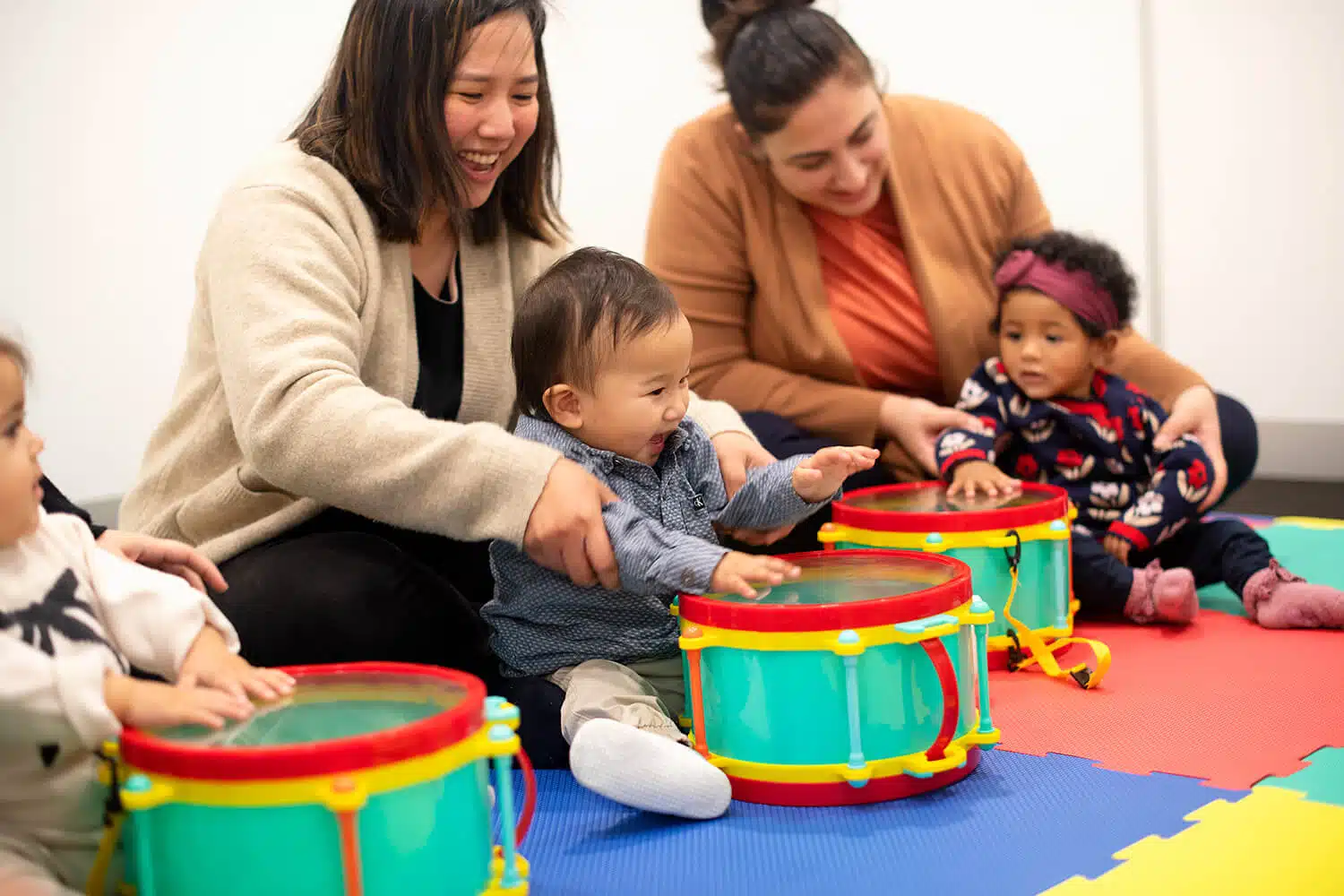
Photo from Shichida Australia: Baby classes start from 6 months at Shichida – you and your baby will love it!
Looking for a weekly baby or toddler activity with some structure? Shichida offers fun, guided classes across Melbourne, with centres in Doncaster, Glen Waverley and Highpoint. Families in Sydney can also join us at Burwood, Chatswood and Parramatta.
Experience how Shichida Australia’s research-based programs champion sensory development from the very beginning by booking a trial class today.
FAQs About the Benefits of Sensory Play for Babies and Infants
Sensory play helps babies learn about the world through touch, sight, sound, smell, movement and body awareness. It can support brain development, motor skills, language, curiosity, attention, emotional security and early problem-solving. Simple sensory experiences, such as tummy time, soft textures, songs and water play, help babies build important foundations for future learning.
Sensory play is important for infants because babies learn through their senses before they can speak, read or write. Each new sensory experience helps the brain form connections that support movement, memory, communication and emotional development. For infants, sensory play also supports bonding because many activities involve interaction with a parent or caregiver.
Babies can start gentle sensory play from birth. For newborns, sensory play may include soft touch, skin-to-skin contact, talking, singing, black-and-white cards and supervised tummy time. As babies grow, sensory activities can become more active, such as textured toys, rattles, water play, mirror play and safe food-based sensory play.
Examples of sensory play for babies include tummy time on different textures, listening to songs, looking at high-contrast cards, playing with rattles, touching soft fabrics, splashing water, looking in a baby-safe mirror, exploring textured toys and playing with safe food textures such as banana or yoghurt. All baby sensory activities should be supervised and age-appropriate.
Sensory play supports baby brain development by helping babies make connections between what they see, hear, touch, smell, taste and feel through movement. These experiences help babies understand cause and effect, recognise patterns, practise attention and build early memory. Over time, sensory play can support the foundations for language, coordination, confidence and learning.
Sensory play is safe for babies when activities are age-appropriate, supervised and designed with safety in mind. Babies should only be given items that are large enough not to be choking hazards, non-toxic and suitable for their stage of development. Parents should avoid small objects, unsafe textures, strong scents, unsupervised water play and anything a baby could swallow or inhale.
Babies can enjoy sensory play every day through short, simple activities. Sensory play does not need to be complicated or messy. Talking to your baby, singing, reading, tummy time, touching different fabrics, playing with rattles and going for a walk outside can all provide valuable sensory experiences. Short, calm and regular activities are often more helpful than long sessions.
Shichida baby classes use sensory-rich activities to support early learning, attention, memory, movement, language and parent-child bonding. Activities may include songs, rhythm, flashcards, tactile games, visual stimulation and gentle movement. Each class is structured to give babies a calm, engaging and age-appropriate learning experience with their parent.