Key Takeaways
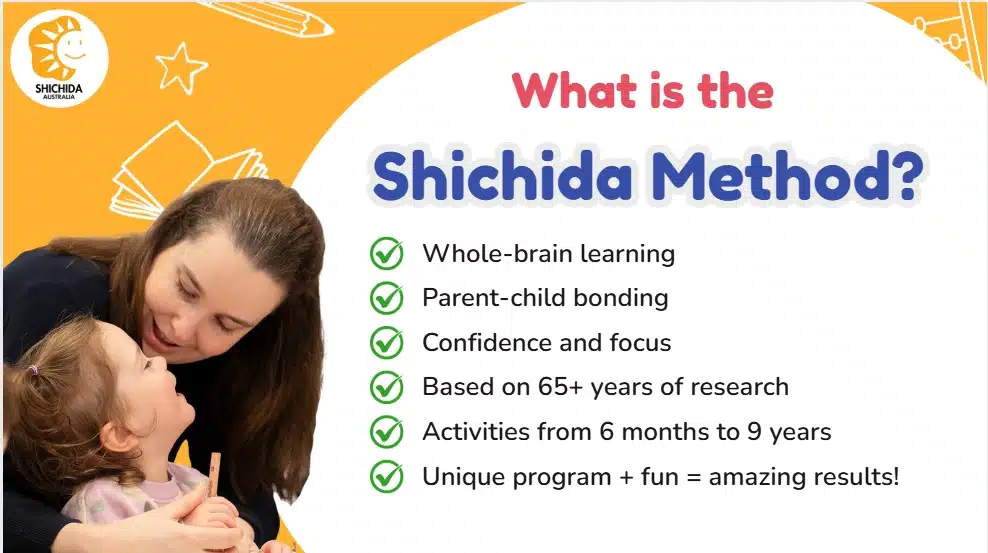
- The Shichida Method is an early learning program for children aged 6 months to 9 years old.
- It helps children build learning foundations through songs, flashcards, memory games, movement, phonics, numeracy activities, puzzles and parent-child interaction.
- Shichida is not tutoring. It supports the skills children need before formal academic learning becomes easier, such as focus, memory, visual tracking, listening, confidence and problem-solving.
- Children learn through repetition, routine, novelty and play. In other words, they get the comfort of knowing what comes next, plus the excitement of “Ooh, what are we doing now?”
- Parents are part of the learning process because children learn best through warm, responsive interaction with the people they trust most.
- Small wins matter. When children feel capable, they are more willing to try, practise and take on new challenges.
- Shichida’s whole-brain learning approach supports logic, language, numbers, creativity, memory, imagination and emotional confidence.
- The goal is not to rush childhood. The goal is to build a strong foundation so future learning feels easier, more natural and more enjoyable.
What Do Parents Want?
Every parent wants to help their child learn well.
Not just memorise answers. Not just sit still and “get ahead” for the sake of it.
Parents want children who are curious, confident, focused, creative and ready to take on new challenges. They want children who can think, remember, problem-solve, communicate and believe in themselves.
That is where the Shichida Method shines. Shichida is a leader in early brain development through play.
Want some ideas and resources for home use? Shichida has plenty!

What Does Shichida Offer Parents?
The Shichida early learning program is not tutoring. It is not school before school, and putting pressure on young children to perform.
It is a weekly 50-min class for children aged 6 months to 9 years old, designed to build the foundations for learning through fun, fast-paced, brain-boosting activities.
Children sing, move, remember, imagine, solve, count, listen, respond and play. Parents join in too, which means the learning does not stop when class ends.
And while it may look like fun and games, every Shichida activity has a purpose.
1. Big Learning with Little Words
Children are capable of learning more than many adults realise.
The key is not to overload them with long explanations, complicated instructions or “Let’s sit down for a very serious lesson on spatial reasoning.”
That would lose most toddlers immediately. Possibly some adults too.
At Shichida, advanced ideas are broken into simple, playful experiences. Children can begin to understand concepts such as odd and even numbers, memory chains, patterns, sequencing, spatial awareness and logical thinking because the ideas are presented visually, physically and repeatedly.
Instead of explaining a concept in a long lecture, we use songs, actions, flashcards, hands-on tasks and short bursts of activity.
This helps children absorb big ideas in little, manageable steps.
For example, a young child may not understand a formal explanation of odd and even numbers. But they can begin to notice pairs, groups, patterns and “one left over” through visual games, songs and repetition.
That is the Shichida difference. We make complex learning feel simple, playful and achievable.
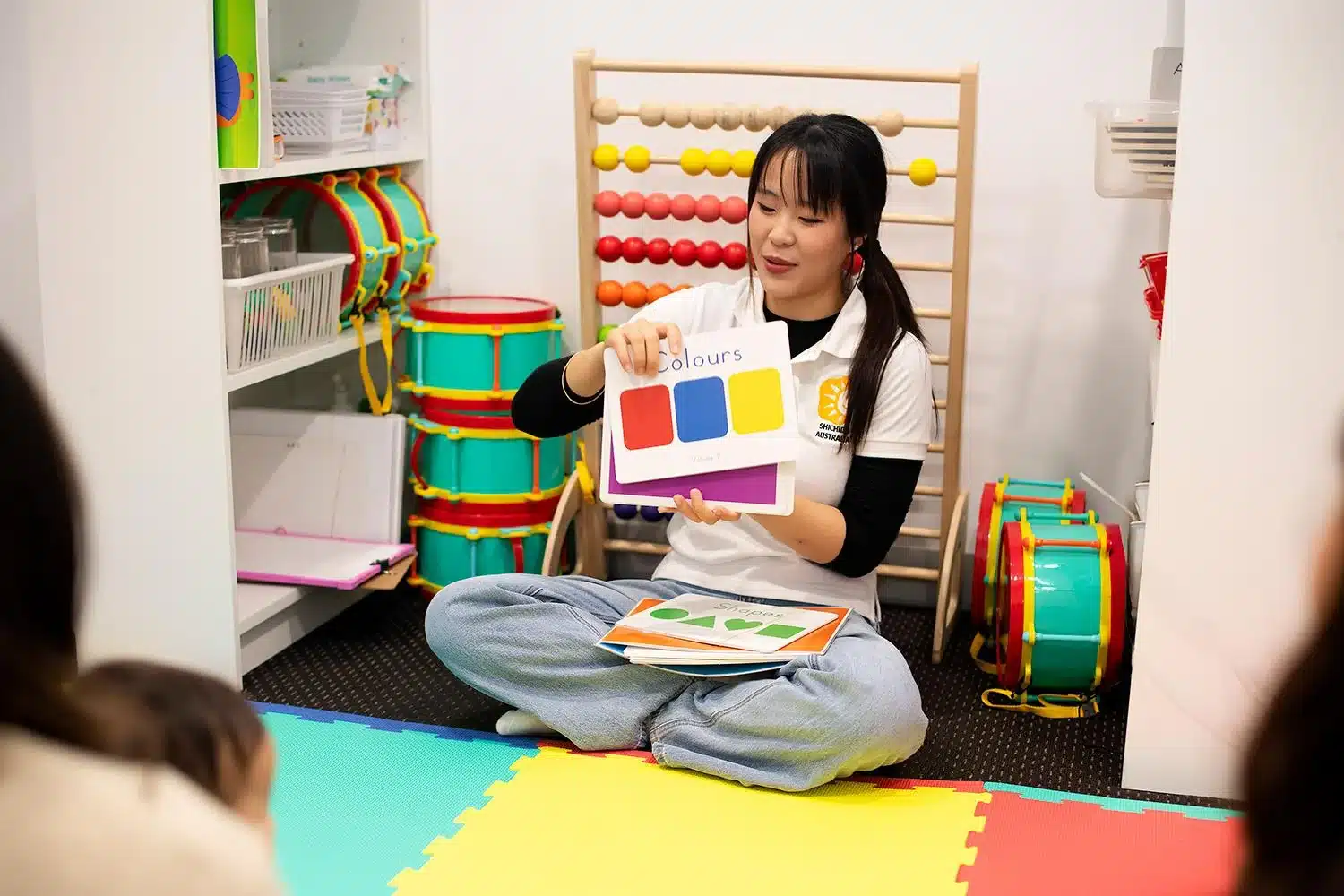
Image by Shichida Australia: Big ideas can begin with simple words. Through flashcards, songs and playful games, children start building early language, focus and visual learning.
2. See It, Hear It, Store It
Children learn through their senses.
They watch. They listen. They copy. They move. They respond. They repeat things at home three days later when you thought they were not paying attention at all.
Shichida classes use multi-sensory input to support memory and learning. Activities may include flashcards, songs, linking memory, visualisation, picture recall, games, matching activities and movement to rhythm using instruments.
This matters because children are not just learning information. They are learning how to take in information, organise it and retrieve it later.
That is memory training.
Not in a high-pressure, “perform now” way. More in a “let’s make your brain stronger while you think you are playing a game” way.
Flashcards build rapid visual input. Songs support rhythm and recall. Linking memory helps children connect ideas in sequence. Visualisation activities support imagination and mental imagery.
Over time, these activities help children build working memory, long-term retention and confidence in their ability to remember.
And when a child starts remembering more, they often start believing they can do more.
That is powerful!
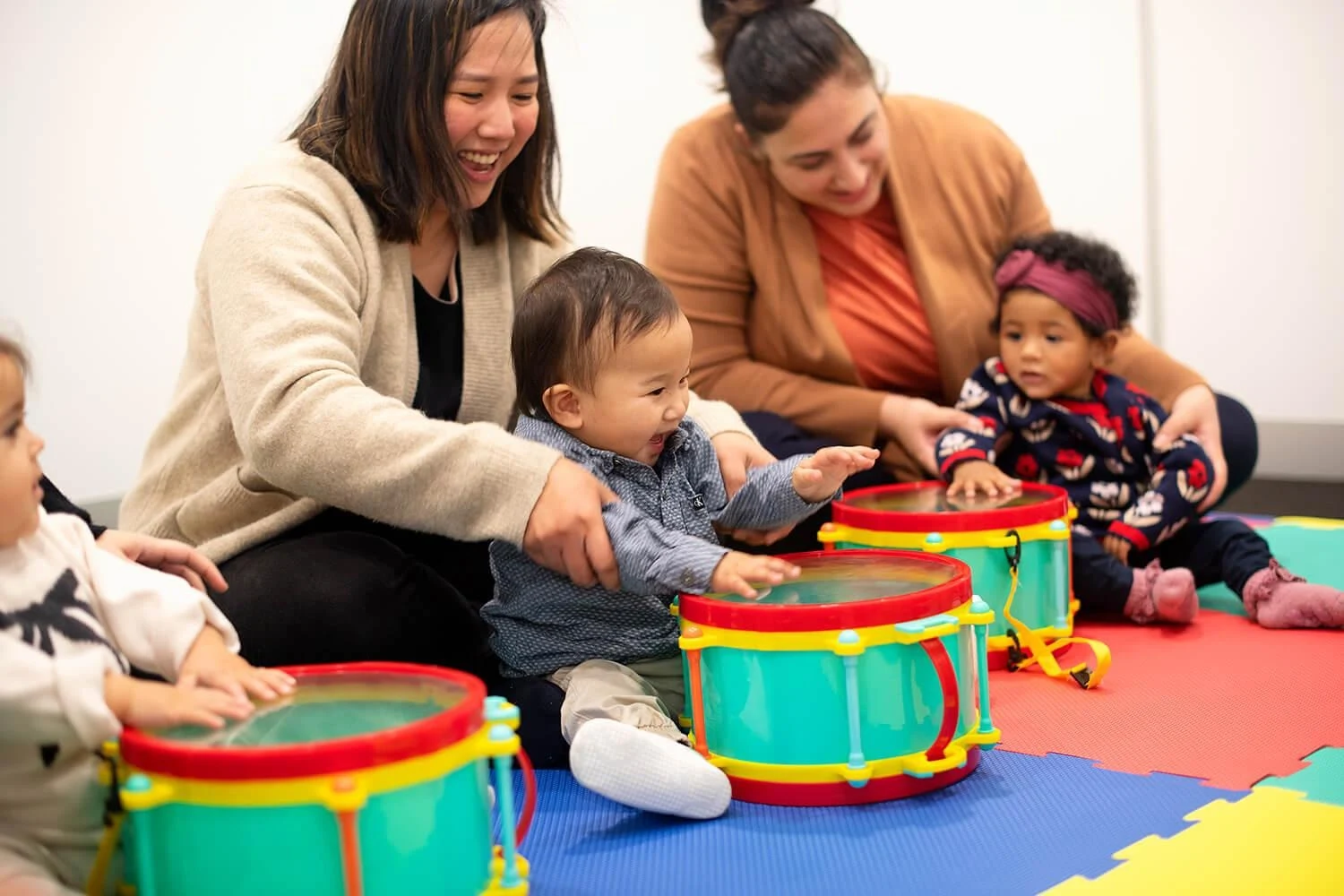
Image by Shichida Australia: Children learn through their senses. Songs, rhythm and movement help them listen, copy, respond and store new ideas through guided play and games.
3. Skills Before School
Many parents think school readiness means knowing letters, numbers and how to write their name.
Those things are helpful, but they are only part of the picture.
Before children read, write and complete school tasks with confidence, they need a strong foundation of underlying skills.
At Shichida, we work on skills that make later learning easier, including:
- visual tracking
- pattern recognition
- phonemic awareness
- listening skills
- focus
- memory
- fine motor control
- number sense
- spatial reasoning
- mental maths foundations
- imagination and visualisation
- executive function
- confidence to try
These are the building blocks underneath academic learning.
A child who can track visually is better prepared for reading and eventually speed reading. Children who hear sounds clearly are better prepared for phonics. Someone who can recognise patterns is better prepared for maths. A child who can focus and remember instructions is better prepared for the classroom.
This is why the Shichida early learning program is not about rushing children into schoolwork. It is about preparing the brain and body for learning before formal learning becomes more demanding.
It’s the difference between trying to build a house on sand and building it on a strong foundation.
Less dramatic than it sounds, but much better long term.
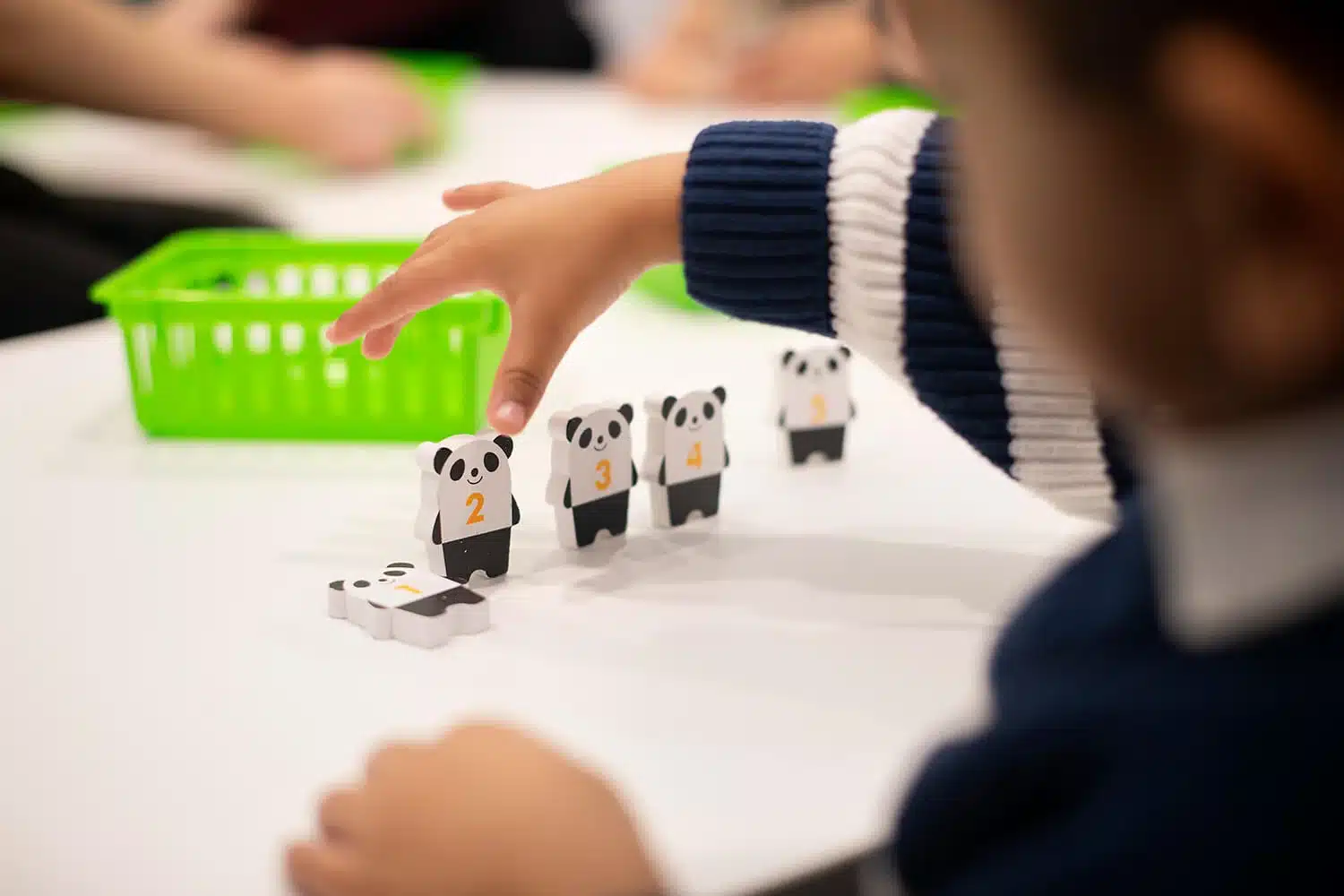
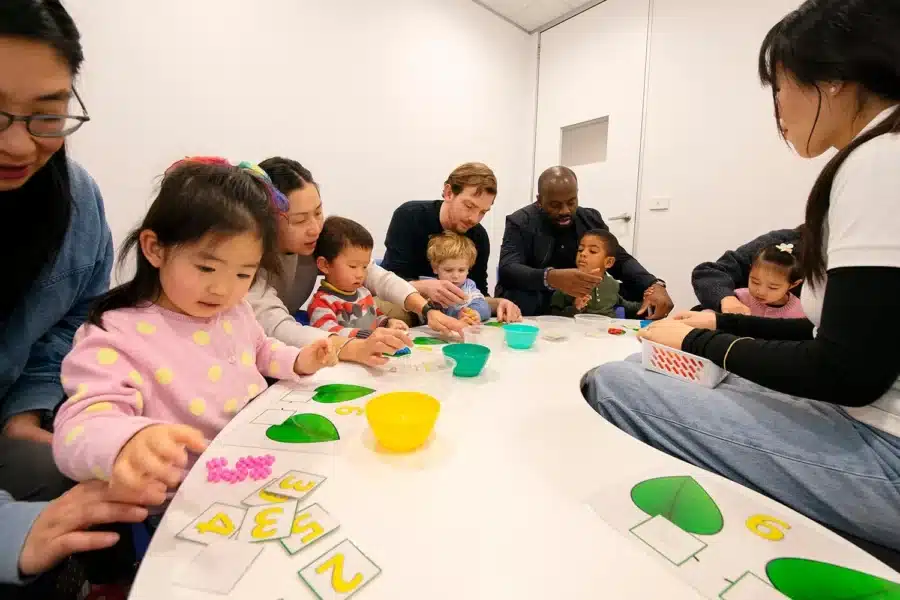
Image by Shichida Australia: Number play games build more than counting – it supports sequencing, focus, fine motor skills and spatial awareness.
4. Routine With a Twist
Children love routine! They may not love putting on shoes, brushing teeth or leaving the playground, but they do love knowing what comes next.
Routine helps children feel safe and confident. When children understand the rhythm of a class, they can relax into the learning experience.
Shichida classes use predictable structure, so children become familiar with the flow of the lesson. They know there will be songs, activities, games, teacher interaction and parent participation.
But here is the important part: the content changes. This means children get the comfort of routine with the excitement of novelty. The brain loves that combination.
Repetition helps children build confidence. New themes and challenges keep them curious. So instead of feeling bored by doing the same thing every week, children experience familiar learning patterns in fresh and engaging ways.
It is a little like their favourite storybook. They want the comfort of knowing what happens next, but they are still delighted every time the bear appears, the truck gets stuck or someone says something silly.
Routine builds confidence, while novelty keeps learning alive.
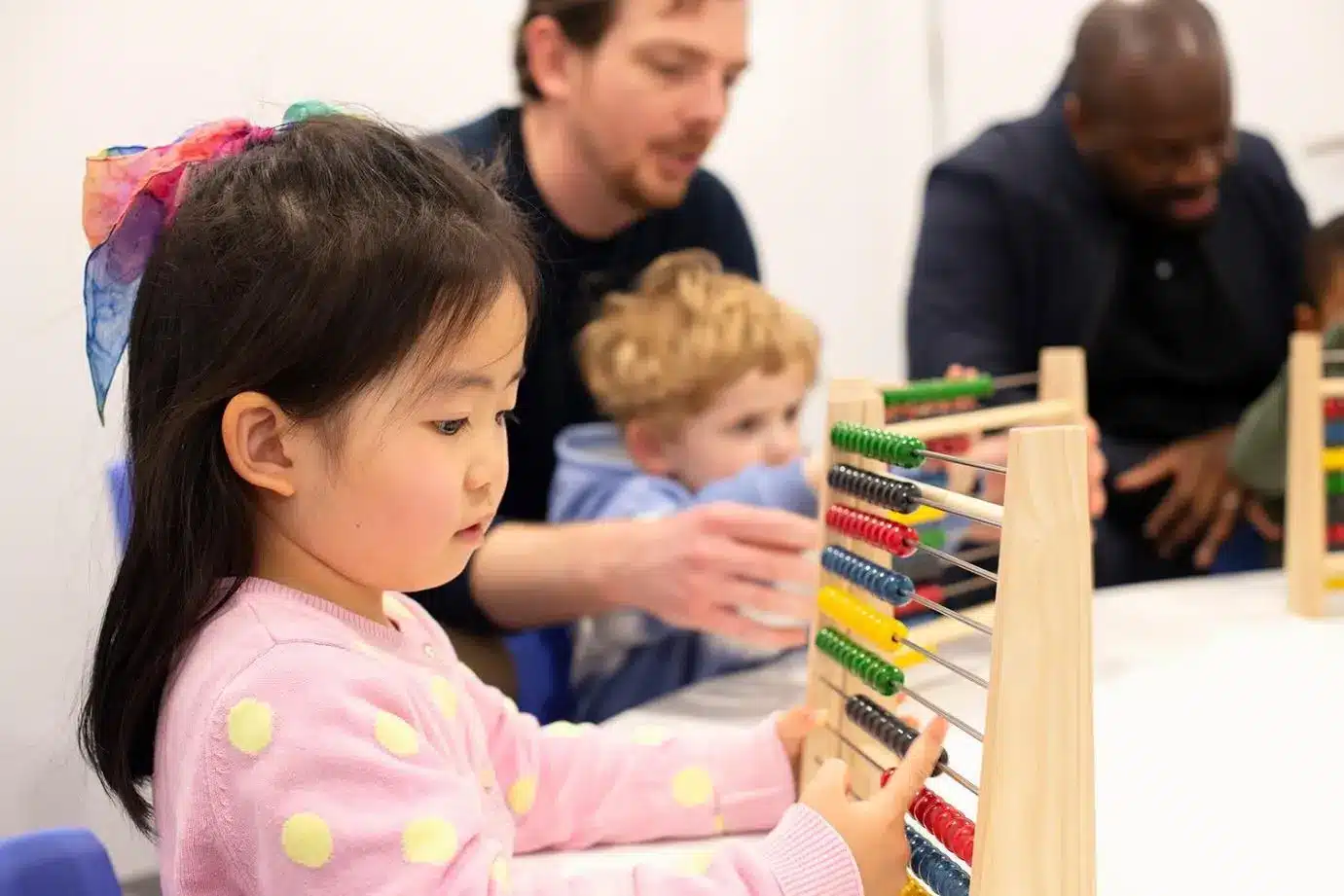
Image by Shichida Australia: Before children solve maths on paper, they need to see it, touch it and move it. Abacus play helps build number sense, focus, fine motor control and confidence.
5. Parents Are Part of the Process
Children do not learn in isolation. They learn through relationships, especially with the people they trust most.
That is why parents are part of the Shichida class experience. You are not sitting outside scrolling while your child “does learning”. You are right there with them, joining the activities, watching how they respond and learning how to support them at home.
This is one of the most important parts of the Shichida Method.
Parents are a child’s first and most important teachers. When parents understand how to use songs, flashcards, memory games, language prompts, movement and positive reinforcement, learning becomes part of everyday life.
A Shichida early learning program class gives parents practical ideas they can carry into the week.
That might look like:
- singing a phonics song in the car
- playing a quick memory game at home
- naming colours during snack time
- using flashcards for a few minutes a few times a week
- counting steps on the way to bed
- praising effort when a child tries something hard
The class gives structure. The parent-child bond gives it meaning.
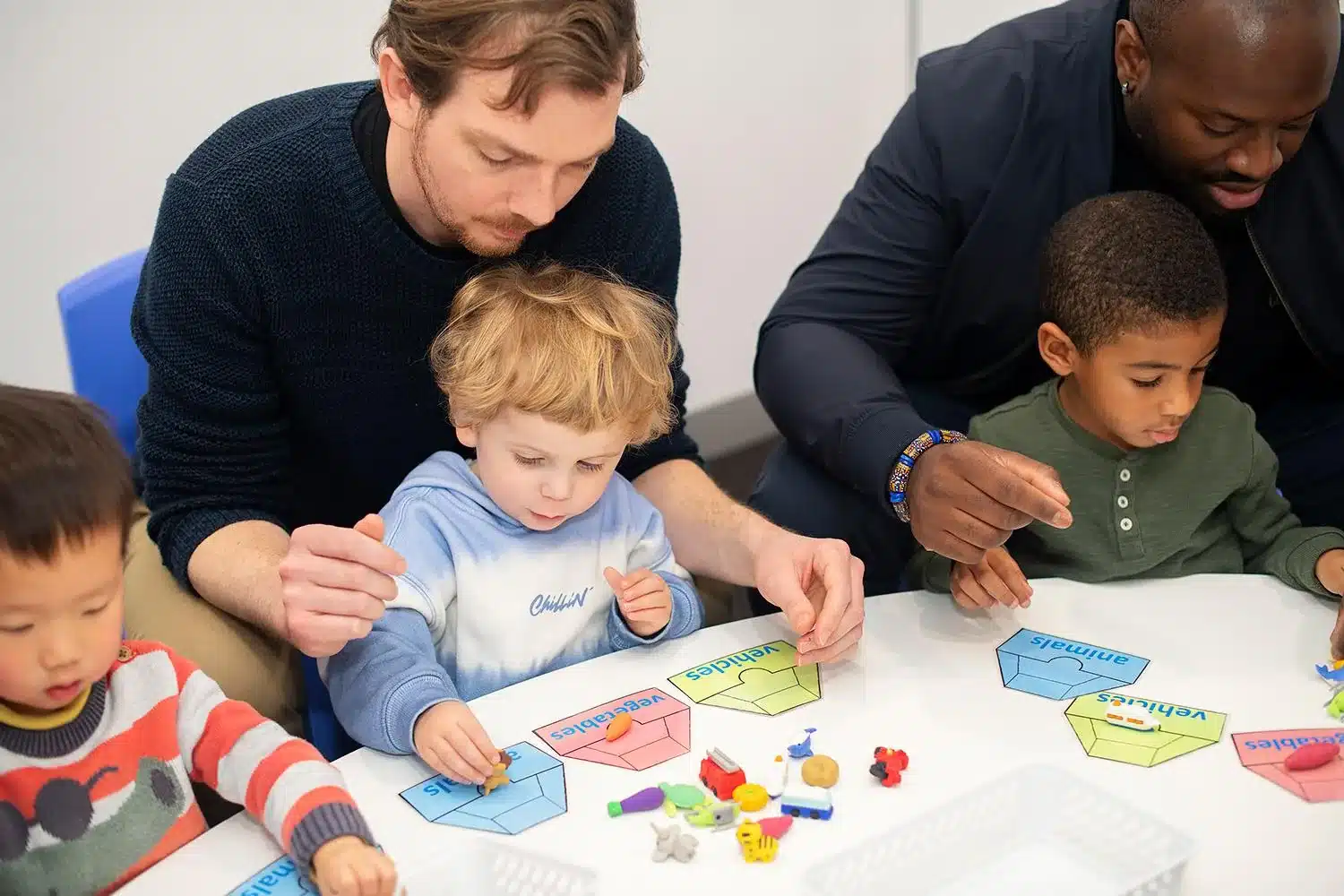
Image by Shichida Australia: Sorting, matching and naming objects helps children build vocabulary, categorisation, fine motor skills and early problem-solving through hands-on play.
6. Small Wins, Big Confidence
Confidence is built through small wins. A child completes a puzzle, remembers a picture, says a phonics sound or finds a matching card. Counts a little further than last time. Tries again after getting something wrong… These moments may look small, but they matter a lot!
Shichida activities are designed to feel achievable while still giving children a little challenge. This balance helps children experience success without feeling overwhelmed.
When children succeed, they feel proud. When they feel proud, they want to try again. When they try again, they build persistence.
Over time, this creates intrinsic motivation. Children begin to enjoy the feeling of learning, not just the reward at the end.
That is a big deal! A child who believes, “I can try,” is more likely to take on new challenges at school, in friendships, in activities and later in life.
Learning is not only about information. It is also about self-belief.
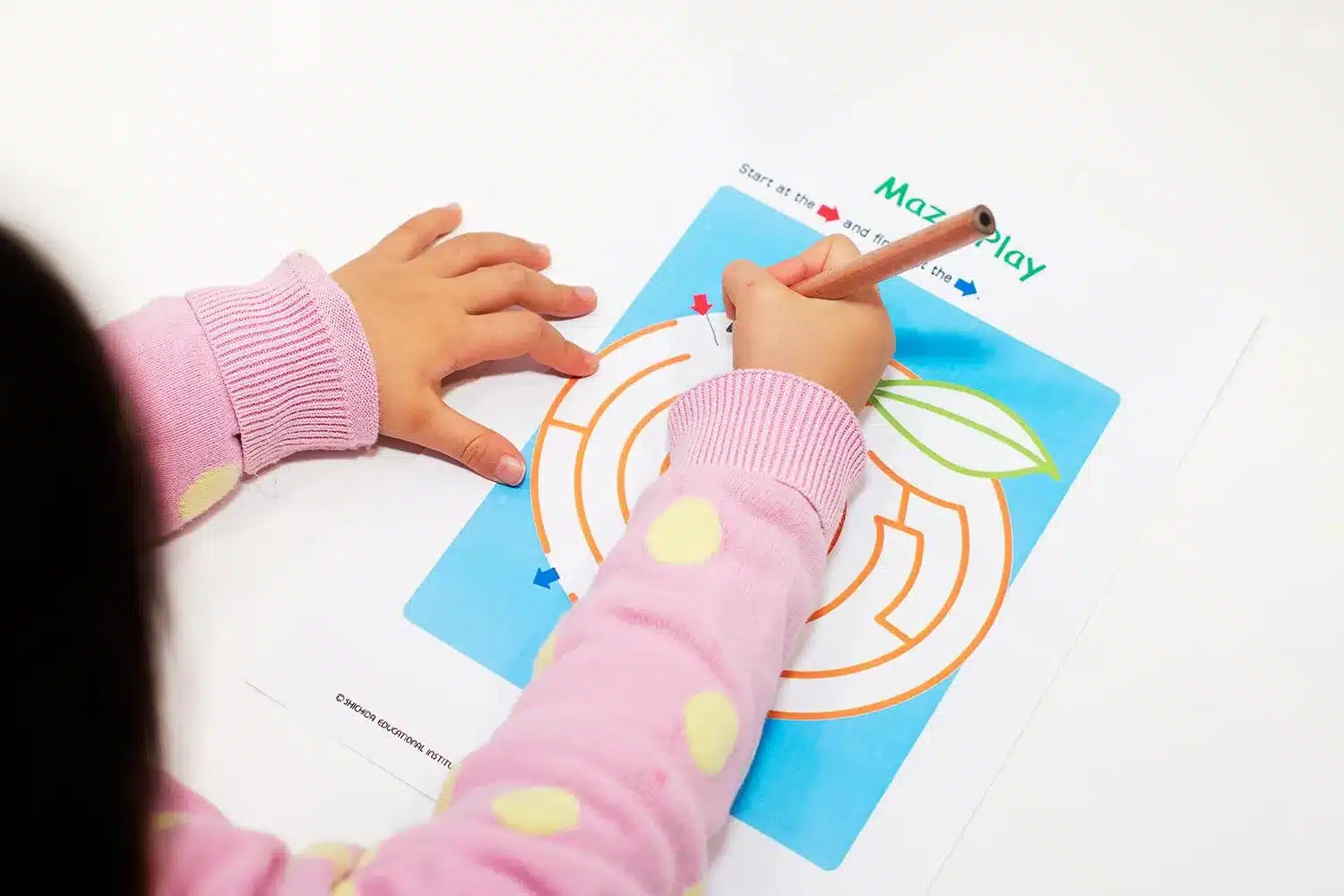
Image by Shichida Australia: Maze play helps children practise visual tracking, pencil control, focus and problem-solving – all important foundations for future writing and learning.
7. Whole-Brain Learning
The Shichida Method is a whole-brain learning program.
This means activities are designed to support many parts of learning together, including logic, language, numbers, memory, creativity, imagination, movement and emotional confidence.
For example, one activity may involve listening, remembering, moving, visualising and responding. Another may combine music, rhythm, number recognition and parent-child interaction.
This matters because children do not learn in neat little boxes.
A child does not use only “maths skills” during a maths game. They also use focus, memory, visual processing, fine motor skills, confidence and sometimes emotional regulation when things do not go perfectly.
A child does not use only “language skills” during storytelling. They also use imagination, listening, sequencing, vocabulary and social understanding.
Shichida’s whole-brain approach gives children many different ways to think, respond and learn. The result is a more balanced learner.
Not just a child who can recite information, but a child who can think flexibly, solve problems, express ideas and manage challenges with growing confidence.
We teach children how to learn, not what to learn!
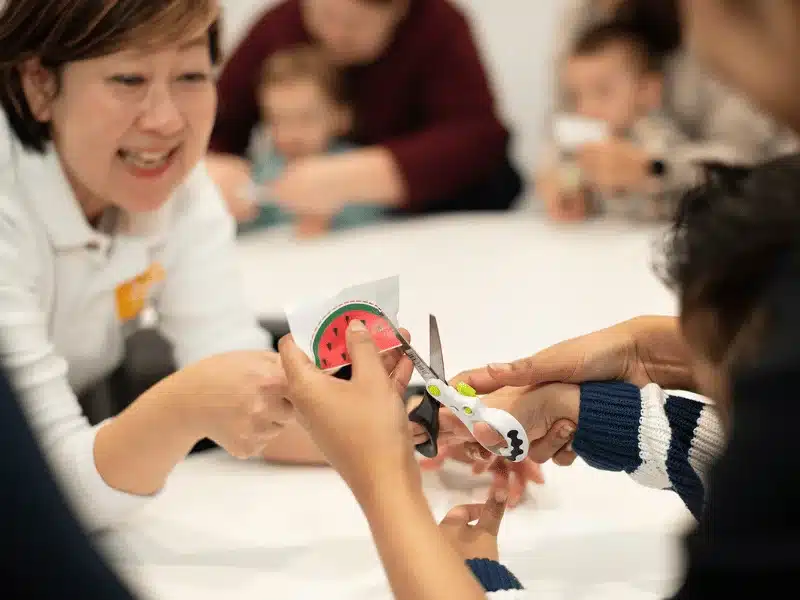
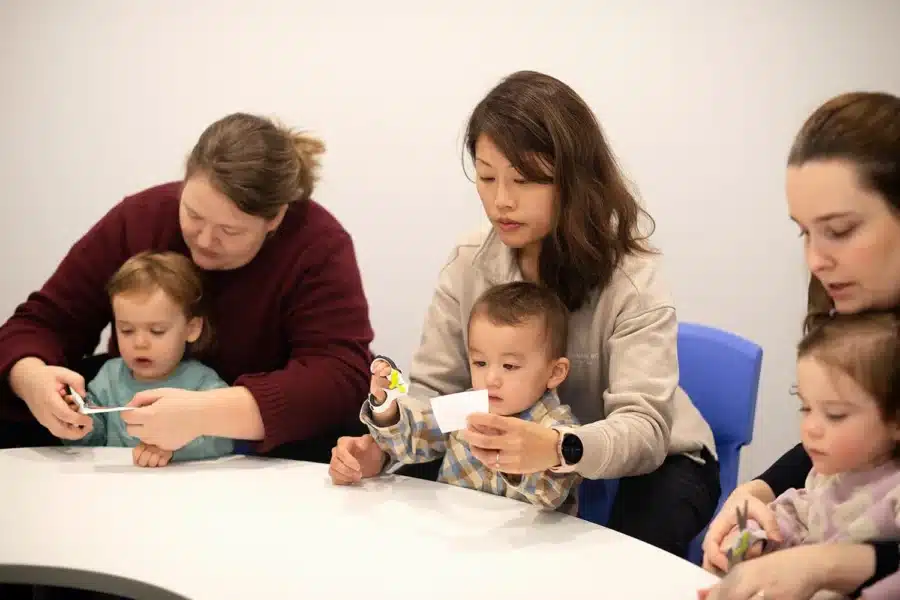
Image by Shichida Australia: Cutting activities help children strengthen hand muscles, coordination, focus and control – all while turning fine motor practice into playful learning.
8. Learning Feels Like Play, But It Has a Purpose
To children, Shichida feels fun and play. There are songs, stories, puzzles, cards, memory games, movement, numbers, sounds and surprises.
To parents, it can look almost too fun to be serious. But that is the point!
Young children learn best when they are engaged. If an activity feels playful, they are more likely to participate, repeat it and enjoy it. If they enjoy it, they are more likely to build positive associations with learning.
Every Shichida activity is designed with a learning purpose.
- A song may support memory and rhythm.
- A puzzle may support problem-solving and spatial awareness.
- A flashcard activity may support vocabulary, focus and visual processing.
- A number game may support early numeracy and pattern recognition.
- A storytelling game may support listening, vocabulary development, sequencing, memory and imagination.
Children may not realise they are building focus, logic, literacy, memory and confidence.
They just know they are having fun. And honestly, that is the dream.
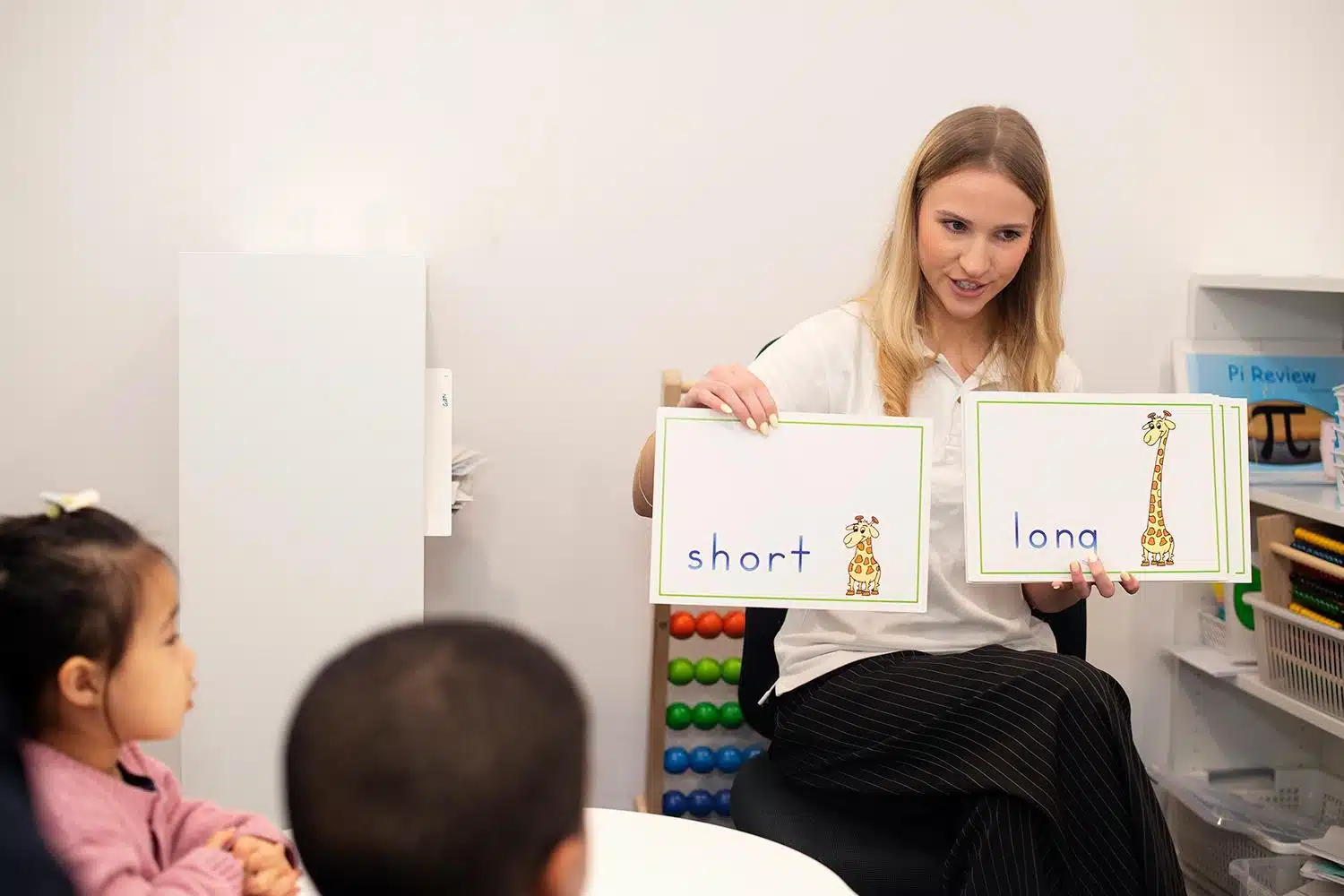
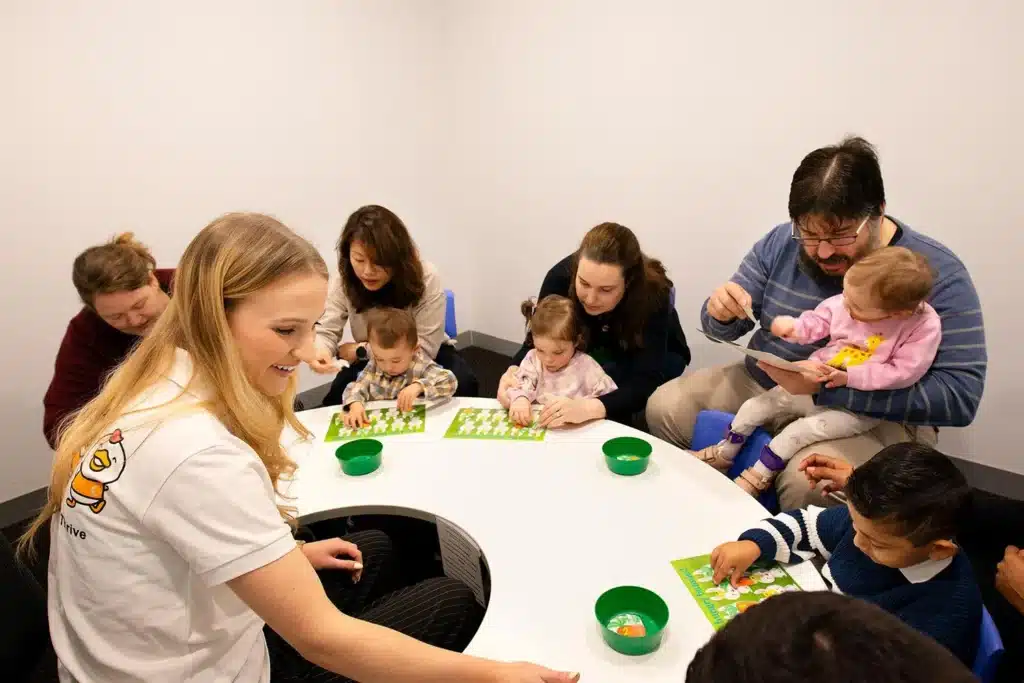
Image by Shichida Australia: The layered Shichida approach in action: flashcards introduce the concept, songs help children remember it, and hands-on games bring it to life through playful guided learning.
9. Early Input, Lifelong Impact
The early years are a powerful time for learning.
Children’s brains are growing rapidly, and the experiences they receive during this stage help shape future learning, behaviour, confidence and development.
This does not mean parents need to panic or turn every minute into a lesson. It simply means rich, positive input matters.
Talking, singing, reading, playing, moving, counting, bonding and trying new activities all support a child’s growing brain.
The Shichida early learning program gives children regular, structured input across many areas of development, including memory, literacy, numeracy, creativity, emotional intelligence, fine motor skills and problem-solving.
This is why starting early can make such a difference. Early input helps children build the foundation before school becomes more formal. Instead of waiting until a child struggles, Shichida helps develop the skills that make future learning feel more natural.
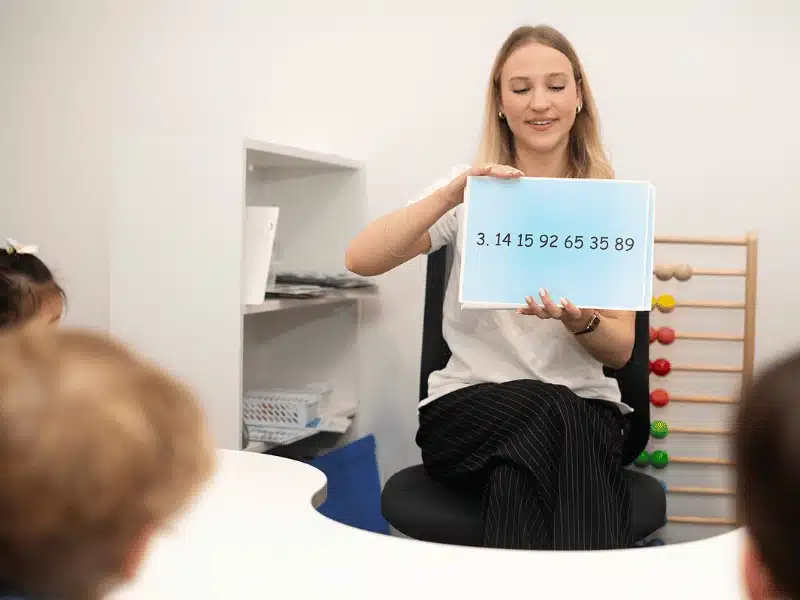
Image by Shichida Australia: With flashcards, a catchy song and playful repetition, children practise remembering the digits of pi up to 500 places — building memory, focus, recall and confidence.
10. A Proven Method With Global Results
The Shichida Method was first developed in Japan and has been refined over decades.
In Australia, Shichida has supported close to 20 000 families through weekly early learning classes that combine children’s activities with parent involvement.
For many parents, Shichida becomes more than an activity. It becomes part of the family’s learning rhythm.
Children build confidence. Parents learn new ways to support development. Families bond through shared learning experiences. Many parents return with younger siblings because they have seen the difference firsthand.
The best part is that children often do not see it as “work”. They see it as a fun class with songs, games, cards and challenges. Fun time with Mum or Dad.
And that is one of the reasons the Shichida Method works so well for young children. It respects how children learn, using play, rhythm, songs, repetition, hands-on engagement, flashcards, connection and joy.
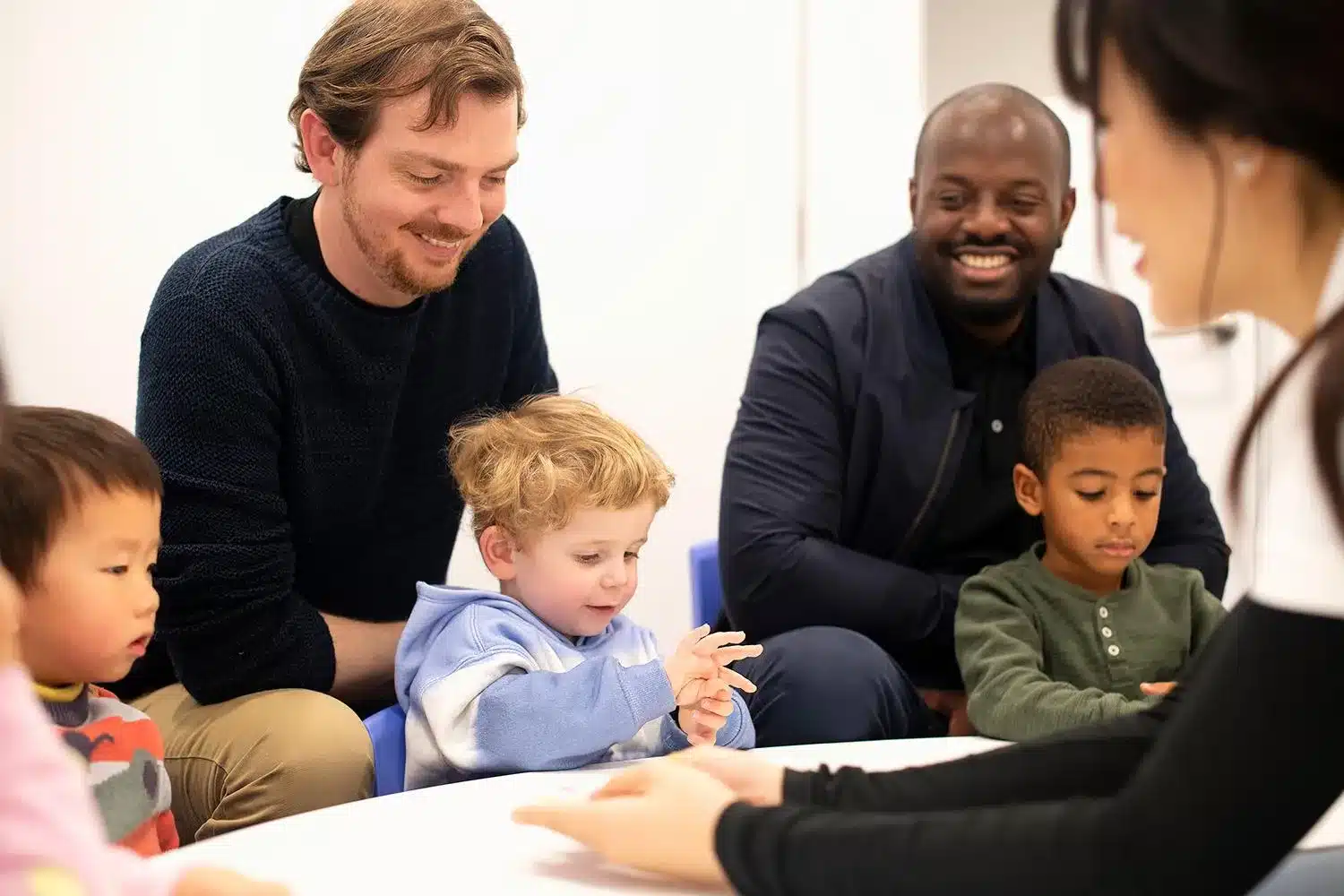
Image by Shichida Australia: Parent-child interaction helps children feel safe, confident and ready to take on new learning challenges. At Shichida, parents do not just watch – they join in, support and help learning continue beyond the classroom.
Why Shichida Is Different
There really are many early learning options for children.
Some focus mainly on movement. Some focus on school readiness. Some focus on free play. Some focus on childcare. Some focus on tutoring a single subject.
Shichida is different because it brings many learning foundations together in one weekly program.
It supports:
- memory
- focus
- creativity
- confidence
- early literacy
- early numeracy and number sense
- problem-solving and critical thinking
- fine motor skills
- emotional intelligence
- parent-child bonding
- a love of learning
And it does this through small-group classes where parents join the learning.
That combination is powerful! Children are not just being taught. They are being supported, guided and celebrated.
Parents are not just watching. They are learning how to bring these ideas into everyday life.
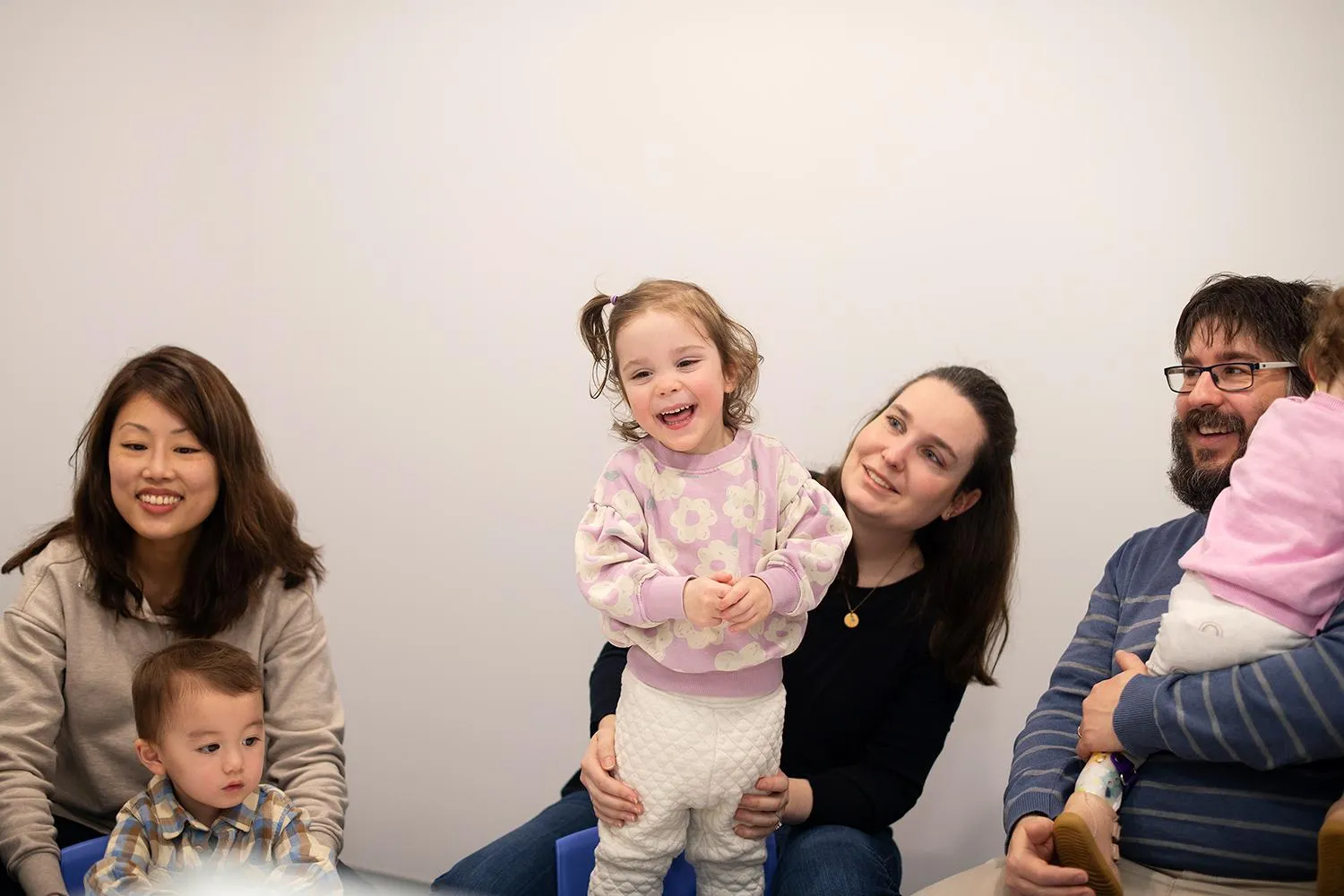
Image by Shichida Australia: You are your child’s first and most important teacher. At Shichida, parents learn how to support their child’s confidence, curiosity and love of learning through simple, joyful moments together.
You Are Your Child’s First and Most Important Teacher
At Shichida Australia, we know parents are a child’s first and most important teachers.
That is why our classes are designed to support both you and your child. We help children build essential learning skills, but we also help parents understand how to continue that learning at home in simple, playful ways.
You do not need to be a teacher. You do not need to know everything about early brain development. You do not need to create Pinterest-perfect activities at 6 am while someone is throwing toast.
You simply need the right guidance, the right tools and a learning environment that helps your child feel confident, capable and excited to try.
Shichida gives families that support.
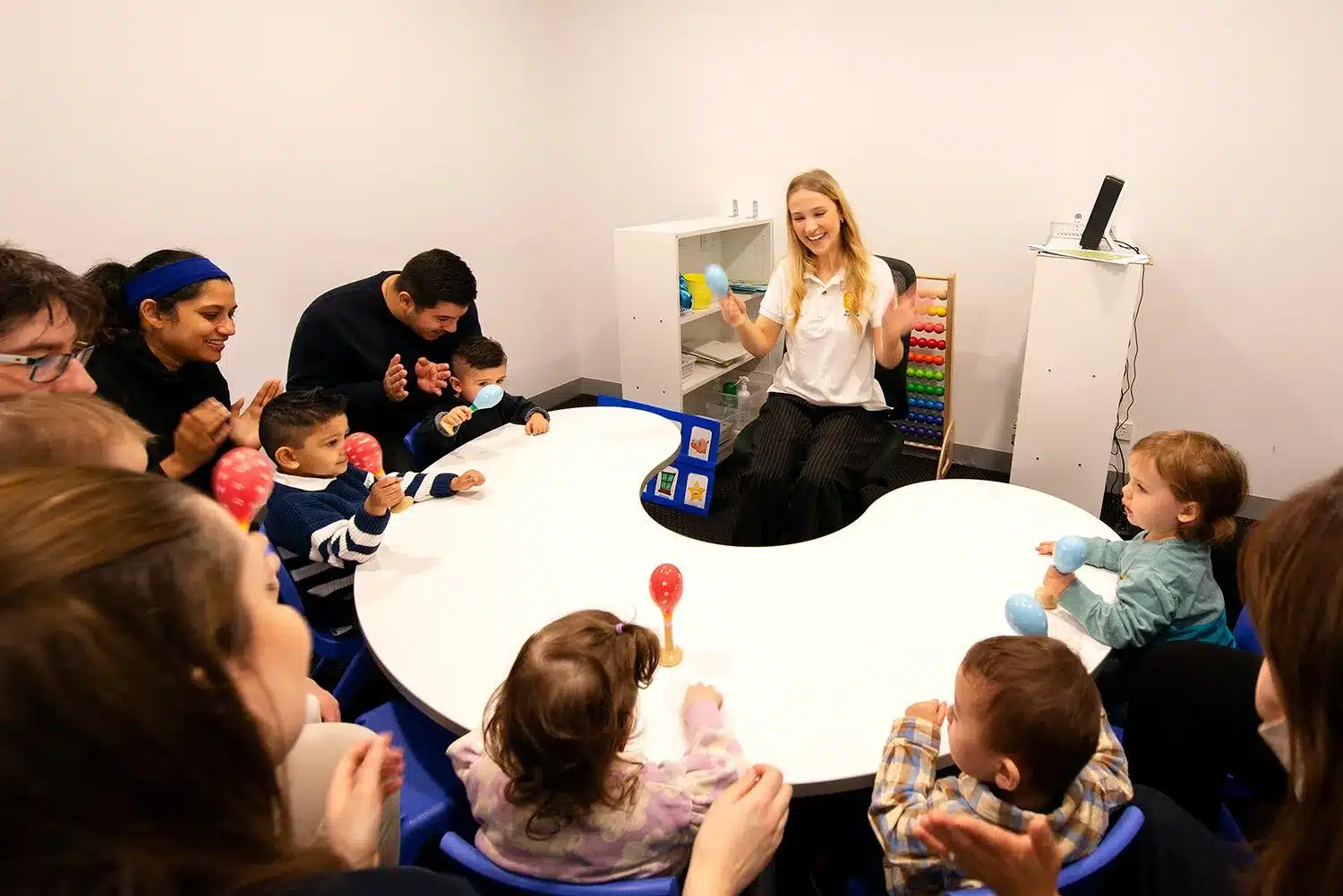
Image by Shichida Australia: Ready to see learning come to life? In a Shichida class, children build focus, confidence, memory and a love of learning through songs, games, movement and parent-child connection.
Ready to See the Shichida Method in Action?
If you want your child to build confidence, memory, focus, creativity, problem-solving skills and a love of learning, Shichida can help.
Our weekly early learning classes are designed for children aged 6 months to 9 years old and give parents practical ways to support learning beyond the classroom. The enrolment cut-off is at 5 years old.
Come and experience a Shichida class for yourself! Book a trial class today and see how the Shichida Method can help your child learn faster, think smarter and grow with confidence.
Experience Shichida Today
Help your child build strong fine motor skills with Shichida Australia’s hands-on, fun brain-boosting activities! Our gentle approach supports coordination, confidence, early maths, reading, writing and more!
Book a trial class and see how these strategies come to life!
FAQs About the Shichida Method Early Learning Program
The Shichida Method is a whole-brain early learning program for children aged 6 months to 9 years old. It uses fun, fast-paced activities such as songs, flashcards, memory games, movement, phonics, numeracy tasks and parent-child interaction to build strong learning foundations.
No. Shichida is not tutoring. Tutoring usually helps children practise specific school subjects or catch up in academic areas. Shichida focuses on building the underlying skills that support future learning, such as memory, focus, listening, confidence, problem-solving, creativity, numeracy and literacy foundations.
Children can start Shichida from 6 months old. The early years are an important time for brain development, and young children learn through play, repetition, music, movement and interaction. Starting early helps children build strong foundations before formal school learning begins.
Shichida helps children learn faster by using repetition, rhythm, visuals, songs, movement and memory techniques to support the way young children naturally learn. Activities are short, varied and engaging, which helps children stay focused while building memory, confidence and thinking skills.
Children at Shichida build a wide range of skills, including memory, concentration, numeracy, literacy, phonemic awareness, visual tracking, fine motor control, creativity, imagination, problem-solving, emotional confidence and social awareness.
Whole-brain learning means supporting different areas of learning together, rather than treating skills in isolation. Shichida activities combine logic, language, numbers, memory, creativity, movement, imagination and emotional development so children build a more balanced foundation for learning.
Yes. Parents join Shichida classes because parent involvement is a key part of the program. Children learn through warm, responsive interaction, and parents learn practical ways to continue supporting their child’s learning at home.
Shichida combines memory training, whole-brain learning, early literacy, numeracy, movement, emotional development, creativity and parent-child bonding in one structured weekly class. It is designed to support the whole child, not just one area of development.
Yes. Shichida helps children build many of the foundational skills that support school readiness, including focus, listening, memory, fine motor skills, confidence, phonemic awareness, early numeracy and problem-solving. It does not rush children into schoolwork; it helps prepare them for learning.
Yes. Shichida classes are designed to feel playful, fast-paced and engaging. Children take part in songs, games, puzzles, memory activities, flashcards, movement and stories. The activities feel fun, but each one has a learning purpose behind it.