Key Points
- Mark making is the first stage of writing development and begins long before children form letters.
- Simple play activities help build pencil control, fine motor skills, and hand-eye coordination naturally.
- Writing readiness develops best through movement, sensory exploration, and repeated hands-on experiences.
- Scribbling, painting, tracing, and messy play all support early literacy and pre-writing skills.
- Children build writing confidence gradually when learning feels playful, pressure-free, and age-appropriate
Long before your child writes their name or forms letters neatly, they are already building the skills needed for writing. Every scribble, finger trail in sand, paint stroke, and crayon mark helps develop pencil control, hand coordination, and confidence.
These early experiences are called mark making. Through simple pencil control activities, toddlers and preschoolers strengthen fine motor skills in a playful, pressure-free way.
Sensory play can help nurture resilience and development. Download a free sensory play guide here.
If your child enjoys these types of activities, a Shichida trial class is a great way to see how structured play can support coordination, focus, memory and early learning confidence.
Book a trial class or contact us to find your nearest centre.
What Is Mark Making and Why It Matters for Early Writing
When your baby scribbles on paper, draws lines in sand, smears yoghurt across a tray, or makes marks with crayons, they are already beginning the journey toward writing. This stage is called mark making, and it starts long before children can form recognisable letters or write their name properly.
At this stage, your child is not trying to “write correctly.” They are exploring movement, testing how tools work, and discovering that their actions can create marks and patterns. These early experiences help support:
- Fine motor skills
- Creativity and self-expression
- Hand-eye coordination
- Early literacy development
- Problem-solving and planning skills
- Understanding how much pressure to apply using different tools
You might notice your toddler drawing circles on a foggy window, making chalk marks outside, or happily scribbling across a large piece of paper. Even messy play activities like finger painting or tracing shapes in foam count as meaningful pre-writing learning.
At this stage, playful exploration matters far more than neat results. Activities that encourage movement, creativity, and sensory exploration, like these creative sensory play ideas for toddlers and preschoolers, can naturally support your child’s early writing development while keeping learning fun and pressure-free.
What Counts as Mark Making?
You may already be doing mark making activities with your child without even realising it. Many simple toddler learning activities help build early writing skills naturally, including:
- Scribbling with crayons or pencils
- Finger painting
- Drawing lines and shapes
- Chalk play outdoors
- Sand or foam writing
- Water painting with brushes
- Tracing with fingers in flour or rice
- Stamping, rolling, or pressing patterns into playdough
These activities do not need to look structured or perfect to be valuable. In fact, some of the best mark making and scribbling experiences happen during everyday play at home, outdoors, or even during messy sensory activities. Give them lots of opportunities to explore movement, creativity, and hands-on learning in a fun and pressure-free way.
Why Mark Making Is the Foundation of Writing
Before your child can write letters or words, they first learn simple pre-writing strokes through everyday movement and play. These early marks help build the coordination and control needed for later writing skills.
Your child will gradually begin practising:
- Vertical lines
- Horizontal lines
- Circles
- Crosses
- Curved lines
- Zigzags
Over time, these simple movements become more controlled and coordinated. Eventually, they form the shapes and patterns needed for letters and words.
For example:
- A circle becomes the foundation for letters like O, C, and G
- Vertical lines help build letters like L and T
- Curves and loops support letters like S, B, and P
Writing is not something children suddenly “learn” overnight. It develops gradually through repeated movement experiences, playful mark making, and lots of opportunities to explore drawing, scribbling, tracing, and creating in their own way.
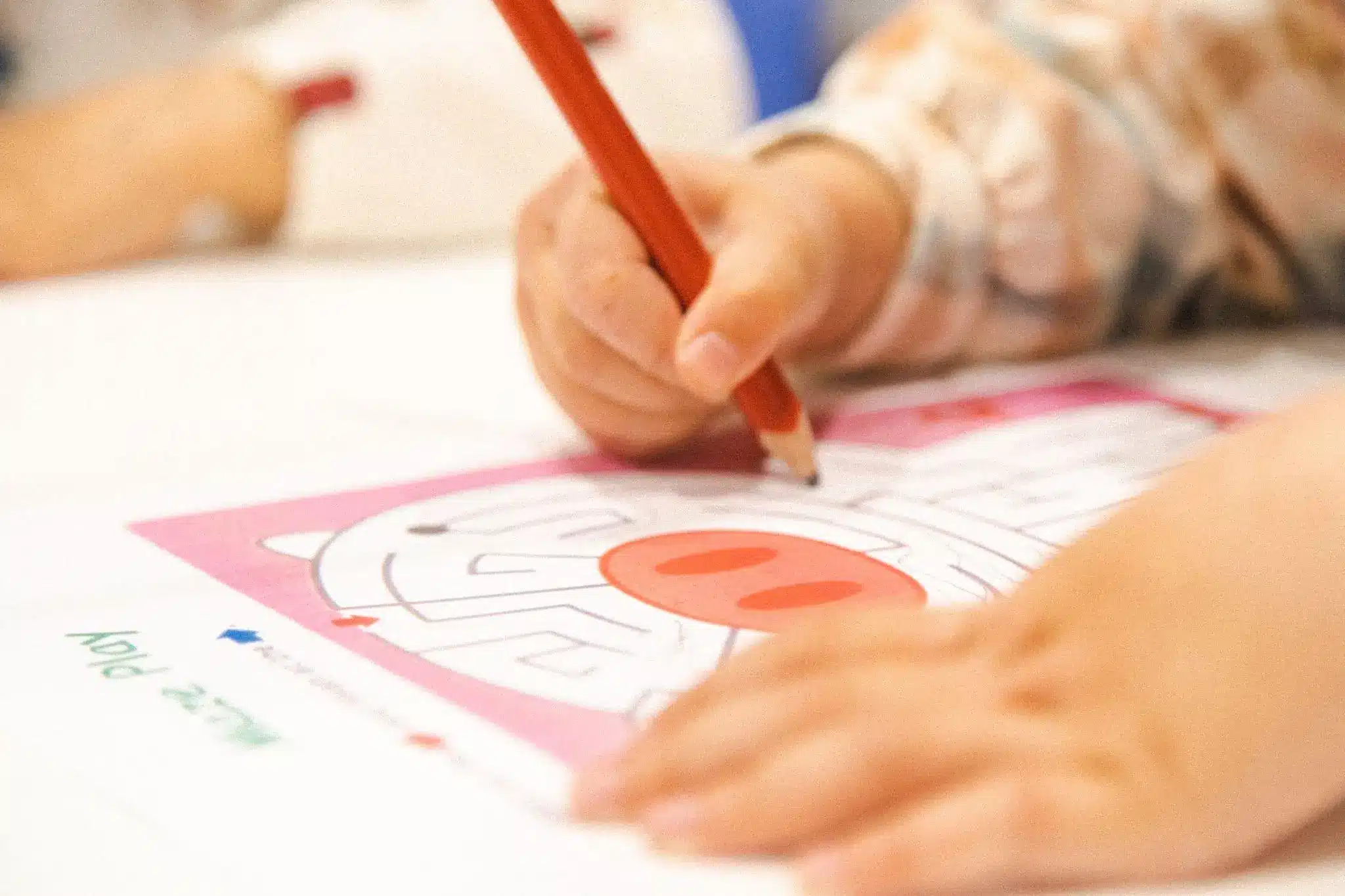
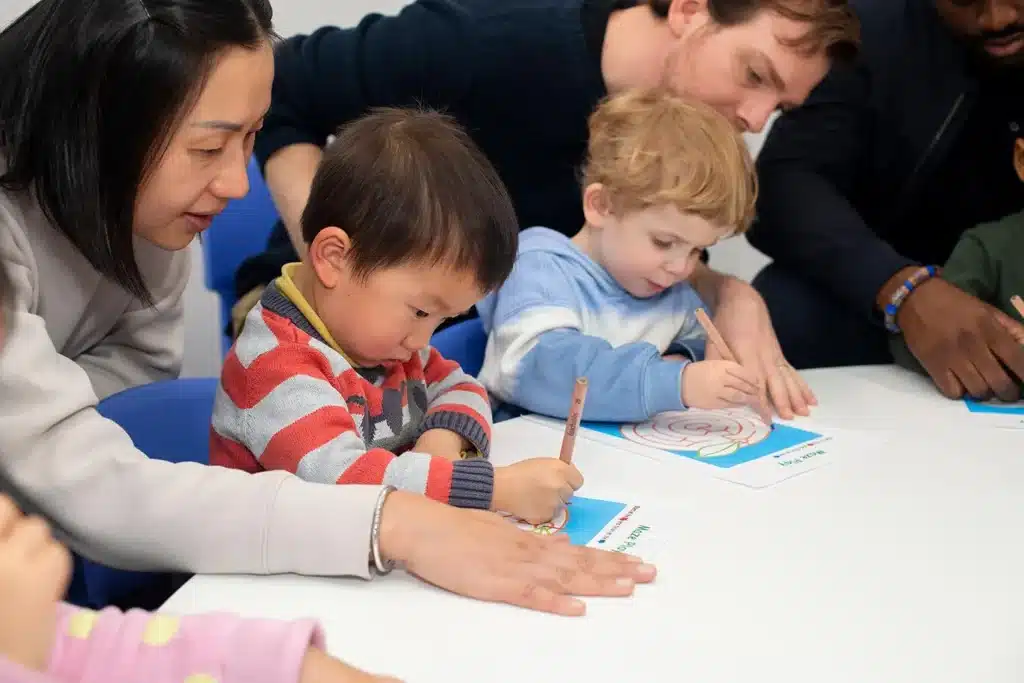
Image by Shichida Australia: Maze activities give preschoolers a playful way to build pencil control, concentration, and problem-solving skills.
The Science Behind Writing Readiness Skills
Writing is actually one of the most complex skills your child will learn in the early years. Even though it may look simple from the outside, writing requires many different systems in the body and brain to work together at the same time.
When your child practises early writing readiness activities, they are developing:
- Fine motor development
- Gross motor stability
- Hand-eye coordination
- Visual processing
- Cognitive planning
- Attention and focus
Your child may recognise letters long before their hands are physically ready to control a pencil comfortably.
Strong writing readiness skills develop best through active play, movement, sensory exploration, and repeated hands-on experiences.
Activities like drawing, threading and painting all help build the physical and cognitive foundations needed for later writing success. Many parents also choose supportive early learning programs that nurture both cognitive and motor skill development together through play-based learning.
Fine Motor Skills and Finger Dexterity
Fine motor skills are the small muscle movements your child uses in their hands and fingers every day. Before your child can comfortably hold and control a pencil, they first need strength, stability, and coordination in these tiny muscles.
Finger dexterity activities help your child gradually develop:
- Grip strength
- Finger isolation
- Hand stability
- Bilateral coordination
Simple everyday play activities can make a big difference. Squeezing playdough, picking up pom-poms with tweezers, peeling stickers, stacking blocks, or using tongs during play all help prepare little hands for future writing skills.
If you are looking for more practical ideas to support your child at home, these fine motor activities for toddlers include simple, play-based ways to strengthen hand coordination and pencil readiness naturally.
Hand-Eye Coordination and Visual Tracking
Writing also requires your child to coordinate what they see with how their hands move in a controlled way.
As your child develops visual tracking, they begin to:
- Follow lines and patterns
- Control movement direction
- Stay within spaces
- Copy shapes and symbols
You can gently support this development at home through simple, playful activities like tracing, puzzles, threading beads, and path-following games. These experiences help your child build the coordination needed for early writing, without pressure and in a way that still feels like play.
If you would like more ideas or guidance, Shichida is a great place to start! Join a Shichida trial class and experience smart pencil control activities for kids first hand.
Pencil Grip and Control Development
Your child’s pencil grip doesn’t develop overnight. It gradually strengthens and refines over several years as their hand muscles grow and coordination improves.
Most children naturally move through these stages:
- Palmar grasp (whole fist grip)
- Digital grasp (fingers begin controlling movement)
- Tripod grip (thumb, index, and middle finger working together)
This development cannot be rushed or forced. Every child progresses at their own pace, and many only develop a mature pencil grip closer to preschool age.
What matters most in the early years is not perfect handwriting or perfect grip position. The real goal is helping your child build comfortable, functional control through play, exploration, and repeated hands-on activities.
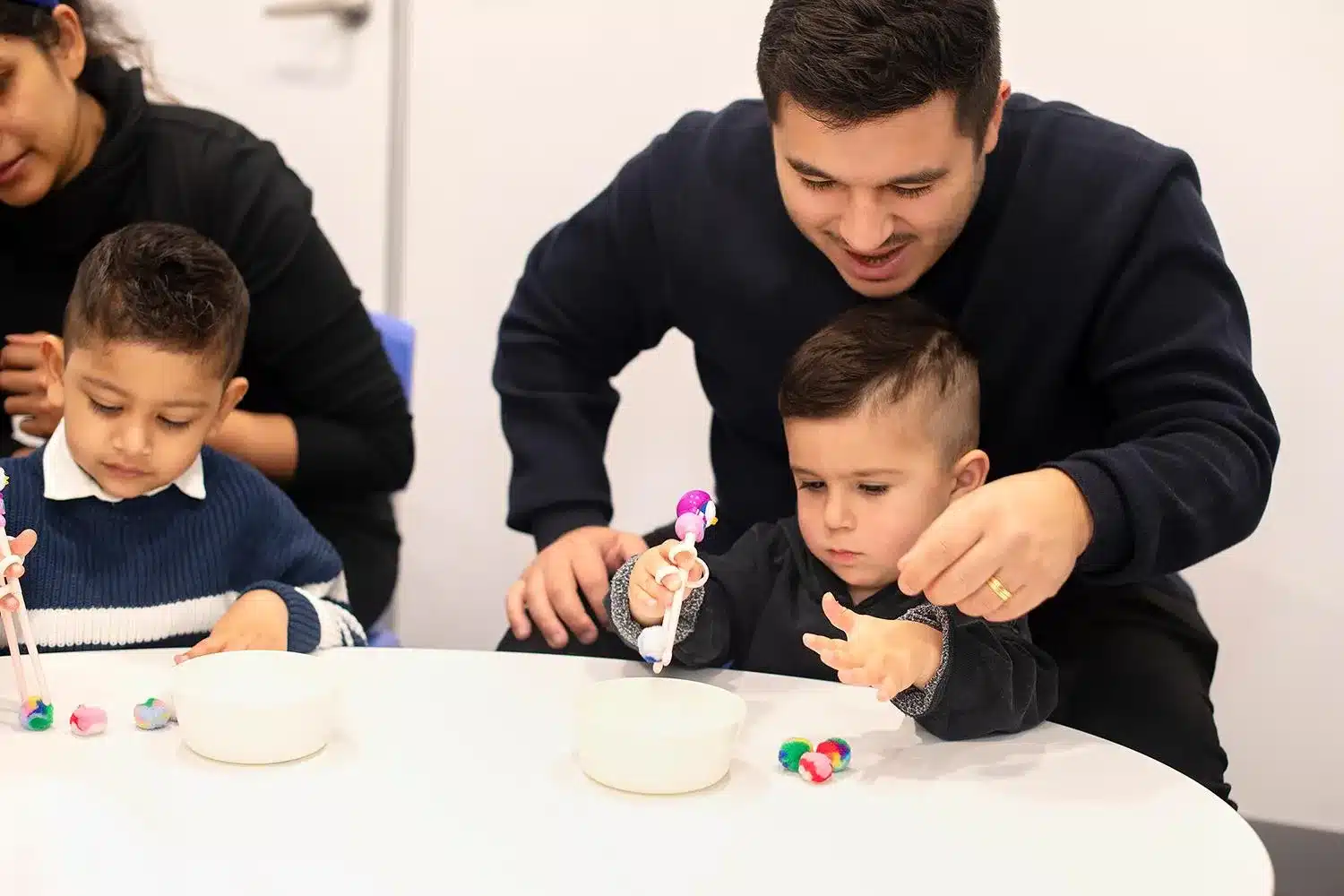
Image by Shichida Australia: Using chopsticks during play helps toddlers strengthen hand muscles and develop the coordination needed for early writing.
Stages of Mark Making Development (0-5 Years)
Every child develops at their own pace, but most children do move through similar stages of mark making development as they grow and explore the world through play.
Babies (0-12 Months): Sensory Exploration
Babies are primarily building the sensory, visual, and motor foundations that later support mark making. At this stage, your baby is learning through touch, movement, and sensory exploration every single day.
You might start to notice your baby:
- Smearing food with their hands
- Patting or splashing paint
- Exploring different textures with curiosity
- Watching moving colours or patterns
- Reaching out and grasping objects or tools
All of these early experiences are important because they help your baby begin building coordination, body awareness, and early control of movement.
Alongside what you do at home, structured baby and infant classes can also offer gentle, age-appropriate sensory experiences that support this stage of development in a calm and guided way.
Toddlers (1-3 Years): Scribbling and Experimentation
Your toddler starts to create more intentional marks as they explore how movement turns into visible shapes on paper or other surfaces.
You might notice your toddler:
- Making random scribbles
- Using large arm movements
- Repeating lines and circles over and over
- Switching hands frequently while drawing
- Exploring cause and effect (seeing that their actions create marks)
What your child creates does not need to look like anything recognisable yet. The focus is on exploration, movement, and discovery, where the process matters far more than the final picture.
Preschoolers (3-5 Years): Controlled Marks and Patterns
As your child moves into the preschool years, you’ll start to notice more control and precision in the way they make marks.
You may begin to see:
- Recognisable shapes
- Repeated patterns
- Simple drawings of people or objects
- Name-like writing attempts
- More controlled colouring within spaces
These early skills are an important step forward. They help build confidence with writing tools and lay the foundation for early literacy development in a natural, gradual way.
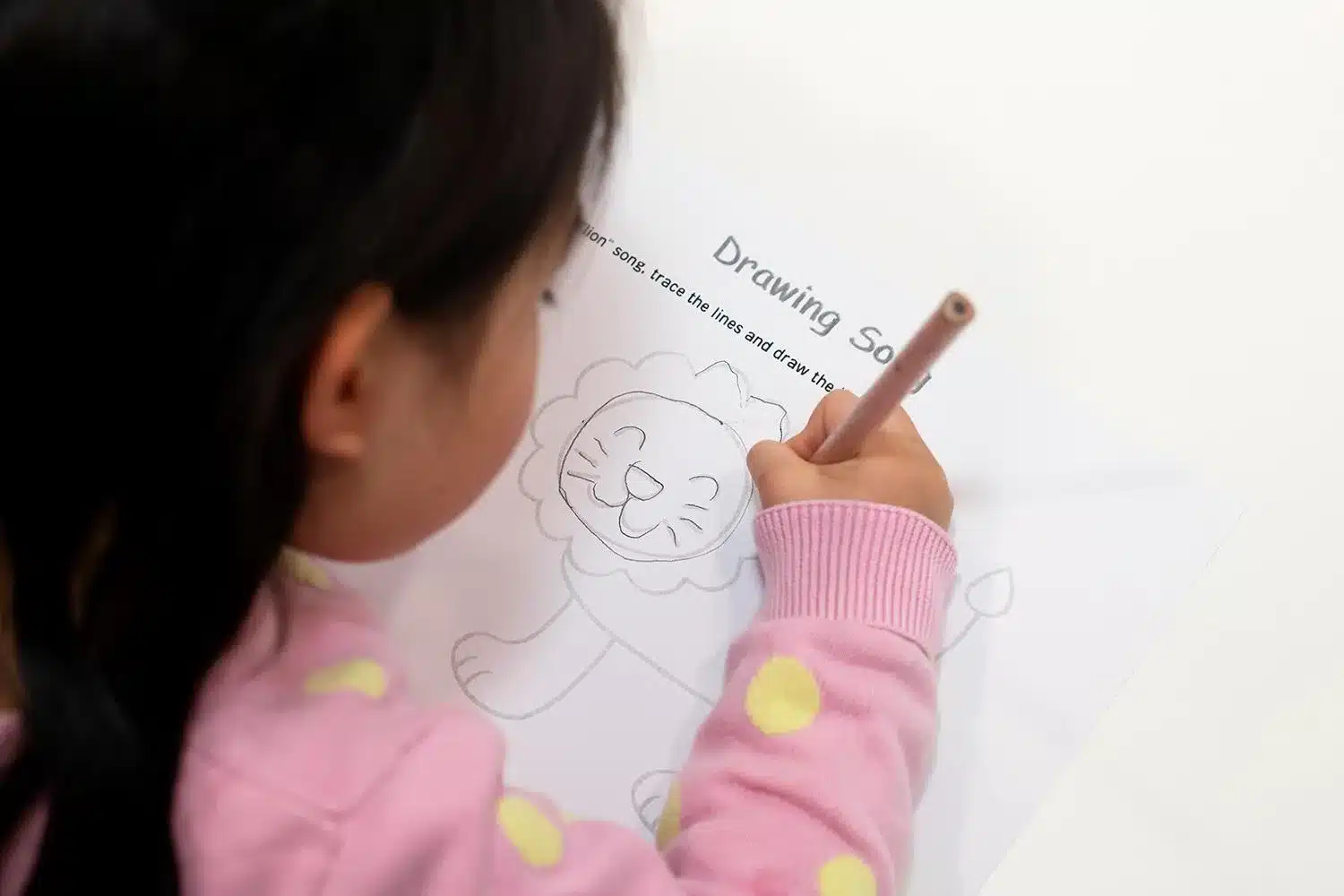
Image by Shichida Australia: Guided drawing activities help children follow step-by-step instructions, build pencil control, and strengthen listening skills through music and play.
My Child Hates Writing – Could They Have Missed Some Early Foundations?
When children struggle with writing later on, the problem is often not the writing itself. They may lack hand strength, pencil control, visual tracking skills, or confidence built through earlier mark making experiences.
This is why early scribbling, painting, sensory play, cutting, and fine motor activities are so important. They help build the physical foundations that make writing feel easier and more enjoyable later on.
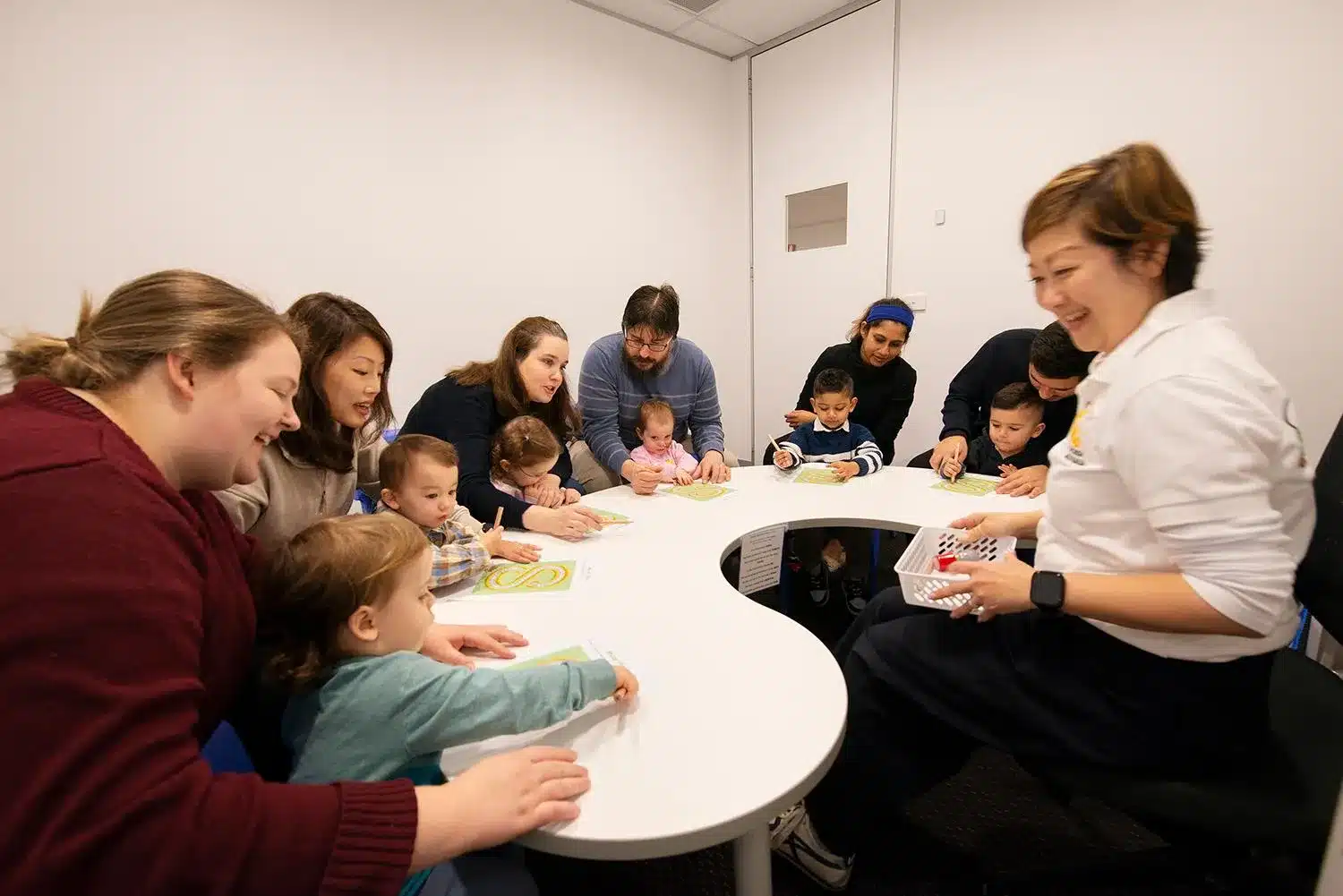
Image by Shichida Australia: Sensory-rich pencil control activities help children strengthen fine motor skills, finger dexterity, and early writing readiness through hands-on exploration.
Pencil Control Activities for Early Writing
Pencil control activities play an important role in helping your child move from early mark making toward more structured writing skills.
The aim is not to produce perfect handwriting. Instead, these activities give your child opportunities to practise movement control, understand direction, build endurance, and develop better hand coordination in a fun and pressure-free way.
Tracing Lines and Shapes
You can start with simple tracing activities and slowly increase the difficulty as your child builds confidence and control.
Try tracing:
- Straight lines
- Horizontal lines
- Curved lines
- Zigzags
- Spirals
- Basic shapes
You don’t need anything complicated for this. Your child can use crayons, chalk, paintbrushes, or even their fingers in sand or foam. The goal is to keep it playful, hands-on, and enjoyable while they develop early pencil control skills.
Colouring and Drawing Activities
Colouring helps your child practise staying within spaces while gradually building hand endurance and control.
You can support this by encouraging:
- Large colouring pages first
- Thick crayons for toddlers
- Free drawing without pressure
- Drawing shapes or patterns together
Try not to focus on correcting every mistake. At this stage, confidence and enjoyment matter far more than precision.
Dot-to-Dot and Path Tracing
Simple tracing activities for preschoolers help build important early writing foundations, including:
- Direction awareness
- Pencil movement control
- Focus and concentration
- Visual tracking
If your child enjoys these activities, these 50 fine motor activities for preschoolers and toddlers offer more playful ways to strengthen pencil control and hand coordination.
Mark Making Activities for Babies and Toddlers
The most effective mark making ideas for toddlers are sensory-rich, playful, and open-ended.
Messy Play Activities
Messy play gives your child valuable sensory experiences that naturally support early writing skills.
Try:
- Finger painting
- Yoghurt painting
- Sand trays
- Water painting outdoors
- Foam play
- Mud drawing
You can explore more ideas in this guide to sensory play for babies, infants and toddlers.
Large-Scale Drawing
Big movements help develop shoulder stability and coordination, which later support controlled pencil use.
Try:
- Chalk on concrete
- Easel drawing
- Butcher’s paper on walls or floors
- Water brushes outdoors
- Large paint rollers
Large movements build the foundation for smaller, more precise control later on.
Everyday Mark Making Ideas
You don’t need special or expensive materials. Simple everyday play works best.
Try:
- Drawing in flour trays
- Writing in shaving foam
- Stick drawing in dirt
- Condensation drawing on windows
- Painting with water outdoors
These toddler learning activities build confidence through repetition, creativity, and exploration.
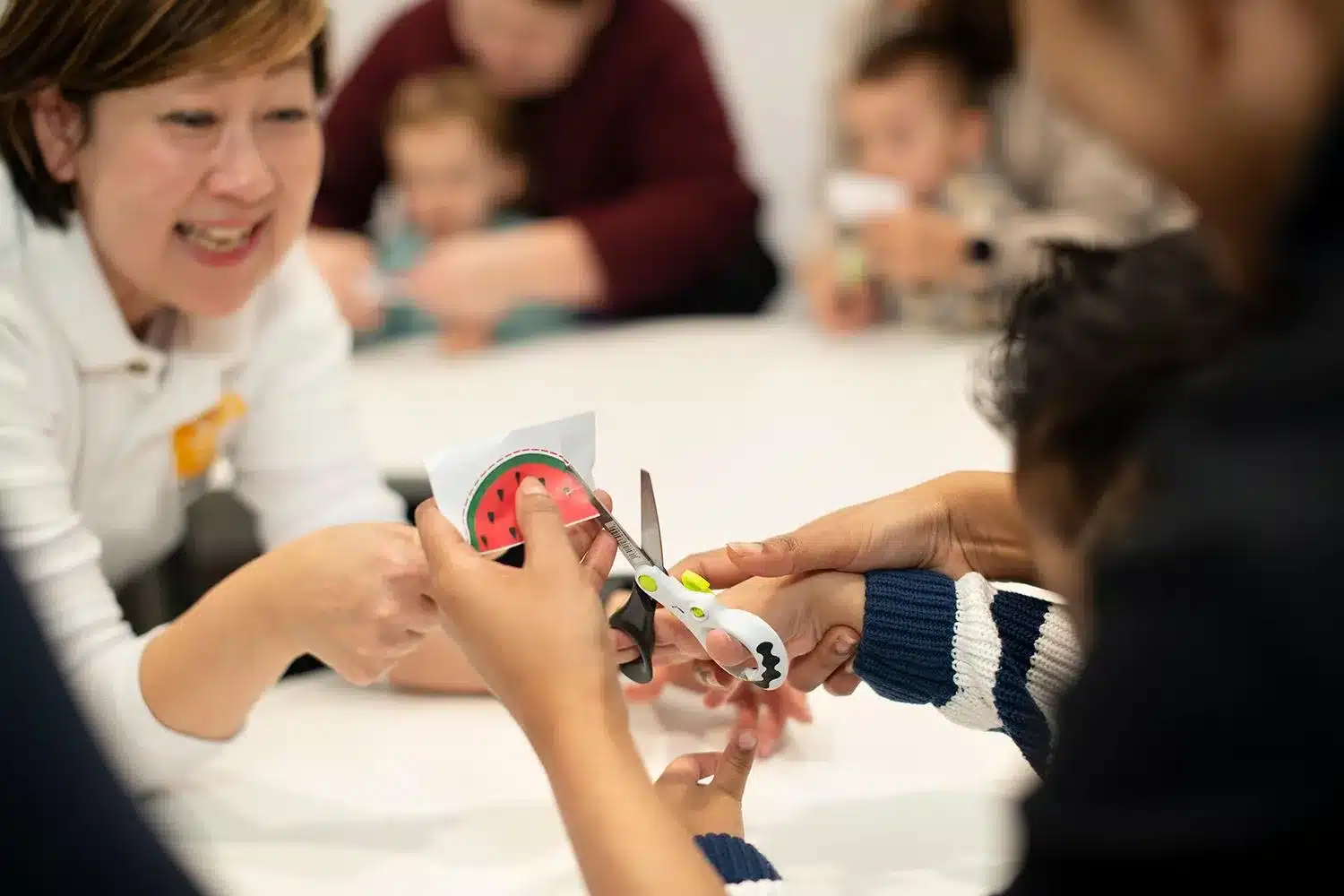
Image by Shichida Australia: Learning to cut along curved lines helps children strengthen fine motor skills, bilateral coordination, and early writing readiness.
Scissor Control and Its Role in Writing Development
Scissor control activities may not look like writing practice, but they play an important role in building writing readiness.
Cutting strengthens the same hand muscles needed for pencil control and improves bilateral coordination, where both hands work together.
Beginner Scissor Skills
Start simple:
- Snipping playdough
- Cutting paper strips
- Making fringe cuts
- Cutting straight lines
Always use child-safe scissors with close supervision.
Advanced Cutting Activities
As your child gains confidence, introduce:
- Cutting shapes
- Cutting curved lines
- Craft pattern cutting
- Collage activities
These activities help build precision, coordination, and planning skills.
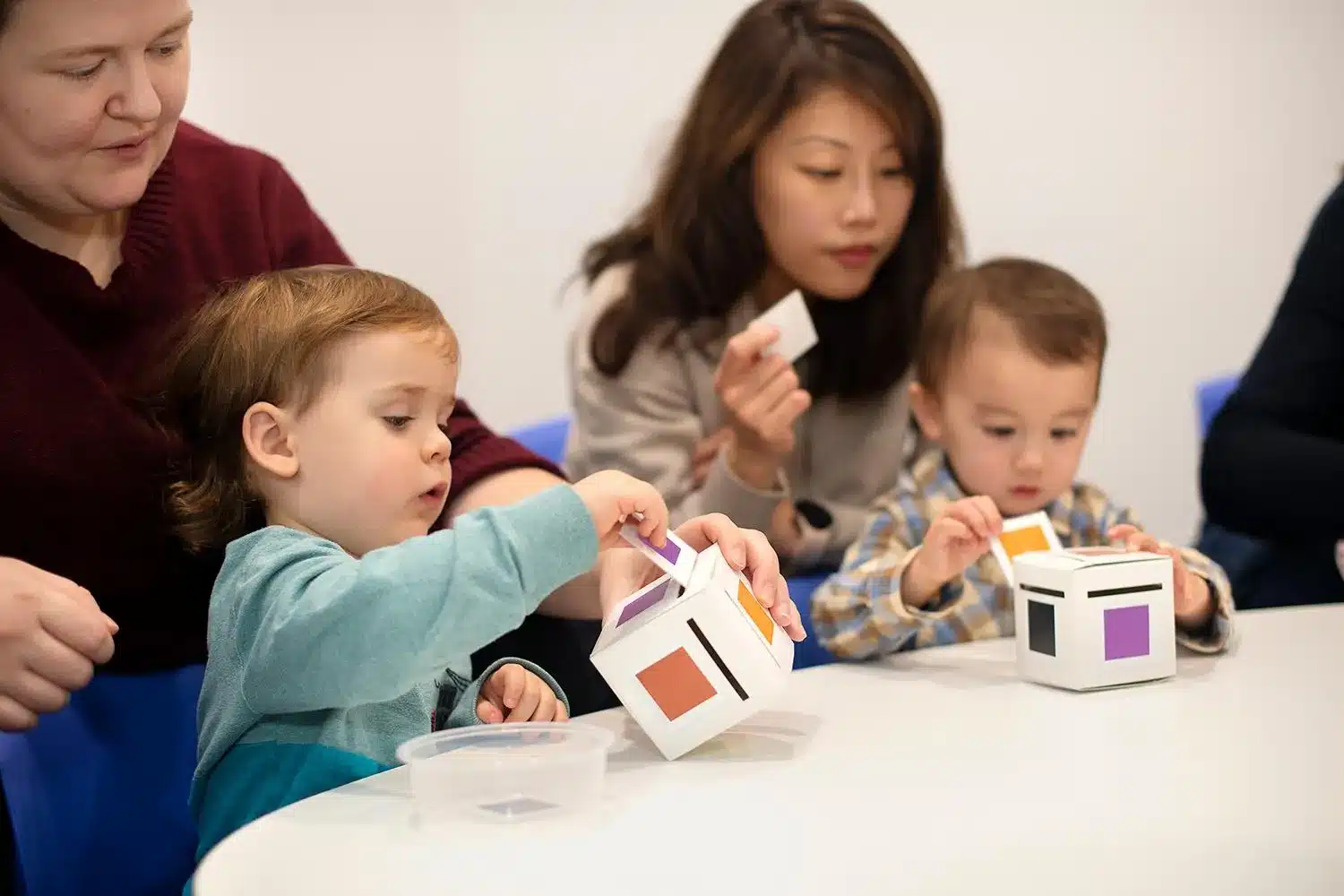
Image by Shichida Australia: As toddlers post each colour card into the matching box, they practise finger control, concentration, and colour learning.
Finger Dexterity Activities to Strengthen Writing Skills
Strong fingers make writing easier and more controlled for your child.
Playdough and Clay Activities
Playdough is one of the best ways to build hand strength.
Encourage your child to:
- Pinch
- Roll
- Squash
- Twist
- Flatten
- Cut with tools
These movements strengthen fingers, wrists, and overall hand control.
Threading, Beads, and Peg Activities
Precision-based play supports fine motor development.
Try:
- Threading beads
- Peg boards
- Lacing cards
- Pipe cleaner threading
- Posting games
These fine motor skills activities for toddlers and preschoolers help build hand strength through engaging, hands-on play.
Everyday Fine Motor Play
Many daily activities naturally support writing readiness:
- Using tweezers or tongs
- Buttoning clothes
- Opening containers
- Transferring objects between bowls
- Using spray bottles
- Peeling stickers
Children learn best when fine motor play feels meaningful and fun.
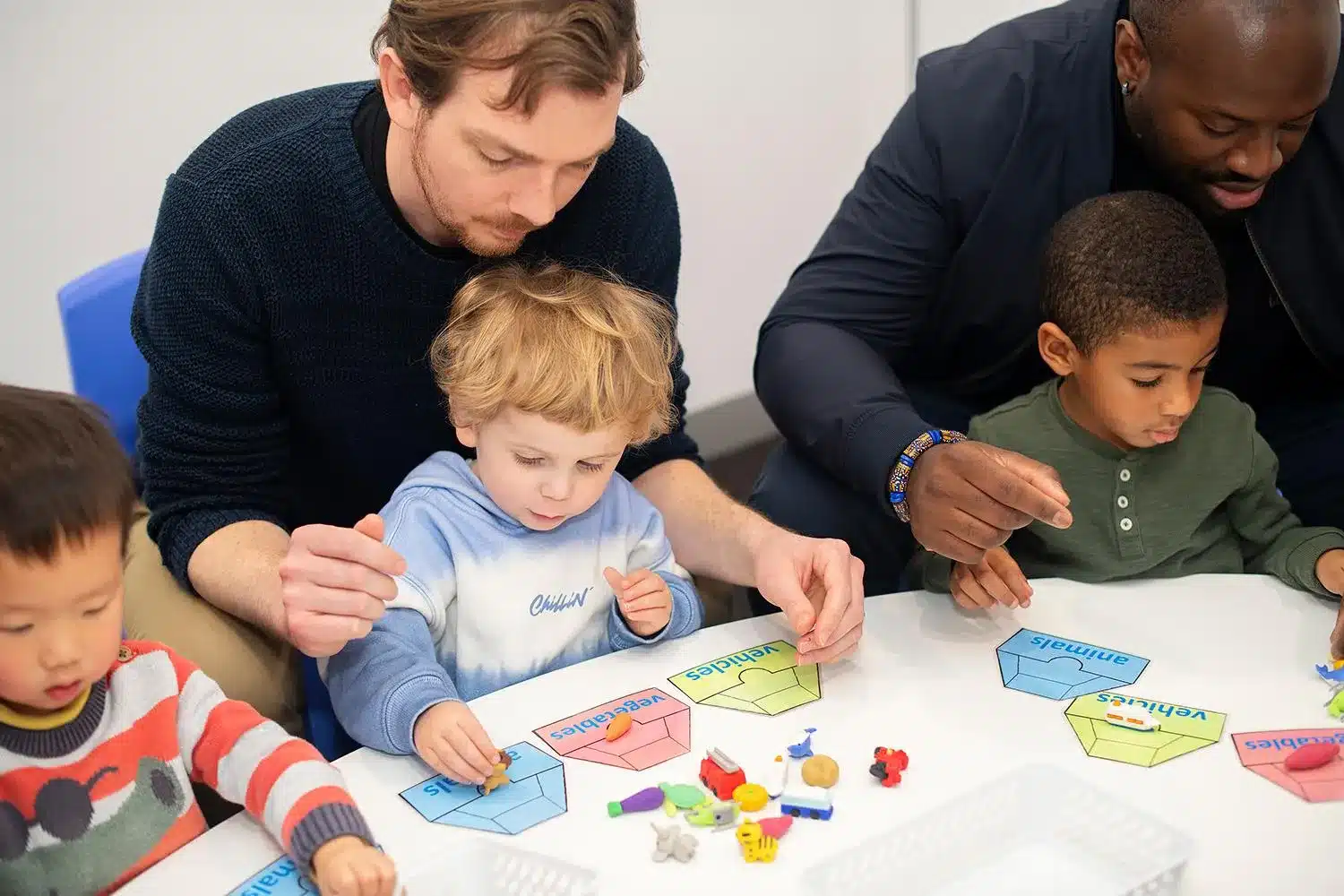
Image by Shichida Australia: As toddlers pinch and place each piece into the right category, they build finger strength, coordination, and thinking skills.
How Shichida Supports Writing Readiness
In Shichida classes, children regularly participate in activities that support writing readiness, including:
- Fine motor exercises
- Pencil control activities
- Tracing and drawing tasks
- Cutting activities
- Hand-eye coordination games
- Sensory-based learning experiences
These activities help children gradually develop the skills needed for writing while keeping learning enjoyable and age-appropriate.
Download Pencil Grip tips from Shichida’s free resources page.
Common Mistakes to Avoid When Teaching Writing Skills
Overcorrecting Pencil Grip
It is normal for young children to explore different grips. Constant correction can lead to frustration. Offer short crayons, chunky pencils, and varied fine motor play instead of forcing a perfect grip too early.
Overusing Worksheets Instead of Play
Worksheets have limited value in the early years. Hands-on experiences build stronger neural connections than repetitive paper tasks.
Movement, sensory play, creativity, and exploration remain the most powerful foundations for early writing development. Creating a balance between the two is key.
When Should Parents Seek Additional Support?
Every child develops at their own pace. However, it may be worth discussing concerns with a health professional if your child:
- Avoids using both hands together
- Shows significant difficulty grasping crayons or drawing tools compared to peers
- Becomes extremely frustrated during simple fine motor tasks
- Shows persistent weakness or difficulty controlling hand movements
Early support can help identify any underlying challenges and provide strategies to build confidence and skills.

How to Support Writing Readiness at Home
Keep it simple and keep it fun!
Creating a Writing-Friendly Environment
Start by making mark making easy and accessible in your home. When materials are within reach, your child is far more likely to explore them naturally.
You can keep things simple with:
- Crayons
- Chalk
- Paper
- Paintbrushes
- Cardboard
- Clipboards
The easier it is for your child to access these tools, the more often they will use them in their own time.
Encouraging Daily Practice Through Play
Even just 5-10 minutes of playful drawing, scribbling, or sensory activity each day can make a real difference over time. These small, consistent experiences build your child’s confidence and control gradually.
Following Your Child’s Pace
Every child develops differently, and that’s completely normal.
Some children naturally love drawing and mark making early on. Others prefer movement, climbing, or sensory play before showing interest in pencils or paper.
Try not to compare your child with siblings or other children. Instead, focus on small, steady progress and keep the experience positive and enjoyable.
Printable vs Play-Based Learning: What Works Best?
Worksheets and tracing printables can have a place, especially for older preschoolers, but they should never replace hands-on play.
At this stage, your child learns best through real experiences that involve movement and sensory exploration.
Play-based learning supports:
- Creativity
- Problem-solving
- Sensory integration
- Fine motor coordination
- Motivation and confidence
This is why many early childhood approaches, including The Shichida Method, focus on active, multi-sensory, and play-based learning in the early years.
Simple activities like painting, threading, mark making, sensory play, and movement games build much stronger foundations than repetitive worksheet practice alone.
If you’re looking for more ideas, you might enjoy:
- Sensory Play for Babies, Infants & Toddlers
- Fine Motor Activities for Preschoolers
- Fine Motor Development: Milestones, Activities and Tips
Enjoy Pencil Control Activities with Shichida
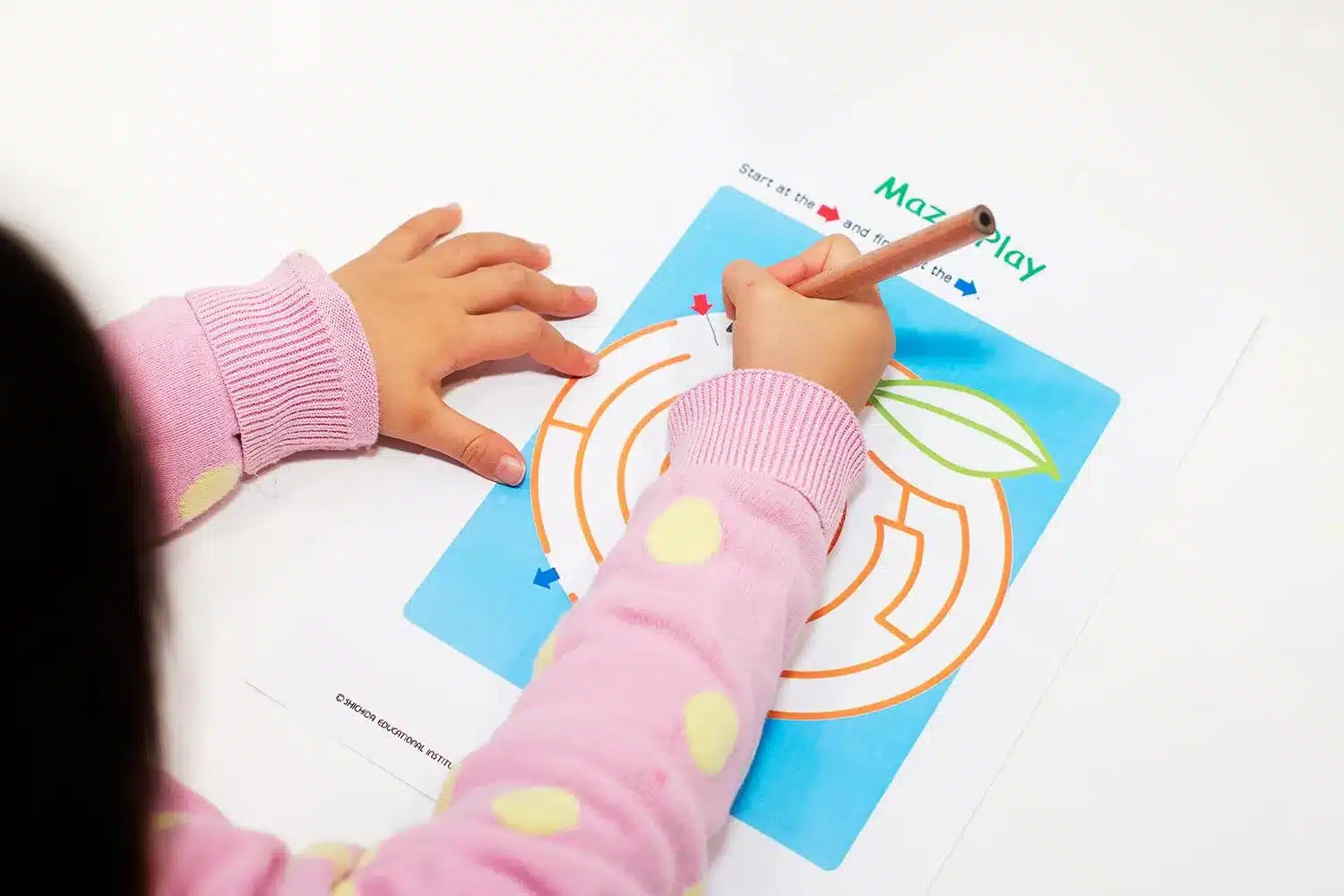
Image by Shichida Australia: Consistent pencil control activities support growing confidence, writing readiness, and independent learning as children progress through early childhood development stages.
Writing doesn’t begin when your child forms letters neatly on paper. It begins much earlier, in every scribble, finger painting session, chalk drawing, and messy play experience.
Through mark making, your child is building:
- Fine motor strength
- Pencil control
- Hand-eye coordination
- Creativity
- Confidence
- Early literacy awareness
The most powerful thing you can do is simply give your child space to explore without pressure.
Children learn best when they feel curious, capable, and supported.
By weaving mark making into everyday play, you are helping your child build lifelong learning skills one small scribble at a time.
For parents who want to go a step further, Shichida Australia offers age-appropriate programs that support sensory development, cognitive growth, and early learning through engaging, play-based experiences.
You can also find your nearest centre or book a trial class to see how it works in practice.
FAQs: Pencil Control Activities for Kids
Pencil control activities are playful exercises that help children practise moving their hands, fingers, wrists, and arms with more coordination. For toddlers and preschoolers, this can include scribbling, colouring, tracing lines, drawing shapes, painting with brushes, threading beads, squeezing playdough, and making marks in sand or foam.
Pencil control activities help children build the hand strength, coordination, and confidence they need before formal handwriting. Before a child can write letters neatly, they first need to practise simple movements such as lines, circles, curves, and controlled scribbles through play-based activities.
Children can begin early pencil control activities from toddlerhood, but they do not need formal writing lessons. Babies and young toddlers benefit from sensory play, finger painting, grasping toys, and large arm movements. Preschoolers can gradually try tracing, colouring, drawing shapes, and simple pre-writing patterns.
The best pencil control activities for toddlers are short, playful, and hands-on. Try chunky crayons, finger painting, chalk drawing, water painting, playdough squeezing, sticker peeling, posting games, and drawing on large paper. These activities build hand strength and coordination without pressure.
Preschoolers often enjoy more structured pencil control activities such as tracing lines, drawing circles, colouring within simple shapes, dot-to-dot pictures, maze paths, cutting practice, threading beads, and copying basic patterns. These activities help prepare the hand for writing letters and numbers.
You can improve your child’s pencil control by offering short daily opportunities to draw, colour, trace, paint, cut, thread, squeeze, and build. Keep activities playful and varied. A few minutes of regular practice is usually more helpful than long worksheets or repeated correction.
It is better to gently support pencil grip than to constantly correct it. Young children’s grip develops gradually as their hand muscles strengthen. Offer chunky crayons, short pencils, playdough, tweezers, tongs, and finger games to build the strength and control needed for a more comfortable pencil grip.
Shichida supports pencil control through age-appropriate activities that build fine motor skills, concentration, memory, confidence, and parent-child connection. Rather than rushing formal handwriting, Shichida classes use engaging, play-based learning to help children develop the foundations they need for early writing and school readiness.