
Key Points
- Open ended questions for preschoolers invite children to think, reflect, and express ideas in their own words.
- They are one of the most accessible and powerful cognitive enrichment tools for parents.
- Regular use of open-ended questions builds cognitive flexibility, language development, and independent thinking.
- Age-appropriate conversation starters help children develop skills progressively from infancy through early school years.
- Small, consistent conversations can have a meaningful impact on early brain development and long-term learning.
Curiosity shows up early in your child’s life, long before they can fully explain what they’re thinking. You’ll see it in the way they observe everything, experiment through play, and keep asking questions about the world around them. These everyday moments are actually where a lot of early learning is happening.
How you respond in those moments really matters. Instead of focusing only on questions with right or wrong answers, you can start asking questions that encourage your child to think and share more.
That’s where open ended questions come in. They’re not about testing your child, but about slowing down, encouraging them to think, and helping them build confidence in how they express their thoughts.
Designed for families with children up to 5 years old.
What are Open Ended Questions?
Open-ended questions are the kind of questions that don’t stop with a simple “yes” or “no” answer. Instead, they gently invite your child to pause, think, and explain what’s going on in their own mind.
What makes them so powerful is that they stretch your child’s thinking naturally. Instead of a single-word answer, children begin to describe, imagine, and make sense of ideas in their own way. For example, instead of asking “Did you like the story?”, you might ask “What did you like about the story?” It seems like a small change, but it opens the door to a much richer conversation.
After reading a book, you might ask, “What do you think will happen next?” On a walk, “What do you notice around you?” At mealtimes, “What was the best part of your day?” And during play, “What is your character doing now?”
These simple conversations become powerful opportunities for language growth, creativity, and early thinking skills. And often, it’s in these unplanned moments that your child opens up the most.
Why Open Ended Questions Matter in Early Learning
These questions support multiple areas of development at once, in a natural and low-pressure way.
When children respond, they practise expressing thoughts clearly, which builds vocabulary and communication skills. They also begin exploring different possibilities instead of jumping to one answer, supporting flexible and critical thinking.
Over time, children become more comfortable expressing feelings and experiences, and they approach simple challenges with greater confidence.

Image by Shichida Australia Song-guided drawing helps preschoolers connect words with actions while building focus, memory, listening skills, and confidence.
Key Benefits of Open Ended questions for Children
Using open ended questions for kids regularly supports both thinking and communication skills in meaningful ways.
Over time, these conversations help your child develop:
- Critical and creative thinking
- Stronger vocabulary and verbal expression
- Emotional awareness
- Curiosity and motivation to learn
One of the most important outcomes is cognitive flexibility. This is your child’s ability to consider multiple ideas, shift perspectives, and adapt thinking. It is a key foundation for learning success in school and beyond.
Supports Language and Vocabulary Development
When children answer open-ended questions, they need to find words to express their thoughts.
Instead of a single word response, they begin forming sentences, describing ideas, and making connections. This strengthens:
- Vocabulary and early literacy
- Sentence structure
- Verbal fluency
Children who experience rich, language-filled interactions early on tend to have stronger reading and comprehension skills later.
Builds Cognitive Flexibility and Creative Thinking
Open ended questions are powerful cognitive flexibility activities.
They encourage your child to:
- Consider more than one possible answer
- Think from different perspectives
- Generate original ideas
For example:
“How else could we build this?” or “What might happen if we try a different way?”
These thinking patterns are closely linked to problem-solving, creativity, and early STEM skills.
Encourages Independent Learning
If you want to understand how to encourage independent learning, start by stepping back.
Open ended questions shift the focus from giving answers to exploring ideas. Instead of correcting or guiding immediately, you allow your child to think.
This builds:
- Confidence
- Intrinsic motivation
- Independent thinking in early childhood
Your child begins to trust their own ideas, which is essential for lifelong learning.
Need some resources to encourage conversation? Shichida has plenty of ideas to get going!
Open Ended Questions by Age Group
The best questions are simple, relevant, and connected to your child’s world. As your child grows, the complexity of questions can grow too.
Toddlers (1-3 Years)
At this stage, communication is still emerging. Responses may be gestures, sounds, or facial expressions.
Examples:
- “What’s that?” then “What sound does it make?”
- “What do you think will happen next?”
- “Which one is your favourite?” then “why?”
Even at this age, these moments support communication, attention, and early language development. Every response matters, whether it’s a sound, gesture like pointing or nodding, or simple words.
Conversation Starters for Preschoolers (3-5 Years)
Preschoolers love imagination and storytelling. This is the perfect stage for conversation starters:
Try:
- “What would you wish for if you had 3 wishes?”
- “What do you think the bird is chirping about?”
- “How could we make this tower taller?”
- “What do you think your teddy bear is thinking about?”
- “If you could invent something, what would it be?”
These questions fit naturally into a preschooler’s world and encourage imagination, storytelling, and early emotional expression.
They help children turn everyday experiences into stories and “what if” thinking. Over time, this supports early narrative skills and more confident communication of feelings, even when words are still developing.
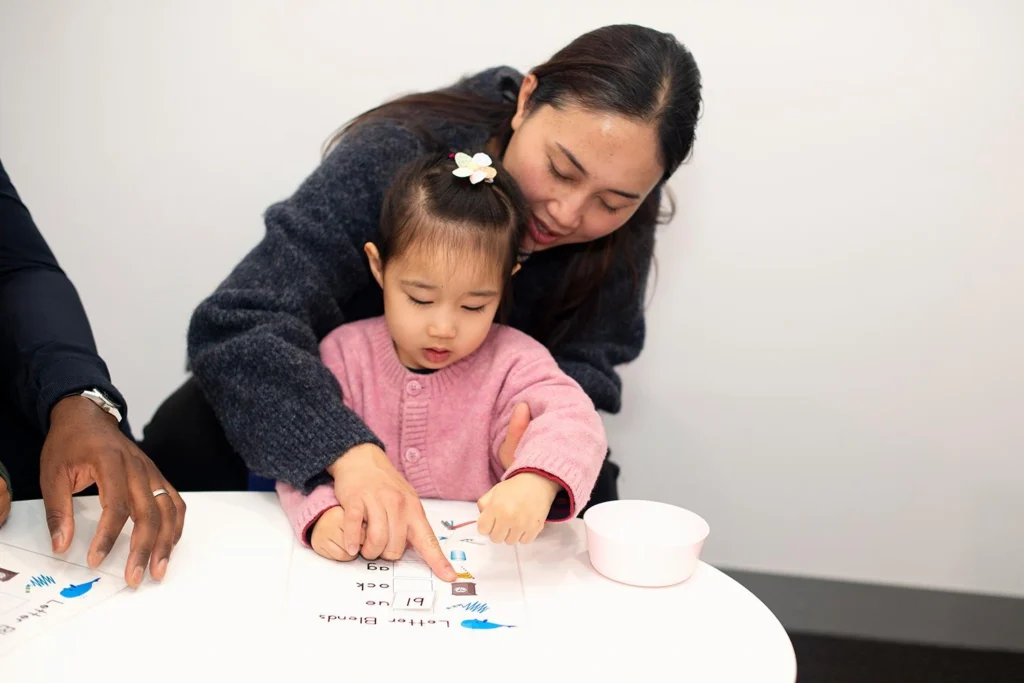
Image by Shichida Australia: Word-building games give preschoolers a playful way to practise sounds, letters, thinking, and confidence – especially when a parent joins in.
10 Best Open Ended Conversation Starters for Preschoolers
Here are practical open ended questions for preschoolers you can use right away:
Questions That Encourage Imagination in Kids
“If you could live anywhere, where would it be and why?”
Skill: Creative thinking
Age: 3-5
“What would your dream playground look like?”
Skill: Visual imagination
Age: 3-5
These kinds of questions are great when your child is in a playful, imaginative mood. They help them stretch their thinking and create little worlds in their mind.
Questions That Build Emotional Awareness in Kids
“What made you feel proud today?”
Skill: Emotional literacy
Age: 3-5
“What things can you think of to do when you feel sad, to help yourself feel better?”
Skill: Self-regulation
Age: 3-5
These questions gently help your child notice and talk about feelings, even the small ones that come and go during the day.
Questions That Encourage Problem-Solving in Kids
“What else could we try? Is there another way?”
Skill: Problem-solving
Age: 3-5
“How can we solve this problem? Let’s work together!”
Skill: Collaboration
Age: 3-5
These are especially useful during play or small frustrations. Instead of stepping in with answers, you’re inviting your child to think it through with you.
Questions That Connect to Everyday Experiences for Children
“What do you notice about the leaves around us?”
Skill: Observation
Age: 3-5
“What was your favourite part of today?”
Skill: Recall and expression
Age: 3-5
These help your child slow down and actually notice the world around them, instead of rushing through it.
Questions That Invite Reflection in Young Children
“Could you have done it in a different way? Let’s talk about it”
Skill: Reflection
Age: 4-5
“What did you learn today? Please share with me, I am interested to know more!”
Skill: Metacognition
Age: 4-5
These are simple but powerful for helping your child start thinking about their own thinking and experiences in a gentle way.
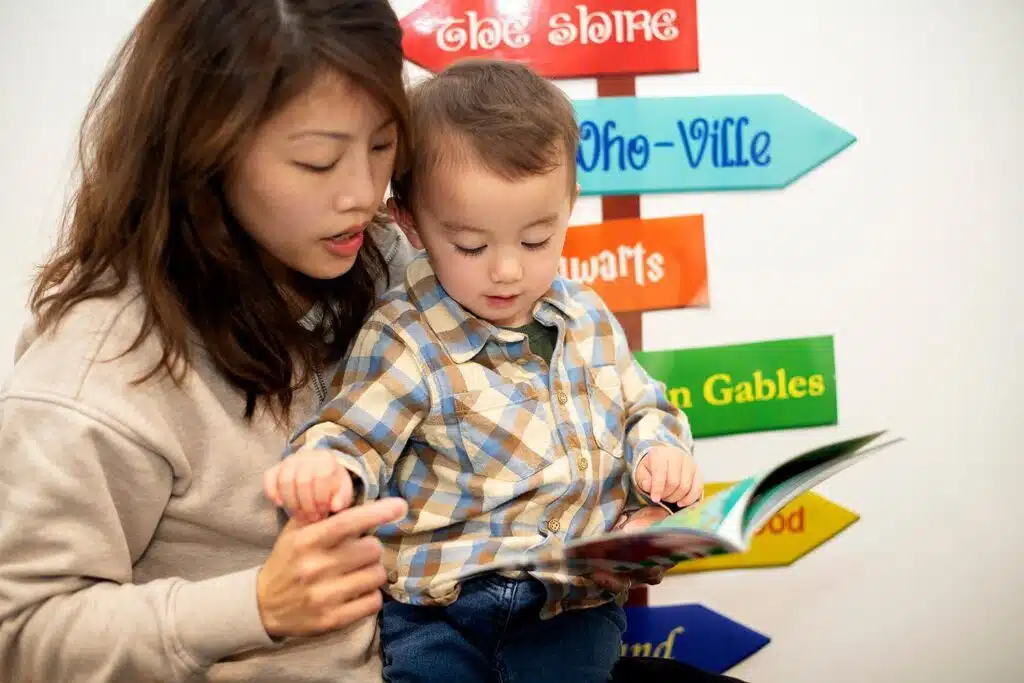
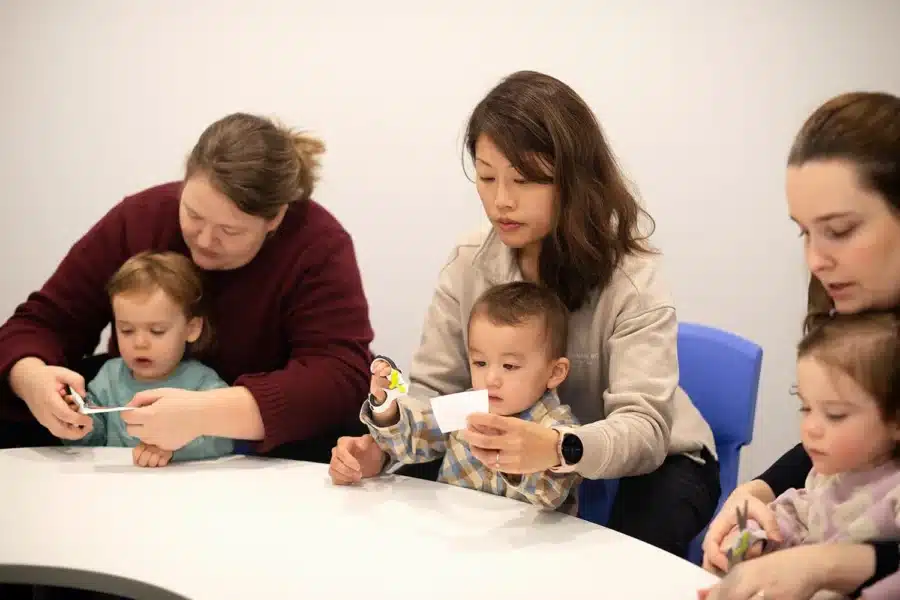
Image by Shichida Australia: Open-ended questions during reading help preschoolers build language, imagination, memory, and confidence in sharing their ideas.
What Is Cognitive Enrichment and How Do Questions Support It?
Cognitive enrichment simply means giving children everyday experiences that help their brain grow and strengthen connections over time.
Everyday conversations, play, and curiosity already provide enough opportunity for cognitive enrichment. Open ended questions are one of the simplest ways to support this kind of learning naturally in daily life.
Defining Cognitive Enrichment in Early Childhood
Cognitive enrichment is not about drills or memorisation.
It includes:
- Meaningful conversations
- Exposure to new ideas
- Play and exploration
- Everyday interactions
Simple moments like talking during a walk or asking about a story are powerful opportunities for learning.
Cognitive Flexibility Activities That Use Open Ended Questions
Many problem-solving activities for preschoolers naturally include open ended questions:
- Role play: “What is your character going to do next?”
- Sorting games: “Good choice! Why did you put it there?”
- Storytelling: “What happens after this?”
- Nature walks: “What do you notice on the ground?”
- Building: “What could you add to make it even stronger?”
These activities strengthen thinking while keeping learning engaging and playful.
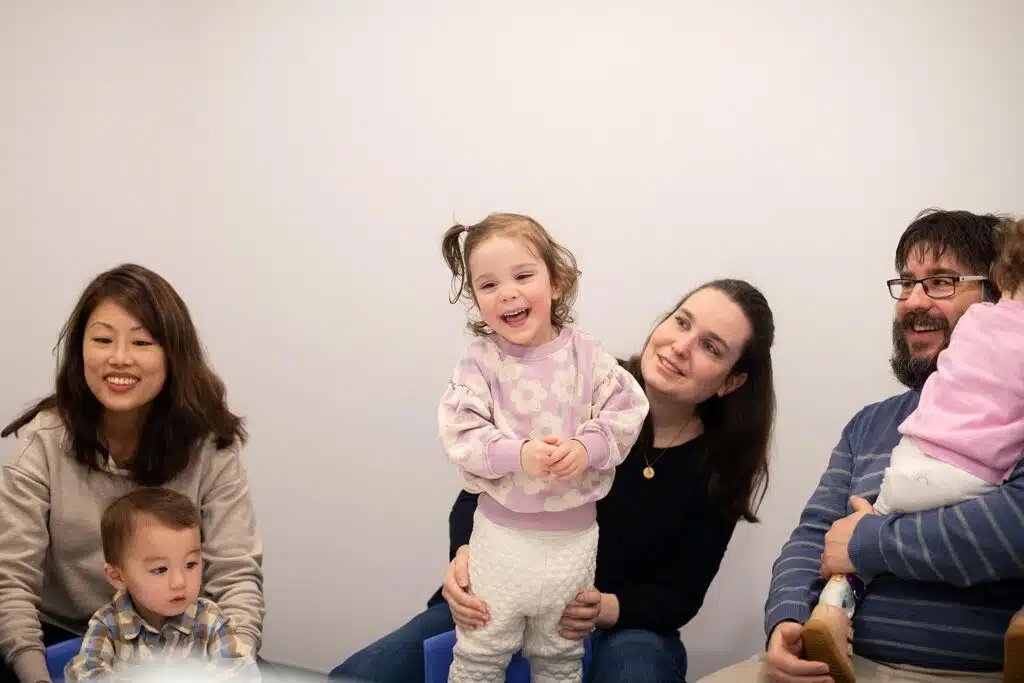
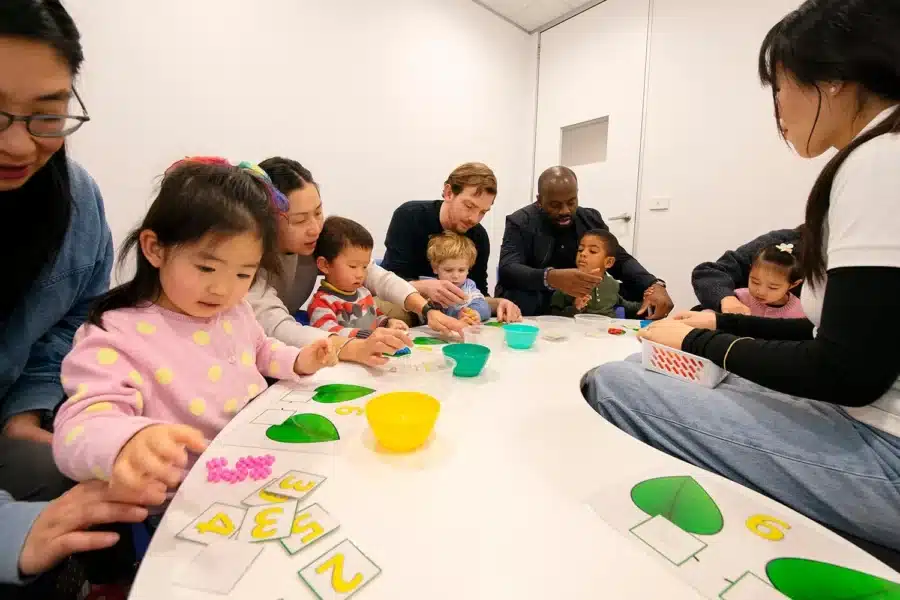
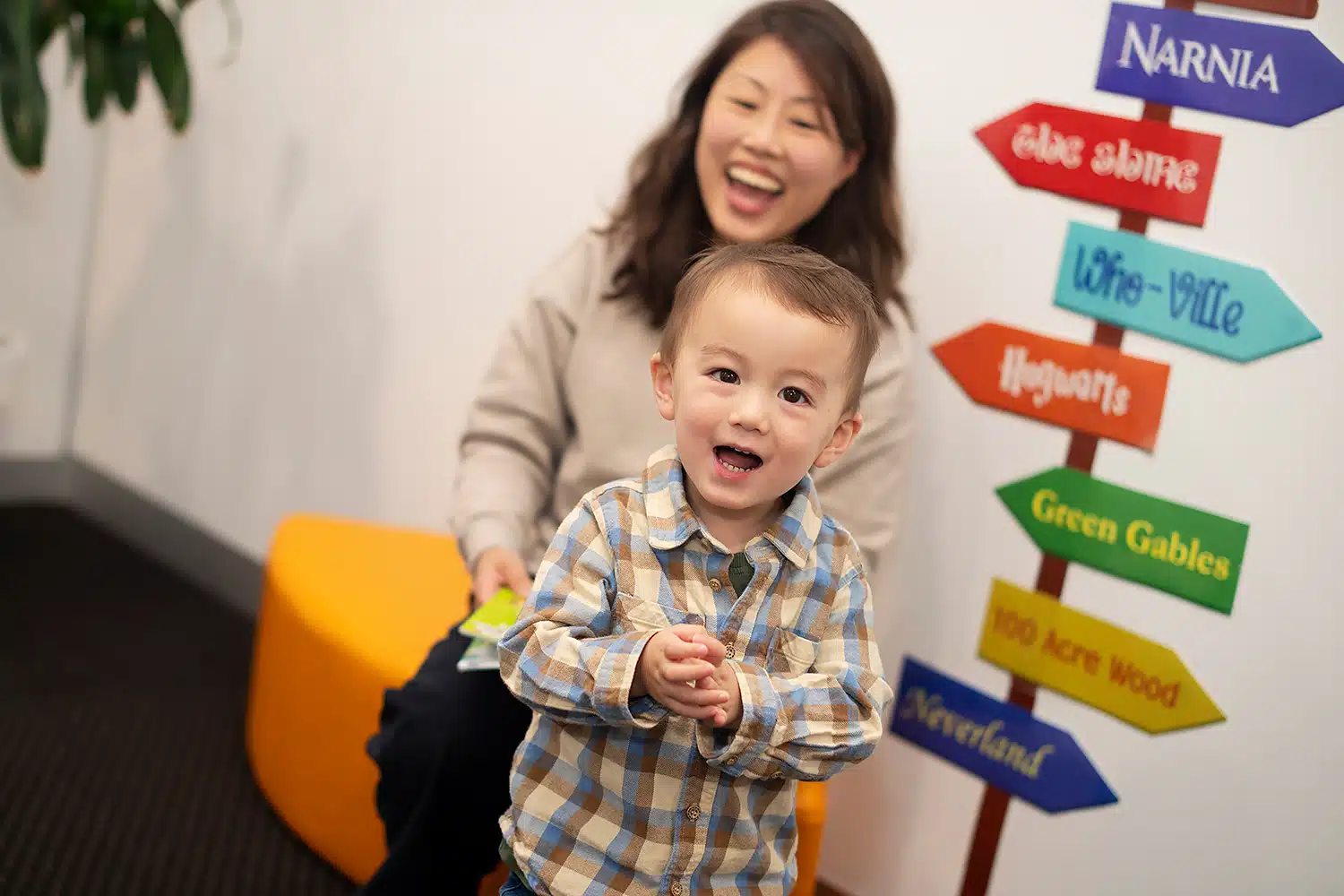
Image by Shichida Australia: In Shichida class, parents and children learn together through playful activities that build confidence, curiosity, focus, and connection.
How to Encourage Independent Learning Through Questions
The goal is not to test your child, but to create space for thinking.
- Create a safe space for thinking: Let your child feel that all ideas are welcome: “That’s interesting” or “Tell me more about that”
- Allow wait time: Pause after asking. Children often need a few seconds to think.
- Follow the child’s lead: Base your questions on what they are already doing. This makes learning feel natural and engaging instead of forced.
Open Ended Questions for Preschoolers Tips
Teach your child that thinking, questioning, and wondering are normal parts of everyday life.
- Use everyday moments: Learning happens in ordinary moments, like mealtimes, car rides, bath routine, or walks.
- Combine questions with play and activities: Play is one of the easiest ways to bring thinking to life. It turns simple play into gentle problem-solving without pressure.
- Model wondering aloud: One of the most powerful things you can do is show curiosity yourself.
How Open Ended Questions Support Long-Term Learning
The habit of asking and answering open ended questions for preschoolers build skills that last far beyond early childhood.
These include:
- Reading comprehension and inference
- Writing and verbal expression
- Scientific and mathematical reasoning
- Emotional understanding and empathy
- Creative expression
Over time, your child becomes more confident, curious, and engaged in learning.
Small, consistent conversations truly add up.
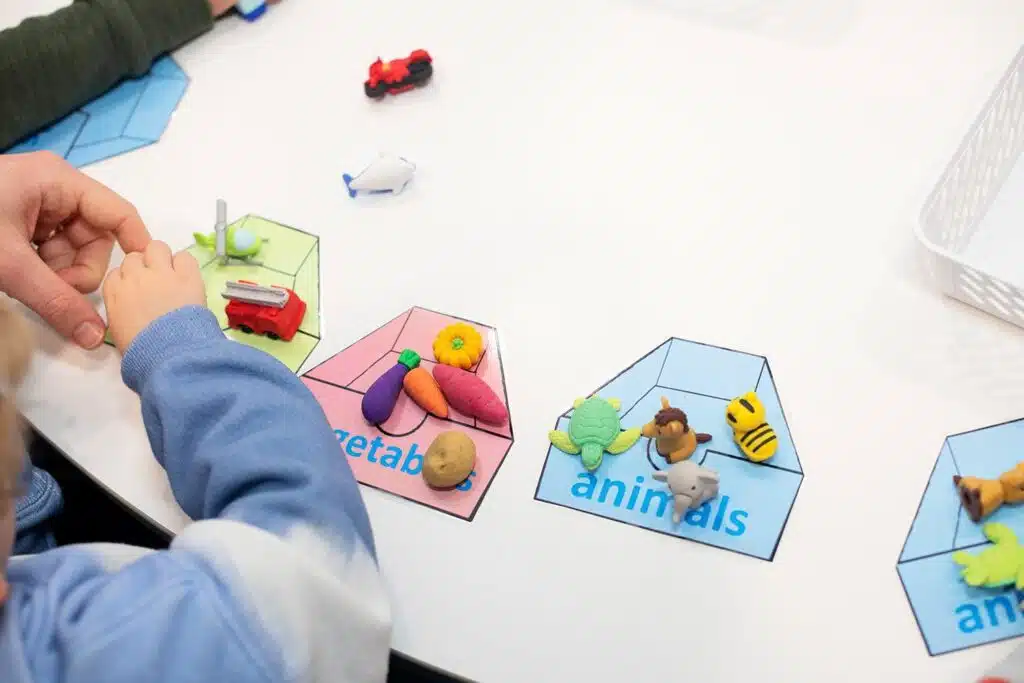
Image by Shichida Australia: Category matching games give preschoolers a fun way to think, sort, explain, and build confidence in their own ideas.
How Shichida Helps Preschoolers Think, Talk and Learn
The way you talk and engage with your child every day shapes how they think, learn, and make sense of the world. If you’d like more guided support, Shichida Australia classes help parents build these early thinking and learning skills through playful, research-informed approaches.
Book a trial class today and see how it can support your child’s curiosity, confidence, and learning at home and beyond.
FAQs: Open Ended Questions For Preschoolers
Open-ended questions for preschoolers are questions that invite children to think, explain, imagine or share ideas in their own words. Instead of asking questions that only need a “yes” or “no” answer, open-ended questions help children talk more and think more deeply.
Open-ended questions help preschoolers build language, thinking skills, emotional understanding and curiosity. They also give children the chance to explain their ideas, make choices and practise problem-solving in everyday situations.
The best conversation starters for preschoolers are simple, familiar and easy to answer. Questions about play, feelings, imagination, family, stories, food, animals and daily routines usually work well because children can connect them to their own experiences.
Open-ended questions support thinking skills by helping preschoolers compare, predict, remember, explain and make connections. Questions such as “What do you think will happen next?” or “Why do you think that happened?” encourage children to think beyond one-word answers.
Open-ended questions give preschoolers space to think for themselves. When children are invited to share their ideas, test possibilities and explain their reasoning, they begin to trust their own thinking and become more confident learners.
Children can be asked simple open-ended questions from toddlerhood, and even earlier through playful interaction. For preschoolers, questions can become more detailed as their language, memory and reasoning skills grow.
Pretend play, storytelling, building with blocks, sorting games, puzzles and “what if” questions can all support cognitive flexibility. These activities help preschoolers practise seeing things in different ways, changing their thinking and solving problems creatively.
Parents can use open-ended questions every day during normal routines. Mealtimes, bath time, car trips, playtime, story time and bedtime are all simple opportunities to help preschoolers think, talk and share ideas.
Yes. Open-ended questions can support school readiness by helping preschoolers build language, listening, confidence, problem-solving and social communication skills. These skills help children participate, follow discussions and express themselves more clearly when they start school.
You may notice your child giving longer answers, asking more questions, explaining their ideas, using new words or showing more curiosity during play and daily routines. Some children take longer to respond, so it is important to give them time to think.
Shichida uses playful, age-appropriate activities to help preschoolers think, communicate, remember, imagine and solve problems. Through guided interaction, children are encouraged to participate, share ideas and build confidence in how they learn.