Hand Eye Coordination Activities for Child Development
Key Takeaways:
- Hand-eye coordination plays a key role in early childhood development.
- It supports writing, drawing, reading readiness, and overall motor skills.
- Play-based activities are one of the most effective ways to build coordination.
- Age-appropriate activities help your child develop skills step by step.
- Strong coordination skills support confidence and early academic success.
You see it every day, when your child reaches for a toy, stacks blocks, or scribbles across a page. What looks like simple play is actually your child learning through hand eye coordination activities to coordinate what they see with how they move. These small actions are developing hand-eye coordination, a skill that supports so much of their early development.
The way your child plays at home already creates the perfect foundation. With a little intention, these everyday interactions can help your child build confidence, develop new skills, reach developmental milestones and feel more capable as they grow.
Sensory play can help nurture resilience and development. Download a free sensory play guide here.
If your child enjoys these types of activities, a Shichida trial class is a great way to see how structured play can support coordination, focus, memory and early learning confidence.
Book a trial class or contact us to find your nearest centre.
What Is Hand Eye Coordination?
Hand-eye coordination is the brain’s ability to process what the eyes see and guide the hands to move accurately. It’s a continuous loop that happens in seconds:
- The eyes track an object
- The brain processes distance, position, and movement
- The hands respond with controlled action
In early childhood, this system develops rapidly as your child’s brain forms new neural connections through repetition and play. (This is part of the Golden Period of child development.)
You’ll notice this skill in everyday activities like catching or throwing a ball, drawing and colouring, building with blocks, turning book pages, and eventually writing letters. Each of these tasks requires the eyes and hands to work together smoothly.
Strong hand-eye coordination supports fine motor development, pre-writing skills, visual tracking, and overall classroom readiness. It also lays the groundwork for independence, from feeding themselves to managing school tasks later on.
The most effective way to build this skill is through play. When your child is engaged, curious, and having fun, their brain is learning faster and more naturally.
Why Hand Eye Coordination Matters in Early Learning
Hand-eye coordination plays a key role in school readiness. It supports writing development, reading readiness through visual tracking, and the ability to manipulate objects with control.
Simple tasks like drawing shapes, turning pages, building with blocks, or using scissors all rely on this skill. When coordination is strong, children can focus more on learning instead of struggling with the physical side of tasks.
When Hand Eye Coordination Develops in Children
Hand-eye coordination develops gradually:
- Infants begin by tracking objects and reaching or grasping
- Toddlers start stacking, throwing, and placing objects
- Preschoolers refine skills through drawing, cutting, catching, and threading
As motor control, visual perception, and brain development grow together, coordination becomes more precise and efficient.
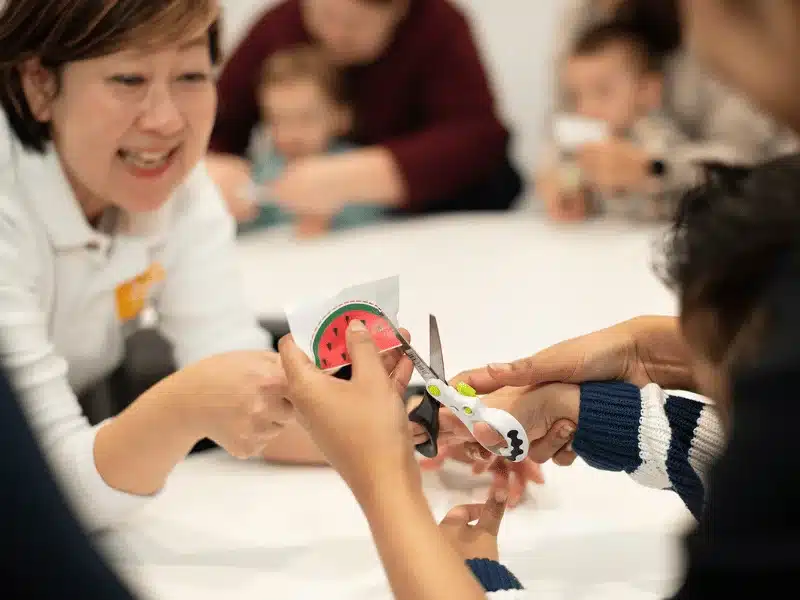
Image by Shichida Australia: A toddler practising cutting a curved shape during a Shichida Toddler Class.
Key Benefits of Hand Eye Coordination Activities for Children
Practising hand eye coordination activities does more than improve physical skills. It strengthens both the body and the brain.
Regular play-based practice helps improve motor control, concentration, visual processing, and problem-solving. Over time, children develop better precision, faster reaction times, and stronger coordination, all of which are essential for early academic tasks.
Strengthens Fine Motor Skills
Coordination activities build the small muscle movements needed for everyday independence. These include writing, drawing, buttoning clothes, using utensils, and handling tools like scissors or crayons.
Supports Early Literacy and Writing Skills
When visual tracking works together with controlled hand movement, children can form letters more easily, follow lines of text, and trace shapes or patterns. This creates a smoother transition into reading and writing.
Improves Focus and Attention
Many coordination exercises require concentration, patience, and trial-and-error learning. Children learn to watch carefully, adjust their movements, and stay engaged, all of which support better attention in learning environments.
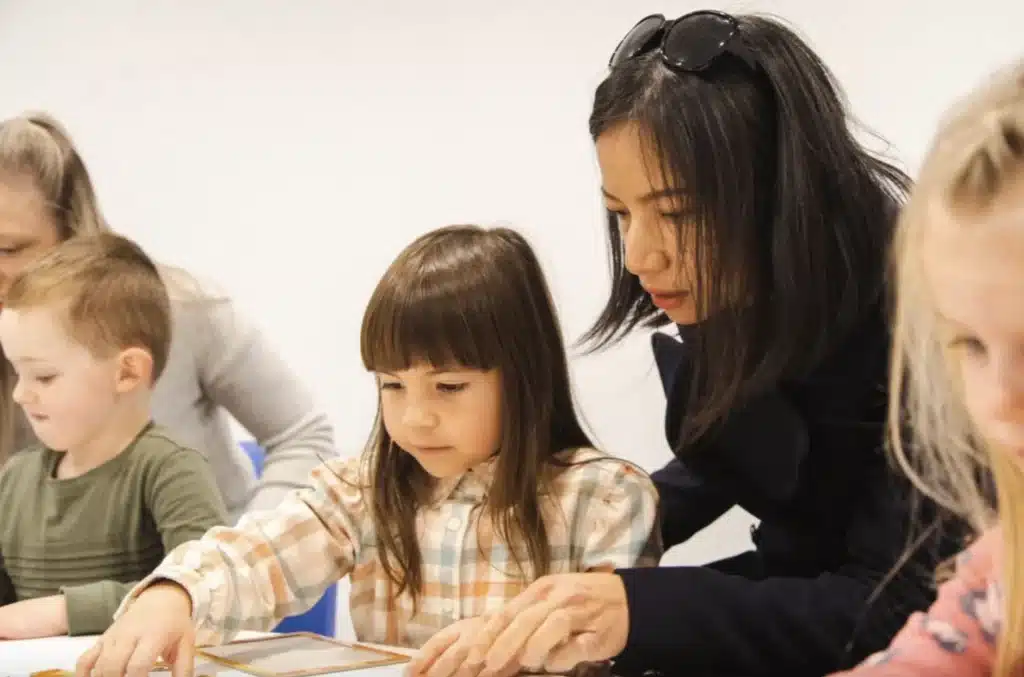
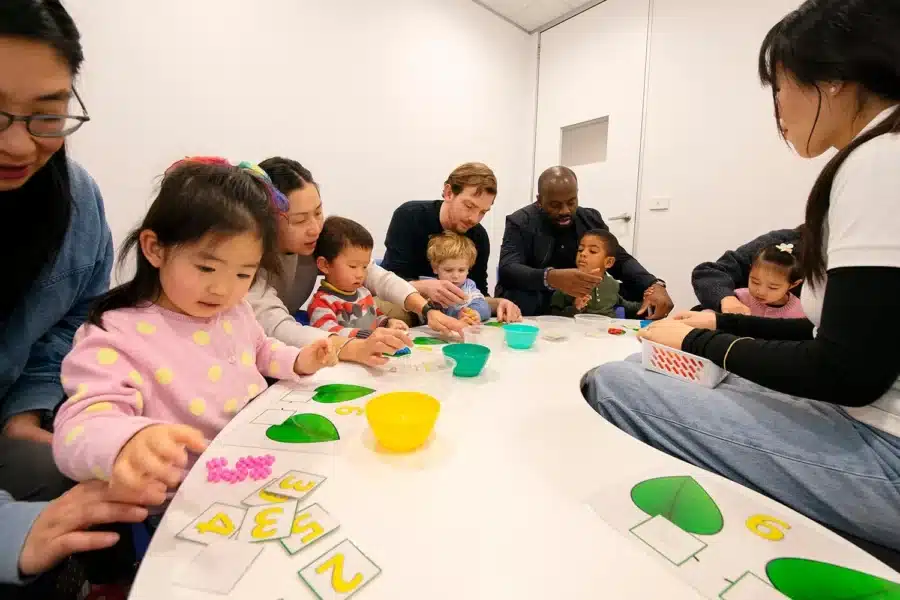
Image by Shichida Australia: Hands-on learning in action. These structured hand eye coordination activities support fine motor skills, visual tracking, and early writing readiness through engaging, child-led play.
Hand Eye Coordination Activities by Age
Choosing the right activities for your child’s stage makes learning more enjoyable and effective. The best activities are simple, playful, and easy to set up at home.
Activities for Babies (0-12 Months)
At this stage, your baby is just beginning to connect what they see with how they move.
- Reaching for hanging toys
- Grasping rattles
- Tracking moving objects with their eyes
- Tummy-time play with nearby toys
- Transferring toys between hands
These activities help build early visual tracking and basic hand control.
Activities for Toddlers (1-3 Years)
Toddlers thrive on repetition and exploration.
- Stacking blocks
- Using shape sorters
- Tossing soft balls
- Placing objects into containers
- Playing with simple peg boards
- Completing chunky puzzles
These activities improve spatial awareness, coordination, and control.
Activities for Preschoolers (3-5 Years)
At this stage, coordination for pre-schoolers becomes more refined and purposeful.
- Cutting with child-safe scissors
- Threading beads
- Drawing shapes and simple pictures
- Catching and throwing balls
- Building with construction toys
- Using lacing cards
These activities prepare children for writing and future classroom tasks.
If you’re not sure you’re doing enough at home, Shichida Australia is a great place to start. Book a trial class and see how much children can learn through guided play.
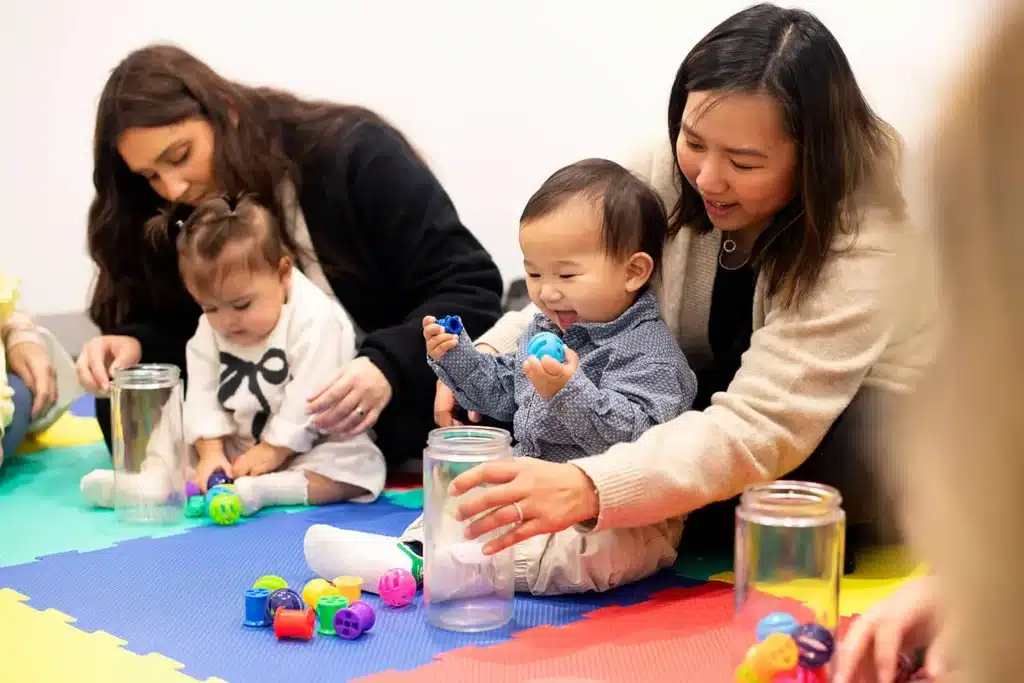
Image by Shichida Australia: Babies practising fine motor skills during a fun Shichida Baby Class.
10 Fun Hand Eye Coordination Activities for Early Learners
Here are practical, engaging hand eye coordination activities for kids that you can start using right away:
Ball Toss Games
- Toss a soft ball back and forth
- Builds visual tracking and reaction speed
- Age: 2+
Building Block Challenges
- Stack towers or recreate simple designs
- Improves spatial awareness and precision
- Age: 2-5
Threading and Bead Stringing
- String beads or pasta onto yarn
- Develops finger control and fine motor strength
- Age: 3+
Colouring and Tracing Activities
- Trace shapes, letters, or lines
- Prepares children for handwriting
- Age: 3-5
Puzzle Play
- Complete age-appropriate puzzles
- Strengthens visual motor integration and problem-solving
- Age: 2-5
Target Throw Game
- Throw soft objects into a basket
- Builds aim and coordination
- Age: 2+
Sticker Placement Activity
- Place stickers inside shapes or lines
- Improves precision and control
- Age: 2-4
Water Pouring Practice
- Pour water between cups
- Builds control and hand stability
- Age: 2-4
Pegboard Play
- Insert pegs into holes
- Strengthens fine motor development
- Age: 2-4
Lacing Cards
- Thread strings through holes
- Builds coordination and patience
- Age: 3-5
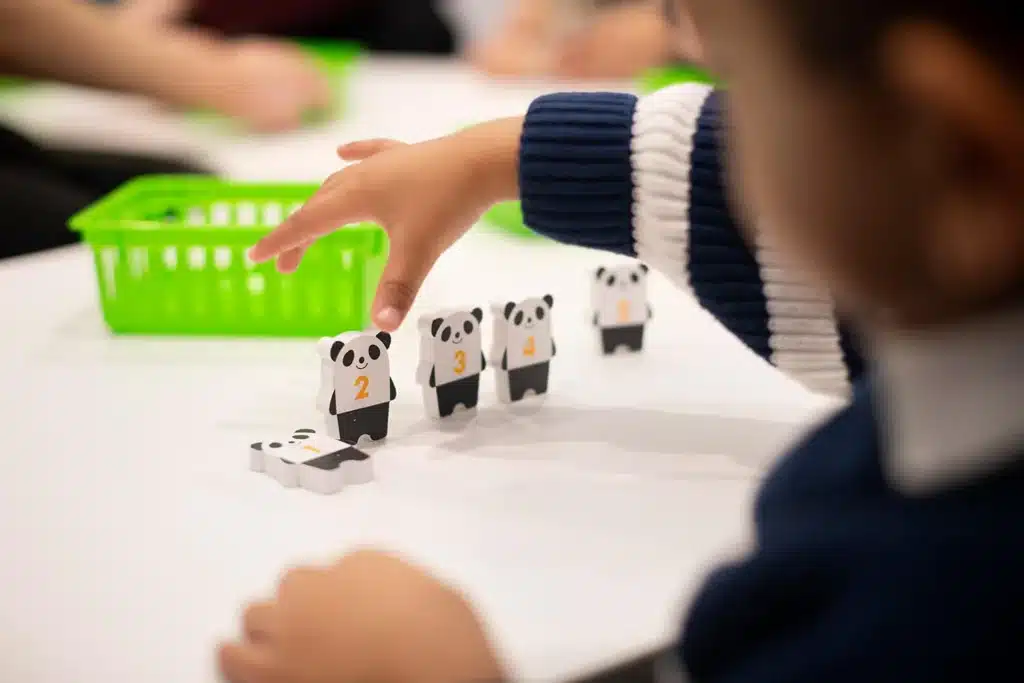
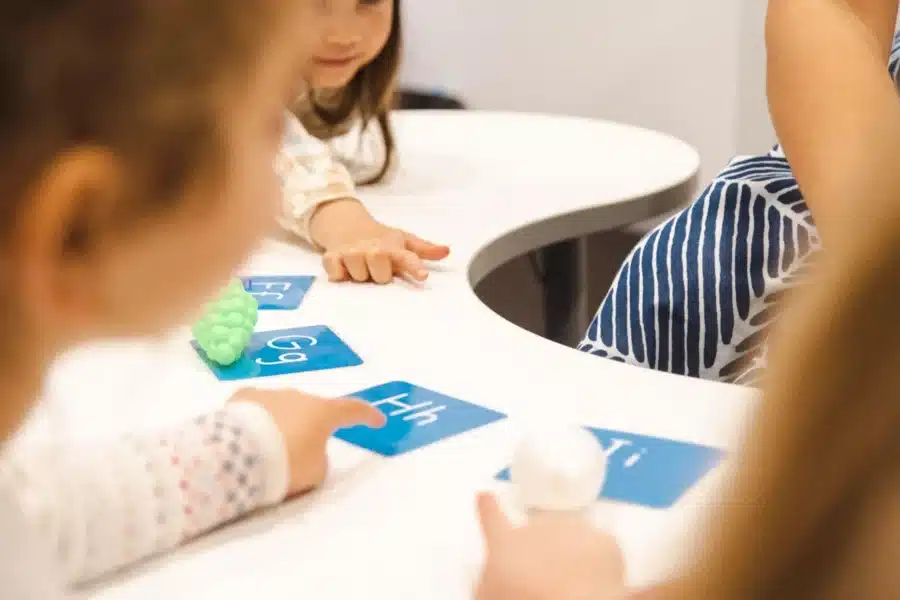
Lining up number dominoes is a fun way to practise number sequencing, spatial awareness, and fine motor control – all in one game.
Indoor vs Outdoor Activities for Coordination
A mix of indoor and outdoor play gives your child a well-rounded experience. Different environments challenge coordination in unique ways and keep your child engaged.
Indoor Coordination Activities
Indoor play supports focused, fine motor development:
- Puzzles
- Drawing and tracing
- Stacking toys
- Sorting games
- Threading beads
These activities are great for quiet, structured play and skill refinement.
Outdoor Coordination Activities
Outdoor play adds movement and energy:
- Ball games
- Obstacle courses
- Throwing games
- Hopscotch
- Target practice
Outdoor activities build larger body coordination while still strengthening visual tracking and reaction skills.
Signs a Child May Need More Hand Eye Coordination Practice
Every child develops at their own pace, but some signs may suggest they need extra support.
Difficulty With Writing or Drawing
If your child struggles to control a pencil, trace shapes, or stay within lines, it may indicate weaker visual-motor coordination.
Trouble Catching or Throwing Objects
Missing a ball frequently or hesitating during play can point to challenges with visual tracking and reaction timing.
Frustration With Fine Motor Tasks
Children who avoid or become frustrated with puzzles, scissors, building toys, or bead threading may need more practice in a supportive, low-pressure way.
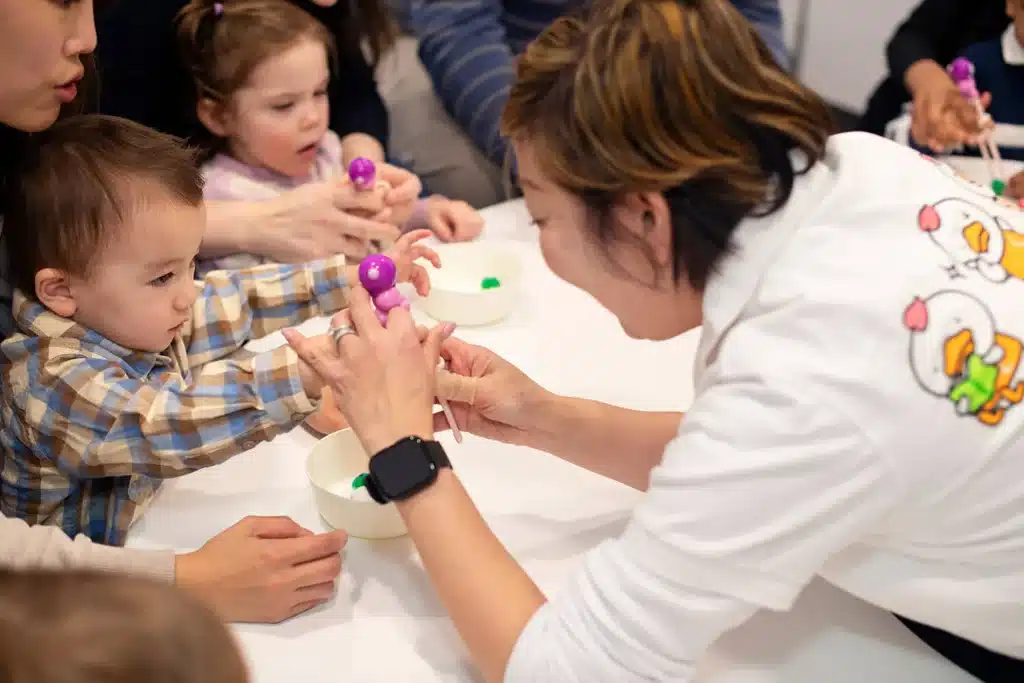
Image by Shichida Australia: Toddlers practising picking up small objects using chopsticks – a great way to strengthen hand muscles and prepare for a proper pencil grip later on.
Tips for Helping Children Improve Hand Eye Coordination
Supporting your child doesn’t have to feel overwhelming. Small, consistent actions make a big difference.
Encourage Play-Based Learning
Children learn best through fun. Choose activities that feel like play rather than tasks.
Start With Simple Tasks
Begin with easy activities and gradually increase the challenge as your child gains confidence and control.
Practice Regularly
Short, daily practice helps strengthen neural pathways and improve coordination over time. Even 10-15 minutes of focused play can be effective.
Shichida Australia can help with this with weekly classes of 50 minutes each. Book a trial class and see how much fun guided play can be!
How Hand Eye Coordination Supports Long-Term Learning
Strong hand-eye coordination sets your child up for success far beyond early childhood!
It supports writing fluency, reading development, and participation in sports or physical activities. It also plays a role in creative expression, whether your child enjoys drawing, building, or music.
When children feel capable in these areas, they build confidence and independence. They’re more willing to try new things, persist through challenges, and engage fully in learning.
The best part is that this growth starts with simple, playful moments at home. Every time your child stacks a block, catches a ball, or traces a line, they are building skills that will support them for years to come.
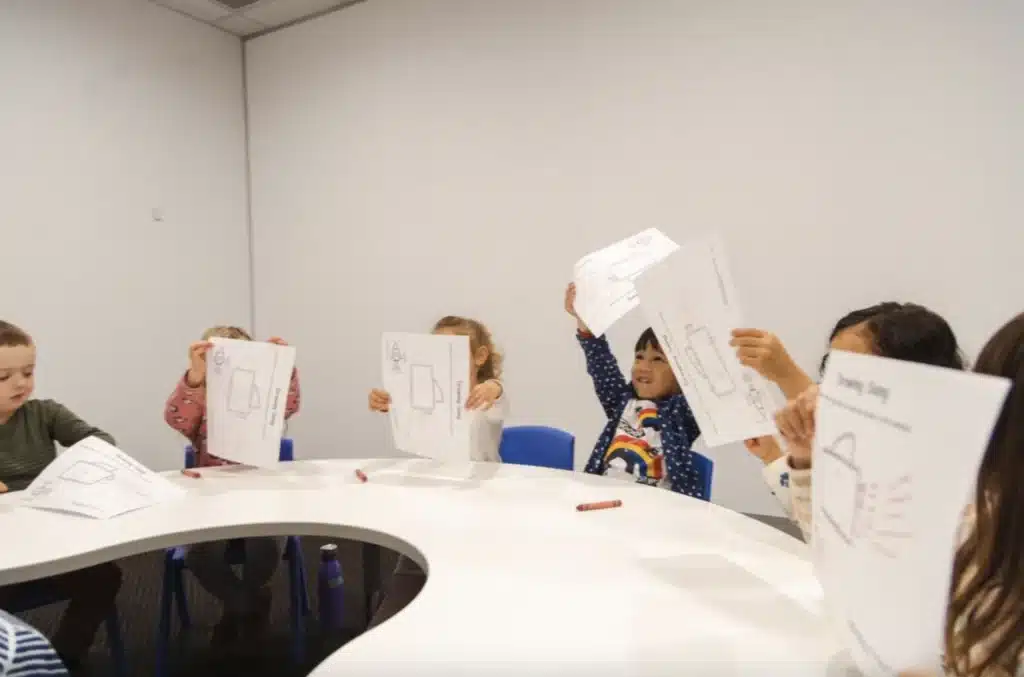
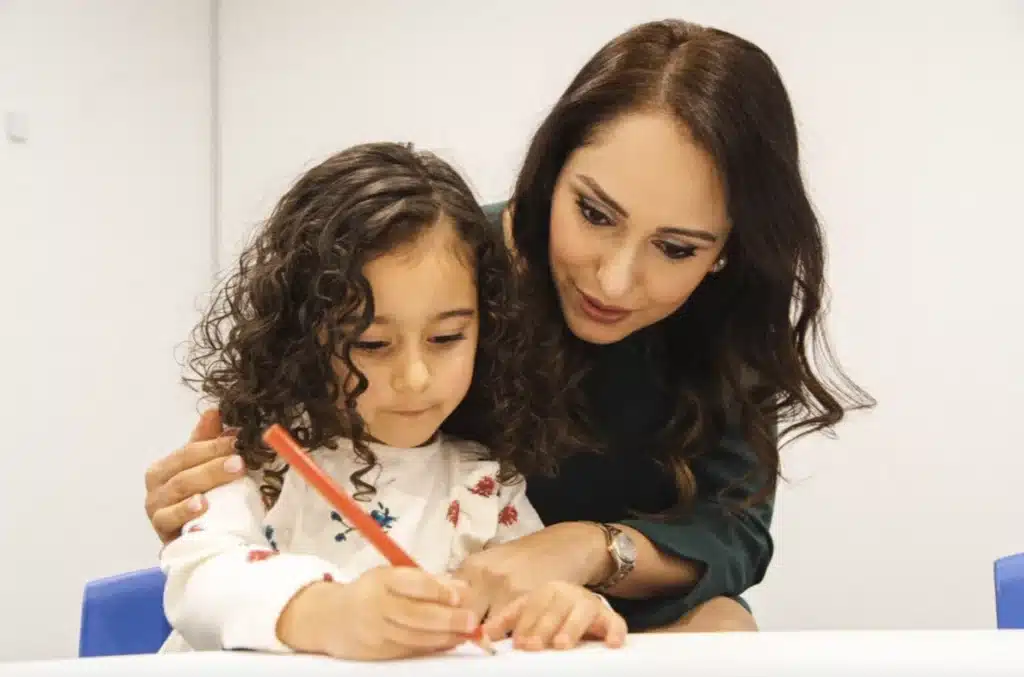
Image by Shichida Australia: Confident learners grow through practice and play. Consistent hand-eye coordination activities help children build independence, focus, and the skills they need for school and beyond. Here, preschoolers drew a picture of a rocket ship using a song as a guide.
Looking for a fun and effective way to support your child’s development from an early age?
Shichida Australia offers structured, play-based sessions designed to strengthen hand eye coordination activities while building focus, confidence, and essential learning skills.
Book a trial class today and discover how your child can learn through guided play.
FAQ’s: Hand Eye Coordination Activities
They are play-based activities that help your child use their eyes and hands together, such as ball games, puzzles, drawing, and threading.
It supports writing, reading readiness, focus, and your child’s ability to complete everyday tasks independently.
It begins in infancy and continues to develop through the toddler and preschool years as skills become more refined.
Stacking blocks, using shape sorters, tossing soft balls, and completing simple puzzles are all highly effective.
Yes. Strong coordination helps your child control a pencil, form letters, and follow lines when writing.
Daily short sessions of 10–15 minutes are ideal and more effective than occasional long practice.
Blocks, puzzles, bead sets, pegboards, and balls are excellent tools for building coordination.
Signs may include difficulty with drawing, catching objects, or frequent frustration with fine motor tasks.
Yes. Puzzles help improve visual motor integration, problem-solving, and spatial awareness.
Absolutely. They build the physical and cognitive skills your child needs for writing, reading, and everyday classroom tasks.