
Your toddler just threw themselves onto the supermarket floor because you chose the wrong cup. Rather than a behaviour problem, it’s a developing nervous system doing exactly what it’s supposed to do.
Shichida has helped Australian families build emotional intelligence for over 15 years, and one thing is always true: emotional regulation activities for kids can genuinely help. Read on to find the best activities for each age group.
Key Takeaways
- Development is a journey: Emotional regulation develops in distinct stages: what calms a toddler won’t work for a school-age child.
- Vary your strategies: Combine body-based activities like sensory play with cognitively layered tools like role play and emotion naming.
- Your calm comes first: Kids can’t self-regulate without co-regulation. Your steady presence is the most powerful tool you have.
- Visual systems help: The Zones of Regulation gives children a simple colour-coded language for their feelings, accessible from around age three.
What is emotional regulation in children (and why does it look different at every age)?
Emotional regulation is a child’s ability to manage their emotional states and physical reactions to match their environment. It’s the skill that lets them calm down after getting upset and handle frustration without lashing out.
It’s hard for young children because the prefrontal cortex, the brain region responsible for logic and self-control, doesn’t fully mature until early adulthood. A two-year-old’s meltdown and a six-year-old’s outburst are completely different problems.
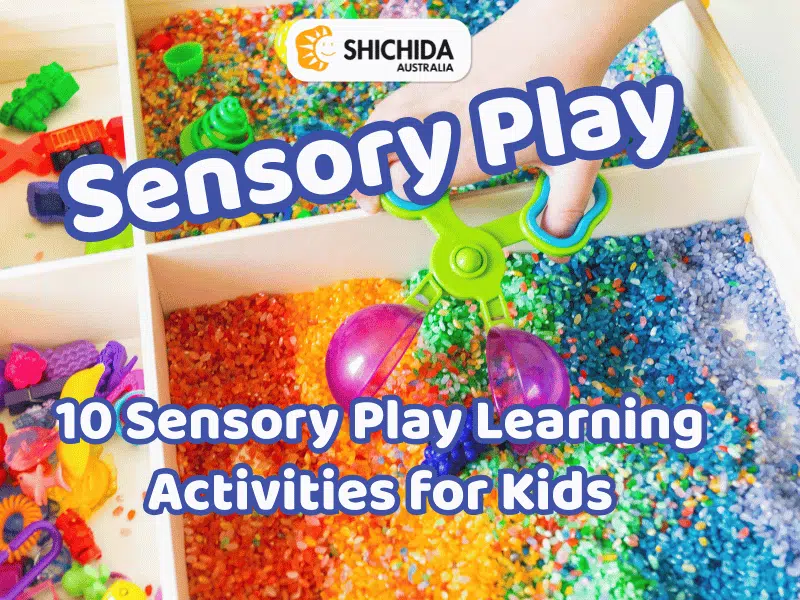
Sensory play can help nurture resilience and development. Download a free sensory play guide here.
If your child enjoys these types of activities, a Shichida trial class is a great way to see how structured play can support coordination, focus, memory and early learning confidence.
Book a trial class or contact us to find your nearest centre.
Why co-regulation comes first
Young children don’t have the neural wiring to calm down from high distress alone. When your child is dysregulated, matching their anger with your own makes things worse. Stay calm, lower your voice, and name what they’re feeling: “I can see you’re really angry right now.” That single phrase helps them feel safe enough to start settling.
Children with developing regulation skills handle daily challenges like this:
- A child loses a board game, takes a breath, and says they’re sad but had fun playing.
- A child’s block tower gets knocked over and they use words instead of lashing out.
- A cancelled playdate gets talked through with a parent, then redirected to a solo activity.
Signs your child may be struggling with emotional regulation
These behaviours aren’t signs of a difficult child. They’re signs of a skill still developing.
- Intense meltdowns: Tantrums that regularly last more than 20 minutes and are hard to de-escalate.
- Physical aggression: Hitting, kicking, or biting when frustrated. Normal in toddlers, but should ease as language grows.
- Transition anxiety: Real distress when switching activities, especially common in preschoolers.
- Emotional avoidance: Shutting down or refusing anything that feels slightly hard.
- Can’t self-soothe: Needs an adult to calm down from even minor disappointments.
Knowing what you’re seeing makes it easier to respond with empathy rather than frustration
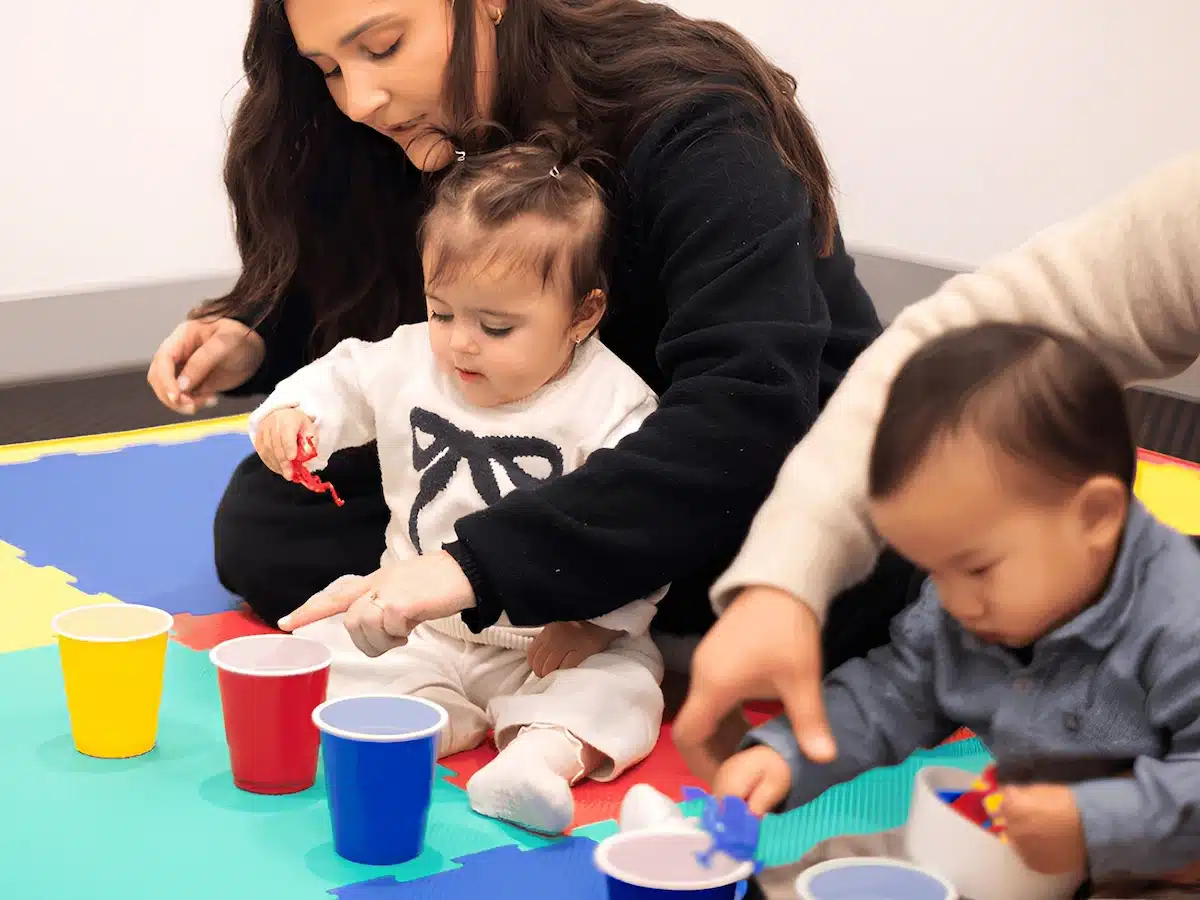
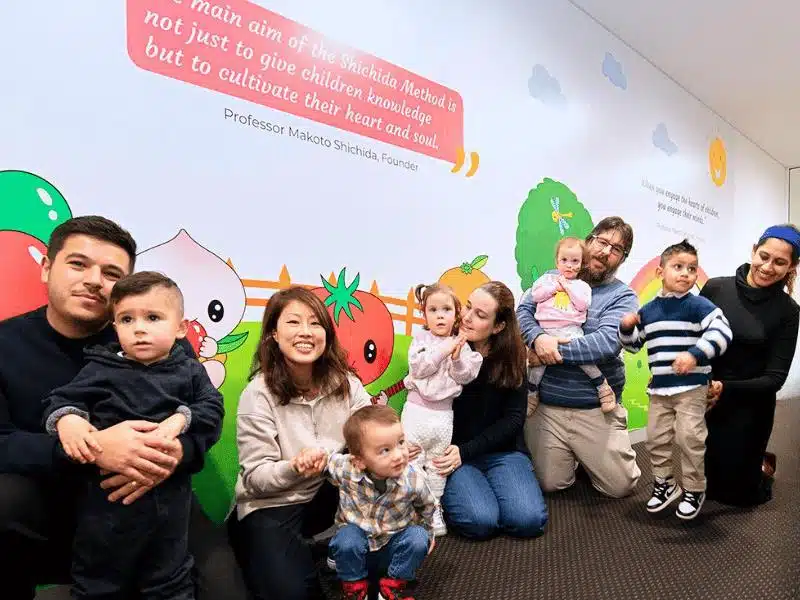
Photo from Shichida: In Shichida classes, emotional regulation starts with connection – every activity strengthens the bond between parent and child.
Emotional regulation activities for toddlers (1–3 years)
Forget reasoning with a dysregulated toddler. At this age, the brain simply isn’t wired for it. Sensory play and physical connection are what actually work.
- Playdough and sensory play: Squeezing and pulling releases physical tension. Dry rice or water play shifts the brain’s focus naturally.
- Animal walks: Crawling like a bear or waddling like a duck discharges built-up stress safely.
- Balloon breathing: Breathe in with arms wide, breathe out and bring them in. Model it first, toddlers copy, they don’t follow instructions.
- Calm-down corner: A low-stimulation space with soft pillows and books. A retreat, never a punishment.
- Feelings books: Naming emotions through characters reduces the overwhelm of a nameless feeling. The Colour Monster and The Very Hungry Caterpillar’s Little Book of Feelings are both easy to find in Australia.
- Consistent routines: Predictability reduces anxiety. Transitions are the highest-risk moments, so structure around them.
To see how these sensory connections are built in a social setting, explore our Shichida toddler classes.
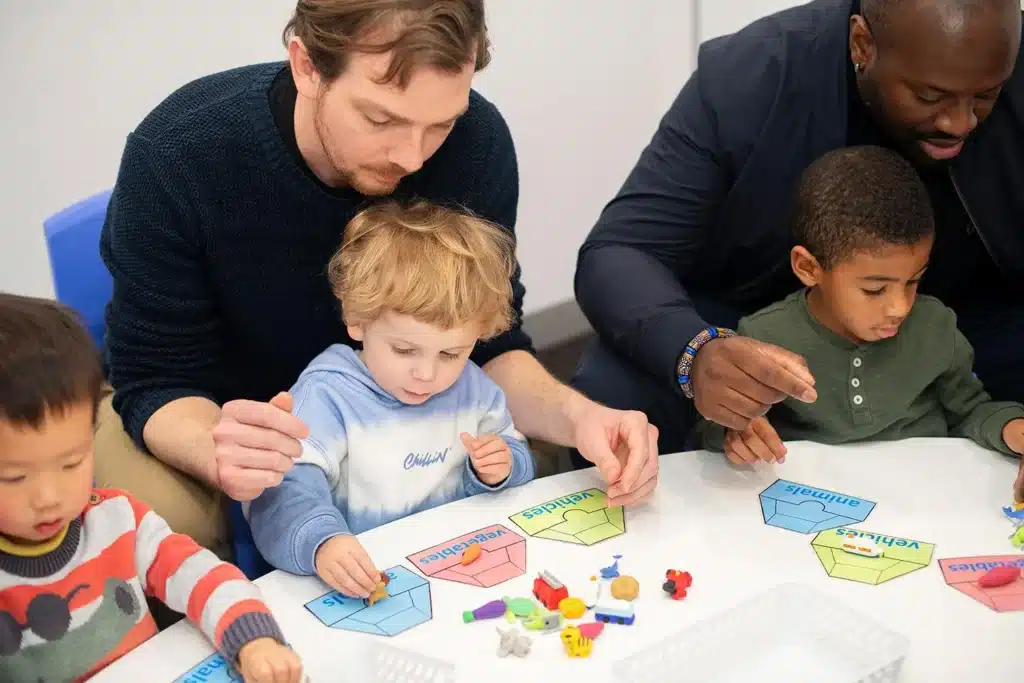
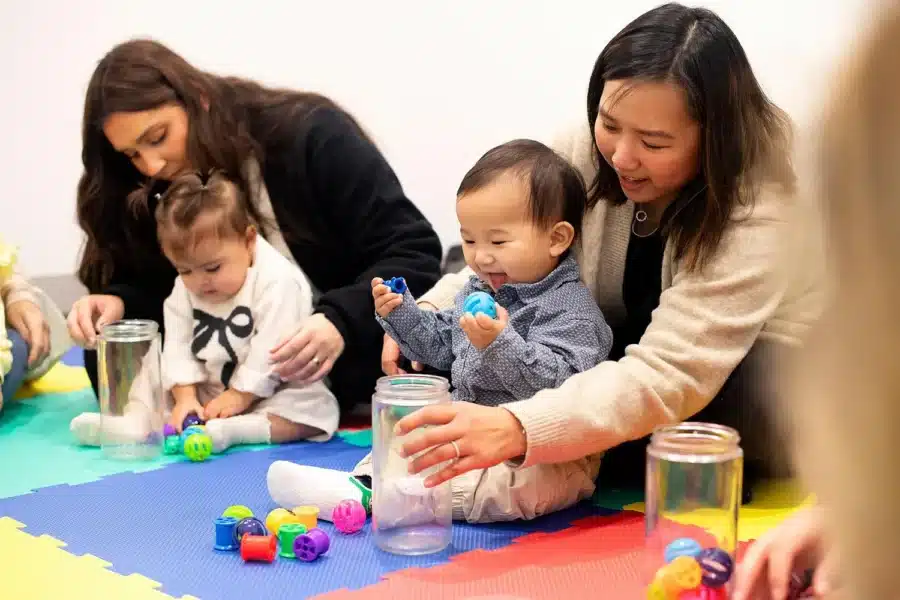
Photo from Shichida: Toddler classes focus on fine motor skills using hands-on learning experiences, alongside a parent. Classes are fast paced and fun!
Emotional regulation activities for pre-schoolers (3–5 years)
Preschoolers can start using simple visual tools, making this the right window for activities for emotional regulation that include visual frameworks like the Zones of Regulation.
- Two-zone introduction: Start with just Green (calm) and Red (very upset) before adding yellow and blue. Simple is better at this age.
- Emotion charades: Act out feelings and guess them together. Builds emotional vocabulary and body-awareness at the same time.
- Star breathing: Trace a star with a finger, breathing in on the way up and out on the way down. The visual keeps them focused.
- Puppet role play: Replay a situation that went wrong using stuffed toys. Gives children safe distance to process and problem-solve.
- Mandala colouring: Repetitive colouring is calming after dysregulation. Don’t force it mid-outburst.
- Feelings wheel: An emotion chart with 8–10 faces works well for daily check-ins before dinner or bed.
- Countdown timers: Show how long is left before a transition. Knowing when play ends reduces anxiety significantly.
To see how these activities are structured for preschoolers, check out our kinder classes.

Photo from Shichida: Kinder classes focus on developing memory and critical thinking skills, alongside early literacy and numeracy skills.
Emotional regulation activities for school-age children (5–9 years)
By school age, kids can think about what they’re feeling, identify it physically, and choose a strategy. The activities get more cognitively layered.
- Full Zones of Regulation: All four colours. Encourage your child to name their zone and suggest their own way back to green.
- Feelings journal: Drawing or writing about an upsetting event externalises the emotion and reduces its intensity.
- Body scan: Ask where they feel the emotion: tight chest, clenched jaw, butterflies. This builds interoception: reading internal signals before a meltdown hits.
- Problem-solving talk-through: Once calm, talk through what happened. Not a lecture. “What do you think set you off, and what could we try next time?”
- Mindfulness scavenger hunt: Five things they can see, four they can touch, three they can hear, two they can smell, one they can taste. Fast grounding for spiralling thoughts.
To see how we develop these skills with older children, explore our Pre-Primary classes (ages 5–7) and Primary classes (ages 7–9).

Photo from Shichida: Pre-primary classes develop a range of early learning skills, including speed listening, memory, reading, writing, mental math and more!
Zones of Regulation: a practical guide for parents
The Zones framework works because it gives emotions a visual, colour-coded language children can use even when they’re too upset to find the right words.

The Zones of Regulation help children recognise different emotional states, from low-energy feelings like tiredness or sadness, to calm and focused states, through to heightened emotions such as frustration, worry, anger or overwhelm. Understanding these zones can support emotional regulation, self-awareness and early childhood social-emotional development.
How to use Zones of Regulation at home
All four zones are normal. The goal isn’t to stay green permanently. It’s to recognise which zone you’re in and have a strategy to return to green.
Introduce it at home using a stuffed toy: “Teddy is in the Yellow Zone because his tower fell over. What can Teddy do to get back to Green?” Then try these:
- Zone sort: Sort facial expression pictures into coloured cups.
- Guess the zone: Act out an emotion and ask your child to name the zone.
- Zone jars: Place a coloured marble in a jar at the end of each day to reflect on feelings.
What not to do when teaching emotional regulation
The instinct to stop a tantrum is natural. It’s also often what makes learning emotional regulation strategies for kids harder, not easier.
- Don’t punish emotional expression: Punishing crying or yelling teaches suppression, not regulation. Correct the behaviour (hitting), but validate the feeling underneath.
- Don’t skip co-regulation: Sending a young child to their room before they’re calm creates anxiety. They need your presence first.
- Be patient with progress: Regression is normal. Tiredness, illness, and big life changes all cause setbacks. That’s development, not failure.

Photo by Shichida Australia: A parent and young child completing an activity together in a Shichida class.
How Shichida builds emotional intelligence and cognitive skills
Emotional regulation grows through consistent, structured practice over years. That’s exactly what Shichida’s EQ and IQ development is built around.
Parents are in the room for every session, which creates the emotional security children need to take risks. Classes are capped at six children, and EQ development runs alongside cognitive activities in every session.
That balance matters most during the golden period, birth to age 3, when the brain is most receptive to both.
When to seek professional support
While all children developed at their own unique pace, some children need more than home strategies. Speak to a paediatrician or child health professional if you notice:
- Daily meltdowns lasting more than 20 minutes or involving violence
- Aggression directed at themselves, others, or property
- No improvement despite several months of consistent effort
- Struggles across multiple environments – home, childcare, school
Three professionals who can help:
- Occupational Therapists work on sensory processing and self-regulation through physical activity.
- Child Psychologists use play therapy and behavioural strategies.
- Parent Coaches provide practical co-regulation techniques tailored to your family.
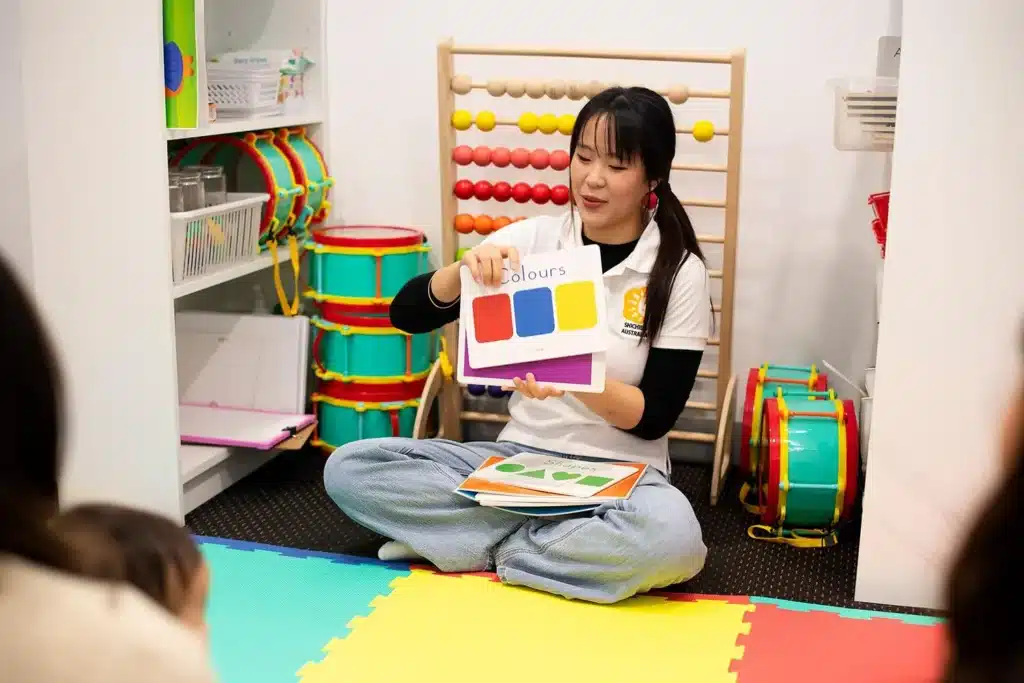
Photo by Shichida Australia: Flashcards are a favourite during each Shichida lesson – touching on a variety of topics at a fast pace.

Download DIY emotions flashcards for use at home.
Ready to see emotional intelligence in action?
The activities in this guide work because they’re built around how a child’s brain actually develops. Once you shift from trying to fix a tantrum to guiding your child’s nervous system, everything else gets easier.
Shichida’s trial class gives you 50 minutes inside our program with no commitment. Book a trial at your nearest centre.
FAQ: Emotional Regulation Activities for Kids
They’re the tools children use to monitor and adapt their reactions to match their environment, helping them stay focused, recover from disappointment, and move between tasks.
Stay calm yourself first. Use balloon breathing or sensory play, and name the feeling clearly: “You’re really frustrated right now.”
Match the activity to the age. Sensory play and animal walks for toddlers, star breathing and puppet play for preschoolers, feelings journals and body scans for school-age kids.
A colour-coded system grouping feelings into four zones: blue (slow/sad), green (calm/ready), yellow (high energy/frustrated), red (out of control). It makes emotions visual and manageable.
Yes. Daily routines are the ideal practice ground. Your consistent co-regulation is the foundation: structured programs build on top of that.
Look for programs that keep parents involved and support emotional development alongside cognitive skills. In Shichida classes, children build confidence, listening, focus and parent-child connection through structured activities, praise, routine and guided participation, developing both EQ and IQ.