Key Takeaways
- Most babies take their baby’s first steps between 9 and 18 months, and this wide range is completely normal.
- The journey to baby walking is more important than the age it happens. Pulling up, cruising, standing and balancing all build the skills needed for walking.
- The safest way to support your baby as they learn to walk is to let your baby hold your finger at shoulder height rather than lifting both arms overhead.
- Sit-in baby walkers are not recommended. A sturdy push toy provides a safer way to practise walking.
- Barefoot indoor play gives your baby valuable sensory feedback that supports balance and coordination.
- Walking develops through everyday play, exploration and repetition, not through pressure or formal practice.
- Speak with your Maternal and Child Health nurse or GP if your baby is not walking by 18 months or shows other developmental concerns.
“Should my baby be walking by now?”
It’s a question many parents ask, especially when other children seem to be reaching milestones sooner or your little one is happily cruising along the furniture but not taking independent steps yet.
The truth is that babies learn to walk at different ages. While many take their first steps around their first birthday, it’s completely normal for healthy babies to start walking anytime between 9 and 18 months.
Walking isn’t just about that first step. Before it happens, your baby develops the strength, balance and coordination needed through milestones like sitting, crawling, pulling up and cruising.
Understanding these milestones can help you recognise your baby’s progress, support their development with confidence, avoid common mistakes, and know when it may be worth speaking with a health professional.
Quick Answer
Most babies take their first independent steps between 9 and 18 months, with the average around 12 months. Before walking, babies usually pull themselves up, cruise along furniture and briefly stand without support. You can encourage healthy walking by providing plenty of floor time, creating opportunities for balance-building play, letting your baby hold your finger rather than lifting both hands overhead, and allowing them to practise at their own pace.
Sensory play can help nurture resilience and development. Download a free sensory play guide here.
If your child enjoys these types of activities, a Shichida trial class is a great way to see how structured play can support coordination, focus, memory and early learning confidence.
Book a trial class or contact us to find your nearest centre.
When Do Babies Take Their First Steps?
One of the biggest concerns parents have is whether their baby is “on time” for walking. Fortunately, there isn’t a single age that’s considered normal.
Most babies begin baby walking sometime between 9 and 18 months, with many taking their first independent steps around 12 months. This broad range reflects the fact that every child develops differently.
Your baby’s walking timeline isn’t a race or a prediction of future abilities. It’s simply one part of their unique developmental journey.
The Typical Age Range for First Steps
Although many milestone charts mention the first birthday as a common age for walking, it’s important to remember that this is only an average.
Some babies confidently walk at 10 months. Others are perfectly content crawling until 16 or 17 months before suddenly taking off. As long as your baby continues making progress with other gross motor milestones for babies, this variation is usually nothing to worry about.
Even babies who skip crawling altogether can develop normal walking skills. Rather than following one exact sequence, babies often find their own way to becoming mobile.
Why Walking Timing Varies So Much
Several everyday factors influence when babies take their first steps.
Some babies are naturally adventurous and eager to explore. Others are more cautious and prefer to perfect one skill before trying the next.
Other influences include:
- opportunities for floor play
- body proportions and muscle strength
- spending time barefoot indoors
- having older siblings to copy
- home environments that encourage movement and exploration
These differences are completely normal and don’t reflect parenting quality.
First Steps Don’t Predict Future Skill
It’s easy to compare your baby with friends, cousins or children on social media.
However, early walkers are not necessarily more intelligent, more coordinated or more athletic later in life. Likewise, a baby who starts walking at 16 or 17 months isn’t automatically behind.
Walking is simply one milestone among many. Your baby’s language, social development, curiosity and confidence all continue to grow alongside their physical skills.
Instead of comparing timelines, celebrate your child’s own progress. Each new movement is another step towards greater independence.
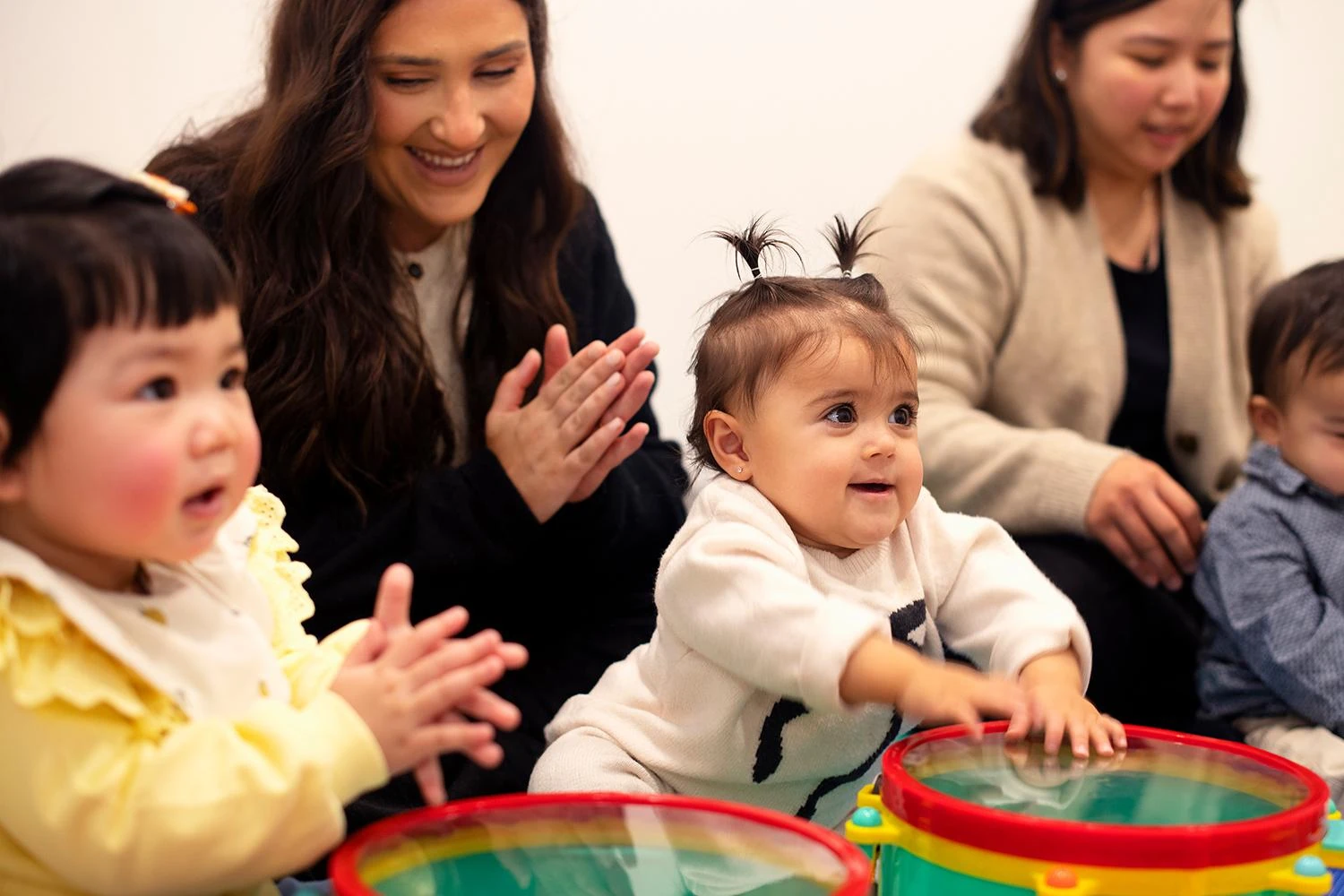
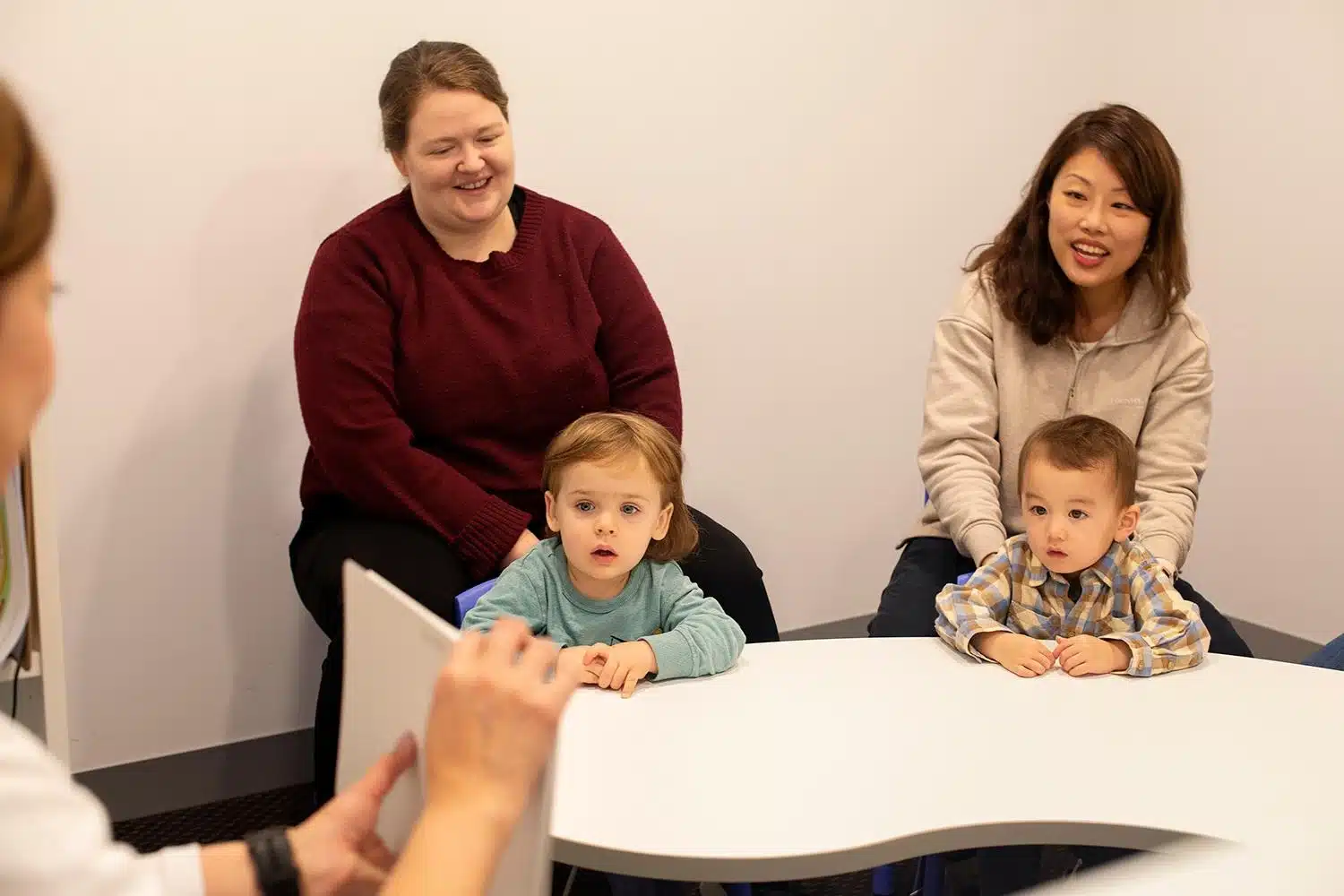
Image by Shichida Australia: Babies playing drums during a Shichida baby class, building coordination, sensory awareness and confidence through music and movement.
Signs Your Baby Is Getting Ready to Walk
Parents often focus on the magical moment of those first independent steps, but there’s actually a whole series of pre-walking milestones that happen beforehand.
These smaller achievements build the strength, coordination and confidence needed for walking. The order isn’t always identical for every baby, but each stage supports the next.
Pulling Up to Stand
Around 8 to 10 months, many babies begin pulling themselves upright using furniture, your legs or the side of the cot.
This is an exciting milestone because it strengthens the hips, legs and core muscles while helping your baby learn how to shift their weight into a standing position.
Cruising Along Furniture
A cruising baby moves sideways while holding onto furniture.
Usually seen between 9 and 12 months, cruising teaches balance, side-to-side weight shifting and foot placement. Although it may look like simple shuffling, it’s actually an important stage that prepares babies for independent walking.
Many babies spend several weeks or even months happily cruising before they feel ready to let go.
Standing Independently for a Few Seconds
Before walking independently, your baby may suddenly let go of the furniture without realising it.
They might stand for two or three seconds, grin proudly, then quickly sit back down.
These brief moments show that your baby is beginning to trust their balance. Expect plenty of wobbling, arm waving and dramatic sitting down. It’s all part of learning.
Walking with Push Toys or Holding a Finger
Between 10 and 14 months, many babies begin walking with light support.
A sturdy push toy allows your baby to control their own movement while practising stepping. Likewise, gently holding your finger gives them just enough confidence without taking over their balance.
The goal isn’t to hold your baby’s weight but to let them gradually learn how to control it themselves.
First Independent Steps
Finally comes the milestone every parent remembers.
Your baby’s first steps are usually:
- wide-legged
- slow and wobbly
- arms held high for balance
- followed by plenty of falls
These early attempts rarely look graceful, and that’s exactly how they’re supposed to look.
Each wobble helps your baby’s brain develop better balance, coordination and body awareness. With practice, those uncertain little steps gradually become confident walking.
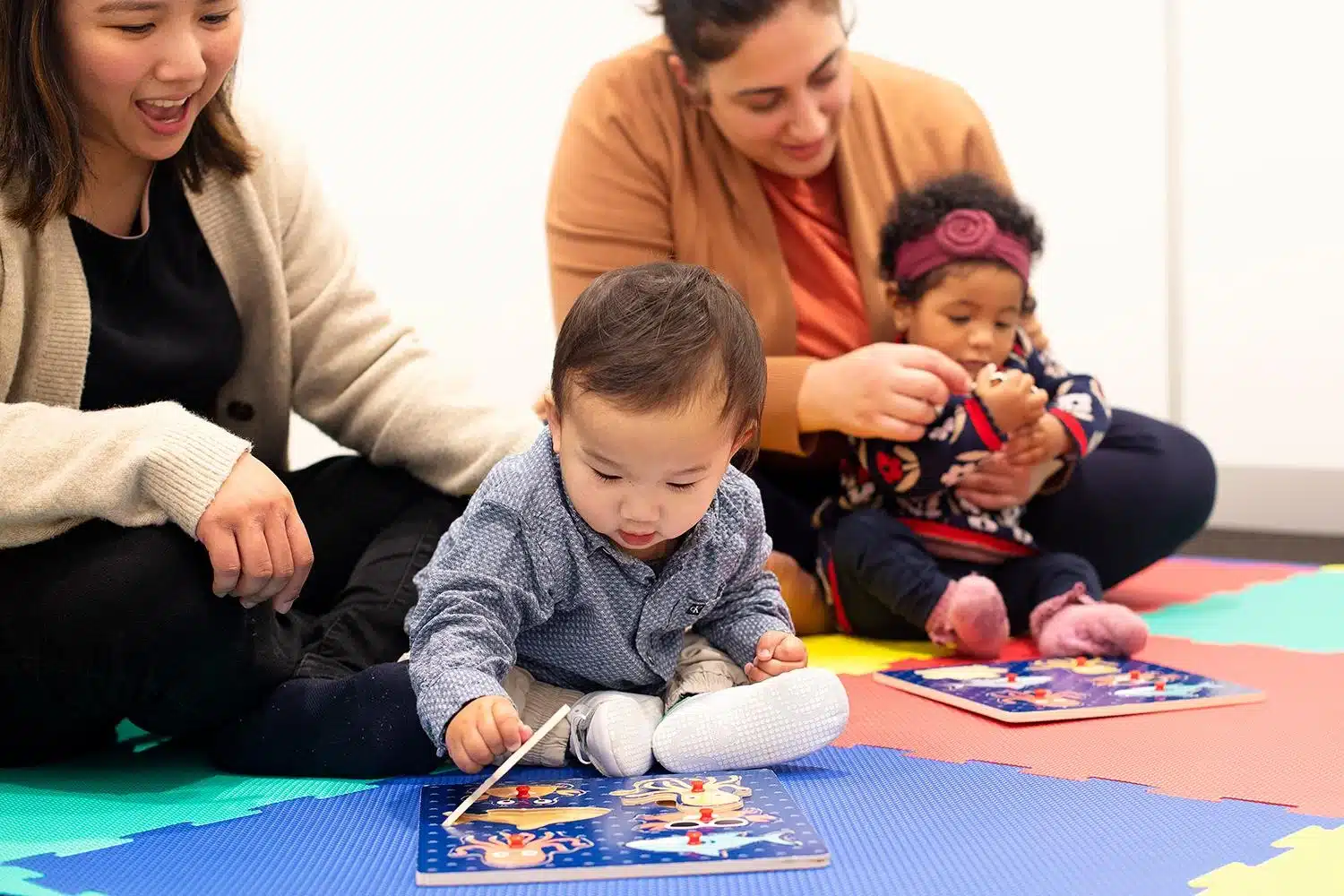
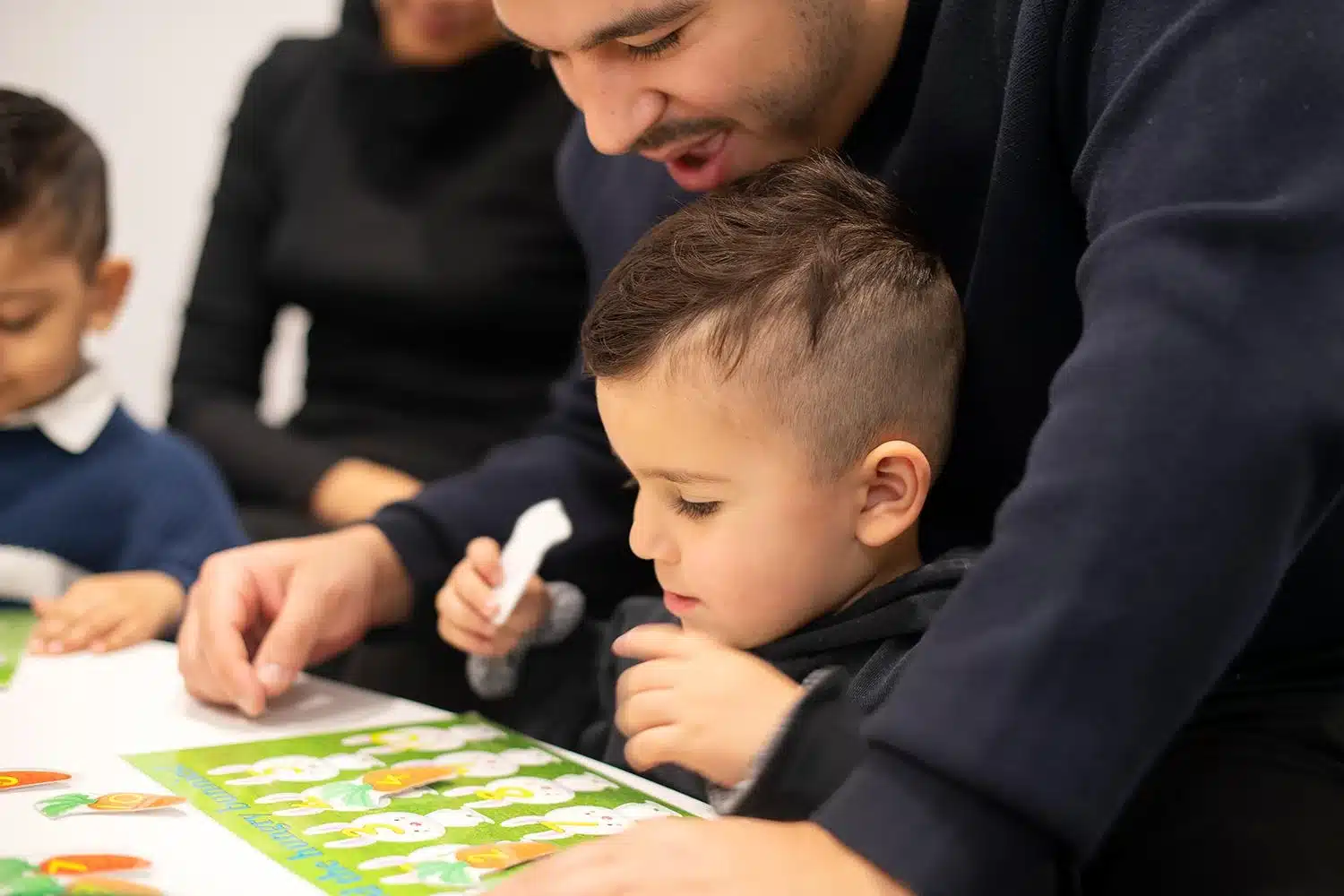
Image by Shichida Australia: Babies completing knob puzzles in a Shichida baby class, developing fine motor skills, hand-eye coordination, problem-solving and concentration.
How to Support Your Baby While They Learn to Walk
As your little one becomes more adventurous, it’s natural to want to help. However, one of the most common mistakes parents make is also one of the least talked about.
Many parents instinctively hold both of their baby’s hands above their head and walk them around the room. While well intended, this isn’t the safest or most effective way to be walking while holding your baby’s hand.
Why Overhead Hand-Holding Isn’t Ideal
Your baby’s shoulder joints and ligaments are still developing. Holding both hands high overhead places unnecessary strain on these joints, especially if your child stumbles or suddenly pulls away.
A sharp upward tug can sometimes contribute to nursemaid’s elbow, an injury where the elbow joint partially slips out of place. Although treatable, it’s something parents can often avoid by changing how they provide support.
Walking with both arms raised also changes your baby’s posture. Instead of learning to balance over their own feet, they tend to lean backwards into your support, making it harder to develop natural balance.
The Better Way: Let Your Baby Hold Your Finger
Rather than gripping both of their hands, offer a single finger or thumb at about shoulder height or slightly lower. Your baby naturally holds on while keeping one arm free to help with balance.
This simple adjustment:
- keeps the shoulder in a more natural position
- reduces unnecessary pulling on the joints
- encourages better posture
- allows your baby to practise balancing independently
Remember, your finger is there for reassurance rather than support.
Supporting from the Hips or Torso
Another helpful option is to squat behind your baby and gently steady them around the hips or torso.
Supporting from behind encourages your baby to shift their weight forward, which is exactly what happens during natural walking. It also allows them to decide when to step, pause or sit down.
Avoid lifting under the arms for long periods, as this can prevent your baby from learning how to control their own balance.
When to Step Back Entirely
Once your baby can confidently take two or three independent steps, try to resist offering constant support.
Those tiny wobbles are where learning happens.
Each time your baby catches themselves after losing balance, their brain is strengthening the pathways responsible for coordination, posture and movement planning.
Sometimes the best way to help is simply to stay close, smile and let them keep trying.
Key takeaway: If you’re holding your baby’s hands above their head while walking, try offering one finger at shoulder height instead. It protects developing joints while encouraging healthier balance and movement.
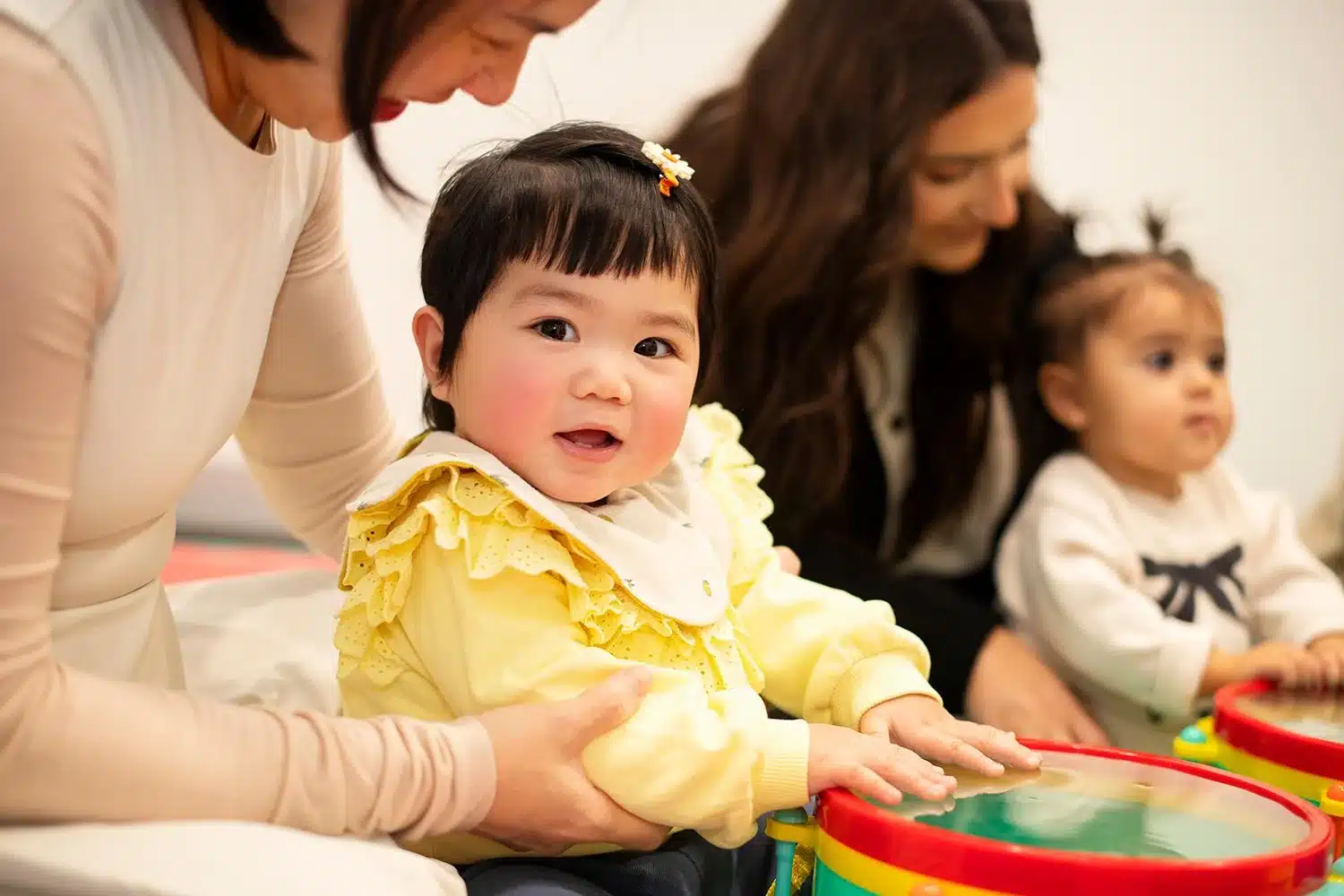
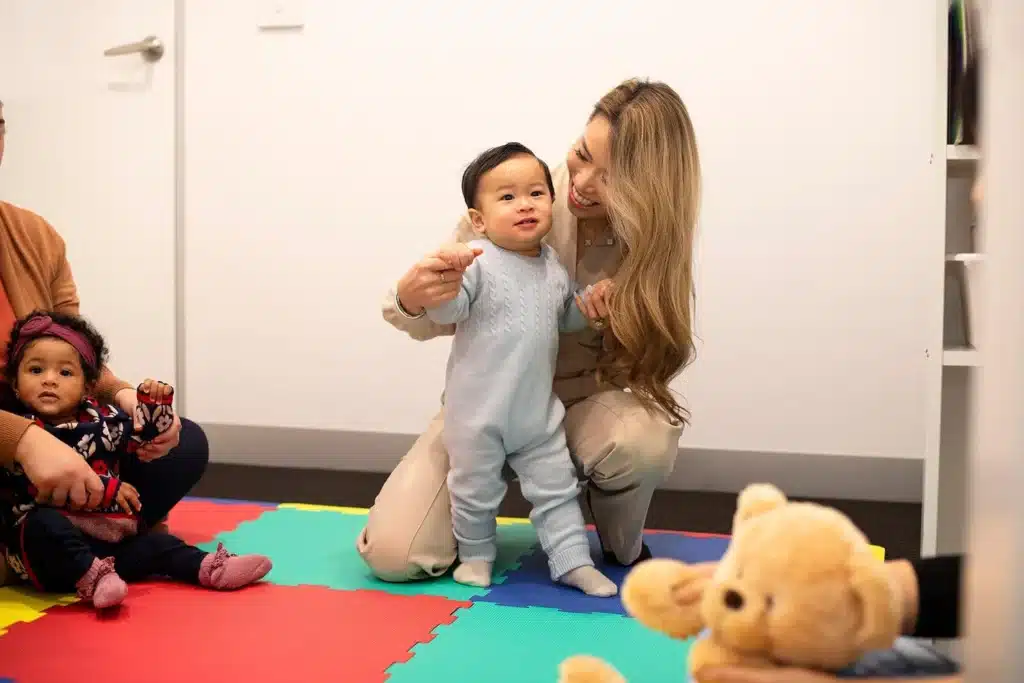
Image by Shichida Australia: Baby’s first steps begin long before walking. Through music, sensory play and parent-child interaction, babies build the balance, coordination and confidence that prepare them for independent movement.
Balance and Coordination Activities to Support Walking
Walking is not simply about building stronger legs. It also depends on balance, body awareness, core strength and confidence.
The good news is that you can help your baby develop these skills naturally through play.
Before your baby begins pulling themselves up and moving around furniture, make sure the area is safe. Cover sharp edges with soft corner protectors and secure any furniture or objects that could tip over or fall onto them.
Cruising Practice Along Low Furniture
Arrange sturdy furniture such as a sofa, coffee table and ottoman to create a safe cruising path.
Place favourite toys a short distance apart so your baby is motivated to move sideways while holding on.
Push-Toy Walking
A sturdy weighted push toy gives your baby the opportunity to practise walking while staying in control.
Unlike sit-in baby walkers, push toys allow children to stop, steer and balance independently.
Barefoot Floor Time
One of the easiest balance and coordination activities is simply allowing your baby to play barefoot indoors.
Bare feet help your baby feel the floor beneath them, giving valuable sensory information that supports balance and foot strength.
Squat and Stand Play
Place toys on the floor and others on a low table or couch.
Moving between squatting and standing strengthens the hips, legs and core while improving balance.
Stepping Over Soft Obstacles
Once your baby begins walking confidently, lay rolled towels or pool noodles on the floor.
Stepping over them encourages coordination, balance and careful foot placement.
Standing While Playing
Encourage your baby to stand at a child-sized activity table or low couch while exploring books, puzzles or blocks.
Standing for play naturally strengthens the postural muscles needed for walking.
Music and Movement
Hold your baby gently around the hips and sway together while listening to music.
These playful movements stimulate the vestibular system inside the inner ear, which plays an important role in balance.
Explore Different Surfaces
As your baby’s confidence grows, let them walk across grass, rugs, wooden floors and playground surfaces.
Experiencing different textures helps develop balance, coordination and body awareness.
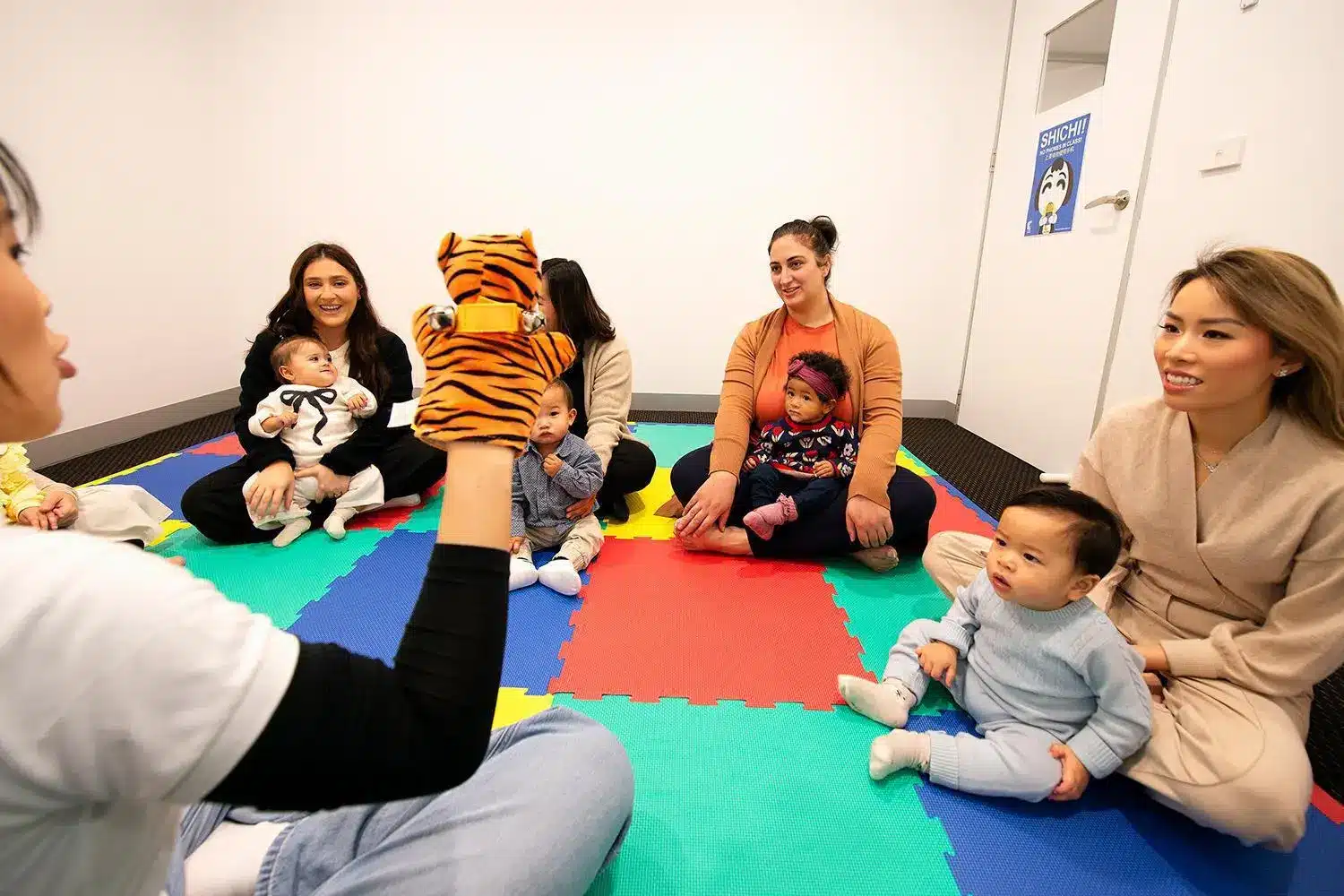
Image by Shichida Australia: Babies following a puppet during a Shichida baby class, supporting field of vision, visual tracking, attention and sensory development.
What to Avoid: Baby Walkers and Other Common Mistakes
Sometimes knowing what not to do is also valuable.
Why Sit-In Baby Walkers Aren’t Recommended
Despite their popularity, sit-in baby walkers are discouraged by Kidsafe Australia and the Royal Children’s Hospital Melbourne.
Research has linked them with falls, especially down stairs, and they can encourage babies to walk on their toes while placing them in positions they’re not developmentally ready to manage.
A sturdy push toy is a much safer alternative.
Avoid Overhead Hand-Holding
Remember that holding both hands above your baby’s head can strain developing shoulder joints and interfere with natural balance.
A single finger at shoulder height is the better option.
Don’t Rush Shoes
Inside the home, barefoot is usually best.
Once your baby is walking outdoors, choose lightweight, flexible shoes that protect their feet without restricting natural movement.
Don’t Compare Babies
One baby may walk at 10 months while another waits until 17 months. Both can be completely healthy. Remember that development is not a competition.

When to Speak to Your Child Health Nurse or GP
Although variation is normal, it’s worth seeking advice if your baby:
- isn’t pulling to stand by around 12 months
- isn’t bearing weight through their legs by 12 months
- isn’t walking independently by 18 months
- shows a noticeable difference between one side of the body and the other
- continues persistent toe walking after walking becomes established
- loses skills they had previously gained
Your Maternal and Child Health nurse or GP can assess your child’s development and recommend further support if needed.
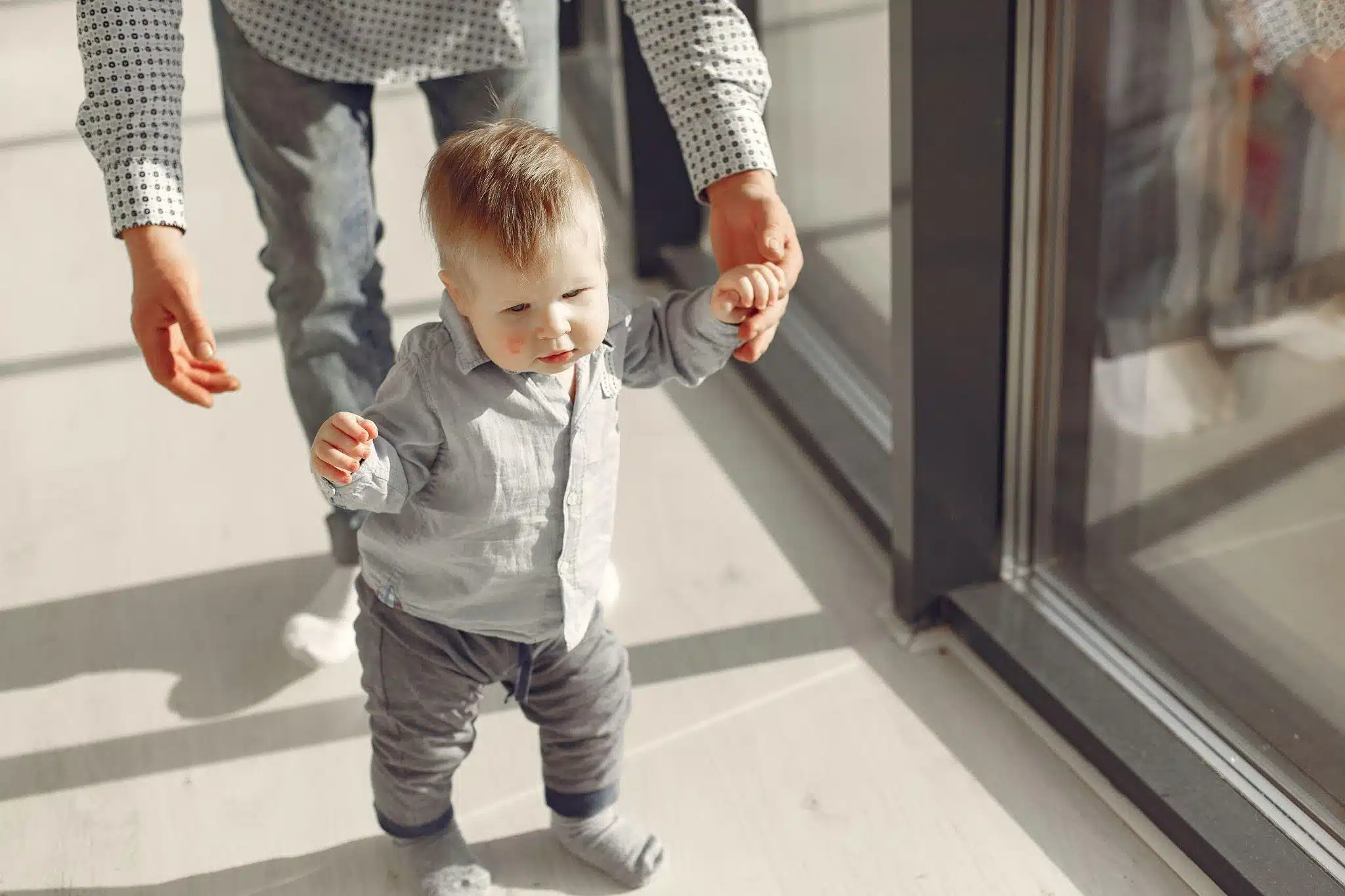
Image from Pexels: Baby’s first steps are easier to master when your child takes the lead. Offering a finger for support, rather than lifting both hands overhead, encourages natural balance and healthy walking development.
First Steps Safety: Childproofing for a New Walker
Walking opens an exciting new world, but it also introduces new safety risks.
Before your baby becomes fully mobile:
- anchor tall furniture and televisions to the wall
- install safety gates at the top and bottom of stairs
- cushion sharp furniture corners
- keep medications, cleaning products and small objects out of reach
- check baby gates regularly to ensure they’re securely latched
- supervise closely around kitchens, bathrooms and water
A few simple adjustments help create a safe environment for confident exploration.
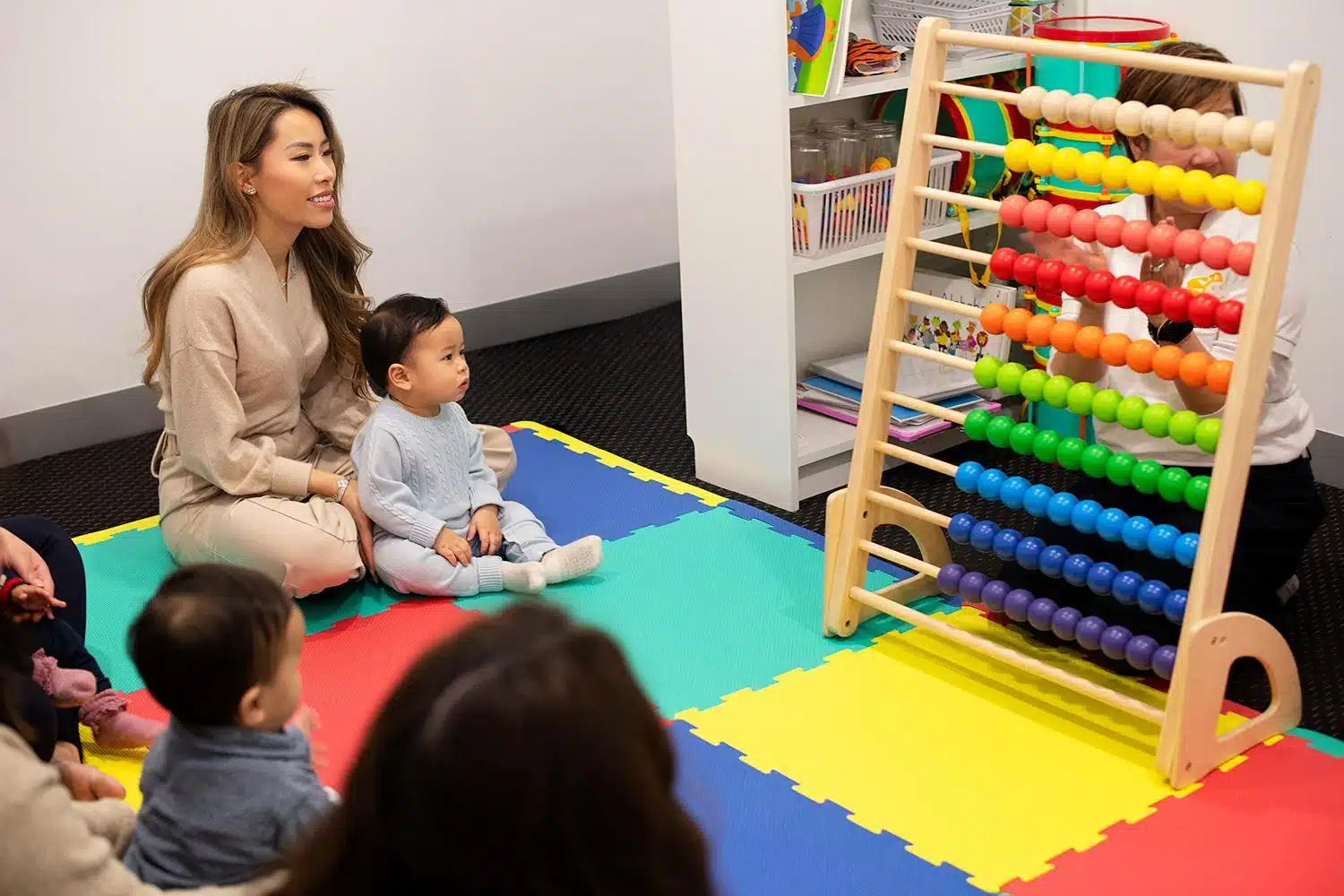
Image by Shichida Australia: Babies watching an oversized abacus during a counting song in a Shichida baby class, supporting early number awareness, visual attention and listening skills.
Supporting Your Baby’s Whole Development with Shichida
Your baby’s first steps are part of a much bigger developmental journey. During the first 1,000 days, movement, sensory awareness, communication, memory, emotional connection and curiosity all develop alongside one another.
Shichida Australia’s early learning classes take a whole-child approach, using engaging, age-appropriate activities to support these important areas of development. Whether your baby is beginning to pull themselves up, cruising along furniture or confidently walking, each new stage creates opportunities to learn, connect and build confidence.
Support your baby’s early development through weekly parent-and-child classes at Shichida Australia. Book a trial class at your nearest centre.
Experience Shichida Today
Help your child build strong fine motor skills with Shichida Australia’s hands-on, fun brain-boosting activities! Our gentle approach supports coordination, confidence, early maths, reading, writing and more!
Book a trial class and see how these strategies come to life!
FAQs About Baby’s First Steps
Babies commonly begin walking independently between approximately 10 and 18 months. Some babies walk earlier or later, and developmental timelines can vary considerably.
Yes. Many healthy babies are still crawling, pulling themselves up, cruising or practising standing at 13 months. Speak with your maternal and child health nurse or GP if you are concerned about your baby’s overall development.
Provide safe floor space, opportunities to pull up and cruise along sturdy furniture, barefoot play indoors and plenty of time to practise. Offer reassurance without pulling your baby forwards or pressuring them to walk before they are ready.
Offer light, steady support while allowing your baby to control their own balance and steps. Avoid pulling them upwards or taking too much of their weight through their arms.
Sit-in baby walkers are not recommended because they can increase the risk of injury and allow babies to reach hazards. A stable push toy designed for your baby’s age may provide a safer opportunity to practise supported movement.
Bare feet are generally best indoors because they allow babies to feel the surface beneath them as they practise balance and coordination. Outdoors, choose lightweight, flexible and properly fitted shoes that protect their feet.
Cruising along sturdy furniture, standing during play, squatting to collect toys, moving to music and walking across safe surfaces can help babies practise balance, coordination and body awareness.
New walkers may occasionally rise onto their toes while experimenting with balance and movement. Speak with your GP or maternal and child health nurse if toe walking is persistent, affects movement or is accompanied by other developmental concerns.
Not necessarily. Some babies move from sitting or shuffling directly to pulling up, cruising and walking. What matters most is that your baby continues developing movement skills and uses both sides of their body.
Speak with your GP or maternal and child health nurse if your baby is not walking independently by 18 months, is not bearing weight through their legs, moves one side differently from the other or loses a skill they previously had.