Key takeaways
- Teaching your child to talk is less about one magical trick and more about hundreds of tiny everyday moments.
- Parents play a powerful role in early language development because children learn through listening, watching, copying, playing and responding.
- How to teach a toddler to talk starts simple. One clear word, repeated often, is usually easier for young children to absorb than a whole sentence packed with new words.
- Phonics, songs, facial expressions, reading, storytelling, flashcards and everyday conversation can all help build your child’s speech and language skills.
- Repetition matters. Your child may need to hear a word many times before they use it.
- Give your child time to respond. Ask, pause and wait. Try not to fill every silence, even if the silence feels longer than a toddler choosing the wrong shoes.
- Every child develops at their own pace, but parents should seek professional advice if they are worried about their child’s speech, hearing, understanding or communication.
Talking Toddler Tips
One of the biggest questions many parents have in the early years is: How can I teach my child to talk?
When learning how to teach a toddler to talk, remember that toddlers need plenty of patient, playful language input before they feel ready to use words themselves. In fact, some of the best language-building moments happen during everyday life: while you are singing, playing, reading, naming objects, repeating the same word 47 times, or having a very serious conversation about why shoes do not belong in the fridge.
At Shichida Australia, we know parents are a child’s first and most important teachers. With the right tools, a little patience and plenty of playful interaction, you can support your child’s speech and language development in simple, meaningful ways.
Here are some learning resources to get you started.

Start With Sounds: Why Phonics Can Begin Early
Many parents think phonics begins when children start school, but children can be introduced to sounds much earlier in a playful, age-appropriate way.
At Shichida, we introduce phonetic sounds from a young age through music, songs, rhythm and repetition. For babies and toddlers, this should always feel like play.
Simple sound games, nursery rhymes and phonics songs help children listen closely to different sounds. Over time, these sounds become the building blocks for speech, vocabulary, early literacy and later reading skills.
For example, you might sing a simple phonics song, exaggerate the sound and let your child watch your mouth as you say it. Even if they do not copy you straight away, they are listening, observing and absorbing.
And yes, you may feel slightly ridiculous making big sounds and faces. That usually means you are doing it right!
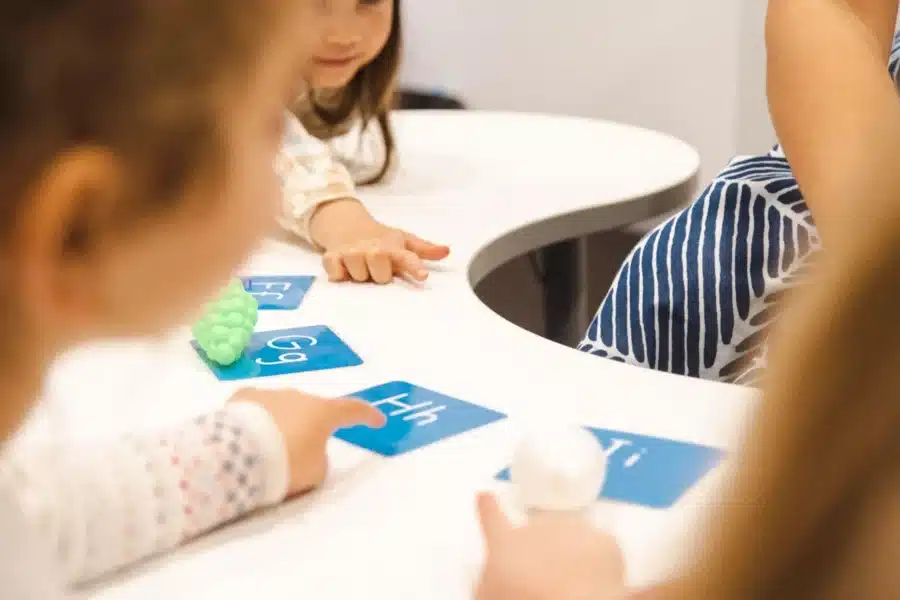
Before reading begins, sound awareness starts. Letter play, picture cards and everyday words can help toddlers build early talking skills.
Use Big Facial Expressions
Teaching your child to talk is not just about what they hear. It is also about what they see.
Children are incredible mimics. They watch your mouth, your face, your expressions and your body language. When you say a word or sound, exaggerating your facial movements can help your child see how the sound is formed.
For example, when saying “mmm”, really press your lips together. When saying “oh”, make your mouth round. When saying “ba”, clearly show the movement of your lips.
This turns language learning into an interactive performance. You are not just saying sounds; you are showing your child how sounds are made.
So go big. Be animated. Be playful. Your child does not need a perfectly polished teacher. They need an engaged parent who is willing to look a little silly for the sake of learning.

How to teach a toddler to talk? Be silly! When you exaggerate your face, you make language feel playful, clear and exciting for your toddler.
Repeat, Repeat, Repeat
Repetition is one of the most important parts of teaching your child to talk.
Young children need to hear words again and again before they fully understand them, remember them and eventually use them. This is why the same book, song or word can be powerful even when you are personally very ready to move on.
If you are teaching your child the word “blue”, repeat it naturally throughout the day.
“Blue cup.” “Blue socks.” “Look, a blue car.” “You found the blue block.”
The goal is not to overwhelm your child with too much language at once. Instead, choose a few words and use them consistently in different real-life situations.
The more your child hears a word connected to something they can see, touch or experience, the easier it becomes for them to understand and eventually use it.
Sensory play is a great way to enforce simple concepts and vocabulary. Shichida has a lot of fun ideas for families.
Sensory play can help nurture resilience and development. Download a free sensory play guide here.
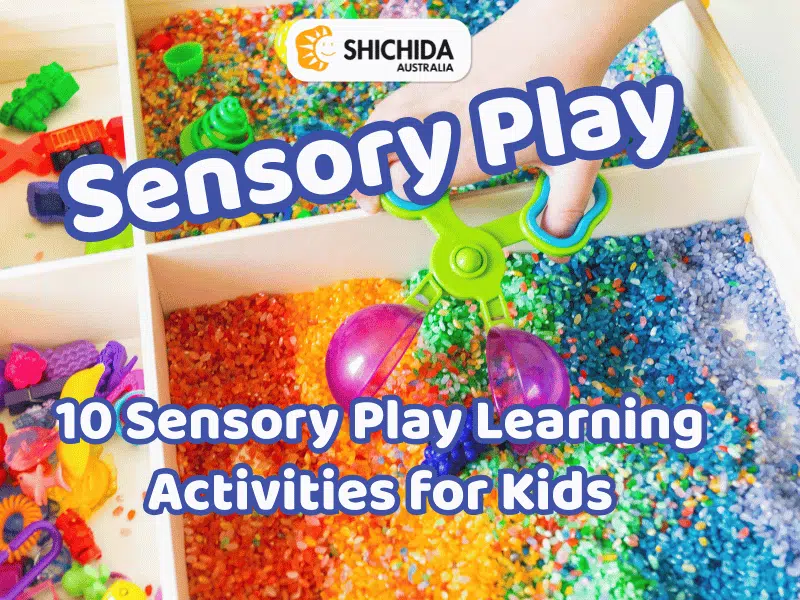
If your child enjoys these types of activities, a Shichida trial class is a great way to see how structured play can support coordination, focus, memory and early learning confidence.
Book a trial class or contact us to find your nearest centre.
Master One Step at a Time
When supporting your child’s speech development, simplicity is key.
It can be tempting to say, “Look, there is a big red bouncy ball rolling across the floor!” But for a child who is still learning to talk, that may be too much language to process all at once.
Start with one clear word. “Ball.”
Hold up the ball. Point to the ball. Roll the ball. Say the word again.
Once your child becomes familiar with the word, you can slowly expand it.
“Red ball.” “Big ball.” “Kick the ball.”
This step-by-step approach helps your child build language in a way that feels manageable. First comes the word. Then comes the description. Then comes the phrase.
Small steps matter!
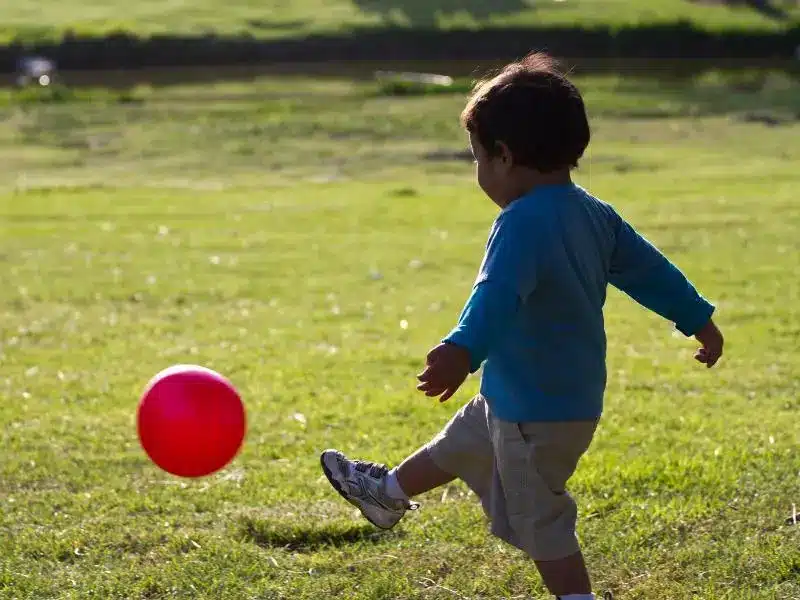
Many parents ask how to teach a toddler to talk, but it is less about formal lessons and more about repeating words, naming objects, singing songs, giving your child time to respond and patience! Start with one word, then build from there. “Ball” can become “red ball,” “big ball,” and eventually, “kick the ball.”
Give Your Child Time to Respond
When you ask your child to say a word, give them time.
This sounds simple, but it can be surprisingly hard. As adults, we often rush to fill silence. We ask, repeat, prompt, explain and then ask again before the child has had a chance to process what we said.
Try this instead: “Look, it’s a ball. Can you say ball?”
Then pause. Wait. Give your child a moment to respond.
If they babble, make a sound or attempt the word, respond warmly. “Yes, ball!”
If they do not respond, you can repeat the word once more and then move on. Try not to pressure them or turn the moment into a test.
Children are more likely to enjoy language when it feels safe, warm and playful. The goal is to invite communication, not demand performance.
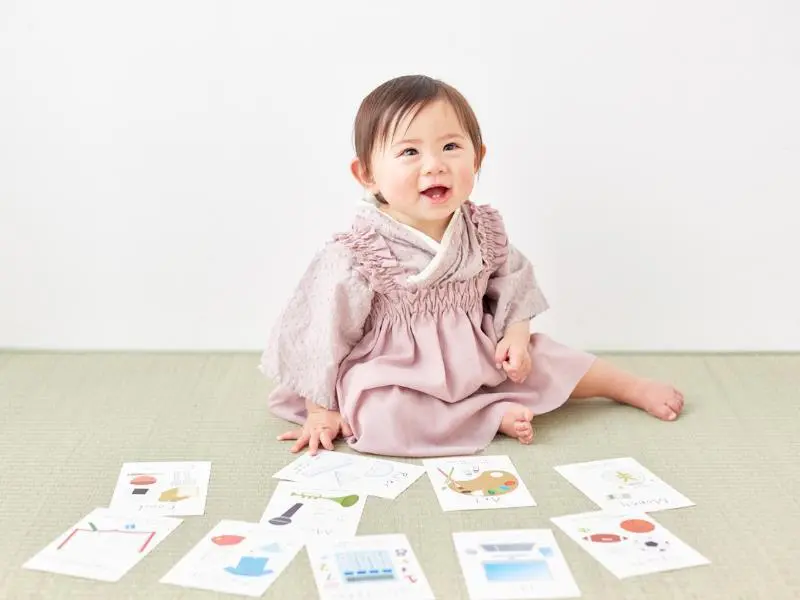
If you are wondering how to teach a toddler to talk, the best place to start is by turning everyday moments into little conversations. Picture cards can open up a whole world of words and conversations, from animals and food to colours, shapes and everyday objects.
Use Flashcards to Build Vocabulary
Flashcards can be a helpful tool for building vocabulary when they are used in an interactive and engaging way.
The key is not simply showing a card and expecting your child to memorise it. The magic happens when you combine the image, the spoken word, your expression and your child’s attention.
For example, show a picture of an apple and clearly say:
“Apple.”
Then you might point to a real apple later and say:
“Apple. You ate an apple.”
This helps your child connect the image, the word and the real-life object.
Flashcards can also introduce children to a wide range of words they may not encounter every day. Animals, transport, food, colours, shapes and everyday objects can all become part of your child’s growing vocabulary.
At Shichida, high-speed flashcards are used as part of a broader learning approach that includes speed, rhythm, visual stimulation, memory and language. When used warmly and playfully, they can help children absorb words and concepts over time.
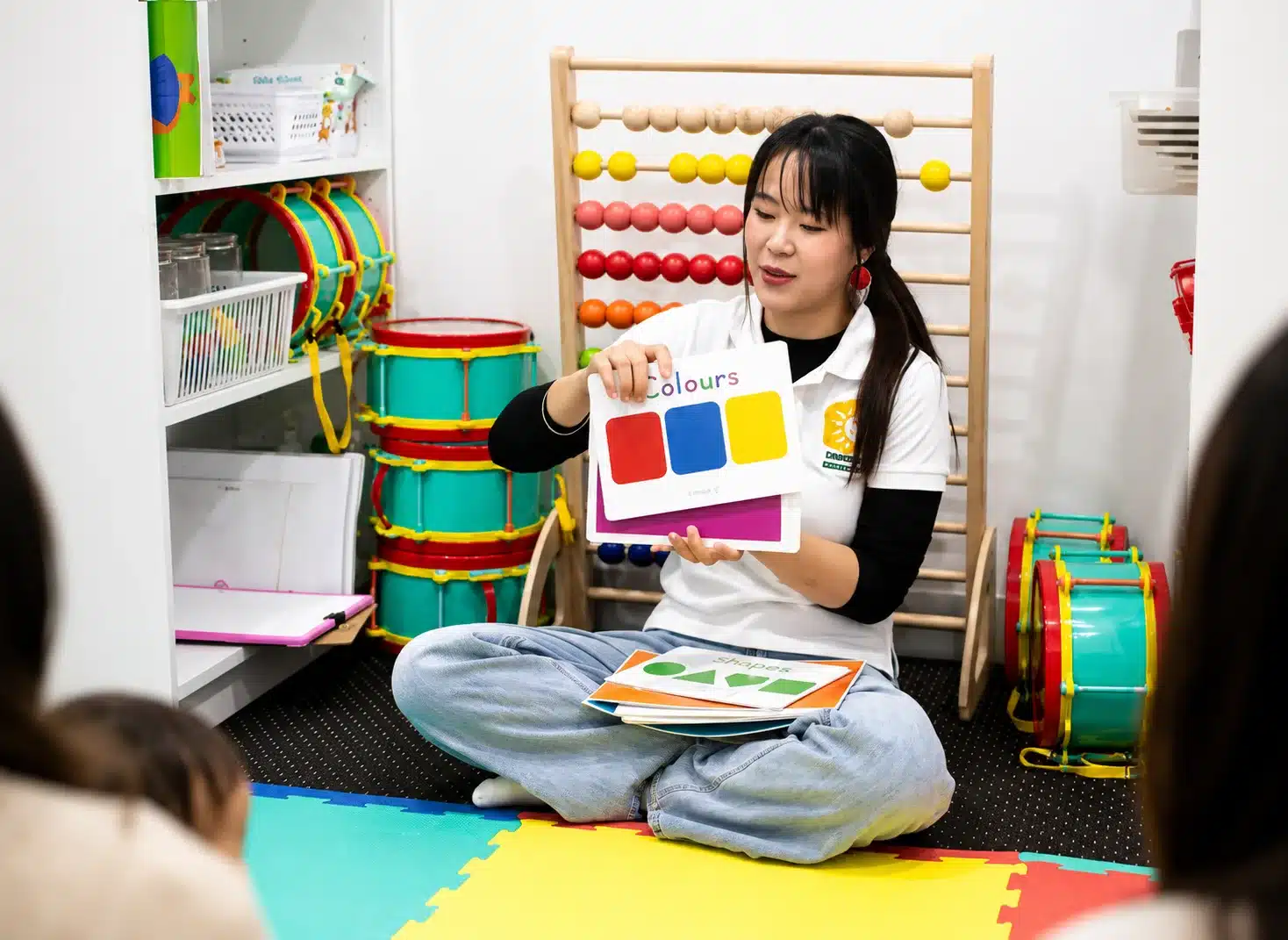
Image by Shichida Australia: In Shichida classes, flashcards are shared with speed, rhythm and warmth – helping babies and toddlers hear new words, see new concepts and enjoy learning through playful visual stimulation.
Read, Tell Stories and Talk About Pictures
Reading is one of the most powerful ways to support your child’s language development.
Picture books introduce children to new words, sounds, ideas and sentence patterns. They also help children connect language with images, emotions and meaning.
You do not need to read every word perfectly from start to finish. With babies and toddlers, it is often more helpful to point, name, describe and respond.
You might say:
“Dog.” “Big dog.” “The dog is running.” The dog says “Woof woof!” “Where is the dog?”
This turns reading into a conversation, not a performance.
Storytelling is also valuable. You can make up simple stories using your child’s toys, daily routines or family members. A teddy bear getting ready for bed can become a language lesson. A toy car going to the shops can become a story. A banana can have a surprisingly dramatic adventure if you are tired enough.
The more children hear language used in meaningful and playful ways, the more opportunities they have to learn.
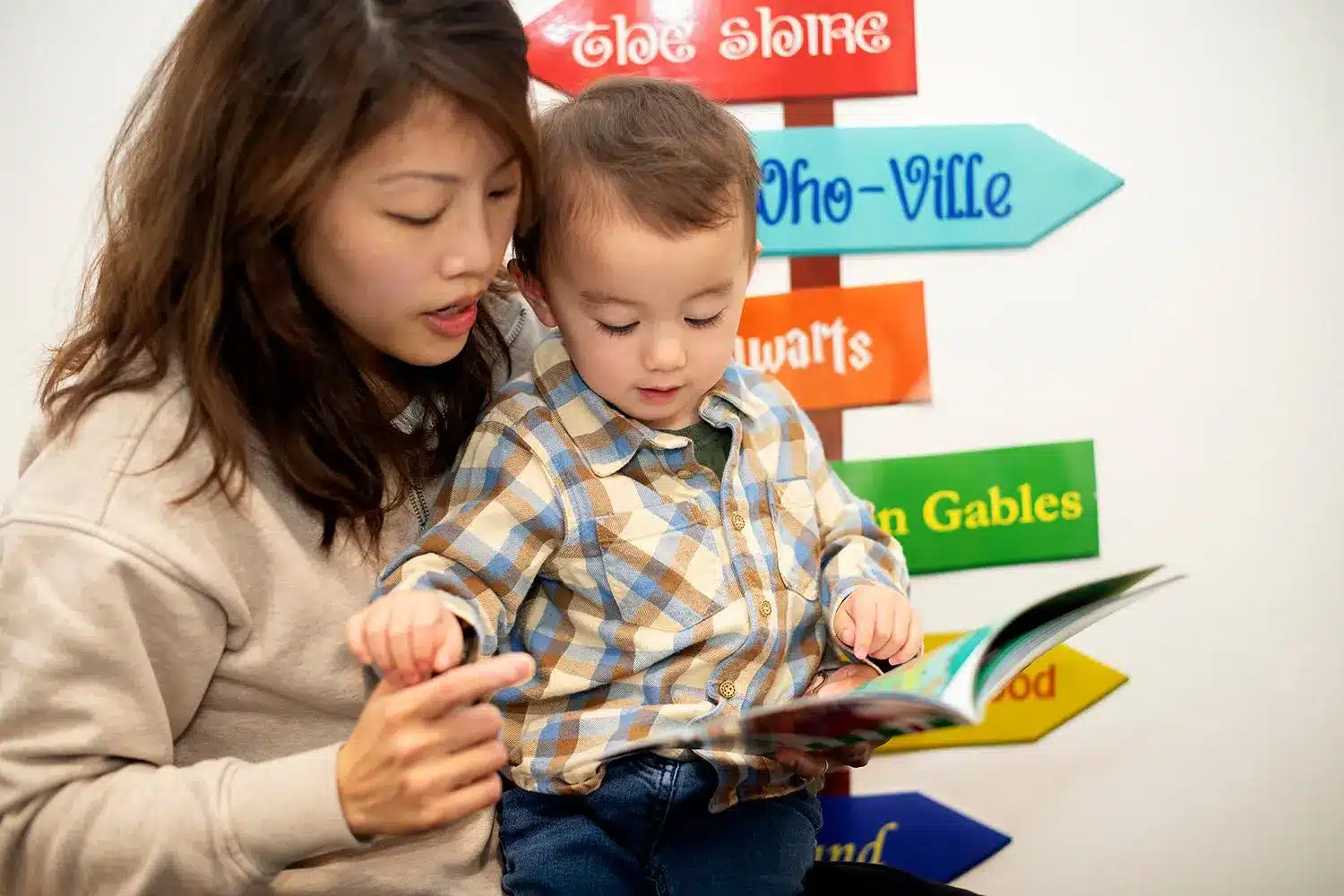
Image by Shichida Australia: Reading aloud gives toddlers more than words – it gives them rhythm, expression, storytelling and shared attention.
Turn Everyday Moments Into Talking Practice
Daily routines are full of language-building opportunities.
During mealtimes, you can name foods, colours and actions.
“Banana.” “Cut banana.” “Want more banana?”
During bath time, you can talk about water, body parts and toys.
“Warm water.” “Wash hands.” “The duck is swimming.”
During walks, you can point out what you see.
“Tree.” “Car.” “Bird.” “A big truck.”
These small moments matter! Children learn language through repeated, meaningful interactions with the people they love most.
You are not just filling silence. You are helping your child connect words to the world around them.
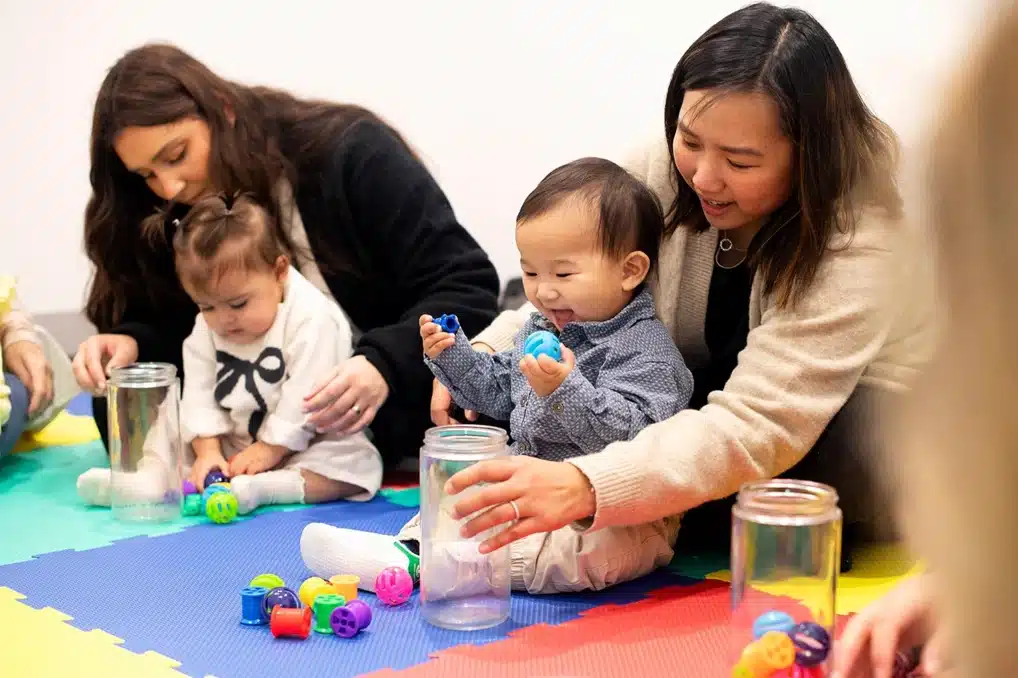
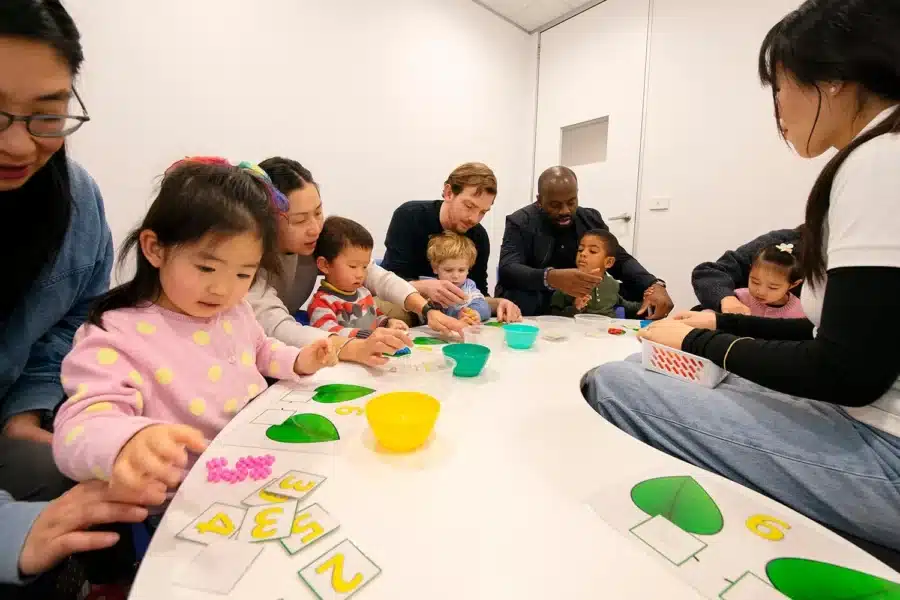
Image by Shichida Australia: Pinch and drop object games during a Shichida Baby Class develops fine motor control but also give parents so much to talk about: colour, shape, size, movement and the little choices their baby makes.
Progress Takes Time
Every child’s speech and language development journey is different.
Some children start using words earlier. Others take more time. Some children understand a great deal before they begin speaking clearly. Others may communicate through gestures, sounds or facial expressions first.
It is important not to compare your child’s speech development with another child’s timeline. Just as children walk, read and develop confidence at different stages, language development can also vary.
What matters is creating a supportive environment filled with talking, reading, singing, play and connection.
Progress may be slow. It may come in little bursts. Your child may say a word once and then not say it again for weeks, just to keep things interesting.
Be patient. Keep going. Every interaction is helping to build the foundation.

When Should You Seek Help?
While every child develops at their own pace, it is important to trust your instincts.
If you are concerned about your child’s speech, hearing, understanding or communication, seek professional guidance. You may choose to speak with your GP, maternal and child health nurse, audiologist or a paediatric speech pathologist.
Getting advice early can provide reassurance, clarity and support. It does not mean something is wrong. It simply means you are taking your child’s communication seriously.
If you are worried, it is always better to ask than to sit at home wondering.
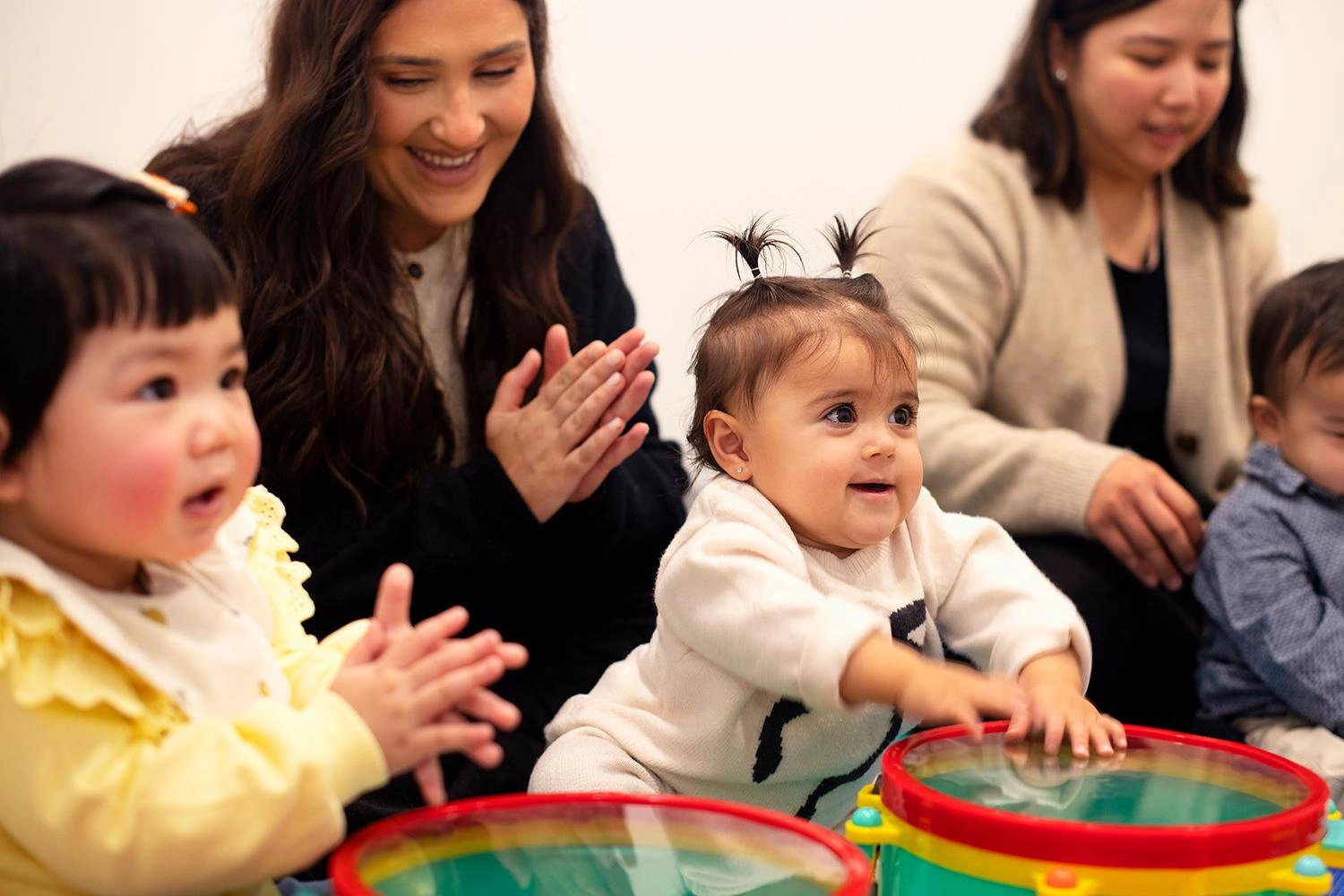
Image by Shichida Australia: When babies and toddlers move and clap along to a song, they are building rhythm, focus and confidence – all while sharing a fun bonding moment with their parent.
You Are Your Child’s First and Most Important Teacher
Helping your child learn to talk does not have to feel complicated.
You do not need to panic if your toddler does not repeat a word the first time, or the tenth time, or the day you have proudly asked Grandma to watch.
What your child needs most is warm, consistent interaction.
Talk to them. Sing to them. Read with them. Name the world around them. Give them time to respond. Celebrate their attempts. Make language joyful.
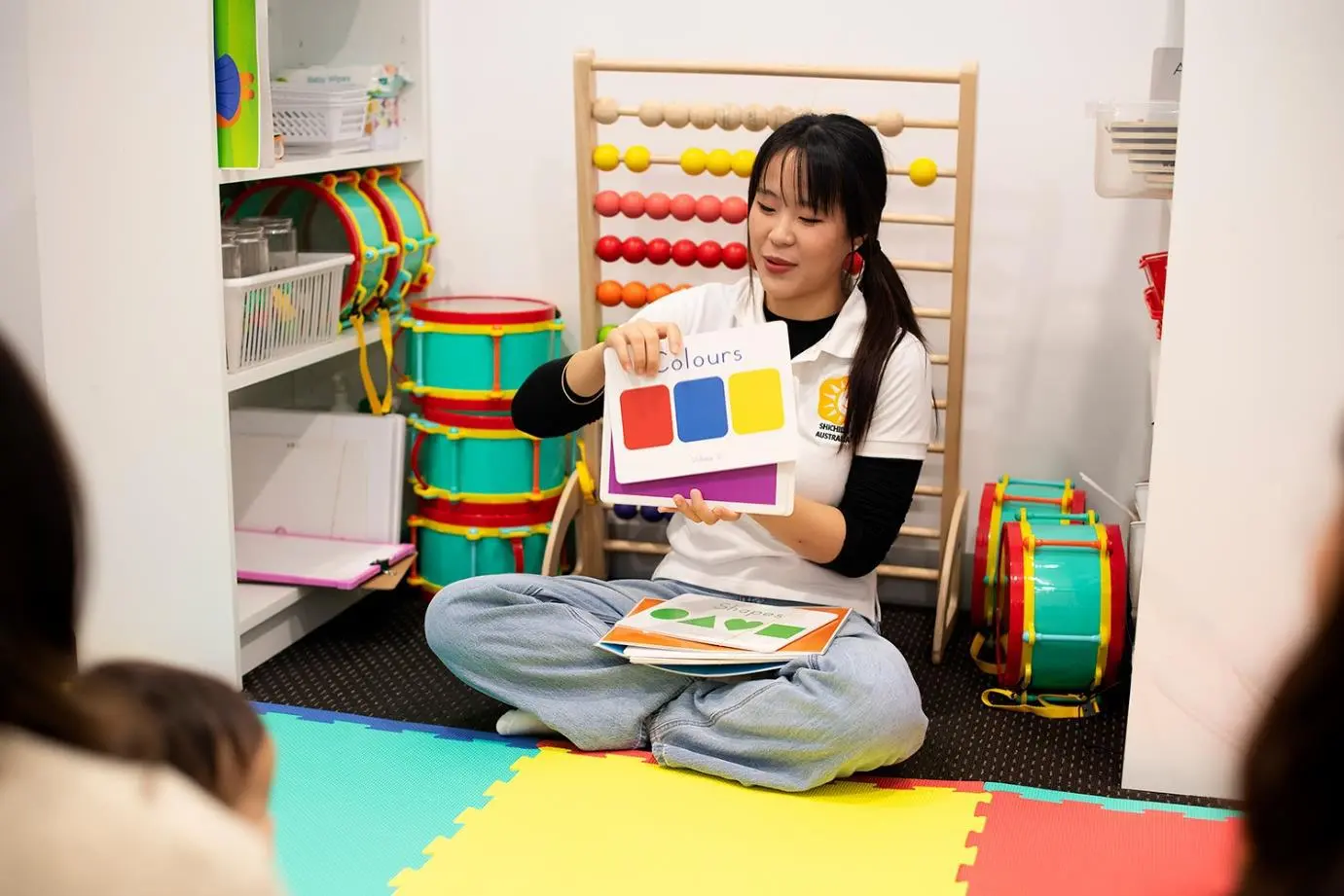
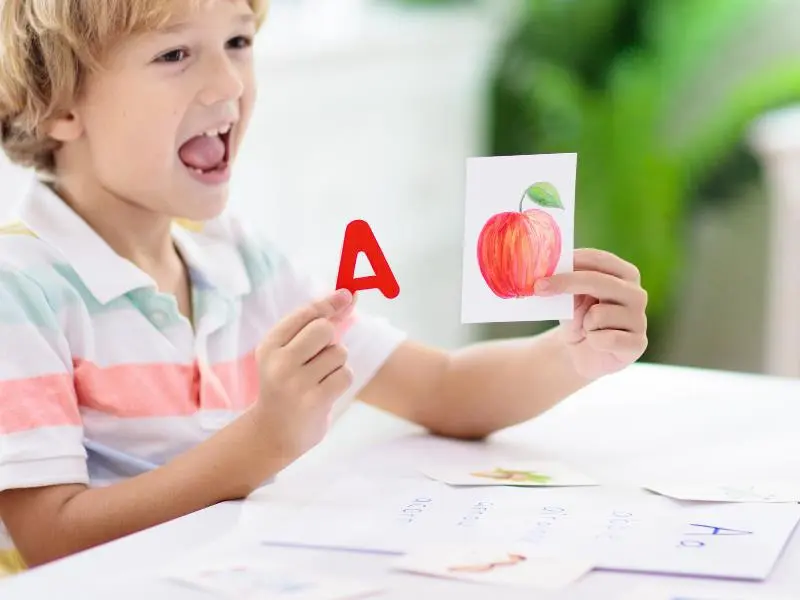
Image by Shichida Australia: Flashcards introduce babies and toddlers to new words while supporting focus, listening and memory.
Shichida Can Help You on this Exciting Journey
At Shichida Australia, we know parents are a child’s first and most important teachers. Our classes are designed to support both you and your child through fun, engaging early learning activities that build language, memory, focus, confidence, creativity and a love of learning.
Through songs, phonics, flashcards, storytelling, movement and parent-child interaction, you will learn practical ways to support your child’s development while bonding with them in a warm and playful environment.
Ready to take the next step in your child’s speech and language journey?
Book a trial class today and see how Shichida can help you support your child’s learning from the very beginning.
FAQs How to Teach a Toddler to Talk
You can help your toddler learn to talk by speaking to them often, using simple words, reading together, singing songs, naming everyday objects, repeating key words and giving them time to respond. Toddlers learn language through everyday interaction, so small moments like getting dressed, eating lunch or playing with toys can become powerful language-building opportunities.
The best way to encourage a toddler to talk is to follow their interests, use simple language and respond warmly to their attempts to communicate. For example, if your child points to a ball, you can say, “Ball. Yes, ball!” This helps your child connect the object, the word and the meaning.
You can introduce babies and toddlers to phonetic sounds in a playful way through songs, rhymes, repetition and exaggerated mouth movements. At this age, phonics should feel like play, not formal lessons. The goal is to help children hear sounds, copy sounds and enjoy language.
Songs help children learn rhythm, sound patterns, repetition and new words. Because songs are playful and predictable, children often feel comfortable joining in through gestures, sounds, actions or repeated words. Nursery rhymes and simple phonics songs can be especially useful for early language development.
Flashcards can help toddlers build vocabulary when they are used interactively. The key is to say the word clearly, show the image, use facial expressions and connect the word to real-life objects or experiences. Flashcards work best when they are part of a warm parent-child interaction, not used as a passive activity.
It is best to start with one word at a time, especially for babies and younger toddlers. For example, say “ball” before adding extra details like “red ball” or “big ball”. Once your child understands the basic word, you can gradually expand their language.
Repetition helps children hear, remember and eventually use new words. Young children often need to hear the same word many times in different situations before they can say it themselves. Repeating words clearly and consistently gives your child more chances to connect sound with meaning.
Instead of directly correcting your toddler, model the correct word naturally. For example, if your child says “ba” for “ball”, you can respond with, “Yes, ball!” This keeps the interaction positive while still giving your child the correct version to hear and copy.
Children develop at different rates, but you should seek professional advice if you are concerned about your child’s speech, hearing, understanding or communication. You can speak to your GP, child and family health nurse, audiologist or a speech pathologist. It is always better to ask early than to sit at home worrying.
Yes. Reading picture books helps children hear new words, connect language with images and build listening and comprehension skills. You do not need to read perfectly from start to finish. Pointing, naming pictures, making animal sounds and talking about the story all help build language.
Shichida Australia supports speech and language development through fun, engaging activities such as songs, phonics, flashcards, reading, memory games and parent-child interaction. Our classes help parents learn practical ways to support their child’s learning while building confidence, focus, vocabulary and a love of learning.