
Key Takeaways
- Newborn sleep is fragmented by biological design
- Most newborns sleep 14-17 hours across 24 hours, but rarely in long stretches
- Hunger, overtiredness, overstimulation, day-night confusion, and the need for closeness are the most common sleep disruptors
- Wake windows are often the strongest predictor of settled sleep
- Calm daytime engagement supports healthy sleep rhythms
- Bright days and dim nights help develop the circadian rhythm
- Safe sleep practices should always align with Red Nose Australia recommendations
- Australia offers excellent support through MCH nurses, ABA, Tresillian, Karitane, and Ngala
- Sleeping through the night is a developmental milestone, not a parenting achievement
It’s 3am. You’ve fed your baby, changed their nappy, rocked them for what feels like hours, and they’re still awake. You find yourself searching, why is my newborn not sleeping, worrying if something is wrong.
You will be relieved to hear that most newborn sleep challenges are completely normal. In fact, newborn sleep is biologically designed to be fragmented. Frequent waking, short naps, and unpredictable sleep patterns are all part of healthy early development.
Understanding what’s happening inside your baby’s developing brain can make those difficult nights feel much less overwhelming. If you’re also learning about your baby’s early development, understanding their first-year brain growth can help put sleep into perspective.
In this guide, you’ll learn why newborns sleep the way they do, the most common reasons babies struggle to settle, practical strategies that genuinely help, and how daytime activities can support better-organised sleep. You’ll also discover where to find support in Australia if sleep deprivation is starting to feel too much.

Understanding Newborn Sleep
Before troubleshooting your baby’s sleep, it helps to understand that newborn sleep is very different from adult sleep.
Australian resources such as Raising Children Network and Better Health Victoria explain that newborns have immature sleep systems. Their brains are still developing the ability to distinguish between day and night, their stomachs are tiny, and they spend much more time in active sleep than adults do.
Most of what feels difficult is actually normal newborn biology.
How Much Sleep Newborns Actually Need
Most newborns need around 14–17 hours of sleep across a 24-hour period.
That sounds like a lot, but it rarely happens in long stretches. Sleep is spread across multiple naps and overnight wakes. One baby may nap for 20 minutes, while another sleeps for two hours. Both can be completely normal.
Rather than treating sleep totals as a target, think of them as a general guide.
Newborn Sleep Cycles
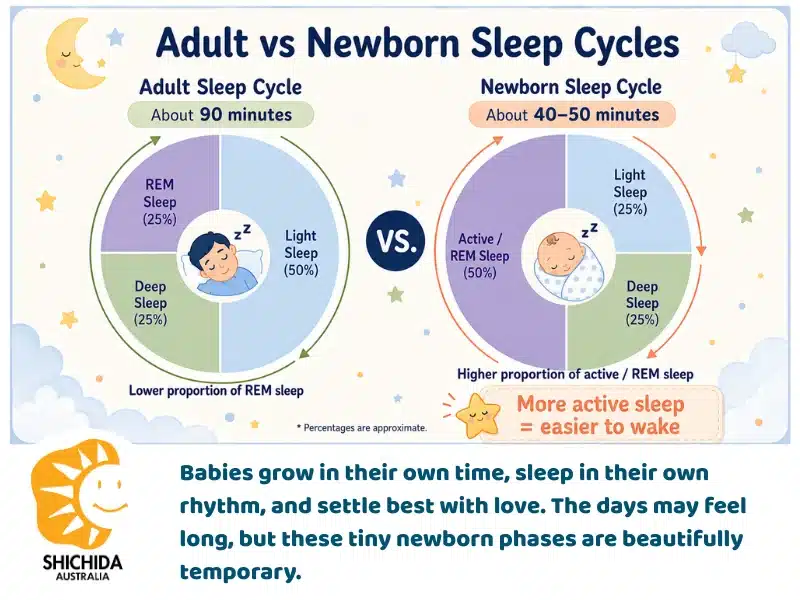
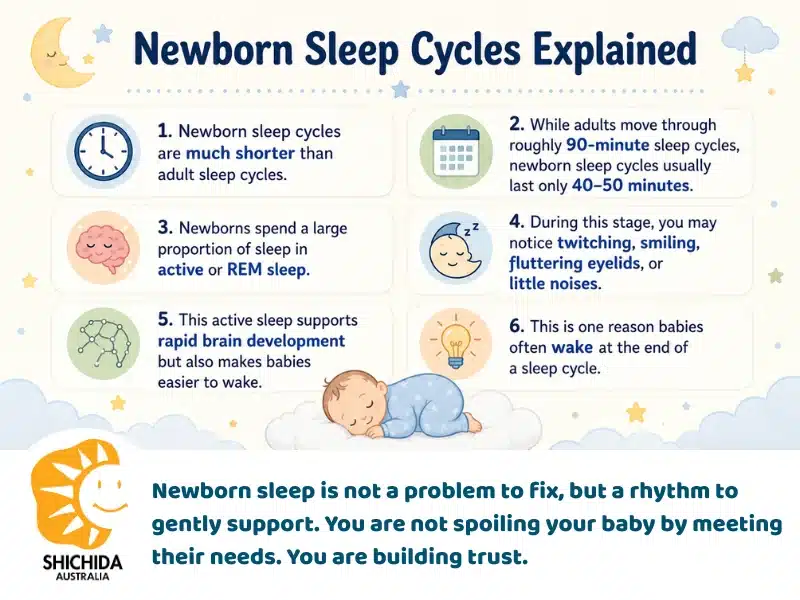
Newborn sleep cycles are much shorter than adult sleep cycles.
While adults move through roughly 90-minute sleep cycles, newborn sleep cycles usually last only 40-50 minutes.
Newborns also spend a large proportion of sleep in active or REM sleep. During this stage, you may notice twitching, smiling, fluttering eyelids, or noises. This active sleep supports rapid brain development but also makes babies easier to wake.
This is one reason babies often wake at the end of a sleep cycle.
Why Newborns Don’t Yet Know Day From Night
A newborn’s circadian rhythm is still developing.
For the first 6-12 weeks, babies do not naturally understand that night is for sleeping and day is for being awake. They’re not difficult. Their internal body clock simply isn’t mature yet.
This is why many babies appear sleepy all day and alert all night during the early weeks.

Why Is My Newborn Not Sleeping?
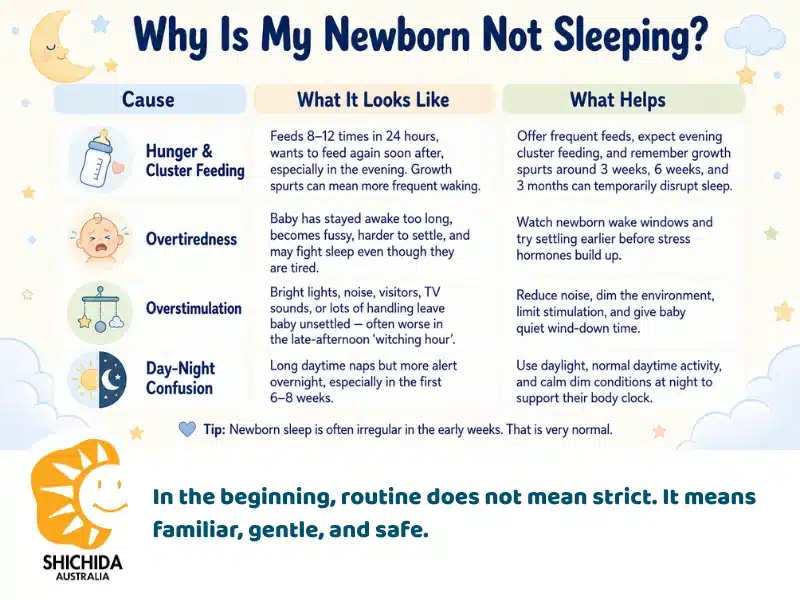
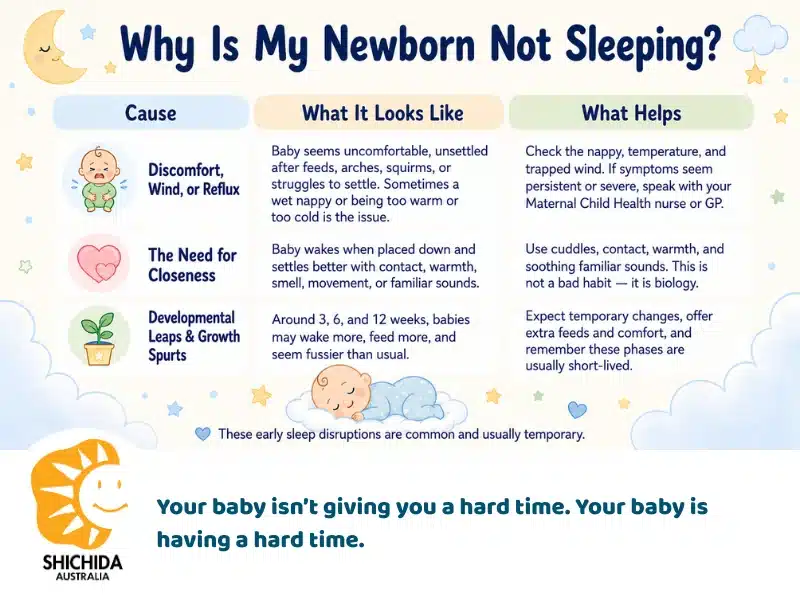
If you’re wondering why your newborn isn’t sleeping, the most common causes are:
- Hunger and cluster feeding
- Overtiredness
- Overstimulation
- Day-night confusion
- Discomfort, wind, or reflux
- The need for closeness
- Developmental leaps and growth spurts
Hunger and Cluster Feeding
Newborns typically feed 8-12 times in 24 hours.
Many babies also cluster feed, particularly during the evening. This can make it feel as though your baby is constantly awake.
Growth spurts around three weeks, six weeks, and three months often increase feeding frequency and temporarily disrupt sleep.
Overtiredness
One of the biggest surprises for new parents is that tired babies often struggle to sleep.
When newborns stay awake too long, stress hormones increase, making settling much harder. This is why understanding newborn wake windows can be so helpful.
Overstimulation
Newborn brains are constantly processing new information and rapidly developing.
Bright lights, loud environments, multiple visitors, television noise, and excessive handling can overwhelm their developing nervous systems.
The late-afternoon “witching hour” is often linked to accumulated stimulation throughout the day.
Day-Night Confusion
Day-night confusion is extremely common during the first six to eight weeks.
Babies may take long daytime naps and remain alert overnight. Consistent light exposure during the day and calm, dim conditions at night help their body clock mature.
Discomfort, Wind, or Reflux
Sometimes the solution is surprisingly simple.
A wet nappy, trapped wind, being too warm or too cold, or mild reflux can make settling difficult. If symptoms seem persistent or severe, discuss them with your Maternal Child Health nurse or GP.
The Need for Closeness
Your baby spent nine months hearing your heartbeat, feeling your movement, and being constantly held.
It’s completely normal for newborns to wake when placed down. Contact, warmth, smell, and familiar sounds all help babies feel safe.
This isn’t creating a bad habit. It’s biology.
Developmental Leaps and Growth Spurts
Many parents notice temporary sleep disruptions around developmental changes.
Periods around three, six, and twelve weeks often bring increased waking, fussiness, and feeding. These phases are usually short-lived.
How to Help Your Newborn Sleep
Wake Windows by Age (0-4 Months)
Wake windows are often a better guide than sleep cues alone.
- 0-4 weeks: 45-60 minutes
- 4-8 weeks: 60-90 minutes
- 8-12 weeks: 75-90 minutes
- 3-4 months: 1.5-2 hours
Many newborns hide their tiredness until they’re already overtired.
If you’re wondering what developmental changes to expect during these months, understanding early milestones from 0-6 months can provide helpful context.
Build a Simple Day-Night Rhythm
During the day:
- Open curtains
- Go outside for natural light
- Allow normal household noise
- Encourage interaction
At night:
- Keep lights dim
- Use a calm voice
- Limit stimulation
- Keep feeds quiet and purposeful
This contrast helps teach the developing circadian rhythm.
Recognising Newborn Sleep Cues
Early sleep cues include:
- Looking away
- Staring into space
- Becoming quieter
- Slower movements
Late cues include:
- Yawning
- Fussiness
- Eye rubbing
- Crying
Try to begin settling during the early stages whenever possible.
Gentle Settling Techniques
Many newborns respond well to:
- Swaddling (until rolling begins)
- White noise
- Gentle rocking
- Shushing
- Sucking for comfort
- Responsive feeding
Always place your baby on their back for sleep.
Newborn Sleep Safety: The Essentials
- Always place your baby on their back for every sleep
- Use a firm, flat mattress
- Keep cots free from loose bedding, pillows, bumpers, and toys
- Room share, rather than bed share, for the first 6-12 months
- Maintain a smoke-free environment
- Keep your baby’s head and face uncovered
- Aim for a comfortable room temperature of around 16-20°C
Red Nose Australia recommends placing babies on their back for every nap, and has some tips to share with Aussie parents.
The Role of Daytime Activities in Newborn Sleep
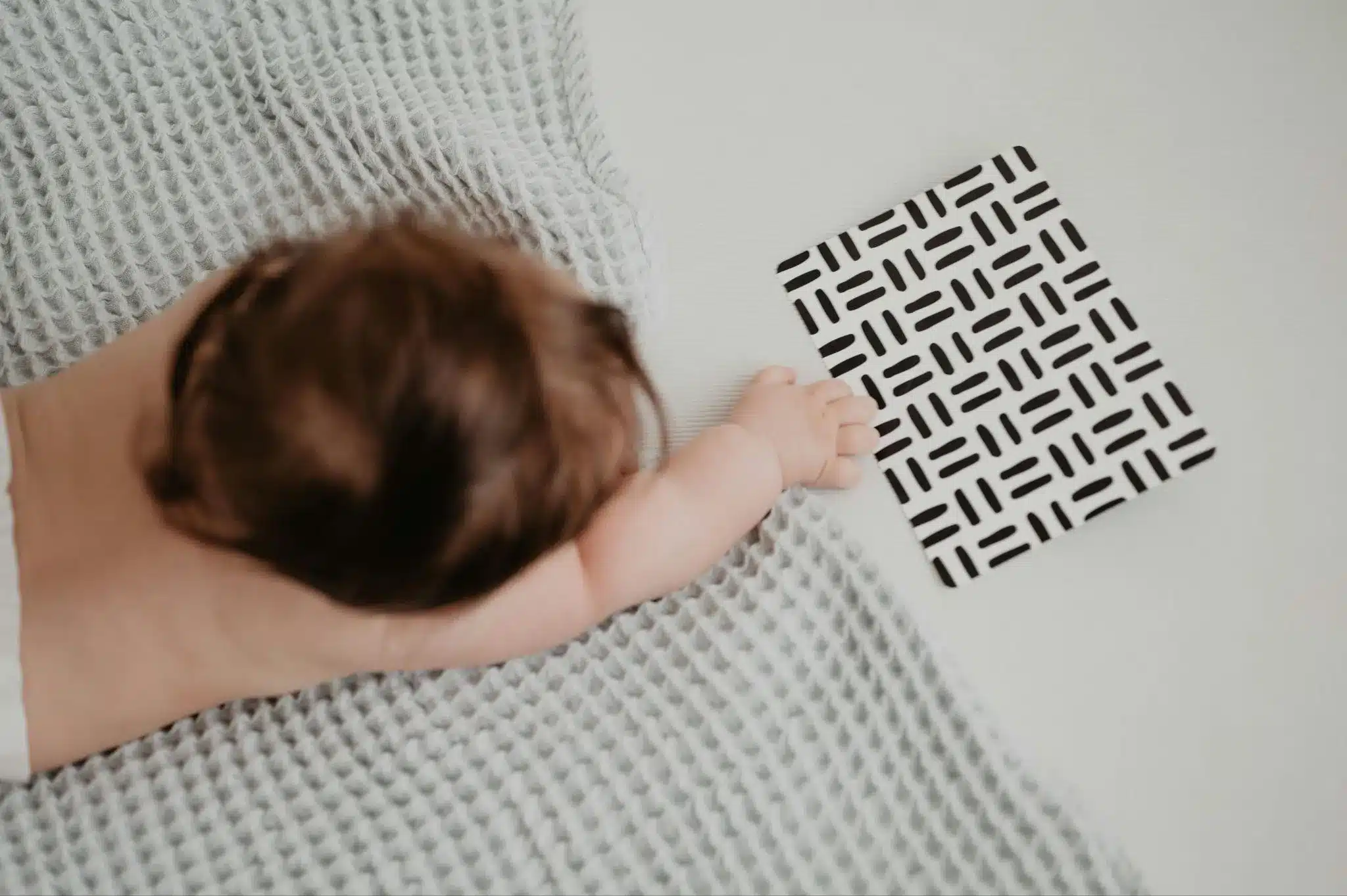
If you’re wondering why is my newborn not sleeping, activities such as tummy time, sensory play, and gentle movement can help create a healthy balance between awake periods and rest.
Why Calm Daytime Engagement Supports Sleep
Many parents worry that stimulating newborn activities will make sleep worse.
In reality, appropriate daytime engagement often supports better sleep.
Meaningful interaction during awake windows helps organise your baby’s developing nervous system and strengthens the distinction between day and night.
Research into early brain development suggests that calm sensory experiences help support learning, connection, and regulation during the first year of life.

High-contrast cards can be a simple way to support early visual focus during short, calm awake windows. Learn more about how Shichida uses flashcards for babies and young children to support memory, vocabulary, visual recognition, and early learning, from 6 months old.
Newborn Activities That Encourage Better Sleep
Try:
- Chest-to-chest tummy time
- Skin-to-skin cuddles
- Outdoor walks in natural daylight
- Face-to-face talking
- Singing
- Reading aloud
- Baby-safe mirror play
- Gentle sensory activities
- High contrast cards (great for visual development)
You can find more age-appropriate ideas in our guide to sensory play for babies and toddlers.
Sensory play can help nurture resilience and development. Download a free sensory play guide here.

If your child enjoys these types of activities, a Shichida trial class is a great way to see how structured play can support coordination, focus, memory and early learning confidence.
Book a trial class or contact us to find your nearest centre.
How to Tell If You’re Stimulating Your Newborn Too Much
Signs of overstimulation include:
- Turning away
- Arching the back
- Hiccupping
- Sudden fussiness
- Escalating crying
When this happens, reduce input, dim the lights, and offer calm, quiet connection.
A Developmentally Attuned Approach
Structured, gentle engagement during awake windows can become part of a healthy daily rhythm. The Shichida Method focuses on age-appropriate sensory, cognitive, and emotional experiences that support development while respecting a baby‘s natural rhythms.
Tummy Time and Newborn Sleep
How Tummy Time Helps Sleep
Tummy time is one of the most valuable newborn activities.
It provides sensory input, strengthens developing muscles, and helps babies use energy appropriately during awake periods. This can contribute to better sleep readiness later.
Tummy Time Ideas for Newborns
Try:
- Chest-to-chest tummy time (great for parent-baby bonding)
- Tummy time across your lap
- Mirror play
- High-contrast cards
For more ideas and guidance, read our complete Tummy Time for Newborns guide.
Newborn Sleep Routines That Actually Work
Flexible Rhythm vs Rigid Schedule
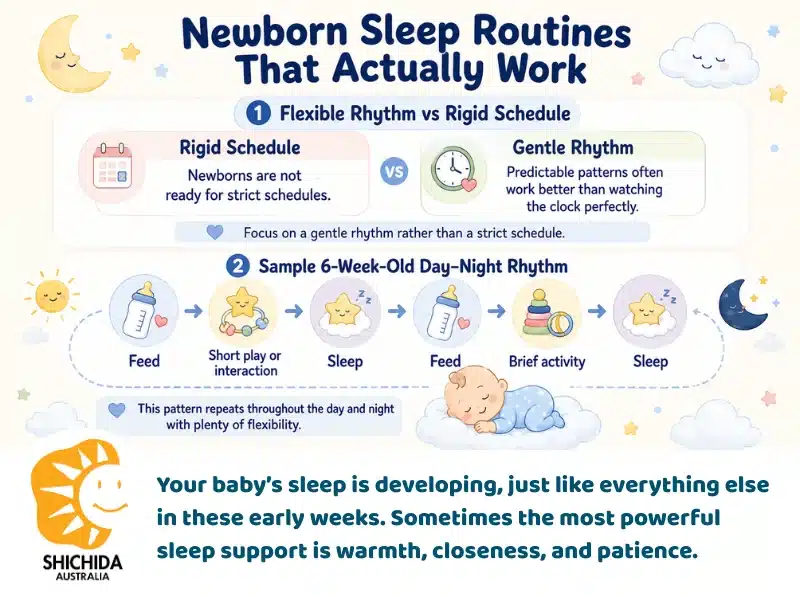
Newborns are not ready for strict schedules.
However, they often respond well to predictable patterns. Focus on creating a gentle rhythm rather than following the clock perfectly.
A Sample Newborn Day-Night Rhythm
A typical six-week-old day may look like:
- Feed
- Short play or interaction
- Sleep
- Feed
- Brief activity
- Sleep
This pattern repeats throughout the day and night with plenty of flexibility.
Bedtime Wind-Down (From 4-6 Weeks)
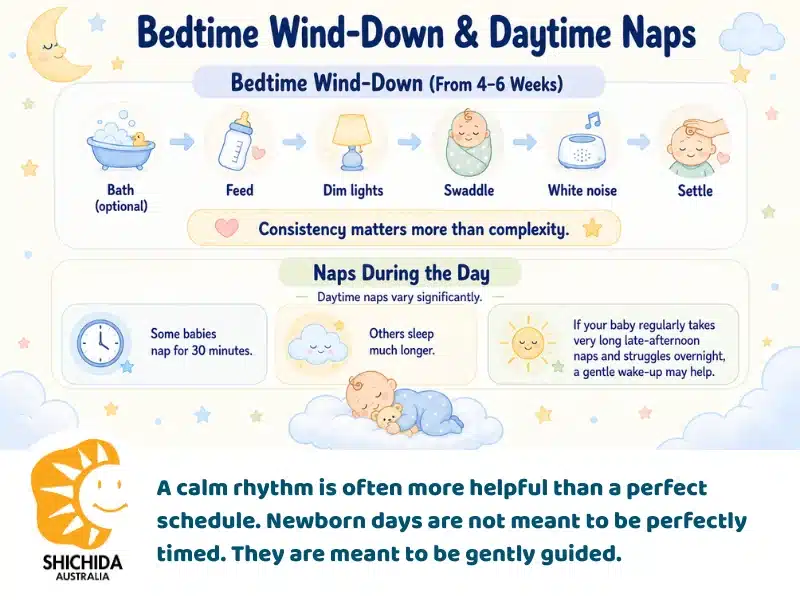
A simple evening routine might include:
- Bath (optional)
- Feed
- Dim lights
- Swaddle
- White noise
- Settle
Consistency matters more than complexity.
Naps During the Day
Daytime naps vary significantly.
Some babies nap for 30 minutes, while others sleep much longer. If your baby regularly takes very long late-afternoon naps and struggles overnight, a gentle wake-up may help.
When to Seek Newborn Sleep Support in Australia
Your Maternal Child Health Nurse
Maternal Child Health nurses are one of Australia’s most valuable parenting resources.
Sleep concerns are among the most common reasons families seek extra support.
Tresillian, Karitane, and Ngala
These trusted Australian organisations offer evidence-based support for families experiencing sleep and settling challenges.
Newborn Groups and Newborn Care Classes Near You
Parent groups, Australian Breastfeeding Association meetings, and newborn care classes can provide reassurance, practical advice, and connection.
Sometimes hearing “my baby does that too” is incredibly powerful!
Early Development Programmes
Some families enjoy structured programmes that combine early learning, sensory experiences, and parent-child connection.
Shichida Australia’s infant programmes provide developmentally appropriate activities that can fit naturally into your baby’s awake windows while supporting early learning and bonding.
When to Speak to a GP
Seek medical advice if your baby experiences:
- Poor feeding
- Low weight gain
- Excessive crying
- Unusual drowsiness
- Sudden changes in behaviour
- Any symptom that concerns you
Trust your instincts.

Supporting Your Newborn’s Development with Shichida
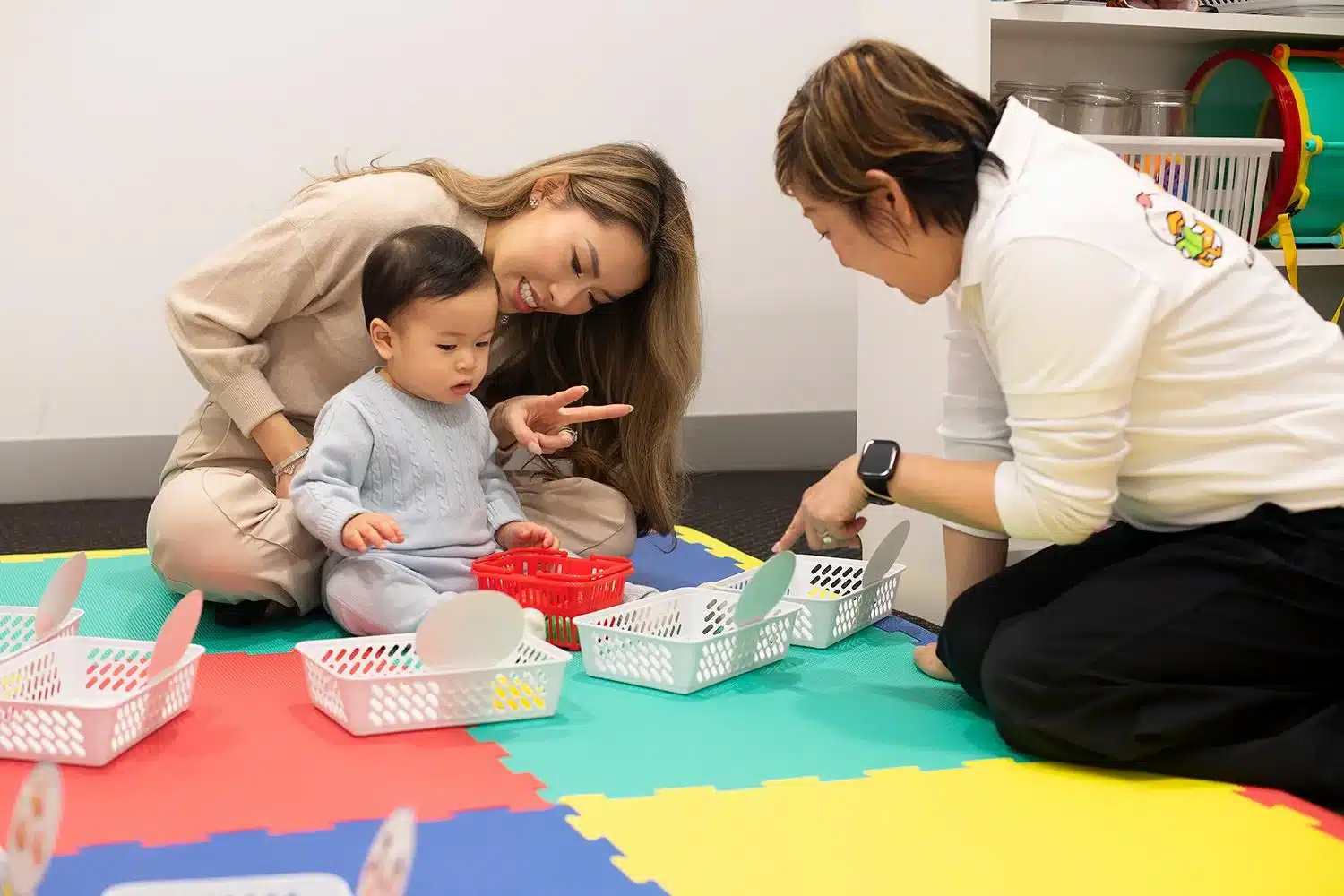
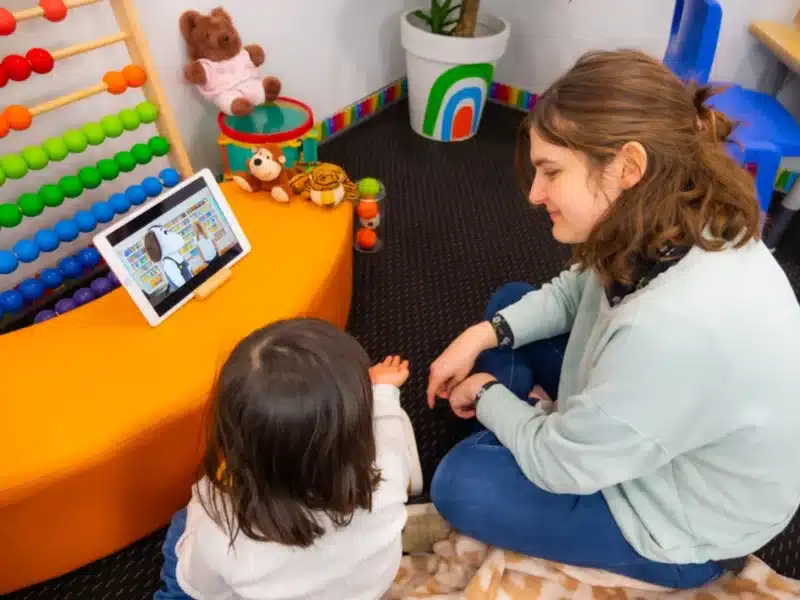
Image from Shichida Australia: Calm, structured activities during awake windows help support learning, connection, and more settled sleep patterns.
Newborn sleep is only one piece of a much bigger developmental picture.
As your baby grows, their sleep, sensory experiences, emotional security, and brain development become increasingly connected. Calm, meaningful engagement during awake windows helps babies learn, connect, and regulate.
The Shichida Method embraces this whole-child approach through sensory-rich, developmentally appropriate experiences designed for the earliest months of life. Our baby classes support cognitive, emotional, and sensory development while respecting your baby’s natural rhythms.
Calm, consistent engagement during your newborn’s awake windows lays the foundation for both healthy development and more settled sleep.
Book a trial class for your baby and see how the Shichida Method can support your baby’s development from the earliest months.
Experience Shichida Today
Help your child build strong fine motor skills with Shichida Australia’s hands-on, fun brain-boosting activities! Our gentle approach supports coordination, confidence, early maths, reading, writing and more!
Book a trial class and see how these strategies come to life!
Why is My Newborn Not Sleeping? FAQs About Newborn Sleep, Night Waking and Settling
Newborns often struggle to sleep at night because their circadian rhythm is still developing. In the first 6–12 weeks, many babies do not yet understand the difference between day and night. Hunger, cluster feeding, discomfort, overtiredness, overstimulation, and the need for closeness can also cause frequent waking.
Keeping days bright and active, and nights calm, quiet, and dim, can help your baby’s body clock gradually mature.
Yes. It is normal for newborns to sleep in short, broken stretches. Newborn sleep cycles are much shorter than adult sleep cycles, and babies often wake between cycles because they spend a large amount of time in active sleep.
Frequent waking is usually a normal part of newborn development, not a sign that you are doing something wrong.
Most newborns need around 14–17 hours of sleep across a 24-hour period. However, this sleep is usually spread across many naps and overnight wakes rather than one long stretch.
Some newborns take short 20–30 minute naps, while others sleep for longer periods. Both patterns can be normal.
Most newborns can only stay awake for a short time before becoming overtired. As a general guide, babies aged 0–4 weeks may manage around 45–60 minutes awake, while babies aged 4–8 weeks may manage around 60–90 minutes. By 8–12 weeks, many babies can manage around 75–90 minutes.
Wake windows are only a guide. Your baby’s cues matter too.
Signs of an overtired newborn may include fussiness, crying, yawning, staring into space, looking away, slower movements, and difficulty settling. Some babies also fight sleep even though they are exhausted.
Starting the settling process before late tired signs appear can make sleep easier.
Newborns often cry when placed down because they lose the warmth, smell, movement, and contact they felt while being held. This is normal newborn biology.
Your baby spent months in the womb surrounded by your heartbeat, movement, and body warmth, so being close to you helps them feel safe.
Contact sleep is common, especially in the newborn stage. However, safe sleep must come first.
If you feel tired, drowsy, or at risk of falling asleep, place your baby on their back in a safe sleep space. Follow safe sleep guidance, including placing your baby on their back, using a firm flat mattress, and keeping the cot free from loose bedding, pillows, bumpers, and toys.
To help your newborn learn day from night, expose them to natural light during the day, open curtains, go outside when possible, and allow normal daytime sounds.
At night, keep lights dim, use a quiet voice, limit stimulation, and keep feeds calm. This contrast helps support your baby’s developing circadian rhythm.
Yes. Calm daytime activities can support newborn sleep by helping babies use their awake windows well and gradually understand the difference between day and night.
Gentle activities such as tummy time, skin-to-skin cuddles, outdoor walks, face-to-face talking, singing, reading aloud, mirror play, and high-contrast cards can support connection, sensory development, and sleep readiness.
Yes. Newborns can become overstimulated because their brains are still learning to process light, sound, touch, movement, faces, and new experiences.
Signs of overstimulation can include turning away, arching the back, hiccupping, sudden fussiness, crying, and difficulty settling. If this happens, reduce noise, dim the lights, and offer calm, quiet connection.
Sleeping through the night is a developmental milestone, not a parenting achievement. Some babies begin sleeping longer stretches after a few months, while others continue waking overnight for longer.
Feeding needs, growth spurts, temperament, development, comfort, and day-night rhythm all influence when a baby sleeps for longer periods.
Yes. Shichida’s baby classes use calm, developmentally appropriate activities that support sensory learning, parent-child bonding, memory, visual attention, and early brain development from 6 months old.
For newborns and young babies, the goal is not to keep them busy or overstimulated. It is to use short awake windows in a gentle, meaningful way that supports connection, learning, and your baby’s natural rhythms.