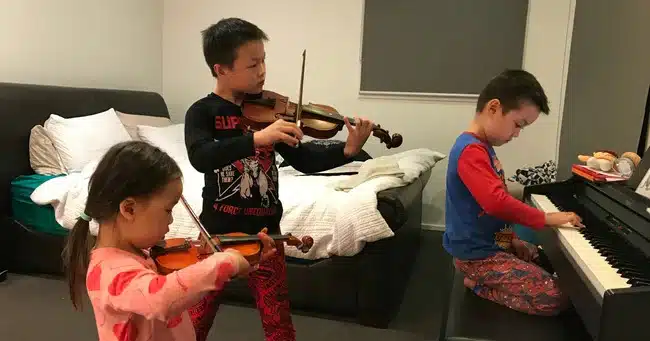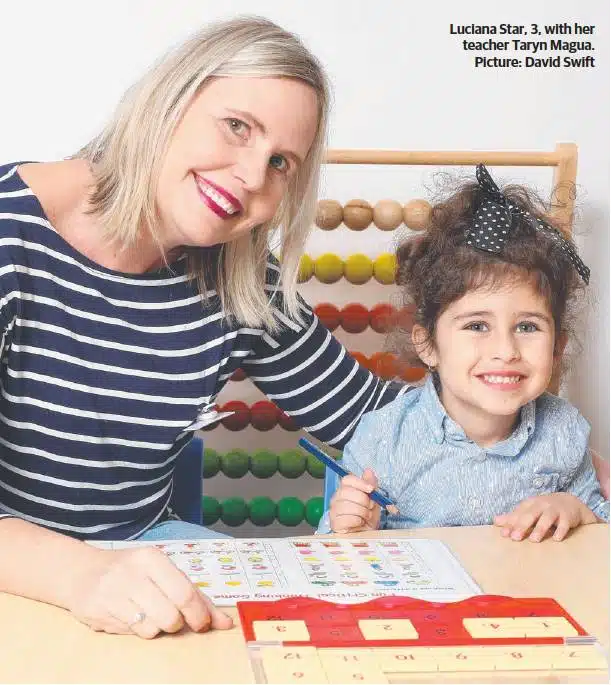

Charles Ho with his mum at a Shichida early years class. Picture Tony Gough
Shichida Featured in the Daily Telegraph: Why Families Are Starting Early
By Nieve Walton
Learning begins long before school. Shichida Australia was recently featured in the Daily Telegraph in an article examining why more families are choosing learning programs for their children before they start school.
The article, titled “Genius in nappies: The parents who start education lessons for their babies as early as nine months old” follows families attending Shichida classes and examines the growing interest in early childhood learning.
But what actually happens in a Shichida class, and why do some families begin when their child is still a baby?
Learning begins long before school
A child’s early years are an important period of growth. Before children can read, write or complete formal schoolwork, they are already developing their memory, concentration, language, coordination, confidence and ability to solve problems.
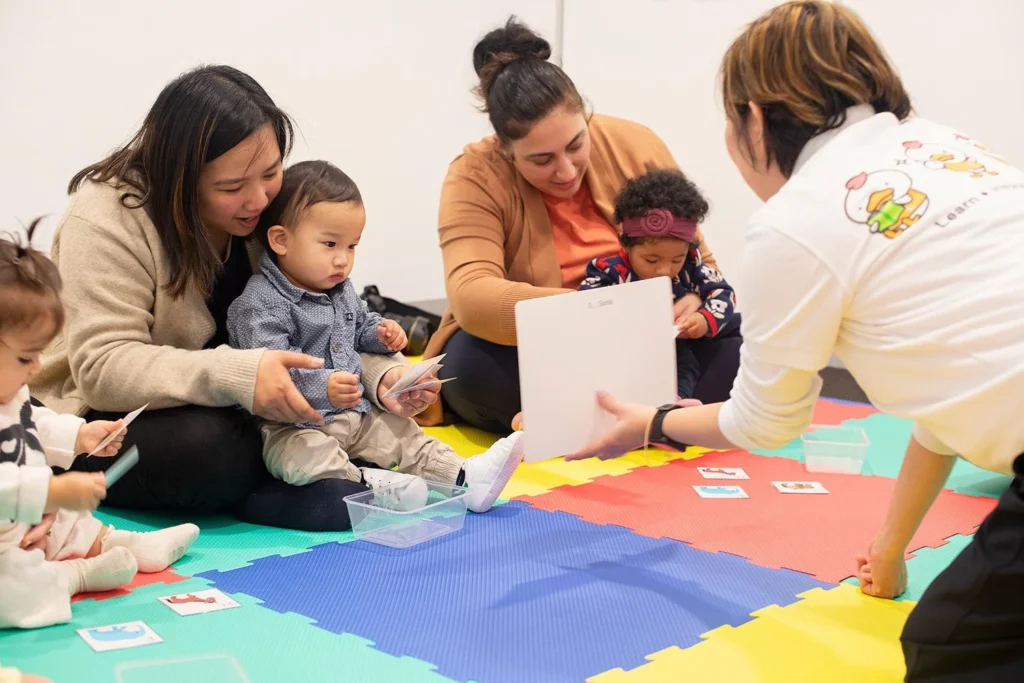
Shichida classes are designed to support this stage through short, fast-paced and age-appropriate activities completed together by a child and their parent.
Rather than recreating a school classroom for babies, the program introduces children to a wide range of learning experiences through play, repetition, music and parent interaction.
Activities may include:
- Songs and rhythm
- Flashcards and visual activities
- Memory games
- Puzzles and problem-solving tasks
- Numbers, letters, shapes and patterns
- Fine motor activities
- Imagination and creative thinking exercises
- Concepts such as size, colour, position and sequence
Each class includes a variety of activities to keep young children interested and actively involved.
It is not traditional tutoring for babies
The Daily Telegraph article notes that Shichida is not focused on formal academics or placing pressure on babies to perform.
Instead, the aim is to give children regular exposure to different concepts and learning experiences during a stage when their brains are developing rapidly.
Shichida Training and Quality Manager Marcelle Coetzee explained in the article that the program supports skills including memory, curiosity, confidence and problem-solving.
“For the babies especially, we are looking to expose them to as many topics and activities as we can,” she said.
The focus is not on testing children or expecting immediate results. Activities are introduced in a positive environment where children can participate at their own pace.
Parents take part in every class
One of the key differences between Shichida and many other learning programs is that parents attend and participate alongside their child.
This allows parents to see how their child responds to different activities and learn simple techniques they can continue at home.
For babies and toddlers, this shared experience is especially important. The parent provides reassurance and connection, while the teacher guides the activities and demonstrates how learning can be incorporated into everyday routines.
The classes are also an opportunity for families to spend focused time together without the distractions of work, household tasks or screens.
A full-circle Shichida family
The article features Melbourne parents Marie Kitano and Yoshi Saito, who both attended Shichida classes themselves while growing up in Japan.
When they became parents, choosing Shichida for their own child felt natural.
Yoshi attended Shichida between the ages of three and five. Although he does not remember every individual activity, he believes the experience supported his cognitive abilities and had a positive influence on his later life.
Marie now attends classes with their child, taking part in songs, flashcards, puzzles, number and alphabet activities, and exercises that introduce concepts such as big and small.
Their story represents a special full-circle moment: former Shichida students now returning to the program as parents.
Supporting skills children use beyond the classroom
Shichida is designed to work alongside childcare, preschool and school rather than replace them.
Schools must naturally focus on curriculum requirements and the needs of an entire class. Shichida provides additional opportunities to practise broader skills such as:
- Thinking flexibly
- Remembering and recalling information
- Concentrating on short activities
- Working through challenges
- Expressing ideas
- Using imagination
- Building confidence when trying something new
These are skills children can use across many areas of learning and daily life.
Building a positive relationship with learning
For many Shichida families, the goal is not to push children ahead or prepare them for a particular test.
It is to help children associate learning with enjoyment, connection and curiosity from an early age.
The article also shares the story of Lejla Sinanovic, who began Shichida before turning one and continued into primary school. Her father, Amir, said he wanted her to love learning, meet other children and grow in confidence.
Now a teenager, Lejla is involved in the NSW Education Minister’s Student Council and volunteers with different organisations. Her family credits her early experiences with helping to build a strong and positive attitude towards learning.
Is starting early necessary?
Every child and family is different, and parents should choose activities that suit their child’s personality, routine and wellbeing.
Starting early does not mean filling every day with structured lessons. Young children still need rest, free play, family time and opportunities to develop naturally.
A well-designed early learning program should feel engaging and age-appropriate rather than demanding. It should support the child’s confidence and independence, not create pressure or reliance.
At Shichida, the aim is to provide a warm environment where parents and children can learn together while building skills that may support them throughout childhood.
Read the Daily Telegraph article
Read the full Daily Telegraph feature to learn more about the families attending Shichida and the growing interest in early learning programs for babies and young children.