Key Takeaways
- In the first five years, children’s brains form connections rapidly as they interact with the people and world around them.
- Young children learn through warm relationships, play, sensory experiences, language and repetition.
- A child may show what they know through recognition, imitation or action before they can explain it in words.
- Rich early experiences are valuable, but children do not need every moment filled with structured learning – it is best to strike a balance between guided play and free play.
- The Shichida Method brings several ways of learning together through short, varied activities shared by parent and child.
Young children learn continuously – through their relationships, senses, observation of adults and children around them, movement, play and repeated experiences. Their earliest years are also a time of particularly rapid brain development.
Understanding how young children learn can help you support your child without turning childhood into a race. It can also explain why early learning often looks very different from school.
Designed for families with children up to 5 years old.

Quick Answer: How Do Young Children Learn?
Young children learn through responsive relationships and active experiences. Talking, playing, reading, singing, moving and exploring allow them to connect new information with what they already know. Repetition strengthens these connections, while warm interaction helps children feel secure enough to take an interest, participate and try again.
During the first five years, this learning happens alongside rapid brain development. Children might recognise, imitate or use something they have learned before they can describe their understanding in words.
Why Are the First Five Years Important for Child Development?
Development includes much more than physical growth. It also covers language, thinking, movement, behaviour, emotions and social skills – and these areas influence one another.
The Raising Children Network explains that children’s brains develop connections faster in the first five years than at any other time. HealthyWA similarly describes the first five years as a particularly important period of brain development.
The Center on the Developing Child at Harvard University reports that more than one million new neural connections can form every second during the first few years. Early experiences help shape which connections become stronger and more efficient. This ability of the brain to change in response to experience is known as brain plasticity.
This does not mean the first five years determine everything or that learning stops at a certain birthday. The brain continues to develop and change throughout life. The early years provide important foundations upon which later skills can be built.
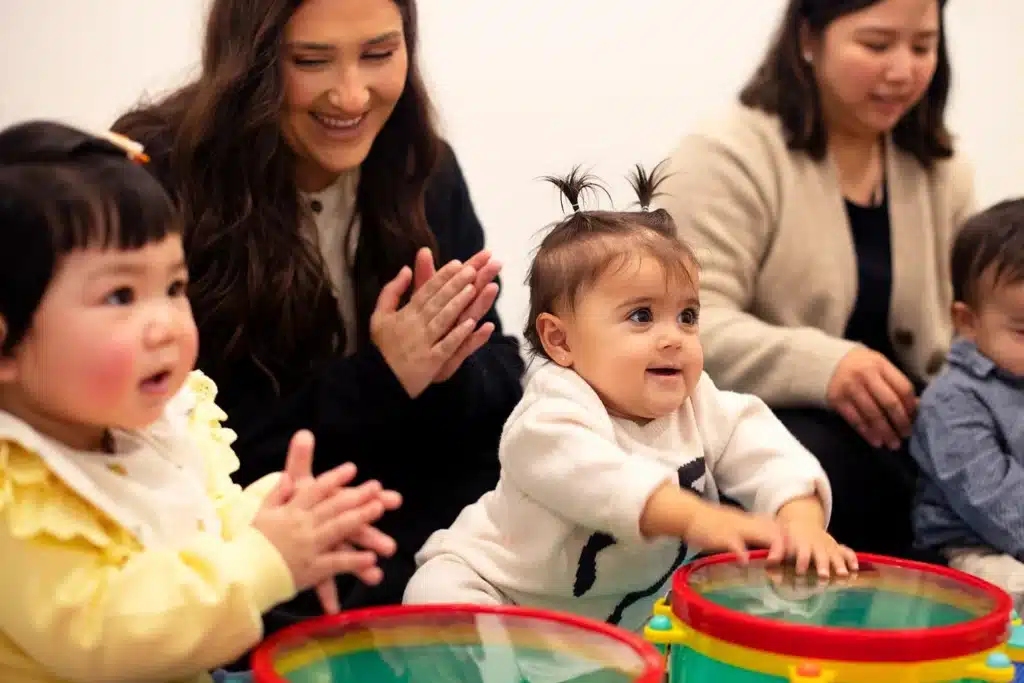
Photo by Shichida Australia, taken during a baby early learning class.
The Main Ways Young Children Learn
Young children do not separate learning into subjects in the way older students do. One simple activity can involve language, movement, memory, problem-solving and social interaction at the same time.
Through Relationships and Interaction
For babies and young children, learning begins within relationships. When your baby looks, babbles or gestures and you respond, they begin learning about communication, emotion and cause and effect.
These back-and-forth exchanges also help children feel safe and connected. Security does not guarantee that a child will participate in every activity, but it creates a strong setting for curiosity, attention and learning.
Through Their Senses and Movement
Young children use their whole bodies to investigate the world. They listen to voices and music, watch faces, handle objects, notice patterns and test what their bodies can do.
Sensory experiences become more useful when they are connected to interaction and meaning. A song with actions, for example, can combine sound, language, rhythm, memory, movement and shared enjoyment.
Through Play
Play gives children opportunities to observe, experiment, make choices and solve problems. Stacking blocks can develop coordination and spatial awareness. Pretend play can build language and flexible thinking. A simple game of taking turns can involve memory, self-control and social understanding.
Children also need room to follow their interests and attempt things independently. Adult guidance is valuable, but so is the chance to test an idea, make a mistake and try another way.
Through Repetition and Variety
Young children often want the same book, song or game again and again. Repetition helps them become familiar with sounds, words, movements and sequences. Each encounter can add another layer of understanding.
Variety is useful too. Seeing the idea of a circle in a picture, a plate, a wheel and a drawing helps a child apply the concept beyond one example. Effective early learning often combines familiar repetition with new ways to use a skill.
By Recognising Before They Can Explain
A toddler might identify an animal, remember a melody or follow a familiar sequence without being able to explain how they know it. This does not mean the learning is incomplete.
Language takes time to develop. Before children can give a verbal explanation, they may show their understanding by looking, pointing, choosing, copying, anticipating or using what they know in a new situation.
That is why observing what a child does can tell you more than repeatedly asking them to produce the correct answer.
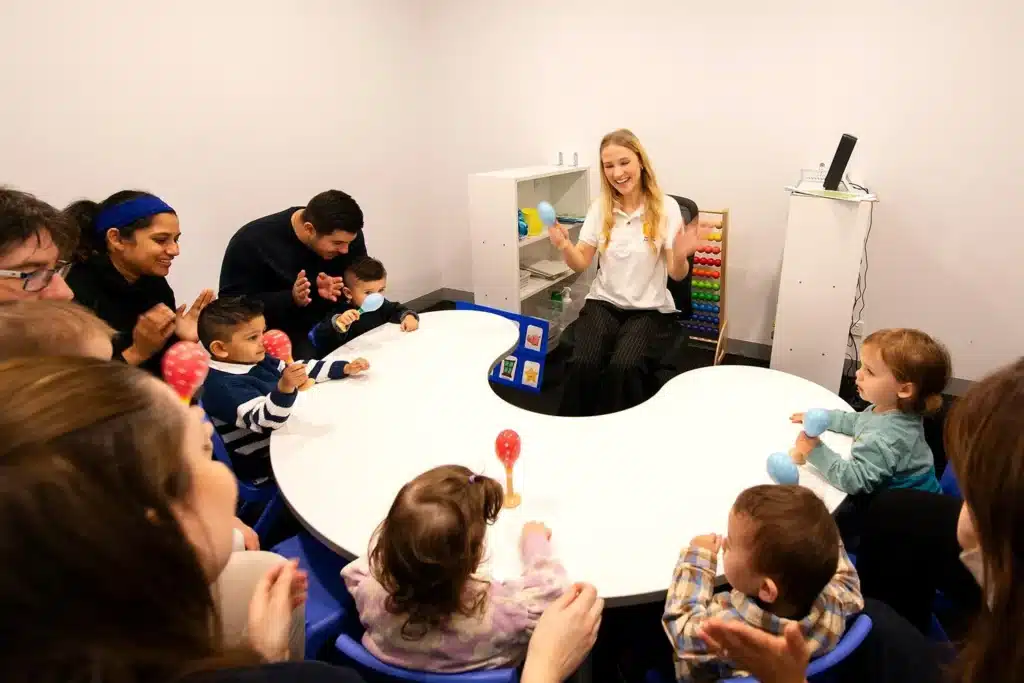
Photo by Shichida Australia, showing toddlers during musical play.
7 Signs Your Young Child May Be Learning
Progress can be subtle, particularly for babies and toddlers who cannot yet describe what they understand. The following behaviours can be possible signs that your child is noticing, remembering or applying something they have experienced.
1. They Anticipate What Comes Next
Your baby moves when a familiar action song begins. Your toddler looks towards the page where a favourite animal appears. Your preschooler prepares for the next step in a repeated game.
Anticipation can show that a child remembers a sequence and is beginning to predict what will happen next.
2. They Ask for the Same Activity Again
Adults often crave novelty, but young children commonly return to the same book, song, puzzle or pretend game. Each repetition gives them another opportunity to notice details, practise a response and become more confident.
Wanting to repeat something does not necessarily mean your child needs a harder activity. They may still be building understanding through familiarity.
3. They Copy Something Later
A child might not imitate an action when you first demonstrate it. Hours or days later, you may see the same action appear during play.
This delayed imitation can show that your child observed, remembered and retrieved the experience when it became relevant to them.
4. They Recognise an Idea in a New Setting
Recognising a circle on a worksheet is one step. Noticing circles in a plate, a wheel and a clock shows that the child is beginning to connect the concept across different examples.
This ability to use knowledge beyond the original activity is an important part of learning.
5. They Notice When Something Changes
Your child corrects a familiar lyric, notices that a picture is missing or pauses when the usual order changes. These reactions can show that they have formed a mental expectation and recognised the difference.
6. They Use What They Know During Play
Children often practise new language, ideas and social situations through play. A child serving pretend food, counting toy cars or retelling part of a story is bringing previous experiences into something they control.
This is one reason play can reveal understanding that does not appear when a child is questioned directly.
7. Their Participation Changes Over Time
Progress might look like watching for a little longer, joining one part of a song, attempting a task independently or returning after an unsuccessful try.
The change may be gradual. Looking across several weeks often gives a clearer picture than expecting an immediate result from one activity.
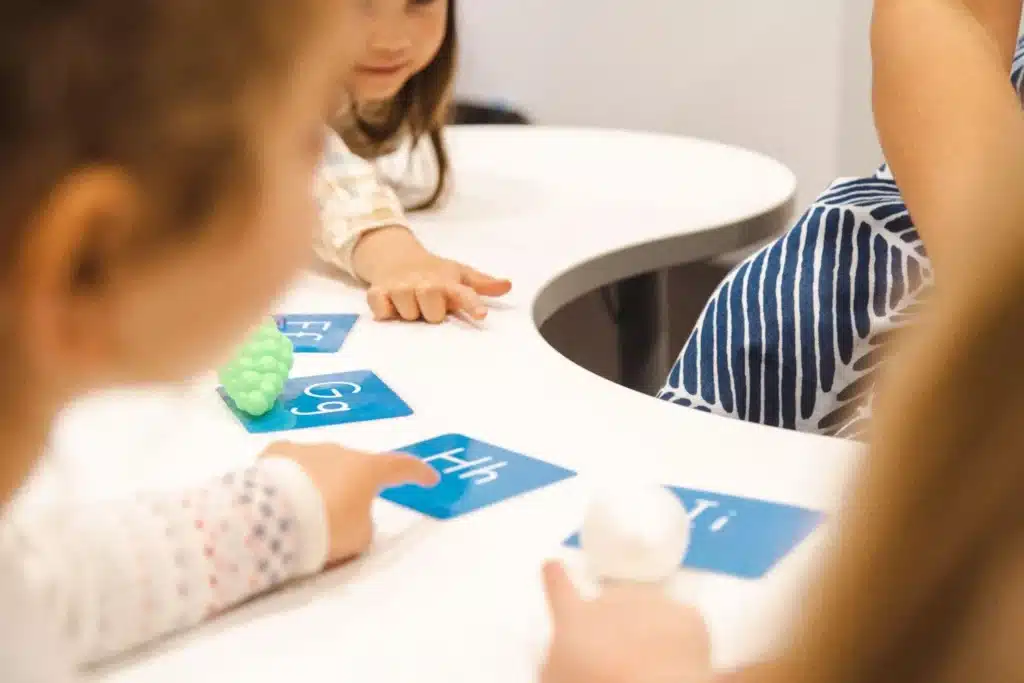
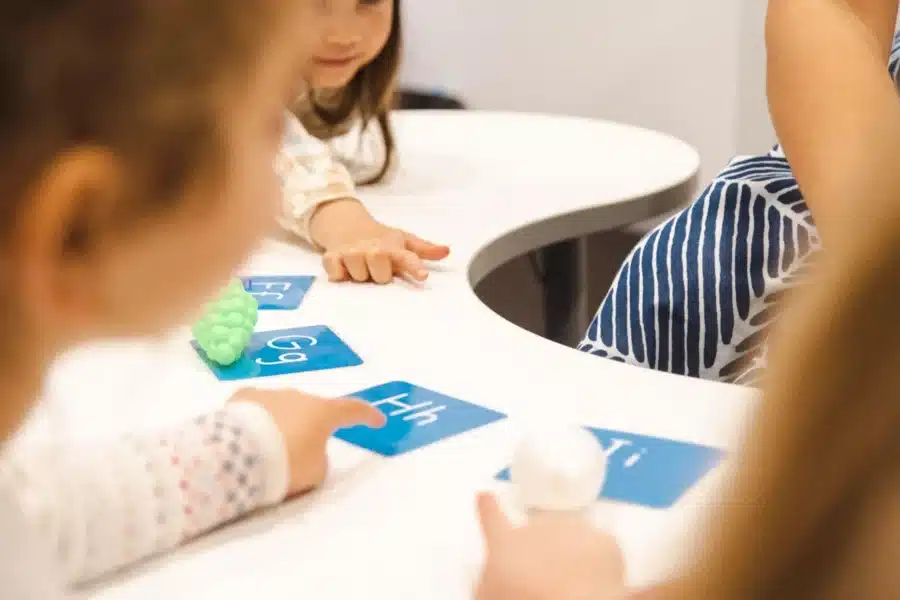
Photo by Shichida Australia, showing preschoolers playing a literacy game.
How Learning May Look at Different Ages
The following examples are a guide, not a developmental checklist. Use them as ideas for observing and interacting with your child rather than testing what they can do.
| Age | Learning may look like | Try this for five minutes |
|---|---|---|
| 6–12 months | Looking, reaching, responding to voices and anticipating familiar actions | Repeat a short action song and pause before a familiar movement |
| 1–2 years | Pointing, copying, matching and using early words or gestures | Name objects as your child places them into a container |
| 2–3 years | Sorting, pretending, following simple sequences and repeating phrases | Sort safe household objects by colour, type or size |
| 3–4 years | Asking questions, recalling events and using ideas during pretend play | Put three pictures or events into a simple sequence |
| 4–5 years | Explaining choices, following more steps and applying familiar rules in new ways | Make a prediction, test it together and discuss what happened |
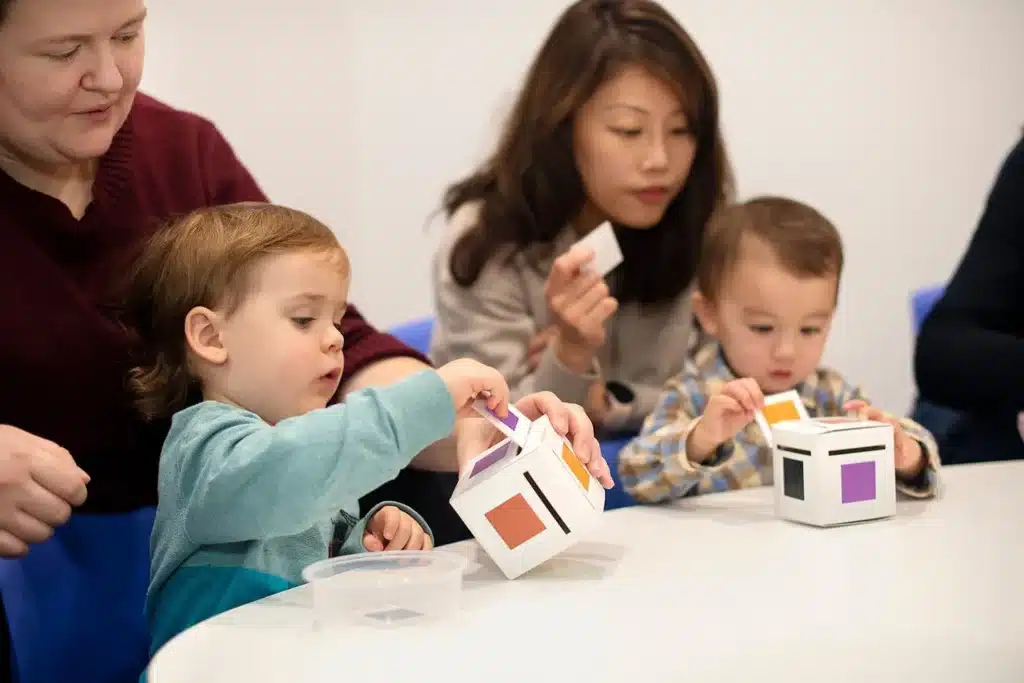
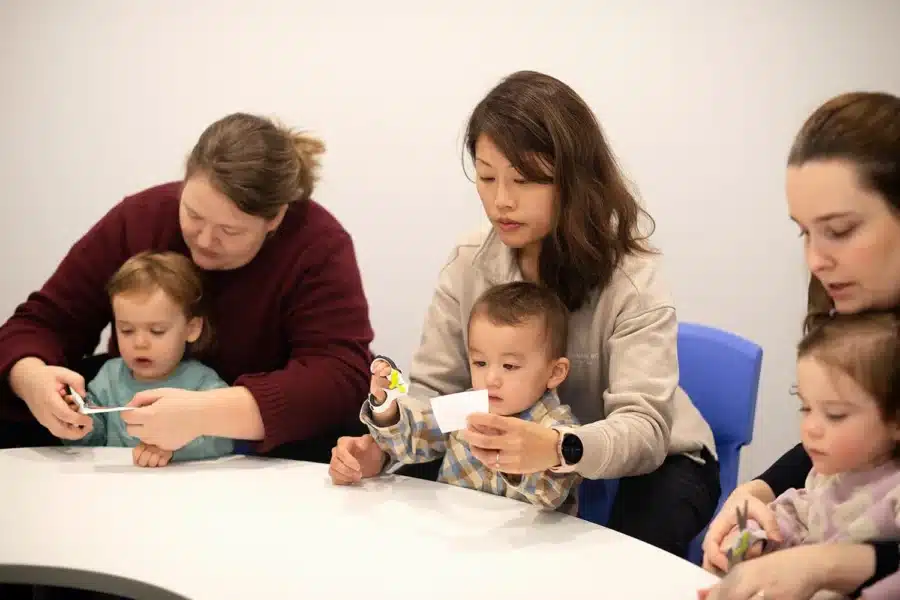
Photo by Shichida Australia, taken during a toddler early learning class.
What Does Shichida Mean by the Golden Period?
The Shichida Method was developed in Japan by Professor Makoto Shichida. Within the Method, the Golden Period refers to the particularly receptive first three years of life. Shichida Australia’s explanation of the Golden Period connects this stage with rapid development and children’s responsiveness to early experiences.
A Note About “Right-Brain Learning”
Shichida has historically used the term right-brain learning for intuitive, image-based and creative activities. This is language from the Shichida philosophy, not a claim that children learn with only one half of their brain. Modern neuroscience understands that both hemispheres work together across most complex activities.
In practice, Shichida’s approach is broader than a right-versus-left division. Shichida lessons combine memory, language, numeracy, creativity, movement, fine motor tasks, social interaction and emotional development. You can also read how Shichida compares with other early childhood education philosophies.
Interested in how this looks in practice? Try a Shichida Early learning Class – you and your child will love it! Perfect for ages 6 months to 5 years old. Book a class here.
How Shichida Classes Apply These Ideas
Shichida classes are planned around the understanding that young children can engage with many kinds of information when it is presented in brief, age-appropriate ways.
In a weekly 50-minute class, children move through a carefully ordered series of activities. Depending on their age and stage, these may include:
- songs, rhythm and movement
- vocabulary and language activities
- early literacy and numeracy
- Flashcards
- memory and matching games
- image and visualisation activities
- fine motor and problem-solving tasks
- relaxation and breathing
- Intuition Training
The pace comes from variety, not pressure. Activities change before they become drawn out, and skills are revisited in increasingly advanced ways as children progress through the program.
For children under five, a parent attends and participates. This gives the child reassurance and allows the parent to see how activities are presented, notice how their child responds and take useful ideas into everyday life.
What Learning Can Look Like in Class
Learning does not always look like sitting still, answering aloud or completing an activity perfectly.
A baby may watch briefly and respond to the same song weeks later. A toddler may look away but still anticipate what comes next. A preschooler may choose the correct answer without being able to explain their reasoning. Another child may need more repetition before their understanding becomes visible.
These responses are not identical, because children develop at different rates and show their learning in different ways. Teachers therefore look for progress over time rather than expecting immediate proof after every activity.
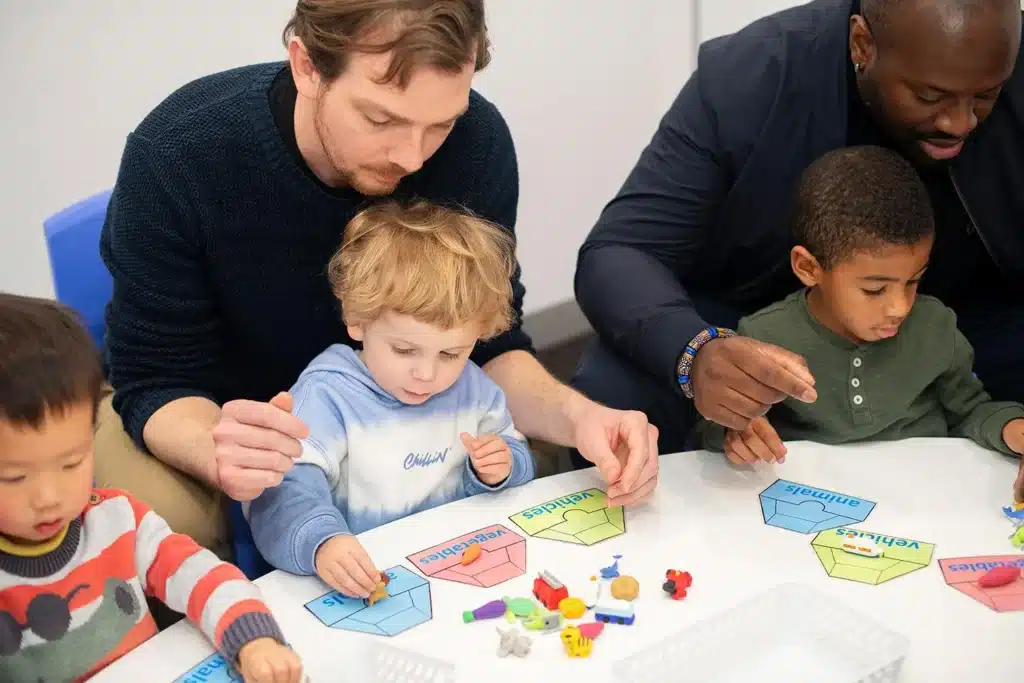
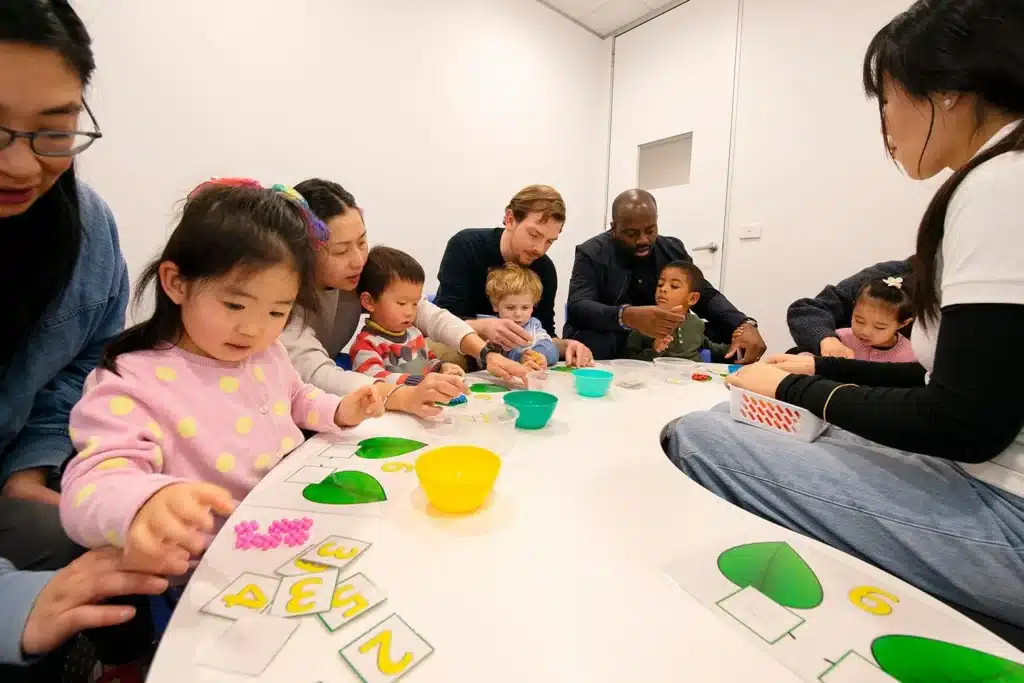
Photo by Shichida Australia, taken during a preschooler early learning class.
Simple Ways to Support Early Learning at Home
You can:
- talk about what you are doing during meals, bath time and travel
- respond when your baby looks, sounds or gestures towards something
- read together and let your child point, turn pages or join familiar words
- sing songs with rhythm, rhyme and actions
- count real objects as you tidy, cook or shop
- offer drawing, puzzles, construction and simple sorting activities
- provide time for active, sensory and imaginative play
- repeat favourite activities while occasionally adding a new challenge
- follow your child’s interest instead of testing them at every opportunity
- keep structured activities short and finish before they become stressful
The goal is to provide a warm, responsive environment with plenty of opportunities to communicate, play, practise and participate.
What If My Child Is Already Older Than Five?
No worries – they have not missed their chance to learn. Children continue developing throughout childhood, adolescence and adulthood. Each stage of child development brings different strengths and opportunities.
Older children generally become better able to use language, plan, reason, reflect and work through more complex steps. Early childhood is an important foundation, not a deadline or a guarantee of later outcomes.
Understanding the first five years should help parents recognise and support early learning – not create anxiety, comparison or pressure.
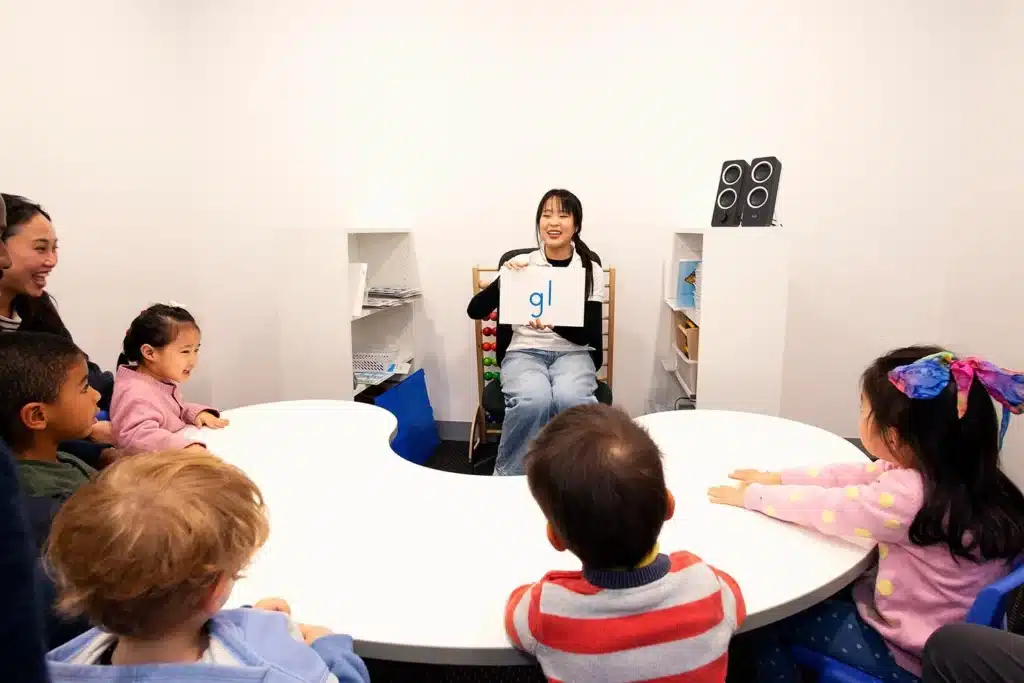
Photo by Shichida Australia, taken during a Shichida kinder early learning class.
See How Your Child Responds to Shichida
Shichida Australia offers weekly parent-and-child classes for babies, toddlers and preschoolers from six months old. Each 50-minute class brings together more than 20 brief activities designed to build skills such as memory, concentration, language, numeracy, problem-solving and confidence.
A trial lets you sit in on a real class with your child, take part in the activities and see how they respond. Find your nearest Shichida centre or book a trial class.
FAQs About How Young Children Learn
Young children learn through warm relationships, active play, conversation, movement, sensory experiences and repetition. They benefit from adults who respond to their interests, introduce useful language and provide age-appropriate challenges while leaving room for the child to participate, experiment and try again.
The brain forms connections particularly rapidly during the first five years. Experiences and relationships during this time help build foundations for language, thinking, movement, emotional development and social skills. The importance of these years does not mean development ends at five or that every outcome is fixed early.
Children do not need a school-style timetable to learn. Everyday conversation, shared reading, music, movement, play and responsive interaction all contribute to development. Some families also choose structured early learning programs like Shichida Australia, where activities are age-appropriate.
Repetition gives children repeated opportunities to notice, remember and use information. A familiar song, story or game can strengthen language, memory and anticipation. Repetition works best when it remains enjoyable and is combined with small variations that help children apply the same idea in different settings.
Look for recognition, anticipation, imitation and application. Your child might point to the right picture, copy an action, remember what happens next or use an idea during play. Verbal explanation is only one sign of understanding and may emerge after a child can demonstrate the skill in other ways.
The Golden Period is Shichida terminology for the first three years, when development is especially rapid and children are highly responsive to experience. It is part of Shichida’s educational philosophy.
Home provides the relationships, routines, conversation and play that shape a child’s everyday learning. Shichida adds a planned weekly sequence of varied activities, specialist materials and teacher guidance. Because parents attend classes for children under five, the classroom and home experiences can support one another.
Choose one shared activity and give it your attention. Read and talk about a short book, sing an action song, complete a puzzle or play a simple sorting or memory game. Follow your child’s responses rather than trying to fit several lessons into the time.
Repetition helps children notice, remember and practise information. A familiar song, story or game also allows them to predict what comes next and participate more confidently. Once the activity is familiar, a small change can help them use the same idea in a new way.