Key Takeaways
- In Melbourne, “preschool” usually refers to 3-Year-Old Kindergarten, 4-Year-Old Kindergarten, Early Learning Centres (ELCs), or kindergarten programs within long day care.
- Shichida Australia offers a structured early learning program for children from six months of age. Children who begin before age five may continue through the Primary School Program up to age nine.
- Comparing programs by curriculum, educator qualifications, parent involvement, schedule, and cost can make choosing easier.
- For some families, Shichida is their child’s main structured early learning experience before school. For others, it is used alongside kindergarten, childcare or home learning.
- A trial class is one of the best ways to decide whether an enrichment program suits your child and your family.
Designed for families with children up to 5 years old.
Searching for a preschool in Melbourne often starts with one simple question: which option is right for my child?
One provider talks about kindergarten, another calls itself an Early Learning Centre, and then there are long day care services and enrichment programs like Shichida. After comparing a few websites, it’s easy to wonder what each option actually offers and which one is the right fit for your child.
That’s exactly what this guide is here to help with.
You’ll learn how preschool works in Melbourne, what to look for when comparing different programs, and where Shichida fits into your child’s early learning journey.
Before going any further, it is worth clarifying that Shichida Australia offers a different model of early education from preschool, kindergarten and childcare. It provides a structured weekly program supporting cognitive, emotional, social, sensory and physical development. For some families, it is their child’s main structured early learning experience before school. For others, it works alongside kindergarten, childcare or home learning.
Quick Answer
Preschools in Melbourne typically refer to government-funded 3-Year-Old and 4-Year-Old Kindergarten, private Early Learning Centres (ELCs), and kindergarten programs delivered within long day care. Shichida Australia offers a distinct early learning model through structured weekly classes supporting sensory, cognitive, emotional and physical development. Children can begin from six months of age and must start before age five to continue through the Primary School Program up to age nine.
When comparing preschools in Melbourne, parents should consider the teaching approach, class size, schedule, parent involvement and the type of learning environment offered.
Understanding Preschool in Melbourne: Terminology Made Simple
If you’ve been comparing different providers, you’ve probably noticed that the words preschool, kindergarten, ELC, and childcare are often used interchangeably.
That can make choosing the right program surprisingly confusing.
In Victoria, though, these services aren’t exactly the same. Understanding the difference will help you compare your options more confidently and avoid choosing a program based on its name alone.
Most early childhood services also follow the Victorian Early Years Learning and Development Framework (VEYLDF), which recognises that young children learn best through play, relationships, and everyday experiences.
3-Year-Old Kindergarten (3YO Kinder)
If your child is approaching their third birthday, 3-Year-Old Kindergarten is likely to be one of the first options you’ll consider.
These government-supported programs usually run for between five and fifteen hours each week, depending on the provider. Rather than introducing formal lessons, your child learns through play while building confidence, communication skills, independence, and friendships.
For many children, it’s also their first chance to become part of a group learning environment.
4-Year-Old Kindergarten (4YO Kinder)
The year before your child starts Prep, they’ll usually move into 4-Year-Old Kindergarten.
Although learning is still play-based, there’s a stronger focus on helping your child develop the skills they’ll need for school, including communication, self-regulation and confidence.
Early Learning Centres (ELCs)
If your family needs longer hours, an Early Learning Centre may be a better fit.
Many ELCs care for children from infancy through the preschool years while also offering funded kindergarten programs. That means your child can enjoy both early learning and extended care in one place.
As you visit different centres, ask how children spend their day and what learning looks like in practice. Every provider has its own philosophy, so no two ELCs are exactly alike.
Long Day Care with Kinder Programs
If you’re balancing work and family life, long day care with a kindergarten program can offer extra flexibility.
Your child receives their kindergarten education while also benefiting from longer opening hours before and after the learning session.
When comparing providers, it’s worth checking theirNational Quality Standard (NQS) rating alongside factors such as educator stability, daily routines, and how they support children’s individual development.
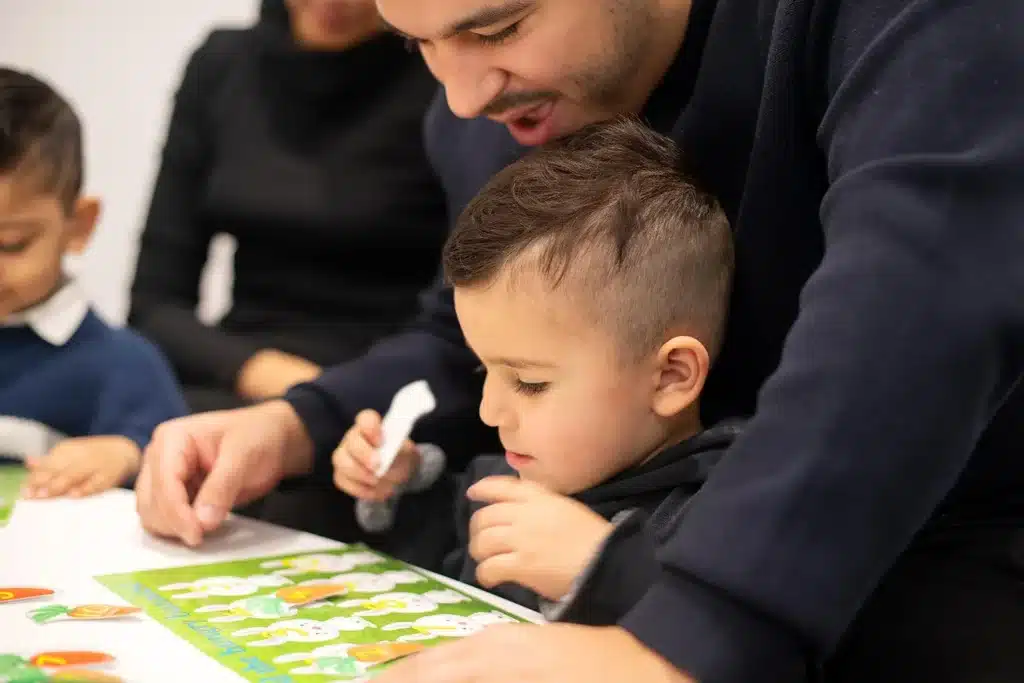
Image by Shichida Australia: Preschools in Melbourne can vary significantly, from sessional kindergarten and long day care programs to private Early Learning Centres. Here a preschooler and his dad completing a numeracy-based matching game in a Shichida class, building number recognition, problem-solving and confidence through parent–child learning.
Enrichment Programs
You may also come across enrichment programs while researching early learning options for your child.
Unlike childcare or kindergarten, these programs do not provide full-day care. Instead, they offer focused learning experiences designed to support important areas of development through structured, age-appropriate activities.
This is where Shichida fits.
Shichida Australia provides a comprehensive early learning program for children from six months of age, supporting cognitive, emotional, social, sensory and physical development.
Weekly parent-and-child classes include activities such as language, music, memory, numeracy, problem-solving, fine motor development and sensory learning.
For some families, Shichida is their child’s main structured early education experience before school. For others, it works alongside childcare or kindergarten. Either way, the program provides a purposeful learning environment where children build strong foundations and parents gain practical insight into how their child learns.
How Melbourne Parents Should Compare Preschool Options
Once you’ve narrowed your search to a few providers, the next question is usually, “How do I know which one is right for my child?”
Curriculum and Philosophy
Every preschool has its own approach to helping children learn.
You might come across play-based learning, Montessori, Reggio Emilia, Steiner, or the Shichida Method. Each philosophy is built on different ideas about how children develop, so there’s no single “best” approach.
Rather than asking which philosophy is the most popular, ask yourself:
- Does this approach suit my child’s personality?
- Will my child enjoy learning in this environment?
- Does it reflect the values that are important to our family?
Some children thrive in highly independent environments, while others benefit from more guided or collaborative experiences. The goal is to find a learning approach that feels like a good fit for your child, not simply the one with the biggest reputation.
Educator Ratios
The people supporting your child’s learning are just as important as the program itself.
It’s worth asking about educator-to-child ratios. While all regulated services must meet the national minimum requirements, some providers choose to keep smaller groups or have additional educators available. More individual attention can make a meaningful difference, particularly for younger children or those who need a little more support settling into a new environment.
NQS Rating (for Regulated Services)
If you’re comparing kindergartens or childcare services, check their National Quality Standard (NQS) rating.
You’ll usually see ratings such as:
- Exceeding National Quality Standard, meaning the service performs above the expected benchmark.
- Meeting National Quality Standard, meaning it meets Australia’s required quality standards.
- Significant Improvement Required, indicating that important improvements are needed.
These ratings provide a useful starting point, but they don’t tell the whole story. Visiting the centre, meeting the educators, and seeing how children interact can give you valuable insight that a rating alone can’t provide.
It’s also important to know that enrichment programs, including Shichida, aren’t assessed under the National Quality Standard because they aren’t childcare or kindergarten services. Instead, they’re best evaluated by looking at their teaching approach, lesson structure, and whether the program aligns with your family’s goals.
Hours, Days, and Schedule Flexibility
A program might sound perfect on paper, but will it fit comfortably into your week?
Government-funded kindergarten programs often run for set hours that may not line up with a typical working day. If both parents work, you may need before and after care or choose a long day care service that includes a kindergarten program.
As you’re comparing providers, consider questions like:
- Do the session times fit around work and family commitments?
- How much travel is involved?
- Will my child usually arrive well rested and ready to participate?
Choosing a schedule that works for your family is just as important as choosing the right educational approach.
Group Size and Mixed-Age Considerations
Every child learns differently, so it’s worth asking about class sizes and how children are grouped.
Smaller groups often allow educators to give children more individual attention and build stronger relationships with each family.
Some services also offer mixed-age groups. These can encourage younger children to learn from older peers while giving older children opportunities to build confidence and leadership skills. On the other hand, age-specific groups may provide activities that are more closely matched to children’s developmental stages.
Neither approach is better in every situation. It comes down to what suits your child.
Parent Involvement
Another important question to ask is how involved you’ll be in your child’s learning.
In most preschools and kindergartens, children attend independently while parents drop them off and collect them later.
Other programs take a different approach.
Shichida, for example, is built around parent-and-child learning. In Shichida’s Baby, Toddler and Preschool/Kinder classes, a parent or trusted caregiver participates alongside the child. Pre-Primary and Primary School Program students attend independently, with parents invited to scheduled observation sessions.
For some families, this shared experience becomes one of the program’s biggest strengths. Others may prefer a program where children learn independently. Neither option is right or wrong. It’s simply a matter of choosing what fits your family!
Cost and Funding
Cost is naturally part of the decision.
Victoria’s Free Kinder initiative has made 3-Year-Old and 4-Year-Old Kindergarten more affordable for many eligible families. Long day care and enrichment programs may involve private fees.
Instead of comparing prices alone, look at what’s included. Consider the length of the program, educator expertise, learning experiences, long-term outcomes and how well the service supports your child’s development.
Choosing the lowest-cost option isn’t always the best value if it doesn’t meet your family’s needs.
What an Enrichment Program Actually Is (and Isn’t)
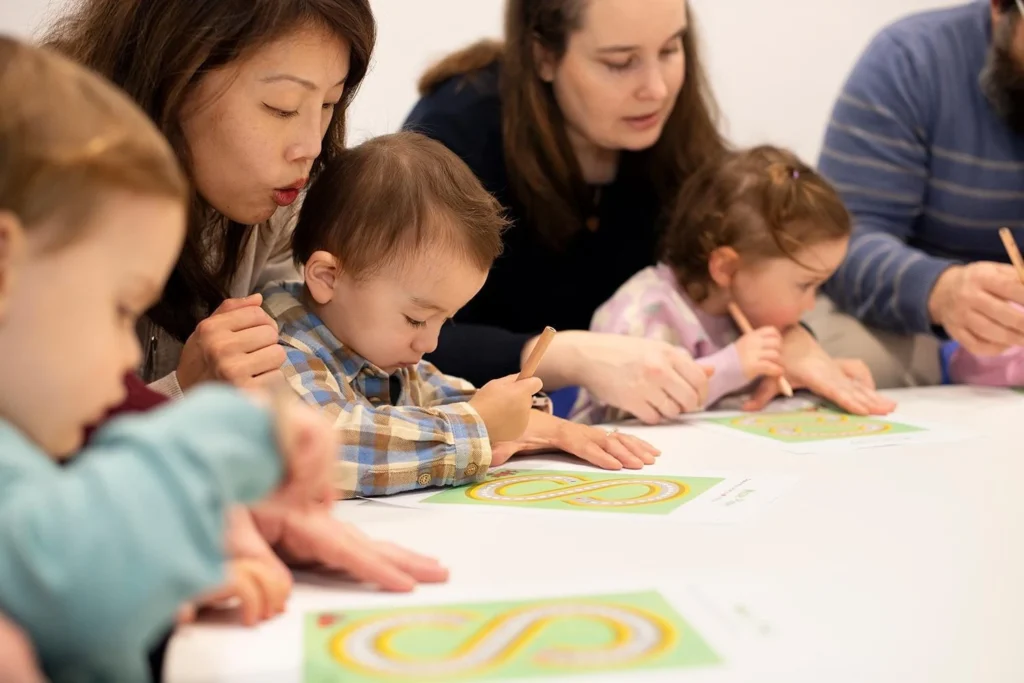
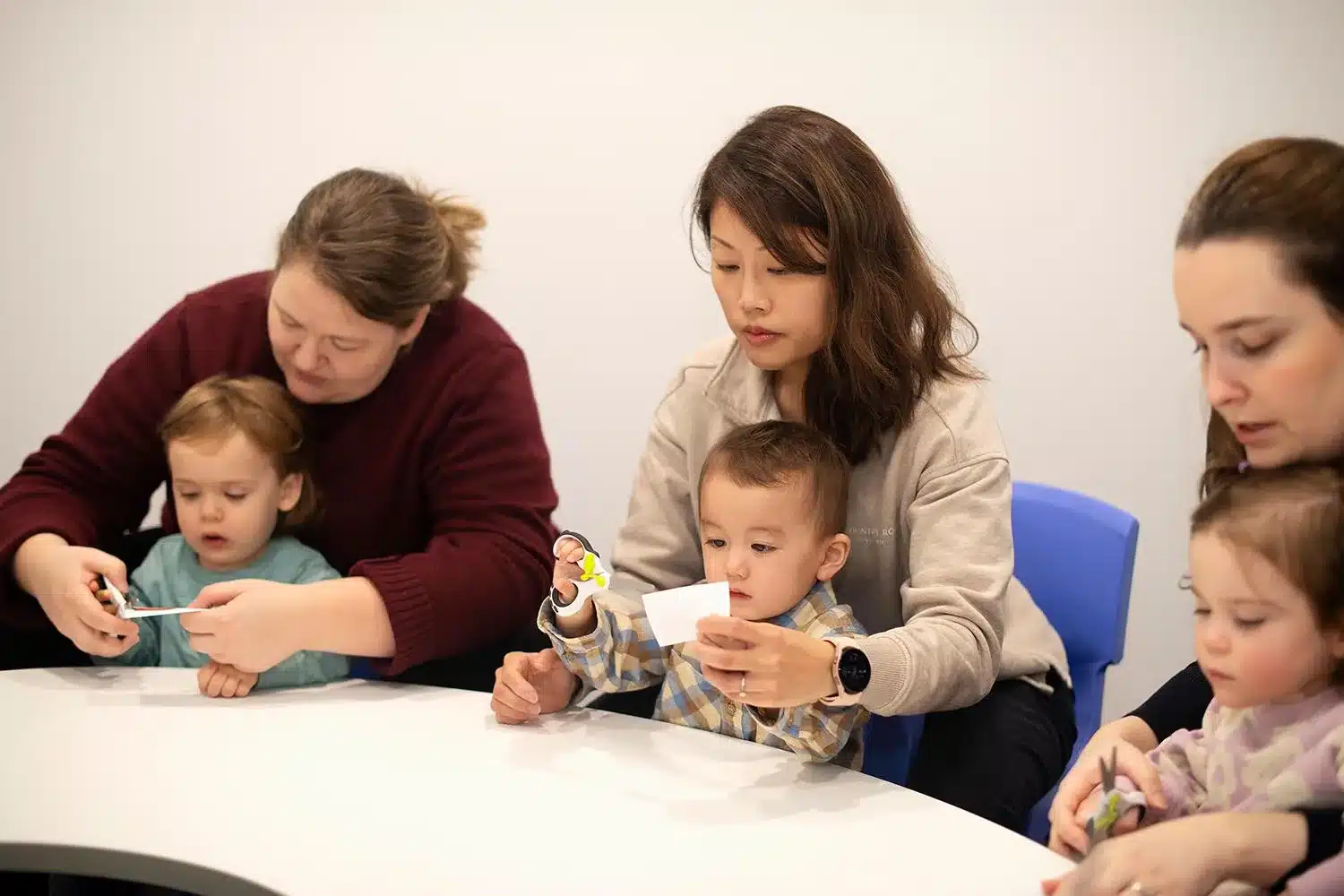
Image by Shichida Australia: Families researching preschools in Melbourne may also consider structured early learning programs such as Shichida, either as their child’s main learning experience or alongside kindergarten and childcare. Shichida offers a fun and unique structured enrichment experience that supports children alongside a parent each.
How Enrichment Differs from Preschool
Preschool and enrichment programs offer different types of early learning experiences.
Preschool usually provides longer sessions focused on play, social interaction, routines and growing independence in a group environment.
A structured enrichment program provides a more concentrated learning experience. Sessions may be shorter and held weekly, but they can intentionally support a broad range of skills, including memory, language, numeracy, creativity, concentration, problem-solving and emotional development.
Shichida Australia is a comprehensive early learning program rather than simply an optional activity. For some children, it is their main structured learning experience before school. For others, it is used alongside childcare or kindergarten.
The right choice depends on your child, your family’s needs and the type of learning experience you value.
What Enrichment Programs Typically Include
Every enrichment provider has its own approach, but programs often include activities such as:
- sensory play
- cognitive games
- music and rhythm
- language exposure
- memory activities
- fine motor development
- social and emotional learning
Some programs place greater emphasis on creativity, while others focus more on cognitive development or parent-child interaction.
The methods may vary, but the goal is similar: to give children guided opportunities to learn through engaging, age-appropriate experiences.
Why Melbourne Families Choose Enrichment
Every family has different reasons for adding an enrichment program to their week.
Some parents are looking for a consistent, structured learning experience beyond what everyday life provides. Others want to support specific developmental milestones or enjoy having dedicated learning time together.
For many families, it’s also a chance to strengthen the parent-child relationship through shared activities that can continue long after the class has finished.
Structured early learning can work alongside everyday play by giving children focused opportunities to practise a broad range of skills.
Where Shichida Fits in the Melbourne Preschool Landscape
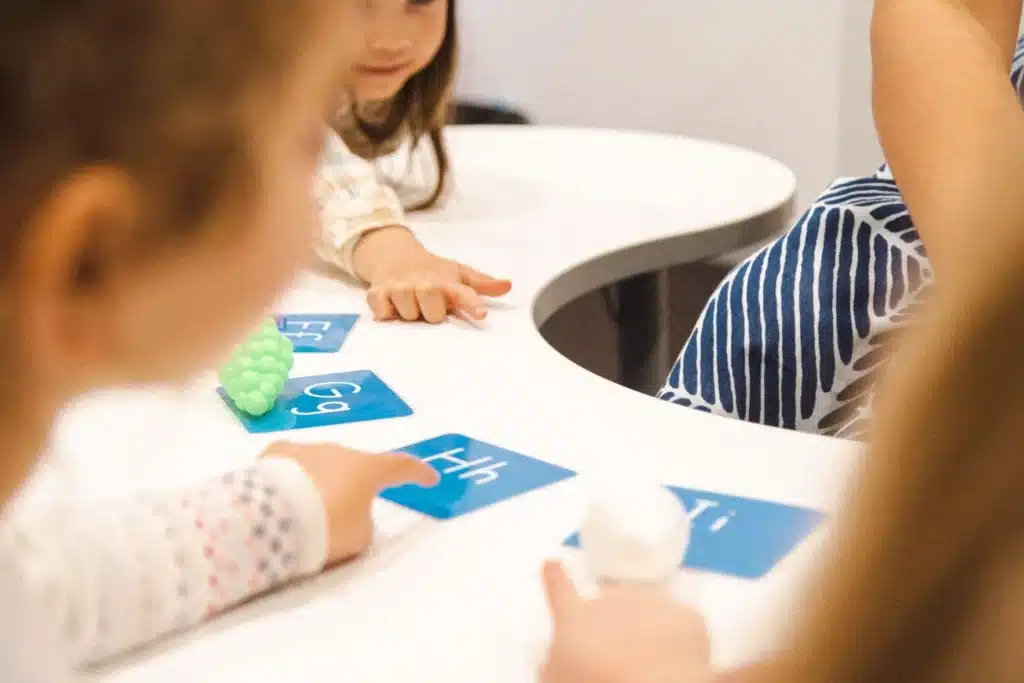
Image by Shichida Australia: Children playing a group phonics game in a Shichida class, matching objects to their starting sounds while building letter recognition, vocabulary and cooperation.
Shichida offers a different model of early education from kindergarten, a general Early Learning Centre or long day care.
Rather than providing full-day care, Shichida delivers a structured once-a-week program designed to support cognitive, emotional, social, sensory and fine motor development through a broad range of age-appropriate activities.
For some families, Shichida is their child’s main structured early learning experience before school. For others, it forms part of a broader routine that may also include kindergarten, childcare or learning at home.
What makes Shichida distinct is its whole-child approach, fast-paced variety and strong parent involvement. Each class gives children focused opportunities to develop memory, language, numeracy, creativity, concentration, problem-solving and confidence while parents learn how to support these skills at home.
What Shichida Is
Shichida Australia is a structured early learning program based on the internationally recognised Shichida Method, which was developed in Japan over 65 years ago.
Each lesson is designed to engage young children through a variety of carefully planned activities that encourage cognitive development, sensory learning, language exposure, memory, music, creativity, and emotional connection. Rather than focusing on one skill, each class introduces multiple short activities to suit the way young children naturally learn.
The Shichida early childhood classes run for 50 minutes once a week. The concentrated format allows children to experience a broad range of carefully planned activities within each lesson.
What Shichida Is Not
Understanding what Shichida isn’t is just as important.
It isn’t a daily preschool. It isn’t a government kindergarten program. It isn’t a childcare service.
Children don’t attend for full days, and parents don’t drop them off before returning later.
In the early childhood program, each lesson is attended by both the child and a parent or trusted caregiver. Primary School Program students attend independently.
Shichida’s Melbourne Presence
If you’re looking for Shichida Melbourne, you’ll find centres across metropolitan Melbourne, making the program accessible to families in different parts of the city.
Children can begin the Shichida program from six months of age and must enrol before turning five. Those who begin earlier may continue through the Primary School Program up to age nine.
Activities are tailored to what children are ready to learn at each age, whether they’re babies just beginning to explore the world or primary school students developing more advanced thinking skills.
As locations and class availability can change, it’s worth checking the Shichida Australia website to find your nearest Melbourne centre.
The Shichida Method in Brief
The Shichida Method was developed by Professor Makoto Shichida after decades of research and practical experience in early childhood education.
Today, the method is taught in multiple countries around the world and is built around the idea that children’s early years provide valuable opportunities for learning through meaningful experiences.
Lessons combine sensory stimulation, memory activities, language exposure, music, visualisation, and parent-child interaction within a structured program that progresses as children grow.
Rather than encouraging children to memorise facts or learn academic content early, the method focuses on nurturing curiosity, confidence, concentration, communication, and a lifelong enjoyment of learning.
This makes Shichida a distinct early education pathway that can form a central part of a child’s learning routine or work alongside kindergarten, childcare or home learning.
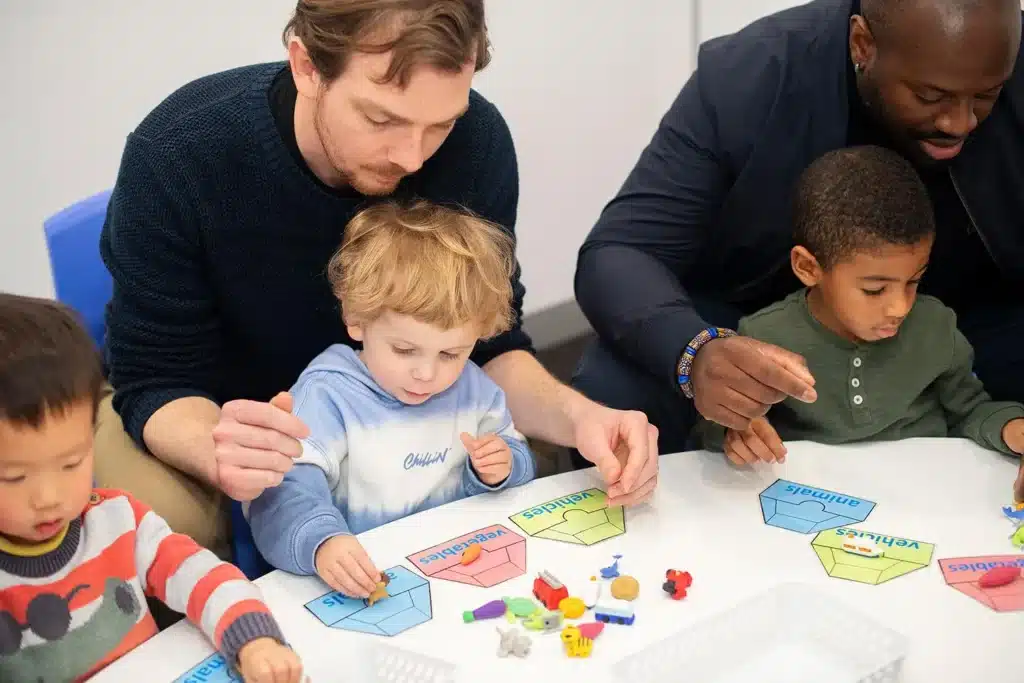
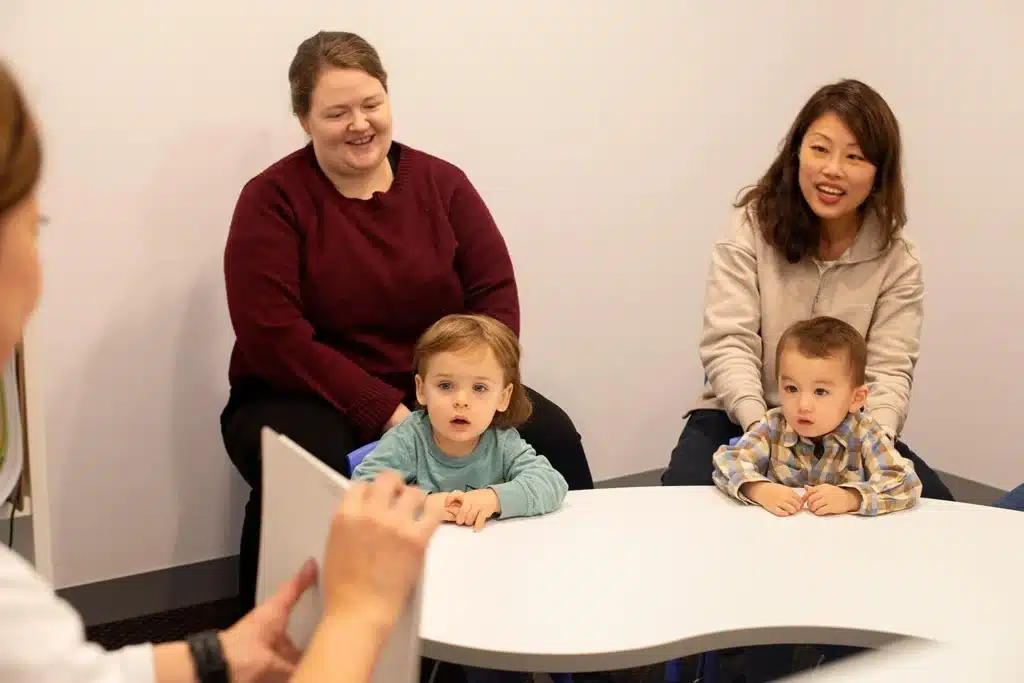
Image by Shichida Australia: Preschoolers playing a category-matching game with their parents in a Shichida class, building vocabulary, critical thinking, communication and parent–child connection.
How Shichida Compares Across the Criteria That Matter
Curriculum Philosophy
The Shichida Method combines sensory activities, right-brain learning principles, memory exercises, language exposure, music, imagination, and parent-child interaction within a structured lesson. Activities are carefully sequenced according to children’s developmental stages, allowing learning to build over time.
Session Format and Hours
Most kindergarten programs involve children attending for several hours across multiple days each week.
Shichida early childhood classes run once a week for 50 minutes, while Primary School Program classes extend to 90 minutes.
Educator Qualifications
Shichida instructors complete specialised training in the Shichida Method, enabling them to deliver the program consistently across different age groups.
Parent Involvement
This is one of Shichida’s biggest points of difference.
At preschool, your child usually learns independently with educators while you drop them off and collect them later.
At Shichida, you attend every lesson together up to age 5.
That shared experience allows you to observe your child’s progress, understand the activities, and continue many of them at home. For many families, those everyday moments outside the classroom become just as valuable as the lesson itself.
Age Range
Most preschool programs finish once children begin primary school.
Shichida continues from infancy through to 9 years of age, allowing children to keep building on the skills they’ve developed during their early years.
For families looking for continuity beyond preschool, this can be an appealing advantage.
Group Size
Shichida lessons are delivered in small, age-grouped classes of six kids per class, allowing instructors to engage with each child while maintaining an interactive learning environment.
Smaller groups also make it easier for children and parents to participate actively throughout the session.
Cost Model
Unlike government-funded kindergarten programs, Shichida operates as a private, term-based enrichment program.
Rather than paying for daily education or childcare, families invest in a weekly structured learning experience.
Comparison at a Glance
| Criterion | Traditional Preschool / Kindergarten | Shichida Australia |
|---|---|---|
| Attendance | Multiple days each week | One 50-minute session each week |
| Parent involvement | Children attend independently | Parent attends early childhood classes; primary students attend independently |
| Age range | Generally 3 to 5 years | Start from 6 months and before age 5; continue up to age 9 |
| Funding | Government-funded or private | Private, term-based enrolment |
How to Combine Preschool and Shichida in Your Week
One of the most common questions parents ask is, “How would this fit into our week?”
With one structured class each week, Shichida can form a consistent part of your child’s early learning routine without adding another full-day commitment. Many Melbourne families find it’s easy to schedule as part of the weekly family routine.
The key is choosing a time when your child is well rested, alert, and ready to participate.
For Families with a Child in 3YO Kinder
If your child attends 3-Year-Old Kindergarten two or three days a week, Shichida can fit comfortably on a non-kinder day.
For example:
- Monday:Home activities
- Tuesday:3YO Kinder
- Wednesday:Outing to a local park
- Thursday:3YO Kinder
- Friday:Shichida morning class, followed by grocery run
- Saturday:Family time
- Sunday:Family time
This balance gives your child plenty of opportunities to learn while still leaving room for rest and unstructured play.
For Families with a Child in Long Day Care
If your child attends long day care during the week, a Saturday Shichida class may be the most practical option.
Saturday classes are often in high demand, so families are encouraged to join the waitlist early to improve their chances of securing a suitable time.
Some families also choose to have a grandparent, aunt, uncle or another trusted family member attend class with their child. This can become valuable bonding time and, for many extended family members, a much-loved part of the week.
For Families with a Child at Home Full-Time
Shichida can provide a consistent and comprehensive early learning experience within your weekly routine.
Each structured class introduces your child to a wide range of activities supporting language, memory, numeracy, creativity, concentration, problem-solving, sensory development and fine motor skills.
Because parents participate in class, they also have the opportunity to observe how each activity is introduced, how the teacher responds to the child and how learning is guided in a positive, age-appropriate way. This makes it easier to repeat similar techniques, language and activities at home with greater confidence.
Families can build on this learning through everyday conversations, reading, sensory play, visits to the park or library and community activities. This creates a flexible early education approach that combines purposeful weekly instruction with the valuable learning that happens naturally at home.
For Families with Multiple Children
Managing activities for more than one child can be challenging.
Because Shichida offers age-grouped classes, many families enrol siblings on the same day where schedules allow. This can make weekly planning simpler while giving each child access to a program designed for their stage of development.
There is also a sibling discount on enrolment fees when enrolling more than one child at Shichida.
Try this today: If you’re curious about how Shichida could fit into your family’s routine, consider booking a trial class. Seeing a lesson in person is often the easiest way to decide whether the program is right for your child and family.

Image by Shichida Australia: Shichida provides a structured weekly learning program that grows with children from infancy through the primary years.
Shichida Beyond Preschool: The Primary Enrichment Program
Many parents think about enrichment during the preschool years but aren’t sure whether it still has a place once their child starts school.
Shichida is designed to continue beyond preschool, supporting children as they move into primary school and face new learning challenges.
When Children Move from Preschool to Primary School
Starting school is an exciting milestone, but it’s also a big adjustment.
As classroom routines become more structured, children are expected to concentrate for longer, follow instructions, solve problems independently, and build stronger literacy and numeracy skills.
Shichida’s Pre-Primary and Primary School Programs build on the skills developed during the early years while introducing more advanced learning experiences.
What Changes in the Primary School Program?
As children grow, the Shichida program grows with them.
The Primary School Program places greater emphasis on memory and recall, language development, mathematical thinking, creative problem-solving and higher-level cognitive skills. Lessons continue to build curiosity, confidence, independence and a positive attitude towards learning.
Classes extend to 90 minutes and include up to eight students. Children attend independently, while parents are invited to observe during scheduled observation weeks.
The program also introduces more advanced activities, including speed reading, speed listening, debating, research, public speaking, creative writing, science experiments and complex memory challenges.
Activities become more age-appropriate and academically challenging, while still maintaining the creativity, variety and whole-child approach that children experienced in the earlier program.
At the end of the program there is a graduation ceremony, and many Shichida kids have gone on to do amazing things!
Look at some of the Shichida kids success stories here.
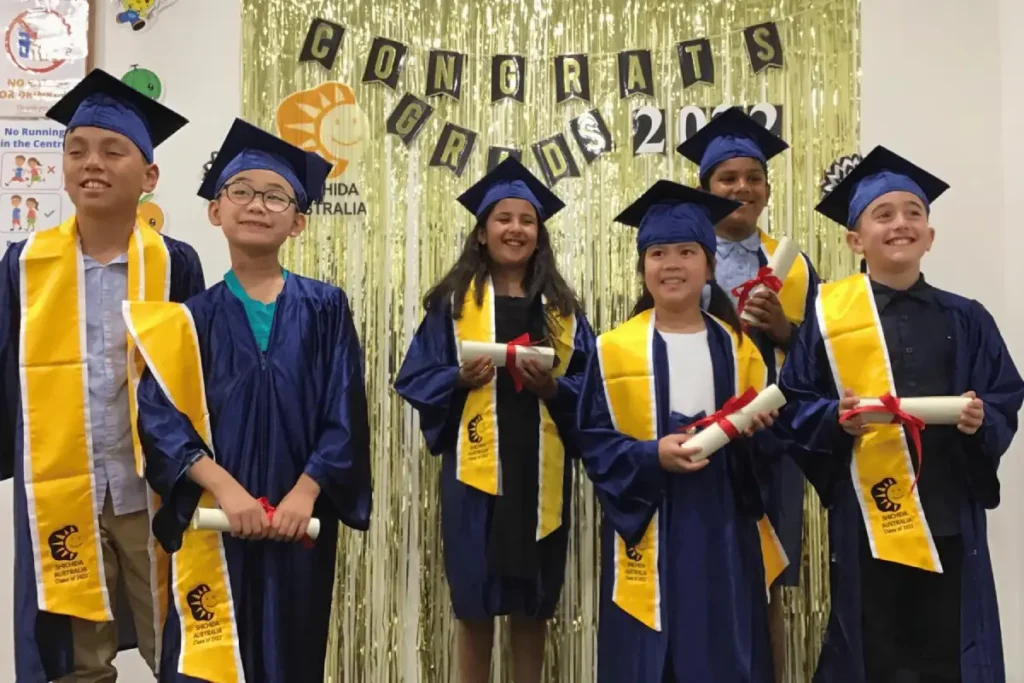
Image by Shichida Australia: Nine-year-old graduates celebrating the completion of the Shichida program after years of building memory, confidence, creativity and independent learning skills.
Getting Started with Shichida in Melbourne
If you are considering Shichida Australia, you can begin by finding your nearest centre and booking a trial class.
Find Your Nearest Centre
Visit the Shichida Australia website or find your nearest Melbourne centre.
What to Expect at a Trial Class
During a trial class, you’ll attend alongside your child and experience a typical lesson with already enrolled families. You’ll see how the activities are delivered, learn more about the Shichida Method, and have the opportunity to ask questions afterwards.
Enrolment and Term Structure
Shichida classes operate across four 10-week terms each year, with children placed in age-appropriate groups.
Families can enrol at any point during the term, subject to class availability. This means you do not need to wait until the beginning of a new term to get started.
Ready to experience the Shichida Method? Book a trial class today!
FAQ: About Shichida and Preschools in Melbourne, Australia
In Victoria, the terms preschool and kindergarten are often used interchangeably. Kindergarten usually refers to government-funded early childhood education for three- and four-year-old children, while preschool may be used more broadly to describe learning before primary school.
No. Shichida is not a preschool, kindergarten or childcare service. It is a structured early learning program delivered through weekly classes that support cognitive, emotional, sensory, social and physical development.
For some families, Shichida is their child’s main structured early learning experience before school. Other families choose to combine it with kindergarten, childcare or home learning. The best arrangement depends on your child’s needs and your family’s education and care requirements.
Kindergarten usually involves longer sessions focused on play, social interaction, routines and independence in a group setting. Shichida provides shorter, structured lessons with a wide variety of activities supporting memory, language, numeracy, concentration, creativity and problem-solving. Parents participate in the early childhood classes alongside their child.
Children can begin Shichida classes from six months of age and must enrol before turning five. Children who begin before age 5 may continue through the Primary School Program up to age nine.
New enrolments are generally not accepted after age five. Children who began the program before turning five may continue into the Pre-Primary and Primary School Programs.
A parent or trusted caregiver attends Baby, Toddler and Preschool/Kinder classes with the child. Pre-Primary and Primary School Program students attend independently, with parents invited to scheduled observation sessions.
Montessori often emphasises independence, practical life skills and self-directed learning. Reggio Emilia is known for child-led projects, creativity, collaboration and learning through the environment.
The Shichida Method uses structured, fast-paced lessons that include memory, language, numeracy, music, visualisation, problem-solving and fine motor activities. Parent participation is also a central feature of the early childhood program.
Shichida supports skills that contribute to school readiness, including concentration, listening, memory, language, confidence, phonic awareness, number sense, problem-solving and the ability to follow instructions.
Yes. Children who began Shichida before age five may continue through the Pre-Primary and Primary School Programs up to age nine. The later program includes activities such as advanced memory, mathematical thinking, research, writing, speed reading, debating and public speaking.
Shichida Australia has Melbourne centres in Doncaster, Glen Waverley and Highpoint. Class availability varies by location and age group.