Key Takeaways
- Learning to write the alphabet starts long before your child picks up a pencil. Scribbling, tracing, drawing, cutting and playing all help build the foundations for handwriting.
- Many children become interested in forming letters between four and six years of age, but handwriting develops gradually and every child progresses differently.
- Start with the letters in your child’s name before introducing the rest of the alphabet.
- Multi-sensory experiences such as sand writing, playdough letters and chalk drawing often build stronger letter formation than worksheets alone.
- Worksheets are most helpful once your child has developed pencil control and should always be balanced with hands-on play.
- Letter reversals are a normal part of learning and usually improve with time and gentle practice.
- The most important goal is helping your child become a confident learner who enjoys writing – do not aim for perfection.
When should children begin learning to write alphabet letters? Is it better to introduce pencils early, or wait until later?
Before children can form recognisable letters, they develop the skills they need through scribbling, drawing, cutting, building and everyday play.
Strong handwriting starts with these early foundations. In this guide, you’ll learn when children are typically ready to begin writing letters, the pre-writing skills that matter most, simple age-appropriate activities, practical letter formation tips, and how to support your child’s progress with confidence.
Quick Answer
Most children begin learning to write the letters of the alphabet between ages 4 and 6, after building foundational skills like mark making, pencil control and hand strength. Start with the letters in their own name, use hands-on, multi-sensory activities before introducing worksheets, and let progress happen gradually rather than according to a fixed timeline.
When Are Children Ready to Start Writing Alphabet Letters?
It’s natural to wonder whether your child is ready to start writing letters, especially before preschool or the first year of school.
Many parents are surprised to learn that age is not the best measure of writing readiness. Some children love letters early, while others focus on climbing, building or imaginative play first. Both are perfectly normal.
Rather than asking whether your child should be writing yet, focus on whether they’ve developed the skills that make writing easier, such as hand strength, coordination, fine motor skills, concentration and confidence.
Signs Your Child Is Ready
You might notice your child is ready to begin learning to write letters of the alphabet if they:
- Can hold a pencilor crayon with reasonable control
- Recognise some letters, especially the ones in their own name
- Enjoy pretending to write through scribbles or attempting to copy letters they see
- Can draw simple shapes like circles, crosses and lines – even if not straight lined
- Stay engaged in a seated activity for around three to five minutes
You don’t need to tick every box before introducing letters. These are simply signs that your child is becoming more confident with the skills writing requires.
Signs to Wait a Little Longer
It may be worth focusing on pre-writing activities first if your child:
- Gets tired quickly when drawing or colouring
- Becomes frustrated every time they hold a crayon or pencil
- Finds it difficult to control their grip or struggles to apply the right pressure for mark making
- Shows little interest in letters just yet
That doesn’t mean they’re behind.
It simply means their hands and muscles are still developing. Giving them more opportunities to play, create, explore and strengthen their hand muscles will go a long way.
Key Insight: Don’t let age become your measuring stick. A child who has spent months scribbling, cutting, squeezing playdough and building hand strength will often learn letter formation much more easily than a child who was pushed into worksheets before they were ready.
Designed for families with children up to 5 years old.

The Pre-Writing Skills That Make Alphabet Writing Possible
Every time your child paints, builds, cuts, strings beads or scribbles, they’re developing the skills they’ll eventually use to write confidently.
Think of these as the building blocks of handwriting. The stronger the foundation, the easier letter writing becomes.
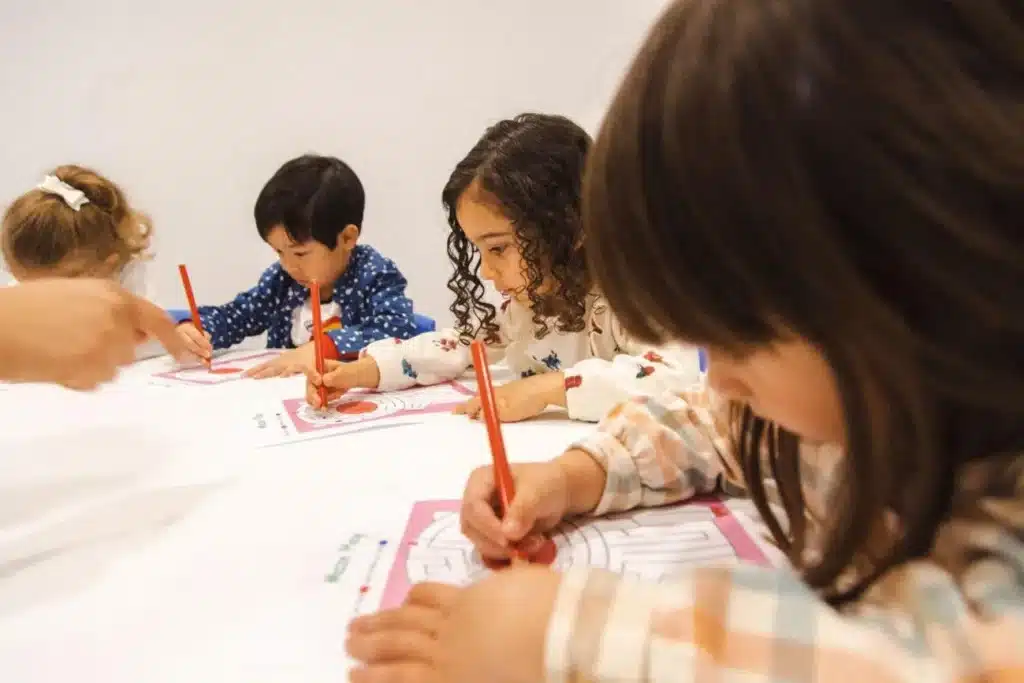
Image by Shichida Australia: Fine motor play and line drawing activities like completing mazes helps children build the skills needed for learning to write alphabet letters.
Mark Making
Before children write letters, they make thousands of marks. Scribbles, drawings, circles and zigzags are early writing practice that helps develop pencil control and confidence.
Encourage mark making through simple activities like drawing, painting, finger painting, drawing with chalk, scribbling on large paper, making patterns in sand or shaving foam, or painting with water outdoors. These simple activities help children enjoy expressing themselves on paper and strengthens hand and finger control.
Pencil Control
As your child’s confidence grows, encourage the small movements that form the basis of letter writing before introducing the alphabet.
Simple activities like tracing dotted lines, drawing straight and curved lines, completing mazes, connecting dots, colouring large shapes, and drawing circles, crosses and squares help build pencil control and make writing easier later on.
Scissor Control
Cutting helps strengthen the same muscles used for handwriting while improving coordination. Start with tearing paper, snipping playdough, cutting straight lines, then progress to curves and simple shapes. Keep it fun rather than focused on practice.
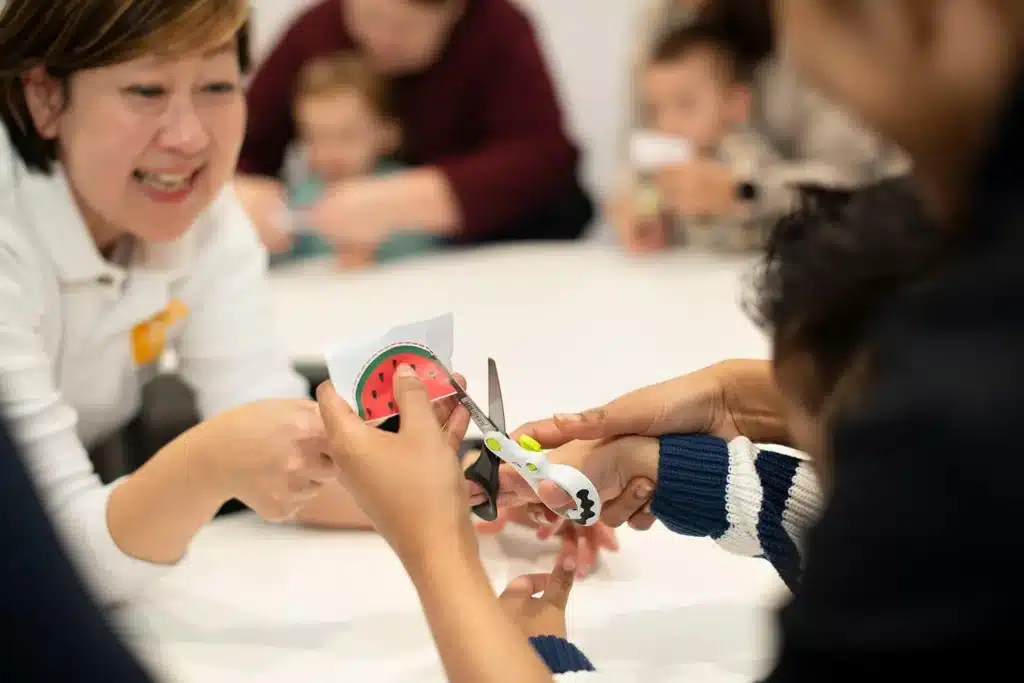
Image by Shichida Australia: A child cutting along a curved line with safety scissors alongside his mum, guided by a Shichida instructor, building hand strength, coordination and fine motor control for learning to write alphabet letters.
Hand and Finger Strength
Strong hands and fingers make it easier for children to hold and control a pencil. Simple activities such as squeezing playdough, using tweezers to pick up small objects, threading beads, clipping pegs, peeling and sticking down stickers, squeezing pipettes and tearing paper can all help build the strength needed for writing.
When these muscles are still developing, children may tire quickly once they begin writing. This can make handwriting feel uncomfortable or frustrating and may cause them to avoid writing activities. Building hand strength through play can help writing feel easier and more enjoyable.
Writing Readiness Activities by Age
Every child learns at their own pace, so try not to compare your child with friends, siblings or children you see online. Instead, focus on what they’re ready for right now.
The activities below will help you match your expectations to your child’s stage of development, making learning to write alphabet letters feel achievable rather than overwhelming.
2 to 3 Years: The Mark Making Stage
At this age, writing is all about exploration. Through scribbling, drawing and mark making, your child is developing the skills needed for writing later on.
Encourage activities like drawing with chunky crayons or chalk, finger painting, making patterns in sand or shaving foam, tearing paper for collages, and painting with water outdoors. The focus is on building confidence, coordination and creativity, not writing letters yet.
3 to 4 Years: Building Pencil Control
At this age, children begin making more purposeful shapes and drawings. Focus on pencil control through tracing lines, drawing simple shapes, dot-to-dot activities, cutting with child-safe scissors, threading beads, and playful letter recognition.
4 to 5 Years: From Letter Recognition to Letter Formation
Many children are ready to start writing, beginning with their own name. Try tracing letters in sand, making letters with playdough, drawing them in the air, and short writing activities of five minutes or less. Keep it fun and pressure-free.
5 to 6 Years: Building Confident Writers
As children prepare for or begin school, they’re usually ready to practise writing their name, both capital and lowercase letters, simple words, and handwriting on ruled lines. Progress takes time, so celebrate steady improvement rather than perfect handwriting.

How to Teach Letter Formation
Once your child is ready to start writing letters, it is tempting to work through the alphabet from A to Z. In reality, there is a more natural and motivating way to begin.
Before children can write letters confidently, they first need to become familiar with them. Recognising letters, hearing their sounds and noticing them in meaningful words all help prepare children for letter formation. The more meaningful writing feels, the more likely your child is to stay engaged.
Begin with Letter Recognition
Before expecting your child to write letters, spend time helping them notice and identify them. This might include singing the alphabet song, matching letters, learning letter sounds, spotting letters in books or recognising the letters in their own name.
These early literacy experiences help children become familiar with letter shapes and build confidence before they are asked to form them with a pencil.
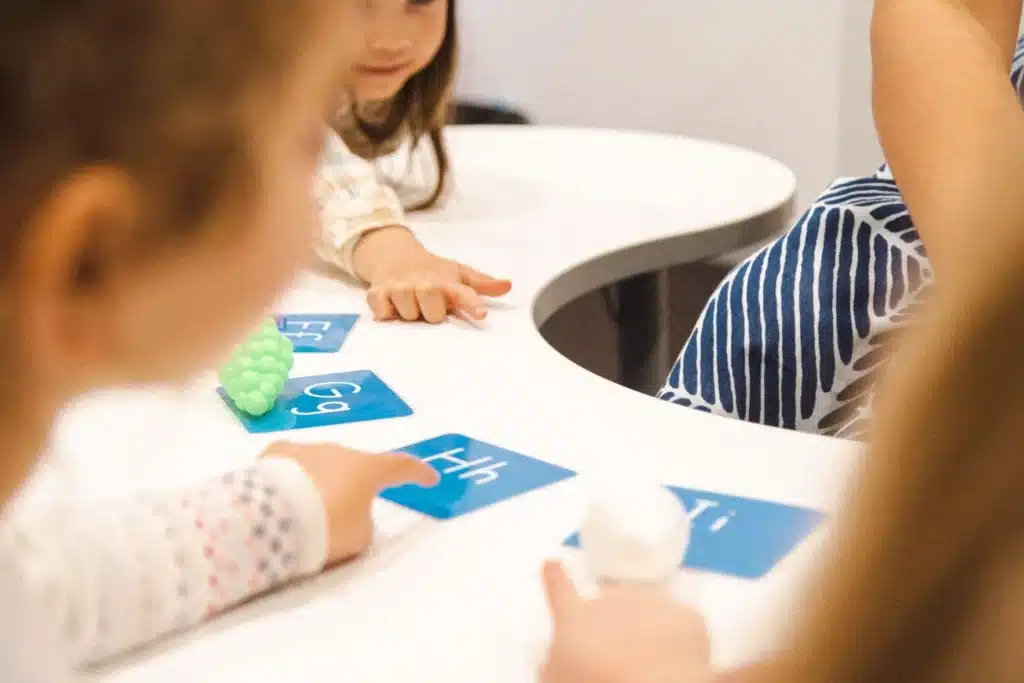
Image by Shichida Australia: Preschoolers playing a phonics matching game, building letter recognition, sound awareness, vocabulary and early literacy skills.
Start With the Letters in Their Name
If you could only teach your child one set of letters first, make it the ones in their own name.
Children often recognise their names long before they can read. Seeing those familiar letters on lunchboxes, artwork and labels gives them an immediate connection to writing.
Start with the first capital letter in your child’s first name, then introduce the remaining letters one by one before moving on to family names, favourite words or the rest of the alphabet. Children often make faster progress when the letters already have personal meaning.
Capitals First, Then Lowercase
Many parents wonder whether they should teach uppercase or lowercase letters first. Capital letters can be easier for some children to form because many are made with simple straight lines and basic curves.
Once your child feels confident with capitals, you can gradually introduce lowercase letters, especially as they prepare for Prep or Foundation.
Australian Handwriting Styles by State
Australia doesn’t have one national handwriting font, so worksheets from overseas or interstate may teach letter formations that differ from what your child will learn at school.
Handwriting styles vary between Australian states, school systems and individual schools. For example, Victorian schools commonly use Victorian Modern Cursive, while NSW public schools use NSW Foundation Style.
Generally, schools use:
- New South Wales: NSW Foundation Style
- Victoria, Tasmania, ACT and Northern Territory:Victorian Modern Cursive
- Queensland: Queensland Beginner’s Alphabet (Beginner’s Script)
- South Australia and Western Australia: SA/WA Modern Cursive
If you’re unsure, don’t worry.
Simple printed letters are perfectly suitable for home learning until your child’s school recommends a specific handwriting style.
Free Resource: Download Shichida Australia’s Alphabet Writing Worksheet Stage 1 for simple letter tracing practice to help your child build pencil control and writing confidence.
Looking for more early learning resources? Shichida has plenty!

Common Letter Formation Mistakes to Watch For
As your child learns to write, you will probably notice a few letters that do not look quite right. This is completely normal.
Common challenges include:
- forming a letter using several unnecessary strokes
- reversing letters such as b, d, p and q
- making letters different sizes on the same page
Try not to correct every mistake at once. Instead, focus on one letter or one small correction during each attempt.
It can help to sit beside your child and slowly model how to form the letter before inviting them to try. Guided learning is an important part of the Shichida Method. In class, the teacher first demonstrates the letter, then gives the child an opportunity to copy it with gentle guidance and encouragement.
Practice remains fun and pressure-free. The same letter may be revisited across several days using different experiences, such as flashcards, songs, sensory materials and writing activities. This allows the child to see the letter, hear its sound, observe how it is formed and then have a go themselves.
Letter reversals are common while children are learning to write and often become less frequent with practice.
Key insight: Show more than you explain. Watching you slowly form a letter gives your child a clear visual model that is often easier to copy than verbal instructions alone.
ABC Writing Activities Kids Actually Enjoy
If writing practice has started to feel like a battle, take a step back and make it fun again.
The best ABC writing activities don’t always involve sitting at a table with a pencil. In fact, children often learn letter formation more quickly when they can see, touch and move their bodies while learning.
Here are some simple activities you can try at home.
Tactile and Sensory Activities
Young children learn best when they use more than one sense at a time. Sensory activities make letters feel less intimidating and encourage children to experiment without worrying about mistakes.
Some favourites include:
- Sand or salt tray writing
Pour a thin layer of sand, salt or rice into a tray and invite your child to draw letters with their finger. If they make a mistake, simply shake the tray and start again. - Shaving cream letters
Spread shaving cream on a tray or outdoor table and let your child practise forming letters with their finger. It’s messy, memorable and a great way to reduce the pressure of getting everything right. - Playdough letters
Roll the playdough into long “snakes” and shape them into letters together. This strengthens little hands while reinforcing letter shapes. - Sandpaper letter tracing
Cut large letters from sandpaper and encourage your child to slowly trace each one with their finger. The textured surface helps them remember how each letter feels as well as how it looks. - Salt dough alphabet
Make homemade salt dough and shape individual letters together before baking them. Afterwards, your child can paint and use them for letter games.
Outdoor and Big-Body Activities
Large arm movements help children understand the direction and sequence of each letter before they’re expected to write it on paper.
Try activities like:
- Chalk letters on the driveway
Draw large letters outside and encourage your child to trace over them or copy them. Bigger movements are often easier than tiny pencil strokes. - Water painting
Give your child a bucket of water and a paintbrush, then let them “write” letters on fences, pavers or concrete. They’ll love watching the letters disappear as they dry. - Stick writing
At the beach or park, use a stick to draw letters in the sand or dirt. It’s a wonderful way to combine outdoor play with early literacy. - Body letters
Challenge your child to use their whole body to make different letters. You can join in too, turning it into a fun family game.
Pencil and Paper Activities
Once your child has developed stronger pencil control, you can gradually introduce more structured activities. Keep them short and enjoyable.
Ideas include:
- Trace, then copy
Begin by tracing a letter before encouraging your child to copy it independently. - Letter hunts
Choose one letter and see how many times your child can find it in a book, catalogue or magazine. - Rainbow writing
Trace the same letter several times using different coloured pencils or crayons. Repetition feels much more exciting when colours are involved. - Highlight and trace
Write a letter with a yellow highlighter, then ask your child to trace over it with a pencil or marker. This provides a clear visual guide without feeling like a formal worksheet.
Movement and Air Writing
Movement helps many children remember how letters are formed. These activities are especially helpful if your child enjoys being active.
- Sky writing
Ask your child to stretch out their arm and draw giant letters in the air using one finger. You can even turn off the lights and use a torch for extra excitement. - Letter walking
Draw large letters on the driveway with chalk and encourage your child to carefully walk along each line. They’re learning letter formation using their whole body.
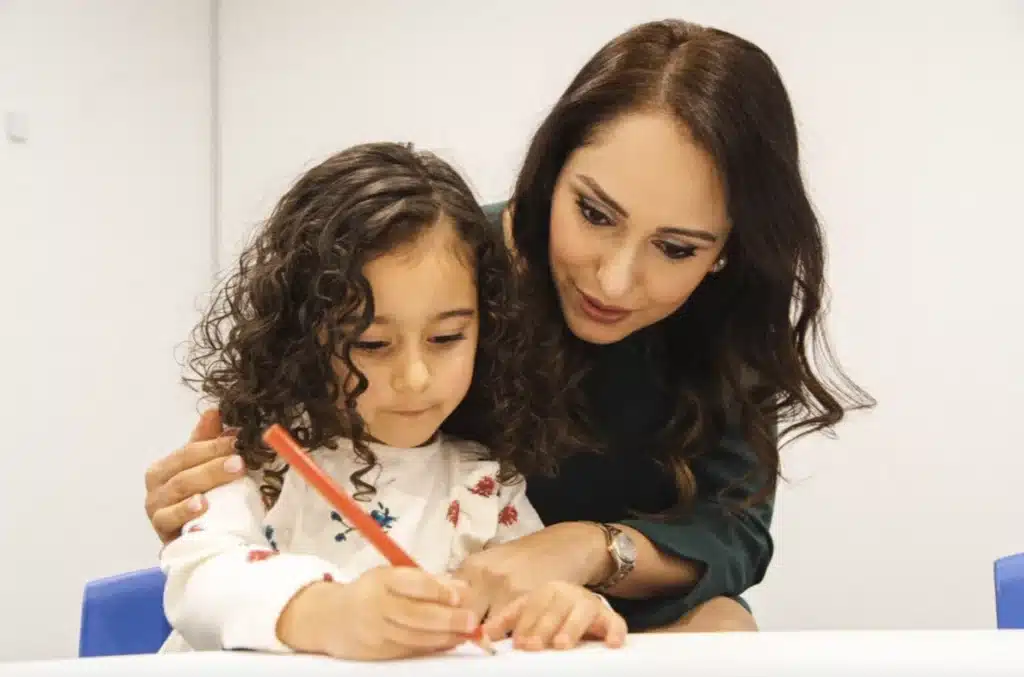
Image by Shichida Australia: A mum sitting beside her child as she traces letters, providing gentle guidance while building letter formation, pencil control and writing confidence.
Using Alphabet Practice Worksheets Effectively
Worksheets can absolutely play a role in learning to write alphabet letters, but they shouldn’t be the starting point or the only letter writing activity your child does.
Think of worksheets as one tool in a much bigger toolbox.
When to Introduce Worksheets
Most children are ready for learning to write with worksheets around four to five years of age, once they’ve developed reasonable pencil control and are showing genuine interest in writing.
If worksheets are introduced too early, they often become frustrating rather than helpful. Instead of building confidence, they can make writing feel like a chore.
What Good Practice Letter Writing Sheets Include
Not all worksheets are created equally! When choosing practice letter writing sheets, look for ones that include:
- Clear starting dots and directional arrows
- Large letters that are easy for small hands to trace
- A progression from tracing to independent copying
How to Avoid Worksheet Overload
If your child enjoys worksheets, that’s wonderful! Just remember that more isn’t always better.
A few simple habits can keep writing practice positive:
- Keep sessions brief – often five to ten minutes is enough for a preschooler – and stop earlier if your child becomes tired or frustrated.
- Finish while your child is still enjoying the activity.
- Pair worksheets with hands-on experiences like playdough, chalk or sand writing.
- Focus on one letter at a time instead of introducing several new ones at once.
- Celebrate effort, persistence and improvement rather than perfectly formed letters.
Key Insight: Worksheets are a helpful tool, not the whole learning journey. A child who happily practises one letter in shaving cream or playdough often gains more confidence than a child who reluctantly completes several pages of handwriting practice.
Common Writing Challenges (and What to Do)
Almost every child experiences a few bumps along the way when learning to write.
The good news is that most handwriting challenges are a normal part of development and improve with time, practice and encouragement.
My Child Holds the Pencil Awkwardly
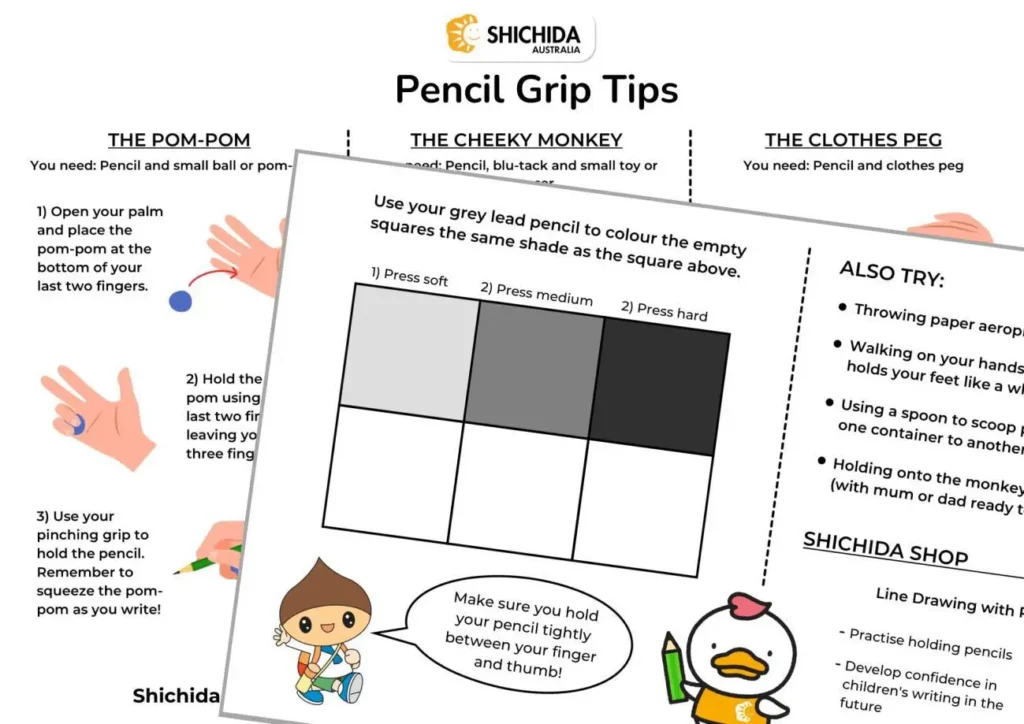
You don’t need to panic if your child’s pencil grip doesn’t look perfect.
The mature tripod grip develops gradually. In the meantime, offer shorter pencils or broken crayons, which naturally encourage a more comfortable and controlled grip, and continue building finger strength through everyday play.
My Child Reverses Letters
If your child writes b instead of d, or mixes up p and q, you’re certainly not alone.
Letter reversals are very common and are considered a typical part of development. Rather than pointing out every mistake, gently model the correct formation and keep practising in fun, low-pressure ways.
My Child Refuses to Write
If writing ends in tears every time, it may be a sign that your child isn’t quite ready for formal handwriting.
Take a break from pencils and return to playful activities like painting, chalk drawing, playdough and sensory letter games. Once writing feels enjoyable again, you can gradually reintroduce letters.
My Child Presses Too Hard or Too Lightly
Some children grip the pencil tightly enough to snap the lead, while others barely leave a mark on the page. This usually reflects developing hand control, which controls writing pressure.
Experiment with different tools such as chunky crayons, markers, coloured pencils or whiteboard pens to discover what feels most comfortable for your child.
When Should You Ask for Extra Support?
Every child develops differently, but if your child reaches the end of Prep or Foundation and is still experiencing significant difficulty with pencil grip, severe letter reversals, persistent refusal to write or intense frustration during handwriting activities, it’s worth speaking with their classroom teacher.
Together, you can decide whether additional support, such as an assessment with a paediatric occupational therapist, would be helpful.
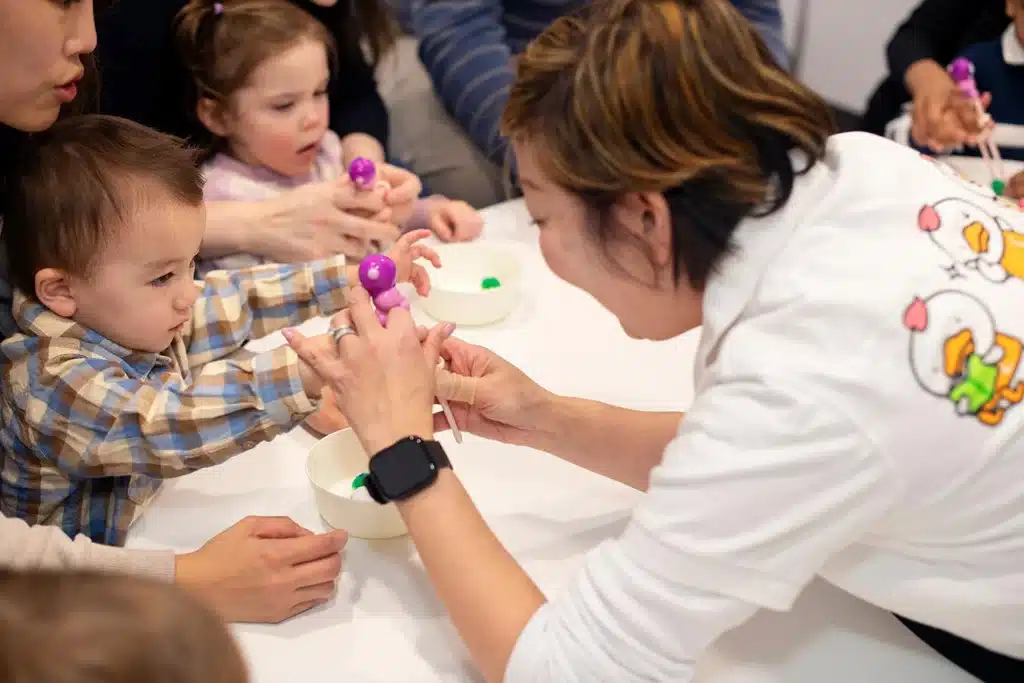
Photo by Shichida Australia: A parent and young child completing an activity together in a Shichida class.
Supporting Your Child’s Writing Journey with Shichida
Learning to write alphabet letters begins long before a child picks up a pencil. From infancy, activities involving movement, sensory play, hand–eye coordination, visual attention, language and fine motor control all help build the foundations needed for later handwriting.
Shichida Australia’s early learning classes begin from six months of age and support children through each stage of development. As children grow, activities become more advanced, helping build skills such as concentration, memory, letter recognition, language, pencil control and confidence.
Because parents participate in the early childhood classes, they can observe how activities are introduced and continue using similar ideas at home.
Book a trial class to see how Shichida helps build the developmental foundations that support handwriting, literacy and a lifelong enjoyment of learning.
FAQs About Learning to Write Alphabet Letters
Many children begin showing an interest in writing letters between four and six years of age. Before this stage, they develop important foundations through scribbling, drawing, cutting, building and other fine motor activities.
Children usually begin by making marks, drawing simple shapes and copying familiar letters, especially those in their own name. Hands-on activities such as writing in sand, forming letters with playdough and drawing large letters with chalk can make early letter formation easier and more enjoyable.
Useful pre-writing skills include hand strength, pencil control, hand–eye coordination, scissor skills, mark making and the ability to copy simple lines and shapes. These skills develop naturally through play and everyday creative activities.
Uppercase letters can be easier for some children because many are formed with simple lines and curves. However, preschools and schools may introduce uppercase and lowercase letters together or follow a particular handwriting sequence, so it is worth checking before using formal worksheets.
Helpful activities include writing in sand or salt, making letters with playdough, drawing with chalk, tracing large letters, sky writing and copying letters with crayons or pencils. Using different senses and movements can help children understand and remember how letters are formed.
Alphabet writing worksheets can be helpful once your child has developed reasonable pencil control and is interested in writing. They work best when used alongside hands-on activities rather than as the only form of practice.
Keep writing sessions brief and positive. Five to ten minutes may be enough for many preschoolers, but stop earlier if your child becomes tired, frustrated or loses interest.
Yes. Letter reversals are common while children are learning to write and often become less frequent with practice. Speak with your child’s teacher if reversals persist or occur alongside other significant writing or learning difficulties.
Start with the first letter of your child’s name, then introduce the remaining letters gradually. Let your child trace, build and copy the letters through play before expecting them to write the whole name independently.
Build hand and finger strength through activities such as squeezing playdough, threading beads, using tweezers and drawing with short crayons. Focus on a comfortable, controlled grip rather than forcing a particular pencil position too early.
Handwriting styles can vary between Australian states, school systems and individual schools. Check with your child’s preschool or future school before choosing worksheets or teaching a specific letter formation.
Speak with your child’s teacher if writing causes ongoing distress or if your child continues to have significant difficulty with pencil control, letter formation or fine motor tasks. The teacher may recommend further support from a paediatric occupational therapist.