Key Takeaways
- Cooperative learning teaches your child to work towards a shared goal instead of competing.
- Learning games for kids help strengthen communication, empathy, problem-solving and self-regulation.
- Matching games for kids are one of the easiest ways to introduce teamwork from an early age.
- Cooperative board games encourage children to think, talk and solve challenges together.
- Your encouragement and guidance play a big role in helping your child learn to cooperate.
Are the Games Your Child Plays Really Helping Them Learn?
If you’ve ever watched your child building blocks, matching cards or playing pretend, you may have wondered whether they’re just having fun or actually learning.
The answer is both!
Play is one of the most effective ways children learn, but some types of play develop more than creativity. Cooperative learning encourages children to work together, solve problems, share ideas and celebrate success as a team, helping build important social, emotional and thinking skills.
This article explores what cooperative learning is, why it matters, and simple games that encourage teamwork from the toddler years through early primary school.
Quick Answer
Cooperative learning is a play and learning approach where children work together towards a shared goal rather than competing against each other. Cooperative games for preschoolers, including matching games, storytelling activities and team-based board games, support brain development by strengthening communication, empathy, problem-solving and turn-taking. Many children begin simple cooperative play from around two years of age.
Designed for families with children up to 5 years old.

What Is Cooperative Learning (and Why It Matters for Young Kids)
Cooperative learning happens when your child works with someone else to achieve a shared goal.
You might see this when your child builds a tower with a sibling, completes a puzzle with a friend or works together to find matching cards. These shared experiences help develop communication, self-control and confidence while making learning enjoyable.
As children move through the preschool years, they naturally become more interested in playing with others. During this stage, language, empathy, problem-solving and self-regulation begin working together, helping prepare them for school and everyday relationships.
Cooperative Play vs Competitive Play vs Parallel Play
Your child will experience different types of play as they grow.
Parallel play is common in toddlers, where children play beside each other without really interacting.
Competitive play introduces winning and losing, helping children learn resilience and sportsmanship.
Cooperative play focuses on working together towards a shared goal. All three types of play are valuable, but cooperative play becomes especially important as your child approaches preschool and school age.
The Brain Science Behind Playing Together
When your child plays with others, their brain works differently than when they play alone.
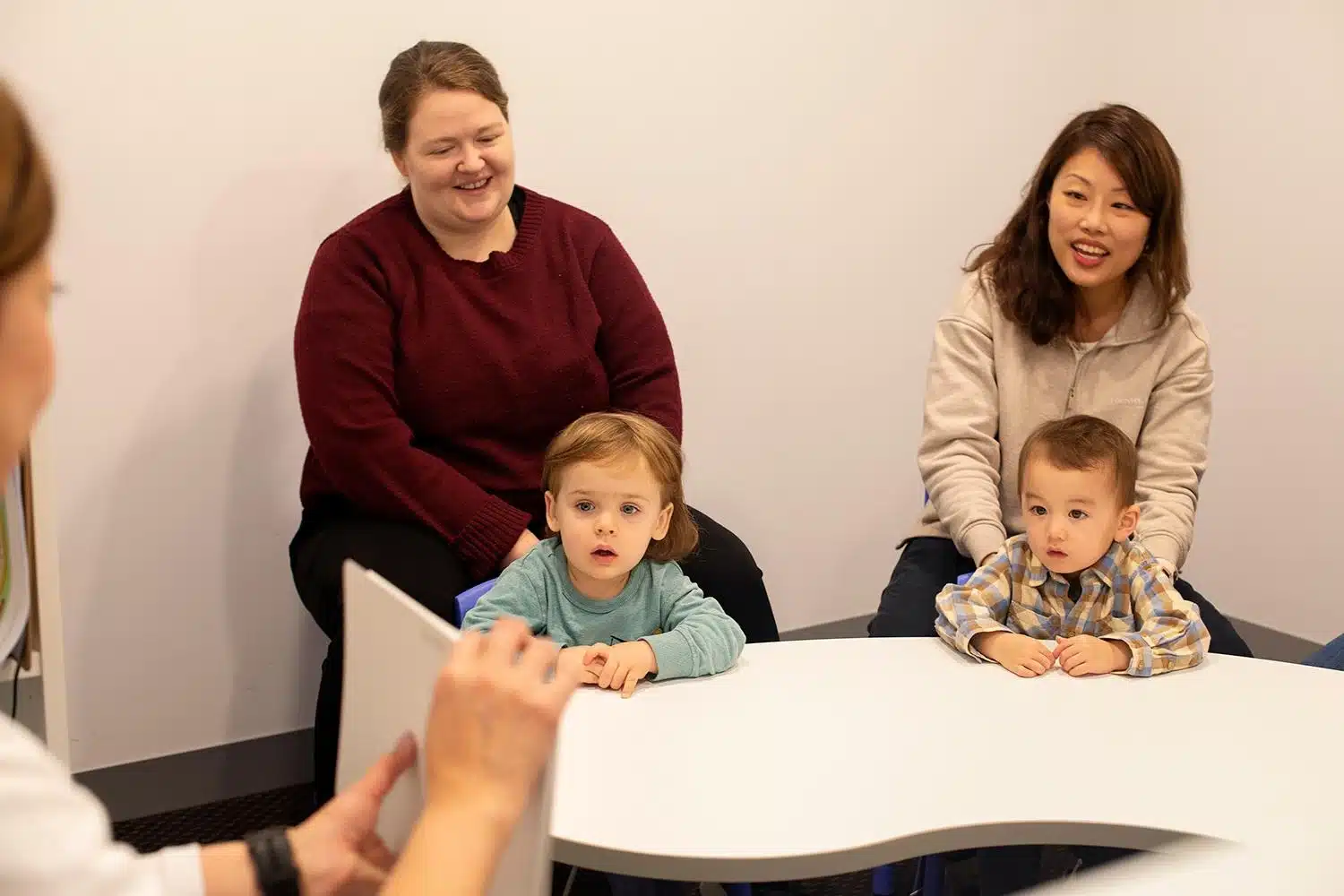
Listening, taking turns and solving problems together strengthen communication, flexible thinking and self-control. Children also learn by watching others, copying ideas and practising new language during play. These everyday experiences help build executive function, which includes the mental skills needed to focus, plan, remember and manage emotions.
When Cooperative Play Starts to Develop
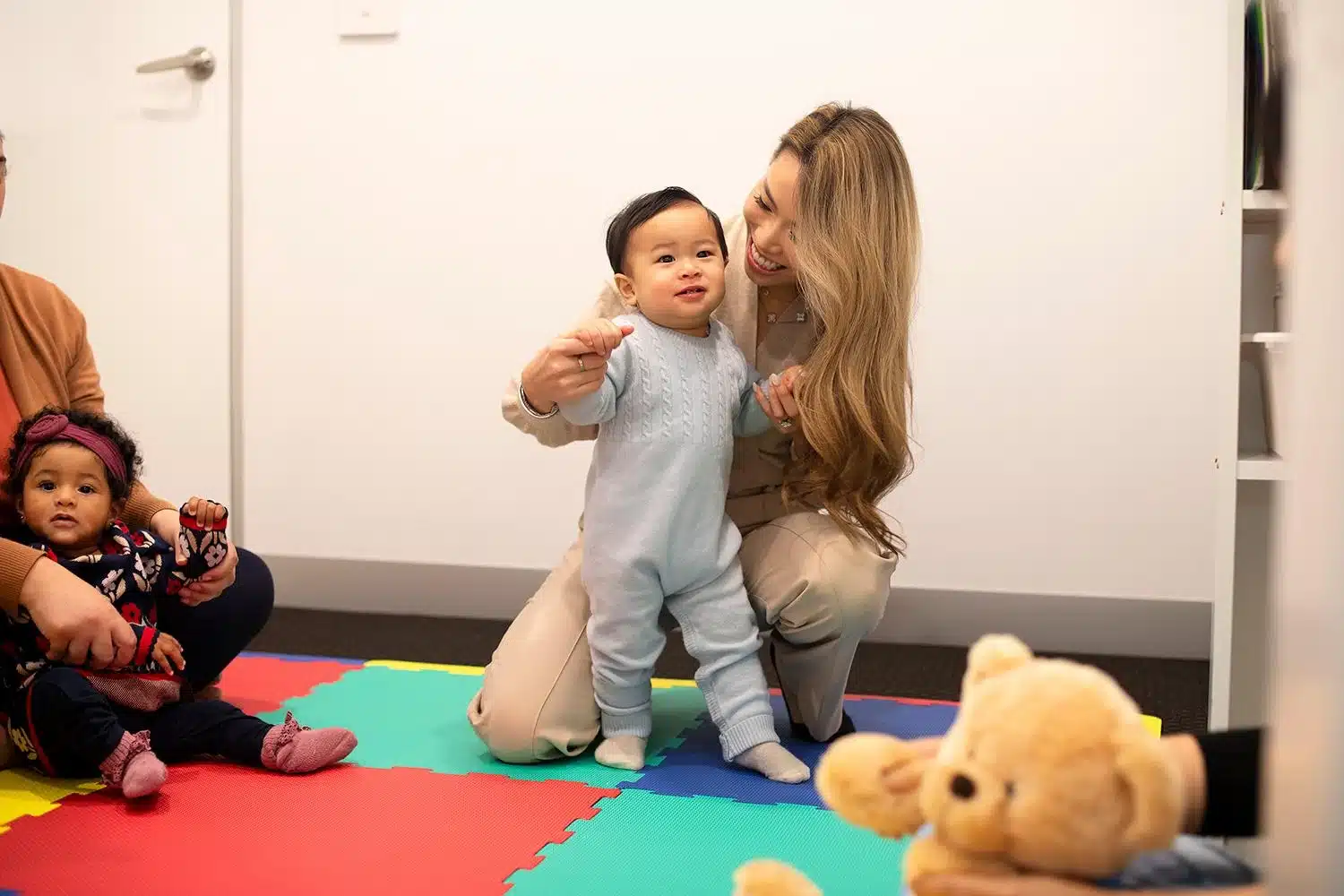
Every child develops at their own pace, but most children begin showing simple cooperative play between 2 and 3 years.
By 3 to 5 years, many children can share ideas, take turns and enjoy simple team games.
Between 5 and 7 years, children often become more confident working together to solve problems, create stories and complete challenges with less adult support.
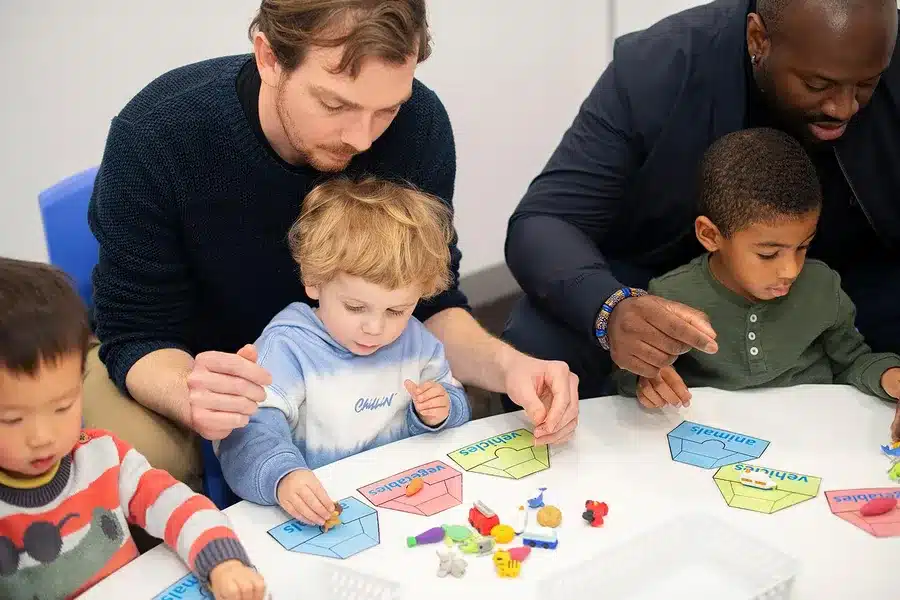
Image by Shichida Australia: Preschoolers playing a category-matching game with their parents in a Shichida class, building vocabulary, critical thinking, communication and cooperation.
Benefits of Cooperative Learning Games for Kids
If you’re wondering whether cooperative play is worth the effort, the answer is yes. Cooperative games for preschoolers support many of the skills children need for learning and everyday life.
They can help strengthen:
- Social and emotional skills
- Communication and language
- Problem-solving
- Executive function
- Memory and attention
- Empathy
- School readiness
Builds Social-Emotional Skills
Every time your child shares, takes turns or works through a disagreement during play, they’re learning valuable social skills. These experiences help them manage emotions, build friendships and become more confident in group settings.
Strengthens Communication and Language
Cooperative games naturally encourage conversation. Your child learns to ask questions, explain ideas, listen and respond to others, all of which support language development.
Develops Problem-Solving and Executive Function
Working towards a shared goal encourages your child to plan, stay flexible and keep trying when something doesn’t go as expected. These are important executive function skills that support learning at school.
Encourages Empathy and Perspective-Taking
When children play together, they begin to understand that other people have different thoughts, ideas and feelings. This helps your child become more thoughtful, patient and supportive of others.
Boosts Memory, Focus and Cognitive Flexibility
Many brain development games for kids, especially matching and memory games, encourage your child to remember information, stay focused and adapt their thinking while working with someone else.
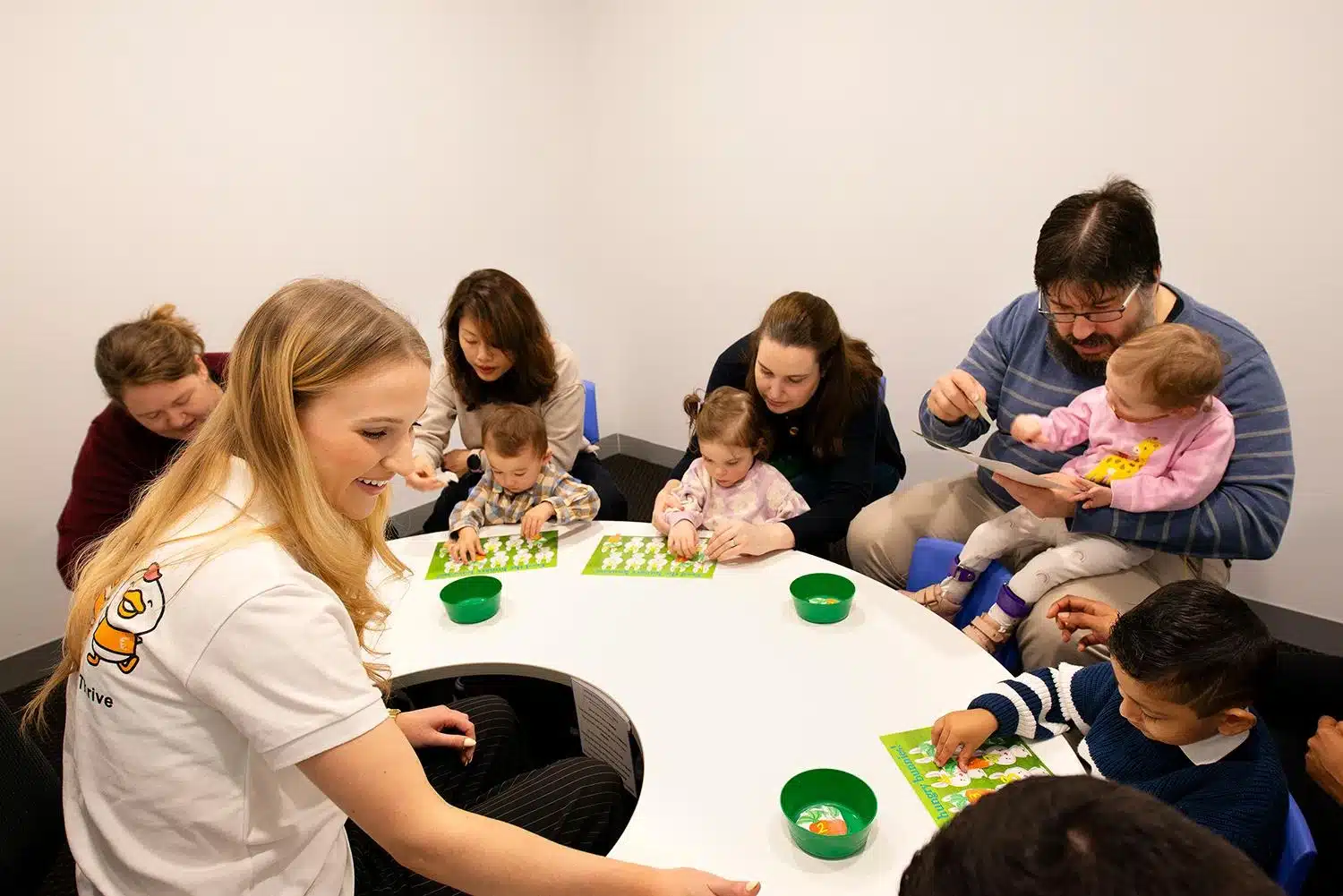
Image by Shichida Australia: Toddlers playing a number-matching game with their parents during a Shichida class, supporting early numeracy, concentration, communication and cooperative learning.
How Matching Games Help Kids Learn Through Cooperation
If you’re looking for a simple place to start, matching games for kids are an excellent choice. They’re easy to learn, quick to set up and support memory, attention, pattern recognition and visual discrimination.
Even better, they’re easy to turn into cooperative games by changing the goal from “Who can find the most pairs?” to “Can we find all the pairs together?”
Matching Games for Toddlers (2-3 Years)
Start with six to eight large picture cards featuring familiar objects such as animals, colours or family members. Celebrate every successful match together to build confidence and encourage teamwork.
Matching Games for Preschoolers (3-5 Years)
As your child’s memory develops, increase the number of cards and introduce themes such as transport, food or shapes. Encourage your child to talk about why each pair belongs together.
Turning Solo Matching Games into Cooperative Play
Instead of competing, work as a team.
Take turns flipping cards, help each other remember where pictures are hiding and celebrate every pair you find together. You can even create a short story about each matching pair to encourage language and imagination.
Key Insight: Matching games are cooperative gold. They’re simple enough for toddlers, engaging enough for preschoolers, and become even more powerful when you replace “me” with “we.”
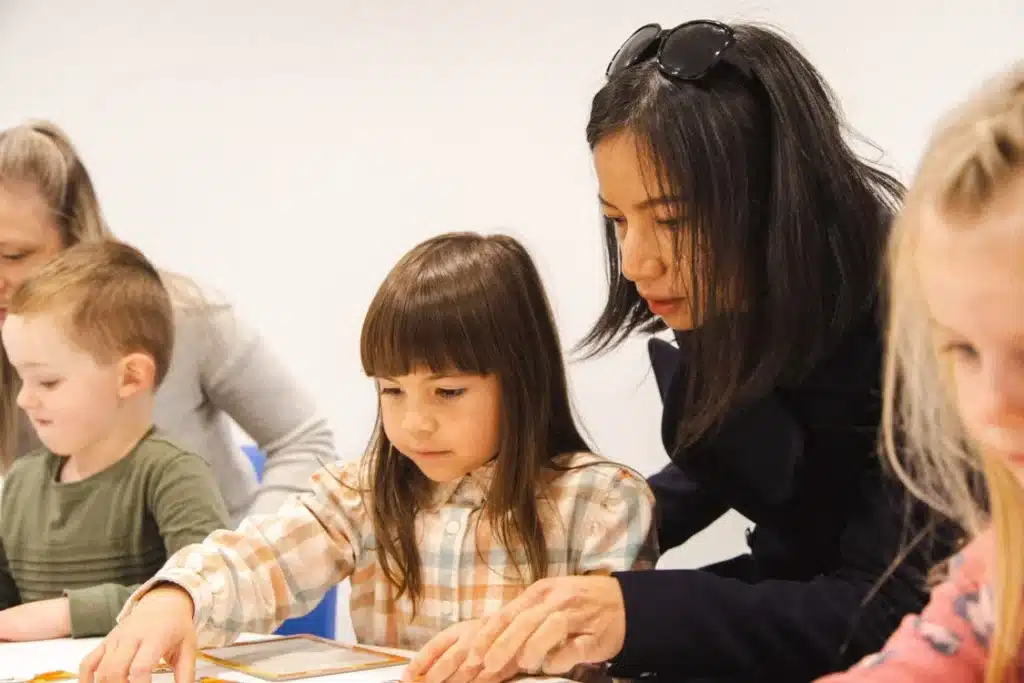
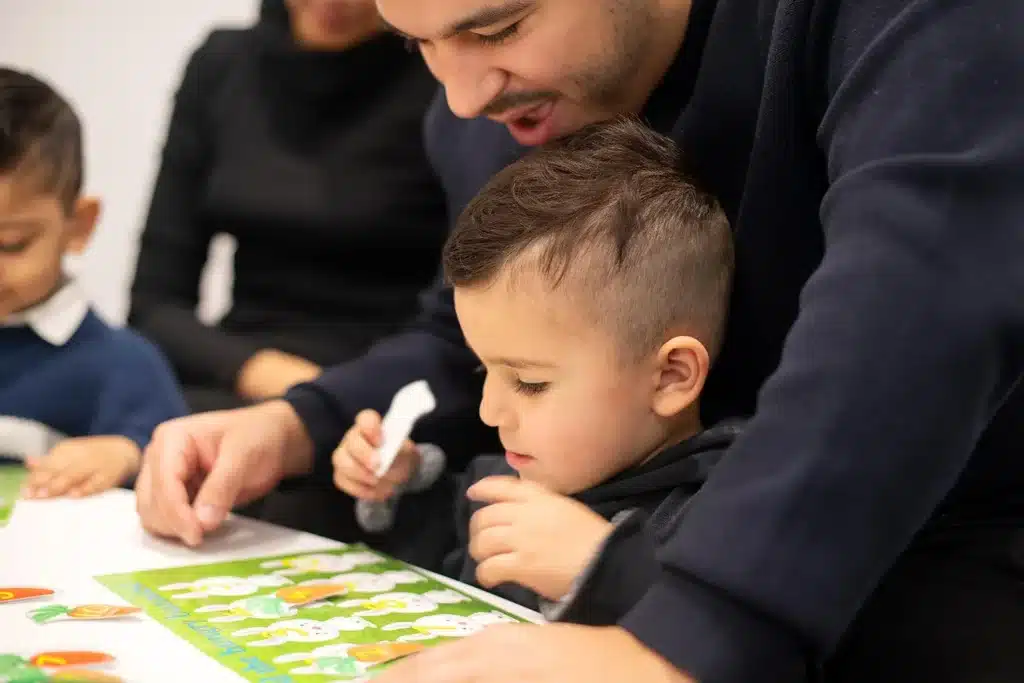
Image by Shichida Australia: Preschoolers completing puzzles with their parents during a Shichida class, developing problem-solving, concentration, communication and cooperative learning.
Best Cooperative Learning Games for Kids by Age
The best learning games for kids are the ones your child enjoys and wants to play again. Choosing activities that match their age helps them build confidence while learning to cooperate.
Ages 2 to 3
At this stage, keep games simple and focus on playing together.
Try:
- Matching animal or colour cards.
- Building one block tower as a team.
- A simple treasure hunt around the house.
- Mirror games where you copy each other’s movements.
- Building simple puzzles together.
These toddler learning games encourage turn-taking, listening and shared attention.
Ages 3 to 5
As your child grows, they’re ready for games with simple rules and shared goals.
Try:
- Memory and matching games.
- Cooperative simple board games.
- Storytelling games using picture cards.
- Completing puzzles together.
- Pretend play, such as running a café or supermarket.
These cooperative games for preschoolers help your child communicate, learn turn taking and solve problems through play.
Ages 5 to 7
Older children enjoy more complex teamwork.
Try:
- Cooperative strategy board games.
- Team-based logic puzzles.
- Collaborative drawing games.
- Simple science experiments.
- Shared reading games where you predict what happens next together, or make turns reading.
These group games for kids encourage planning, creativity and flexible thinking.

Image by Shichida Australia: A preschooler completing a maths-based challenge alongside her mum in a Shichida class, building problem-solving, concentration, confidence and cooperative learning.
Cooperative Learning Board Games Worth Knowing About
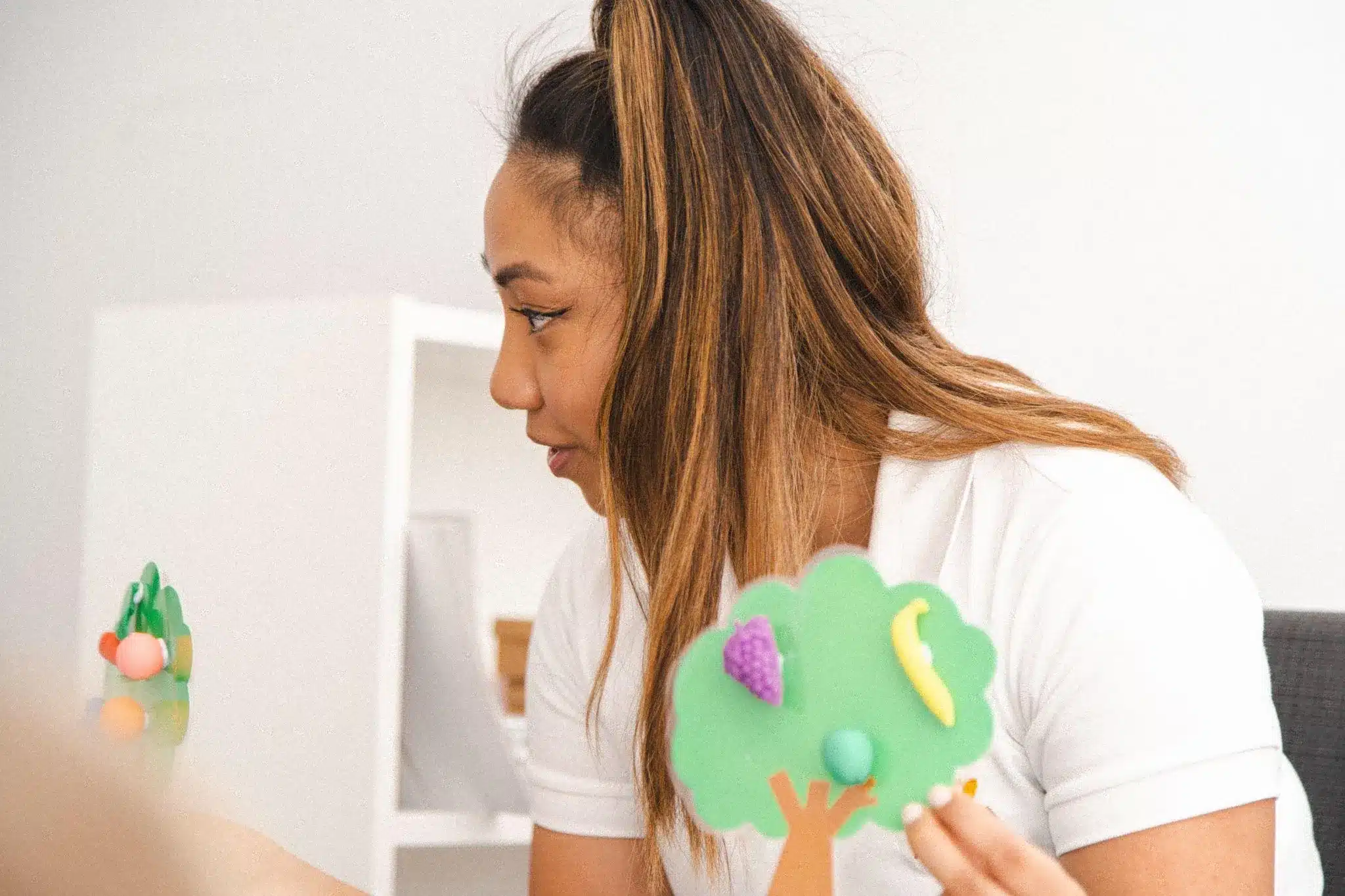
Image by Shichida Australia: Guided learning games for kids encourage children to ask questions, share ideas and solve challenges together, building the communication and cooperation skills they’ll use at school and beyond.
What Makes a Board Game Cooperative?
Not all learning board games are cooperative. Some focus on individual winners, while cooperative games encourage everyone to work towards the same goal.
Instead of asking, “Who won?”, your child learns to ask, “How can we solve this together?” This helps develop teamwork, communication and resilience.
Categories to Look For
When choosing educational games for kids, look for games that encourage collaboration, such as:
- Memory and matching games
- Storytelling games
- Puzzle-solving games
- Building games
- “Beat the timer” games
These activities encourage children to share ideas and celebrate success together.
Where to Find Cooperative Learning Games in Australia
You don’t need an overflowing toy cupboard to support cooperative learning.
Many Australian libraries and toy libraries lend educational games, making it easy to try different options before buying. Educational toy retailers also stock a wide range of preschool learning games suitable for different ages and interests.
Young Shichida Australia students enjoy a shape puzzle game called Time Shock.
Free Online Children’s Games That Support Cooperative Learning
Digital games can also support your child’s learning when used thoughtfully.
What to Look For in Online Cooperative Games
Choose games that are:
- Age appropriate
- Educational
- Free from advertising
- Easy to play together
- Child safe – strangers can not engage with your child
- Focused on problem-solving rather than fast rewards
The best games encourage conversation rather than simply keeping your child busy.
High-Quality Free Platforms for Australian Families
If you’re looking for trusted resources from across the globe, consider:
- ABC Kids Games
- PBS Kids Games
- National Geographic Kids
These platforms offer a variety of educational games for kids covering literacy, numeracy, science and problem-solving in fun, engaging ways.
If you are looking for something more structured, and not just random games, SHICHIDA at Home offers a free 30-day trial, and is suitable for kids aged 1 to 5 years. This learning platform is 100% child-safe and ad-free. It includes songs, flashcards, educational videos hosted by a Shichida teacher, and printable workbooks.
SHICHIDA at Home can be used at home, offering fun, flexible learning on the go!
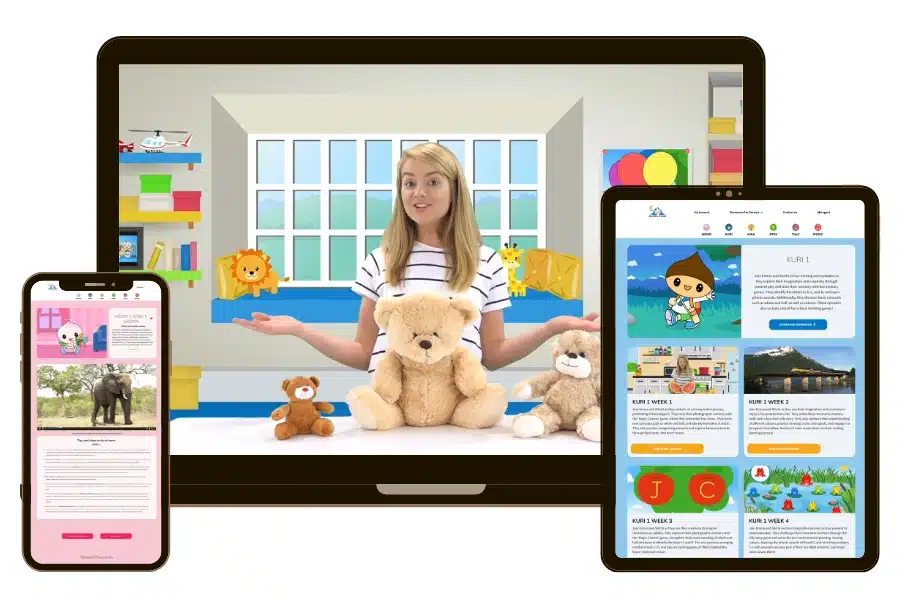
Image by Shichida Australia: SHICHIDA at Home learning platform.
Setting Up Cooperative Play at Home
Choose the Right Games
Pick activities that match your child’s age and interests. When a game feels achievable, they’re more likely to stay engaged and enjoy working with others.
Model Teamwork
Your child learns by watching you. Use phrases like “Let’s work together,” “That’s a great idea,” and “We solved it!” to show what cooperation looks like.
Make It Part of Your Routine
You don’t need hours of structured play. Even 15 minutes of cooperative play after dinner or on weekends can help your child build important social and thinking skills.
Need some more ideas and resources? Shichida Australia has plenty!

Common Cooperative Play Challenges (and What to Do)
“My Child Always Wants to Win”
This is completely normal. Choose games where everyone works towards the same goal so your child learns that teamwork can be just as rewarding as winning.
“Siblings Keep Arguing”
Start with short activities that encourage success together. Praise cooperation rather than focusing on the final result.
“My Child Is Shy”
Begin with one-on-one games before introducing siblings or friends. As your child’s confidence grows, they’ll feel more comfortable joining larger groups.
“My Child Only Wants Screen Time”
Instead of banning screens completely, make screen time interactive and gradually reduce passive viewing. Choose educational content, sit alongside your child, ask questions and play together. Follow with a hands-on game – children enjoy time with their caregivers, so create ample opportunities to engage and spend meaningful time together.
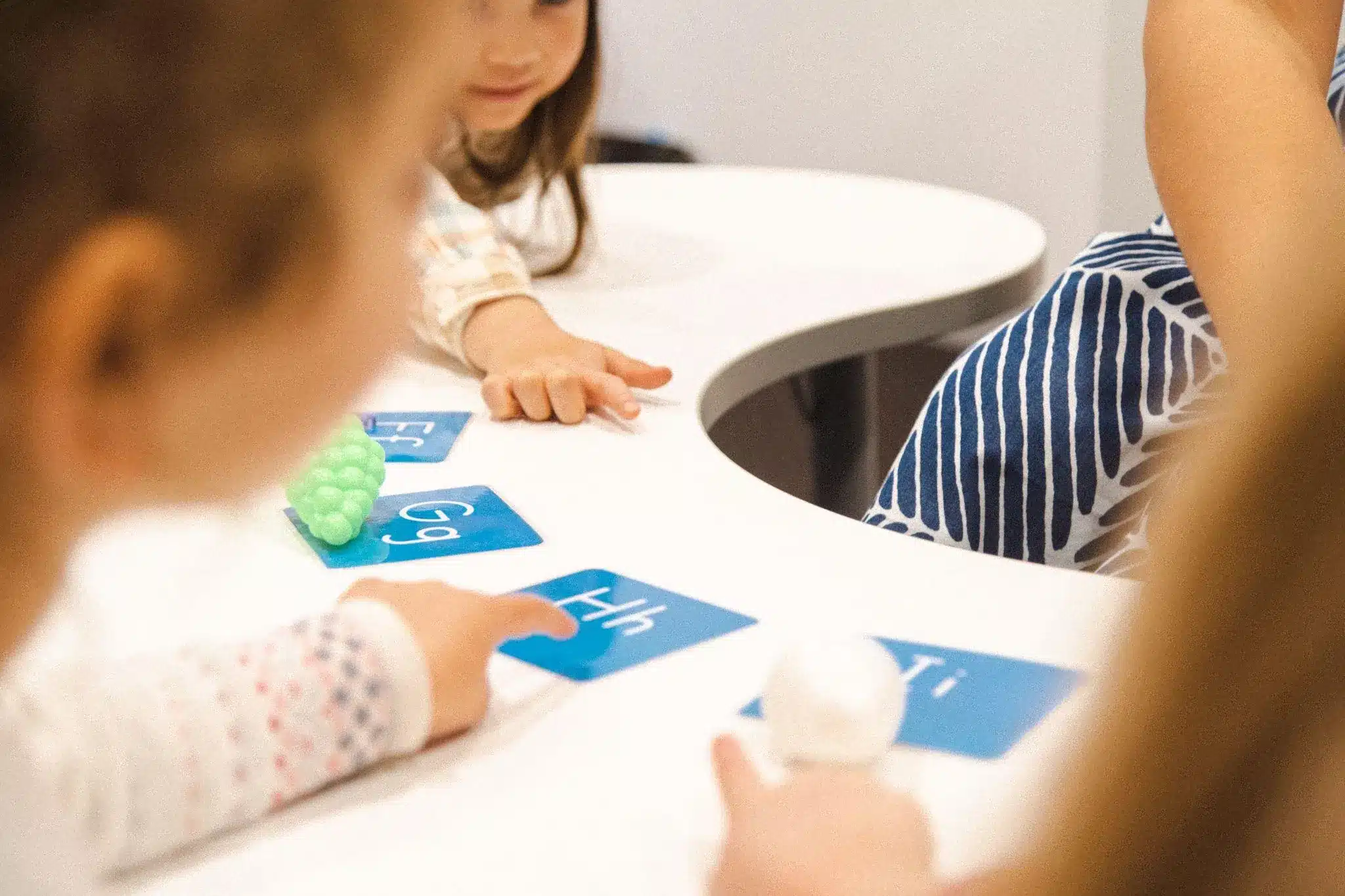
Image by Shichida Australia: Group learning games for kids help children strengthen memory, language and listening skills while learning to cooperate, encourage one another and celebrate success as a team.
How Shichida Australia Builds Cooperative Learning into Early Childhood Programs
The games you play at home provide a wonderful foundation, but your child also benefits from learning alongside other children in a structured environment.
At Shichida Australia, cooperative learning is woven into every class through partner activities, memory games, sensory experiences and guided group learning. Children are encouraged to listen, communicate and solve problems while developing confidence.
These shared experiences complement what you’re already doing at home, giving your child regular opportunities to strengthen the social, emotional and cognitive skills they’ll use throughout school and beyond.
If you’re looking for a supportive learning environment where your child can develop these skills through meaningful play, consider booking a trial class at your nearest Shichida Australia centre.
FAQs About Learning Games for Kids
Learning games for kids are activities that combine play with opportunities to practise skills such as memory, communication, concentration, problem-solving, creativity and cooperation. Examples include matching games, puzzles, storytelling activities, building challenges and educational board games.
The best learning games for kids are suited to the child’s age, interests and developmental stage. Matching games, memory games, puzzles, pretend play, simple science activities and cooperative board games can all make learning enjoyable while supporting important thinking and social skills.
Learning games help children practise new skills through repetition, interaction and hands-on experience. Depending on the activity, they may support language, memory, attention, problem-solving, emotional regulation, fine motor development and the ability to work with others.
Cooperative learning games are activities in which children work together towards a shared goal rather than competing to produce one winner. Children might complete a puzzle, build a tower, find matching cards or solve a challenge together.
Good cooperative games for preschoolers include matching games, group puzzles, building challenges, storytelling with picture cards, pretend play and simple board games with a shared goal. These activities give children opportunities to communicate, take turns and solve problems together.
Early signs of cooperative play may begin to appear between two and three years of age. Cooperation usually becomes more consistent throughout the preschool years as children develop stronger communication, turn-taking and emotional regulation skills.
Yes. Matching games can help toddlers practise memory, concentration, visual recognition and early problem-solving. Playing together with a parent, sibling or friend can also introduce simple turn-taking and cooperation.
Online learning games can be useful when they are age-appropriate, educational, child-safe and free from distracting advertising. They are generally more meaningful when a parent plays alongside the child, asks questions and connects the digital activity with conversation or hands-on play.
Parents can turn many competitive games into cooperative activities by giving everyone a shared goal. For example, instead of seeing who can find the most matching pairs, the family can work together to find every pair before the timer ends.
Learning games do not need to take up hours of the day. Short, regular opportunities to complete a puzzle, play a matching game, build something or tell a story together can fit naturally into a child’s routine.