Key Takeaways
- Memory helps children learn and use language. Remembering speech sounds, word meanings and familiar phrases supports vocabulary, understanding and conversation.
- Different memory processes contribute to communication. Phonological memory holds speech sounds briefly, working memory helps children use information in the moment, and long-term memory retains learned words and knowledge.
- Everyday interactions connect words with meaning. Shared reading, songs, conversations and hands-on play give children opportunities to hear, remember and use language.
- Shichida combines language experiences with memory activities. Stories, songs, picture games and guided play provide opportunities to practise listening, recall and vocabulary alongside a parent.
Memory is the backbone of child language development. From their first words to forming full sentences, a child’s ability to store and recall information shapes how they communicate. It determines how they make sense of the world. As they grow, memory works hand-in-hand with language, helping them grasp grammar, expand their vocabulary, and express themselves confidently. We dive into the powerful link between memory and language, revealing why nurturing both from an early age is crucial.
How Language and Memory Work Together in Child Development
Memory is crucial for child language development, supporting a child’s ability to store, recall, and apply new words and structures.
Phonological memory
Phonological memory plays a key role in the early stages of child language development. This allows children to retain speech sounds they frequently hear. For example, when a toddler repeatedly hears the word “apple” during snack time, they learn to associate the sound with the object. This memory skill is essential for language development as it helps children expand their vocabulary by remembering and recalling these sounds in the future.
Working memory
As children grow, working memory plays a critical role in mastering more complex language tasks, such as grammar and sentence construction. For instance, when a child learns the difference between “The dog is chasing the ball” and “The ball is chasing the dog”, their working memory helps them hold onto and manipulate the word order to grasp the meaning. This allows children to form sentences and engage in conversations more confidently.
Long-term memory
Long-term memory stores learned vocabulary, phrases, and grammatical structures, enabling children to use them later in context. For example, by the age of five, a child may recall and use complex words they learned weeks or months earlier during everyday conversations. This form of memory helps children build fluency over time, enabling them to describe events, ask questions, and participate in more detailed interactions.
Moreover, memory strengthens a child’s ability to engage in social communication. During playdates or at the playground, children rely on their memory to remember names, follow conversations, and participate in social exchanges. Strong memory skills ensure that children can effectively use language in both educational and social settings.
Research also highlights the connection between the brain’s hippocampus, which manages memory, and areas responsible for language processing. As children practise using language, their memory becomes more efficient, further improving their ability to communicate and reinforcing their cognitive growth.
By developing strong memory skills, children can better retain vocabulary, understand grammar, and use language to communicate effectively. These are all key elements in their overall language development.
Child Language Development Stages
During the early child language development stages, memory is crucial at every step:
Babbling Stage (4-6 months): Infants start to mimic sounds they hear frequently, laying the foundation for language. This is when memory begins working to store basic sounds.
First Words Stage (10-18 months): As toddlers begin saying their first words, memory helps them recall and reproduce the sounds they’ve been storing, associating them with objects or actions.
Two-Word Stage (18-24 months): Children start combining words to create basic sentences, such as “want milk”. Memory enables them to remember words and understand their relationships, setting the stage for grammar development.
Preschool Years (2-5 years): By this preschool stage, children’s memory systems are more developed, allowing them to use full sentences, remember complex structures, and hold longer conversations. Memory aids in learning new words, understanding context, and developing storytelling abilities.
Each stage demonstrates how integral language and memory are to a child’s ability to express themselves fluently and confidently. Enriching learning environments can greatly support children’s ability to recall words, allowing them to develop advanced language skills.
The Importance of Sleep for Memory Consolidation
Sleep plays a crucial role in a child’s memory and language development. During sleep, the brain processes and consolidates information learned throughout the day, making it easier for children to remember new words and language rules.
Parents can support this by establishing a consistent sleep routine, which not only aids memory consolidation but also improves attention and cognitive function, boosting language learning.

Sleep is essential for developing language and memory. As your child rests, their brain is busy storing words, sounds, and experiences — helping them wake up ready to learn, speak, and remember even more.
Tips for Parents to Strengthen Language and Memory
Parents play a crucial role in supporting their child’s memory and language development. Here are some effective ways to nurture both:
Repetition is Key: Repeating words and phrases helps reinforce memory and language skills. Try incorporating new words into everyday routines to boost retention.
Reading Together: Reading is one of the best ways to enhance both memory and language development. Books expose children to new vocabulary and sentence structures while encouraging them to remember and recall story elements.
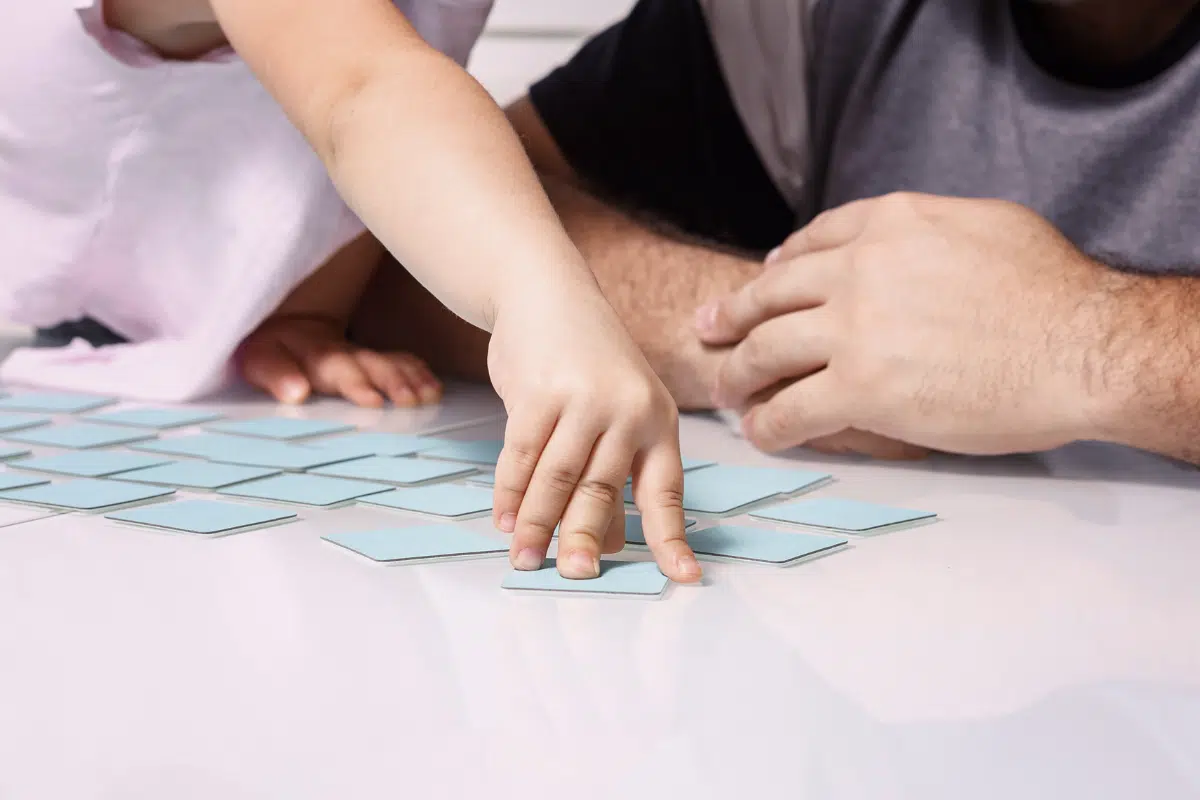
Play Memory Games: Simple games like matching cards or “Simon Says” are excellent for training memory and boosting language comprehension. These games enhance children’s ability to follow instructions, improving their working memory.
Encourage Conversations: Talking to your child frequently and engaging them in dialogue helps strengthen their memory of words and language use. The more they practise speaking, the better their recall will become.
Use Songs and Rhymes: Songs are a fun and engaging way to improve memory. Children naturally enjoy music, and the repetitive nature of songs helps them retain and recall new words and phrases.
The Power of Multisensory Learning
Engaging multiple senses – sight, sound, and touch – is particularly effective for strengthening memory and language development. For example, when a child sees, touches, and hears the word “apple,” they are more likely to remember it because multiple senses reinforce the memory.
Parents can create these experiences at home, such as involving their child in cooking, where they can touch, smell, and see ingredients while learning new words. This approach enhances memory and makes learning more enjoyable.

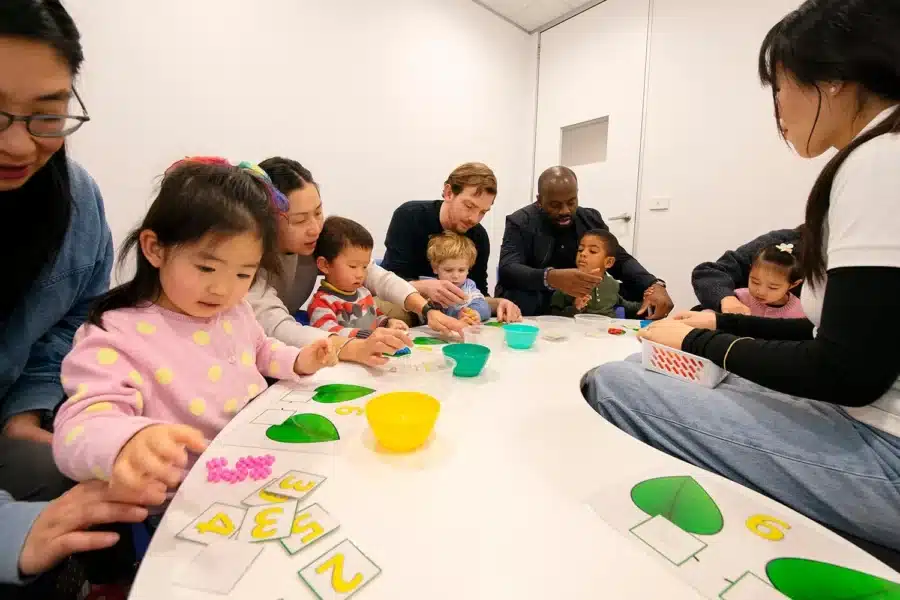
Tactile learning supports language and memory by turning ideas into hands-on experiences. In this Shichida class, a simple math’s game shared between mum and child helps strengthen understanding, build vocabulary, and lock in key concepts – all through touch and play.
Working Memory Training for Children with Shichida Australia
At Shichida Australia, we believe that memory training is a vital part of helping children thrive in their language development journey. Our program makes memory training engaging and enjoyable, using a variety of methods that children find fun and stimulating. Through a blend of stories, games, and songs, children enhance their memory capabilities without even realising they’re learning.
The Shichida Method focuses on three core memory skills:
- Photographic memory (capturing and recalling complete images)
- Mnemonic memory (linking information together for better recall)
- Auditory memory (remembering through sounds and music)
Examples of memory training activities used at Shichida:

Activities that strengthen language and memory start early at Shichida. Through fun and focused memory games, children build the skills they need to succeed in school and beyond.
- Flashcards: Expose children to new ideas and topics quickly, helping them store and recall information efficiently.
- Matching Pictures: Children observe multiple pictures and toys placed on a grid, then try to recall and match their positions. This exercise is great for developing photographic memory.
- Songs and Rhythm: Using songs to remember concepts is not only fun but highly effective for auditory memory. Rhythm helps children retain language structures and new vocabulary.
- Stories: For older children, turning number sequences or word strings into imaginative stories helps them link information and recall it later.
- Mandalas: Children are challenged to remember colours and patterns within mandalas, strengthening their visual memory.
- Big Challenges: In advanced memory training, students take on the task of reciting Pi to hundreds of decimal places using music as a mnemonic aid.
These activities are introduced at stages that are appropriate for each child’s developmental phase. The goal is to build their memory in a natural, supportive environment, which is crucial for language and cognitive growth.
Book a trial class at one of our early learning centres and see why so many families choose the Shichida Method of education for their children. Our proven, fun, and nurturing approach helps unlock each child’s full potential.
FAQs About Language and Memory for Kids
Memory helps children retain speech sounds, connect words with meanings and recognise familiar language patterns. It also allows them to draw on previous conversations and experiences. As children build their vocabulary, they use remembered information to understand others and express their own ideas.
Phonological memory involves briefly holding speech sounds in mind. It helps children retain the sound sequence of an unfamiliar word while learning it. Hearing that word in meaningful situations also helps them connect its sounds with what it represents.
Working memory helps children hold information in mind while making sense of it. During a sentence or instruction, they need to remember earlier words as they hear the next ones. Short, clear instructions can make this task more manageable.
Long-term memory retains word meanings, familiar expressions, language patterns and personal experiences. Children use this knowledge when naming objects, explaining what happened during their day or understanding a familiar story. It provides information they can draw on across different conversations.
Talk about what your child is doing, revisit favourite books and sing familiar songs together. Use new words in different everyday situations and allow time for your child to respond. For example, describe something as “smooth” while touching a pebble, then notice another smooth object later.
Songs and rhymes provide repetition, rhythm and predictable patterns that can act as memory cues. Children may begin by joining in with a familiar sound or final word, then gradually remember more. Talking about the lyrics helps connect remembered words with meaning.
Try naming pictures during a matching game, recalling which toy is missing or retelling a short story with props. Simple action games also involve listening and remembering instructions. Adjust the number of items or steps so your child can participate without feeling repeatedly tested.
Shichida uses songs, stories, flashcards and picture activities to introduce vocabulary and provide recall practice. Children hear language, connect it with images or actions and participate with parent and teacher support. These activities sit within a broader early learning program.