
Key Takeaways
- Children develop at different rates, but concerns deserve attention. Developmental milestones provide a guide to progress; comparing your child with peers alone cannot establish whether there is a delay.
- Seek advice when you are concerned about your child’s development. A GP or child and family health nurse can assess concerns and arrange further support where needed. Raising Children Network.
- Everyday interactions provide valuable learning opportunities. Talking, reading, singing and playing together give children ways to practise communication, thinking and social skills.
- Shichida offers educational enrichment alongside other support. Guided games and parent-child activities provide learning opportunities, but do not replace developmental assessment or individually recommended therapies.
The early years of a child’s development are critical for laying the foundation for their future growth. At birth, babies possess genius like abilities. During the early years, character, intelligence, and abilities are shaped by the quality of their environment and education. As the saying goes, “Give me a child for his first seven years, and I’ll show you the man.”
Infancy is a time of immense potential for brain development. If a positive environment is provided for children from young, their intelligence will develop. However, without the right stimulation and guidance, these innate abilities can diminish over time – a concept known as the ‘Law of Diminishing Ability’. If you’re concerned about your child’s development, the good news is that early intervention and structured guidance can make a significant difference.
Why Early Childhood Education Matters
Human abilities are at their peak during infancy. With the right early childhood education and stimulating activities for kids, children can unlock their potential and set the stage for lifelong success. However, when left without proper guidance, a child’s development may fall short of its full potential, making it harder for them to catch up later.

The golden period refers to the first three years of a child’s life, a critical time when the brain is highly adaptable, and rapid development occurs, making it the ideal stage for learning and growth.
Here are some common concerns parents face:
- Is your child not speaking as much as peers?
- Does your child have difficulty concentrating on activities?
- Are you noticing slower progress in their developmental milestones?
If any of these sound familiar, know that you’re not alone. Many parents experience these worries, and the right support can help address them effectively.
How Shichida Can Help
At Shichida Australia, we provide whole-brain training programs designed to nurture your child’s development during their most formative years. Our classes are structured to:
Boost communication skills
Through interactive learning, children build vocabulary and improve their ability to express themselves.
Strengthen attention spans
Fun, engaging activities are designed to improve focus and patience over time.
Develop memory and cognitive abilities
Memory games, puzzles, and hands-on activities help build problem-solving and critical-thinking skills.
Encourage emotional intelligence (EQ)
Our methods help children manage emotions and improve social interaction.
Support early numeracy and literacy
Educational songs, phonics, and math-based games lay the foundation for academic success.
We also provide parents with tools and strategies to continue the learning journey at home, ensuring that the skills taught in class are reinforced daily.
Our early learning enrichment program is designed to address common developmental concerns, providing the structure and stimuli children need to thrive. By focusing on both cognitive and emotional development, Shichida equips children with skills that last a lifetime.
Practical Tips to Support Your Child’s Development
While attending Shichida classes, you can also take steps at home to support your child’s development:
- Incorporate Music and Language
Play nursery rhymes, classical music, or audiobooks to engage their auditory senses. Expose them to multiple languages if you’re aiming for bilingual skills. - Talk Often
Engage your child in conversations about daily activities like shopping, cooking, or driving. These interactions help expand their vocabulary and understanding of the world. - Limit Screen Time
Choose educational platforms and set limits. Excessive screen time can impact attention spans and reduce interest in human interaction. - Introduce Textured Foods
Chewing strengthens jaw muscles, aiding speech development. Gradually introduce more complex foods to improve their coordination and oral strength. - Train Attention Spans
Attention spans are typically their age plus one minute. Structured activities like puzzles or storytelling can help train focus, an essential skill for brain development.

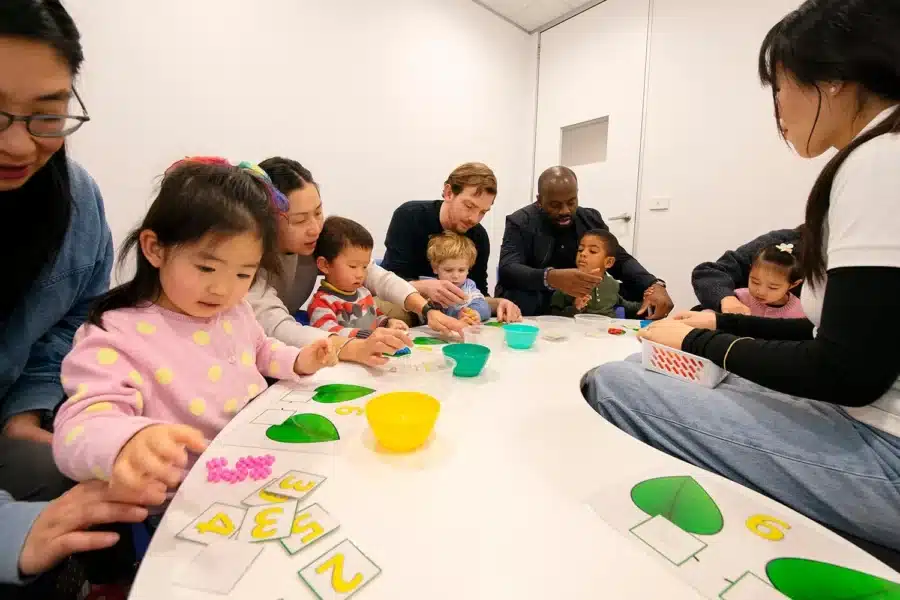
Packed with brain-boosting games and activities, Shichida Early Learning Enrichment Classes for babies, toddlers and preschoolers are engaging and fun.
Why Early Action Matters
A child’s development is an ongoing process, and early intervention makes all the difference. If left unchecked, delays in development can make learning more challenging in later years. Shichida provides the structured guidance and stimulating activities your child needs to excel.
Start Your Journey with Shichida
At Shichida Australia, we understand that every child’s development journey is unique. Our program is designed to bring out the best in your child through early learning activities that focus on both IQ and EQ.
Don’t wait – book a trial class today and discover how we can support your child’s development. Together, let’s unlock their full potential for a brighter future.
At the end of the day, you know your child best. If you’re concerned about your child’s development, please consult a specialist.
FAQs About Children’s Development
Discuss your concerns with your GP or child and family health nurse. Bring specific examples of what your child finds difficult and any changes you have noticed. They can review development and recommend assessments or support suited to your child. Raising Children Network.
Not necessarily. Children develop skills at different times, and comparison with another child does not establish a developmental delay. However, ongoing concerns should be discussed with a health professional rather than dismissed because children develop at different rates. Raising Children Network.
Seek medical advice promptly if your child loses words, movement abilities, social skills or other skills they were using consistently. Losing established skills is different from learning a new skill slowly and should be assessed. Raising Children Network.
Follow your child’s interests during shared play, read picture books, sing familiar songs and talk about everyday activities. Offer manageable challenges and time to respond. If your child has an individual support plan, ask their health professionals how to incorporate its strategies into daily routines.
Start with a familiar activity, give one clear instruction and demonstrate what to do. Reduce distractions and offer help when needed. Adjust the difficulty or take a break if the activity becomes frustrating, recognising participation and progress rather than comparing results.
Early intervention provides targeted support for developmental difficulties or disability, based on a child’s needs. Enrichment classes offer additional educational experiences. They can have different purposes, and an enrichment program should not be presented as a substitute for professional assessment or intervention. Raising Children Network.
Shichida includes songs, puzzles, memory games, early literacy and numeracy activities within guided parent-child classes. These provide opportunities to practise communication, attention and problem-solving. Parents also learn ideas they can use during shared play at home.