Key Takeaways
- An emotion chart helps children recognise and communicate their feelings. Pictures and simple labels give children a way to express themselves when finding the words is difficult.
- Start with a few familiar emotions and personalise the chart together. Include feelings such as happy, sad, angry and scared, then add more words as your child’s understanding grows.
- Use the chart during relaxed, everyday conversations. Brief check-ins, stories and shared reflection help children become familiar with naming feelings without pressure.
- Shichida supports emotional learning through vocabulary and shared activities. Songs, flashcards, games and breathing exercises provide opportunities to talk about feelings with parent and teacher support.
Helping kids handle their feelings doesn’t have to be complicated. From joy to frustration, emotions can feel like a whirlwind for young minds, but the right tools can make all the difference. An emotion chart for kids is one of the easiest ways to help children recognise, understand, and manage their emotions – turning everyday moments into opportunities for growth.
Ready to get started? Let’s dive into how to create your own emotion chart for kids and explore the big impact it can have on their emotional wellbeing.
What is an Emotion Chart for Kids?
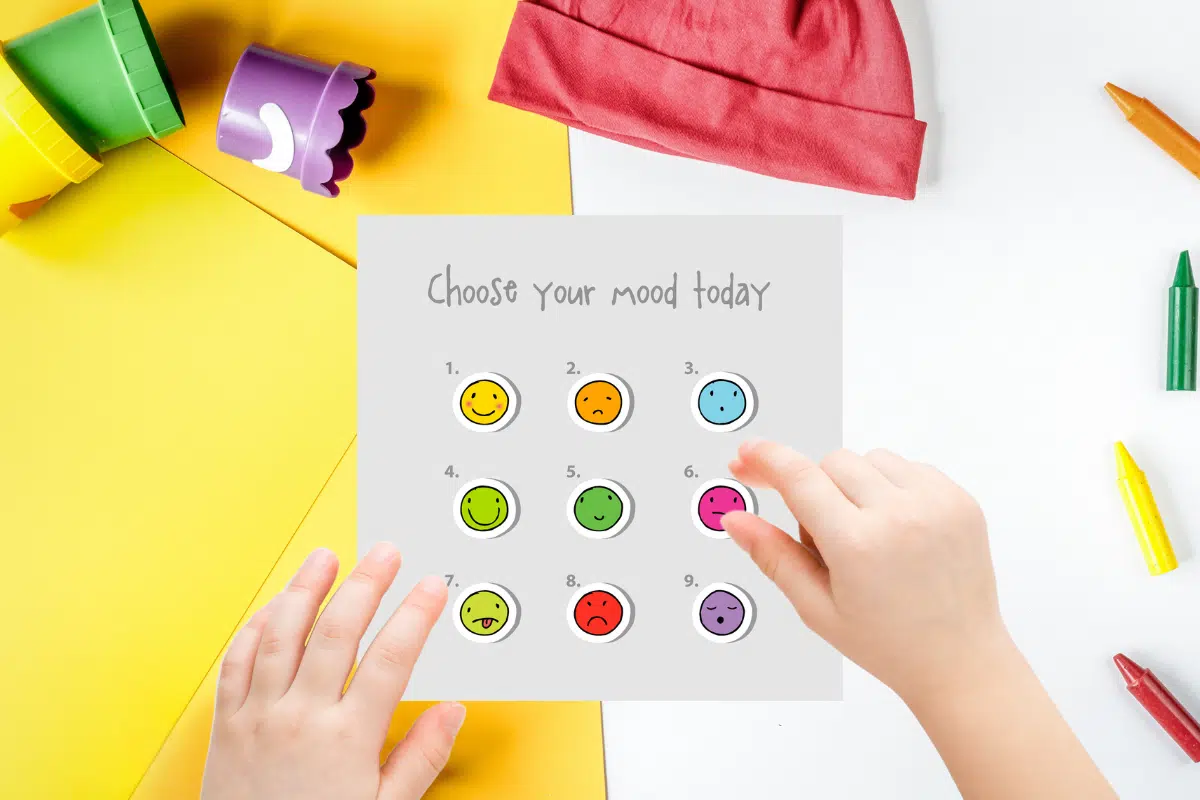
An emotion chart for kids is a visual tool that helps children recognise and express their feelings. It typically uses images, colours, or symbols to represent different emotions, making it easier for kids to identify what they’re experiencing.
Emotion charts come in various formats, such as wheels, grids, or thermometers, each catering to different age groups and developmental stages. The goal is to simplify emotional communication and provide a structured way for children to reflect on their feelings.
Benefits of Using an Emotion Chart for Kids
Teaching emotional regulation with tools like emotion charts has numerous advantages:
Encourages Emotional Awareness
Children learn to identify their emotions, giving them a greater understanding of how they feel and why.
Improves Communication
Kids often struggle to articulate their feelings. An emotion chart gives them the vocabulary and visual prompts needed to share their emotions with parents, teachers, or peers.
Supports Self-Regulation
Recognising emotions is the first step to managing them. An emotion chart teaches children to pause, reflect, and choose appropriate responses to their feelings.
Builds Empathy
By understanding their own emotions, children can better relate to others’ feelings, encouraging kindness and compassion.
Provides Emotional Resilience
Kids equipped with tools to handle their emotions are better prepared to navigate challenges, from school stress to social dynamics.
How to Create Your Own Emotion Chart for Kids
Making an emotion chart is a collaborative and creative process that’s as fun as it is educational. Follow these simple steps:
Decide on the Format
Choose a style that suits your child’s age and interests. Younger kids may benefit from simple designs like a grid or thermometer, while older children might enjoy an emotion wheel that includes a broader range of feelings.
Choose the Emotions to Include
Start with basic emotions like happy, sad, and angry. As your child grows, expand the chart to include more nuanced emotions such as frustrated, proud, or curious. The goal is to match the chart to your child’s current emotional vocabulary while gradually introducing new terms.
Add Visuals and Colours
Use bright colours, expressive drawings, or relatable images to make the chart engaging. Including emotion faces for kids or simple symbols can help children associate specific feelings with visual cues.
Make It Interactive
Add elements like Velcro pieces, sliders, or movable parts to make the chart fun and engaging. For example, a spinner on an emotion wheel can help children point to how they’re feeling at the moment.
Personalise the Design
Let your child help design the chart by choosing colours, adding favourite characters, or drawing their own pictures. Personalisation makes the tool more meaningful and increases their willingness to use it.

How to Use an Emotion Chart for Kids
An emotion chart for kids is most effective when integrated into daily life with purpose and creativity. By varying the way it’s used, parents and educators can avoid repetition and address a wide range of emotional challenges. Here’s how to use this tool in diverse, practical ways:
Creating a Calming Emotional Safe Space
Establish a dedicated area where your child can retreat when emotions feel overwhelming. This space could include sensory items like soft cushions, weighted blankets, and fidget toys, along with an emotion chart. Encourage your child to use the chart as their first step to identify how they feel before choosing an activity to self-soothe.
Example: If your child points to “frustrated” on the chart, they might choose to cuddle a stuffed toy or colour quietly until they feel calmer. This reinforces the habit of addressing emotions constructively.
Morning Emotional Check-Ins
Start each day by inviting your child to share their feelings using the chart. This sets a positive tone and helps you understand their emotional state before challenges arise.
Example: If your child chooses “nervous” about a school presentation, you can take a few moments to practice calming strategies together, such as deep breathing or rehearsing their speech. Morning check-ins create a routine of emotional awareness.
Interactive Emotion Exploration
Build familiarity with the chart by engaging in fun, interactive activities. Act out different emotions with your child, using emotion faces for kids as prompts. This not only strengthens emotional vocabulary but also deepens their ability to connect facial expressions with feelings.
Example: You could point to “happy” on the chart and ask your child to mimic a big smile, or explore more complex emotions like “confused” by discussing scenarios that evoke those feelings.

Problem-Solving During Conflicts
Use the chart as a mediator during disagreements or emotional meltdowns. Ask your child to pinpoint their feelings on the chart and use this as a starting point to discuss solutions.
Example: If your child chooses “angry” after arguing with a sibling, acknowledge their feelings and guide them to consider options like sharing, apologising, or taking turns. This process teaches constructive problem-solving.
Practising Calming Strategies Together
Pair specific emotions on the chart with calming techniques. Over time, children will learn to associate emotions like “sad” or “scared” with actions they can take to feel better.
Example: If your child points to “scared,” practice deep breathing exercises or visualisation techniques together. Using the chart in this way builds a toolkit of strategies they can apply independently in the future.
Building an Emotional Vocabulary
As your child grows, introduce tools like an emotion wheel for kids to expand their understanding of nuanced feelings. Encourage them to connect related emotions and explore how these feelings overlap.
Example: Discuss how “disappointed” might feel different from “sad” and share personal stories to illustrate the distinction. Regular use of the chart and related tools helps children articulate complex emotions with confidence.
End-of-Day Reflections
Incorporate the chart into bedtime routines by reflecting on the day’s emotions. This practice helps children recognise emotional patterns and reinforces the idea that all feelings are valid.
Example: If your child points to “proud” for completing a challenging task, celebrate their success and discuss how that sense of pride motivates future achievements. Similarly, if they indicate “tired,” consider adjusting routines to prioritise rest.
Shichida’s Approach to Emotional Development
At Shichida, we believe in nurturing the whole child, including their emotional growth. Our program integrates tools like songs and flashcards to teach a wide vocabulary, including emotions, empowering children to identify and express their feelings.
Through engaging activities, such as games that build resilience and deep breathing exercises, we help children develop essential emotional regulation skills. This holistic approach lays the foundation for emotional intelligence and resilience, ensuring children thrive in every area of life. Book a trial class today!
FAQs About Maths Games for Kids
An emotion chart is a visual tool that uses pictures and words to represent feelings. Children can point to an image or name an emotion to communicate how they feel. It provides a starting point for conversations about emotions, experiences and the support they need.
Draw a simple grid on paper and add a face and label for each emotion. Start with a small selection, such as happy, sad, angry and scared. Invite your child to help draw the pictures or choose colours, then place the chart somewhere easy to reach.
Begin with feelings your child already encounters and recognises, such as happy, sad, angry, scared and excited. Add words such as frustrated, disappointed, proud or worried as they become useful. Include a range of pleasant and difficult feelings so children know they can talk about both.
Toddlers can point to pictures while an adult names the feelings aloud. You might say, “You chose sad. Would you like a cuddle?” Use simple language and familiar examples. Treat their choice as an invitation to connect, rather than a correct-or-incorrect answer.
Introduce the chart when your child is calm and interested. Try a brief check-in after an activity, during storytime or at the end of the day. Familiarity makes it easier to use later, but children do not need to identify a feeling every time you offer it.
Offer comfort and help your child stay safe first. If they are too upset to engage, leave the chart for later. Once they are calmer, you can use it to talk about what happened and what might help next time. Naming an emotion should not be a condition for receiving support.
Acknowledge the feeling and ask what they need. For example, “You’re disappointed that playtime ended. Would you like to sit with me?” Depending on the situation, you might offer closeness, quiet time or help solving a problem. The chart starts the conversation; your response helps make it meaningful.
Shichida uses songs, flashcards and shared activities to introduce vocabulary, including words for feelings. Games and guided breathing also provide opportunities to discuss challenges and practise calming strategies. Parents participate alongside their child, helping connect classroom experiences with conversations at home.