
Key Takeaways
- Victoria’s Year 1 Phonics Check identifies decoding skills. Children read real and made-up words to show how they apply letter-sound knowledge.
- The check helps teachers plan further support. It provides information about phonics development, rather than measuring every aspect of reading. Victorian Government guidance.
- Early literacy grows through varied experiences. Shared reading, conversation, sound games and letter-sound activities provide foundations parents can support before school.
- Shichida incorporates early literacy into guided learning. Songs, flashcards and hands-on phonics games give children opportunities to practise language and letter-sound connections with parent support.
Victoria Replaces English Test with Year 1 Phonics Check
Victoria’s government schools are making a major change in how early literacy is assessed. The English Online Interview (EOI), a broad assessment covering reading, writing, speaking, and listening, is being scrapped and replaced with a Year 1 Phonics Check that focuses specifically on phonics skills.
This decision aligns Victoria with states like South Australia (2017), NSW (2021), and Tasmania (2022), where similar phonics screening tests have already been implemented.
Key Changes in Early Literacy Assessment
English Online Interview (EOI) Scrapped
- The EOI was a one-on-one interview used to assess reading, viewing, writing, speaking, and listening for Prep and Year 1 students.
- It was criticised for trying to assess too many skills at once and for not always accurately identifying struggling students.
- Despite a $11.3 million upgrade in 2023 to include a phonics component, it has been decommissioned and is no longer mandatory in 2025.
New Year 1 Phonics Check
- Schools will replace the EOI with a Year 1 Phonics Check, which is quicker and more focused.
- It will take 5-7 minutes per student and assess their ability to decode real and non-real words.
- The test will be mandatory from 2026 but is being introduced in 2025.
Expert & Stakeholder Reactions
- Professor Pamela Snow supports the change, arguing that explicit phonics instruction is more effective for early literacy.
- Dyslexia Victoria Support welcomes the shift but urges that the test be mandatory sooner to help identify struggling students earlier.
- Victorian Principals Association sees it as a logical move, but not all schools are happy with the change.
- Opposition politicians argue that the new test should be mandated immediately rather than waiting until 2026.
Comparison to Other States
- South Australia introduced a Year 1 Phonics Check in 2017, followed by NSW (2021) and Tasmania (2022).
- SA publishes results annually, but it’s unclear if Victoria will do the same.
Why Shichida Starts Early with Phonics-Ready Learning
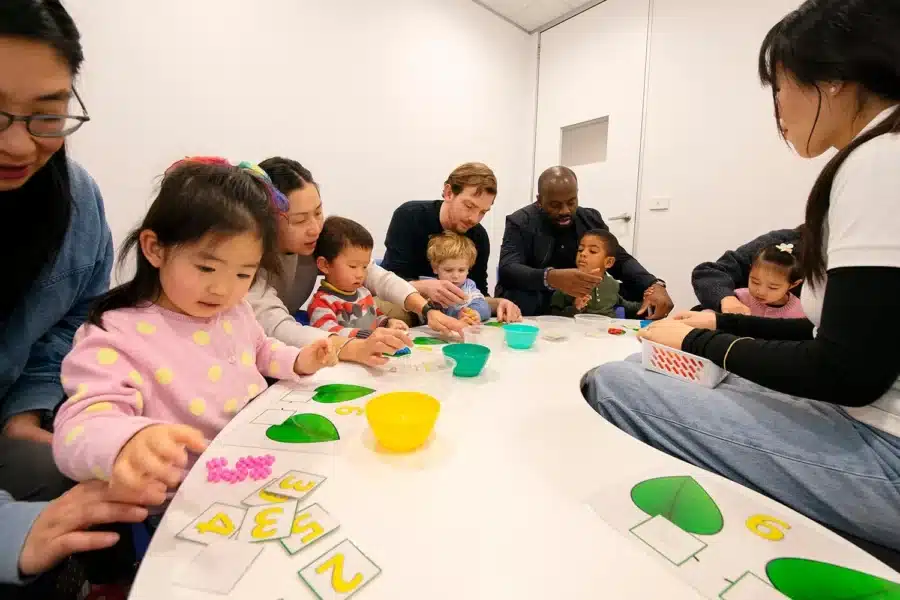
At Shichida, we have always recognised the importance of early literacy skills. Phonics is a powerful tool for learning to read, and we believe in preparing children from a young age – without pressure, drills, or stress.

Our classes introduce early literacy in a way that is fun and engaging, using:
- Interactive phonics-based games that make letter sounds feel like play.
- Songs, memory games, and storytelling to help children naturally absorb language skills.
- Whole-brain learning techniques, so phonics is not just about decoding but also about comprehension and confidence.
- Flashcards to introduce phonics and literacy by rapidly exposing children to letter sounds, word patterns, and early reading concepts, building memory, recognition skills and auditory memory.
- A no-pressure approach, ensuring children develop a love for reading before they even step into school.
By Year 1, children are phonics-ready through stress-free, test-free methods, having built a strong foundation with enjoyable, research-backed learning experiences.Final Thoughts on Early Phonics
The shift to a phonics-based Year 1 check signals the growing recognition of the importance of phonics in early education. However, waiting until Year 1 to assess phonics ability means missing valuable early learning opportunities.
At Shichida, we’re ahead of the curve, helping children develop these essential skills from infancy in a way that creates a lifelong love for reading. With engaging activities, strong parental involvement, and whole-brain learning, we ensure children are not just prepared for school – they’re excited about it!
We know our Shichida kids will be more than ready for the Year 1 Phonics Check in Victoria!

A strong start in phonics and literacy opens doors to future academic success, but it doesn’t have to come with pressure. Our research-backed methods nurture confident, curious learners, ensuring they thrive both in school and beyond.
Want to learn more about how Shichida nurtures early literacy skills? Book a trial class today and see the difference for yourself!
FAQs About Victoria’s Year 1 Phonics Check
It is a short assessment of how children use phonics to read words. A teacher asks each child to read 40 words aloud: 20 real words and 20 made-up words. It usually takes five to seven minutes. Victorian Government guidance.
Following an optional pilot in 2025, the check is completed in Weeks 4–6 of Term 3 by Year 1 students in Victorian government schools, except those unable to complete it. Current assessment arrangements.
Made-up words help show whether children can apply letter-sound knowledge to unfamiliar words, rather than rely on remembering words they have already seen. About the check.
Teachers use the results to decide what further teaching your child needs. Your child’s teacher will share the results and discuss progress with you. Results and support.
Phonemic awareness involves hearing and working with individual sounds in spoken words. Phonics connects those sounds with written letters or letter groups. For example, hearing the three sounds in “cat” uses phonemic awareness; connecting those sounds to c, a and t uses phonics.
Ask your child’s teacher which letter-sound relationships they are learning and practise those together. Help your child blend sounds in suitable words and use reading materials matched to their knowledge. Continue reading stories aloud too, so vocabulary, comprehension and enjoyment develop alongside decoding.
Yes. Preschoolers can enjoy shared stories, sound games, songs and activities that connect letters with sounds. Follow your child’s interest and understanding, offering guidance without turning play into test preparation. These experiences can build familiarity with language and print before formal schooling.
Flashcards can provide practice with letters, sounds and familiar words, but reading also involves blending, decoding and understanding connected text. Combine cards with explicit guidance, suitable books and conversation. Recognising a word on a card is one part of a broader reading process.
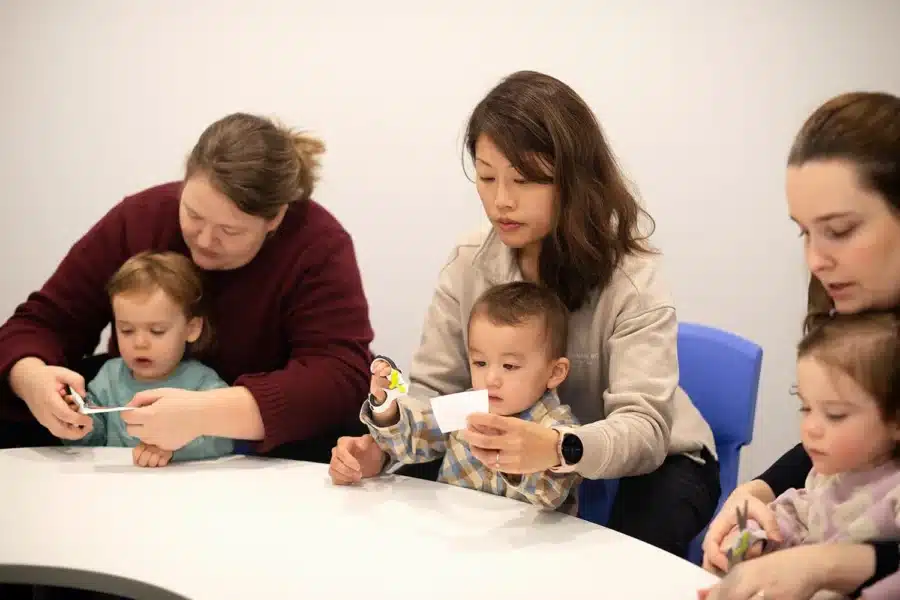
Shichida Australia includes phonics-based games, songs, flashcards and hands-on language activities within its early learning program. Parents participate alongside their children and gain ideas to use at home. These activities support early literacy foundations, but do not guarantee a particular Year 1 Phonics Check result.