Key Takeaways
- Hand-eye coordination and crossing the midline are twin developmental foundations that support everyday learning.
- Both skills develop naturally from birth through play and everyday experiences.
- Crossing the midline is a brain skill that supports reading, writing, attention, and hand dominance.
- The best activities match your child’s developmental stage rather than their age.
- Visual tracking, visual discrimination, spatial perception, and object permanence all work together as children learn.
- Persistent difficulty, particularly avoiding the midline after age three, is worth discussing with your GP, child health nurse, or paediatric occupational therapist.
- Structured, multi-sensory learning environments such as Shichida Australia’s programs provide regular opportunities to strengthen these skills through engaging activities.
Introduction to Hand-Eye Coordination
Have you noticed your baby watching a toy but not quite reaching for it? Perhaps your toddler enjoys throwing a ball but struggles to catch one, or your preschooler swaps hands halfway across a page while drawing. These are common moments that often lead parents to wonder whether their child is developing as expected.
Hand-eye coordination activities and crossing the midline skills develop gradually through everyday play. Together, they support everything from feeding and dressing to handwriting, reading, sport, and confidence at school.
This guide explains how these important skills develop, why they matter, practical activities for every age, signs to look out for, and when it may be helpful to seek professional advice.
At Shichida Australia, we often see these skills developing in small but meaningful ways during class. A baby may begin by simply tracking a flashcard or watching a teacher’s hand movement. A toddler may start reaching across their body during a rhythm activity or matching game. A preschooler may show growing confidence when completing puzzles, mazes, memory activities or fine motor tasks. These moments are part of the foundation for later learning, attention and school readiness.
Quick Answer
Hand-eye coordination is the ability to coordinate what the eyes see with what the hands do. Crossing the midline is the ability to reach one hand across the centre of the body to the opposite side. Both skills develop naturally through everyday play from birth and can be strengthened with age-appropriate activities such as reaching games, threading, ball play, drawing, and pretend play.
Sensory play can help nurture resilience and development. Download a free sensory play guide here.
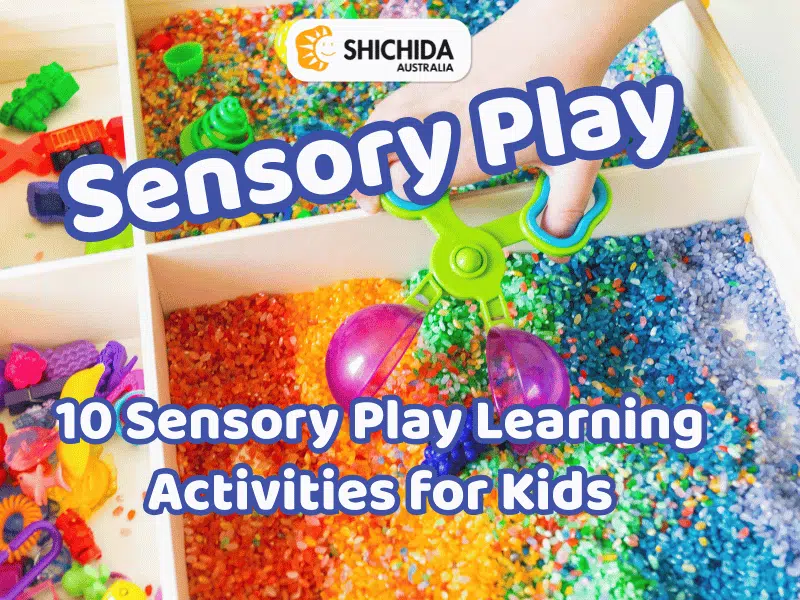
If your child enjoys these types of activities, a Shichida trial class is a great way to see how structured play can support coordination, focus, memory and early learning confidence.
Book a trial class or contact us to find your nearest centre.
What Is Hand-Eye Coordination?
Hand-eye coordination is the brain’s ability to use visual information to guide hand movements. As your child watches, reaches, grasps, catches, or writes, their eyes and hands work together while the brain constantly processes information and adjusts movement.
This skill develops through thousands of everyday experiences. Whether your child is picking up finger food, stacking blocks, fastening buttons, sorting toy cars or catching a ball at the local park, they are strengthening eye-hand coordination.
Australian child development resources highlight hand-eye coordination as an important foundation for independence, learning, and school readiness because it supports many everyday tasks children perform at home and in the classroom.
Why Hand-Eye Coordination Matters
Strong hand-eye coordination supports:
- self-feeding and dressing
- drawing and handwriting
- turning book pages
- building with blocks and puzzles
- reading through smooth eye movements across a page
- ball sports and playground games
- confidence when trying new activities
Children build these abilities gradually, so progress often appears slowly over time.
In a Shichida class, hand-eye coordination is not treated as a separate activity. It appears naturally across many activities, including flashcards, matching games, peg activities, puzzles, rhythm work, drawing, memory games and hands-on problem-solving tasks.
Teachers often notice that as children become more confident with these activities, they also become more willing to attempt new tasks, stay focused for longer and participate with greater independence.
How It Develops from Birth
Development follows a natural progression.
Newborns begin by visually tracking faces and high-contrast objects. Around three to five months, babies start reaching intentionally. By six months, grasping becomes more controlled, followed by manipulating objects during the second half of the first year.
Toddlers learn to use simple tools like spoons and crayons, while preschoolers refine precision through cutting, drawing, puzzles, and construction toys. School-age children continue developing these skills through handwriting, and more complex fine motor tasks.
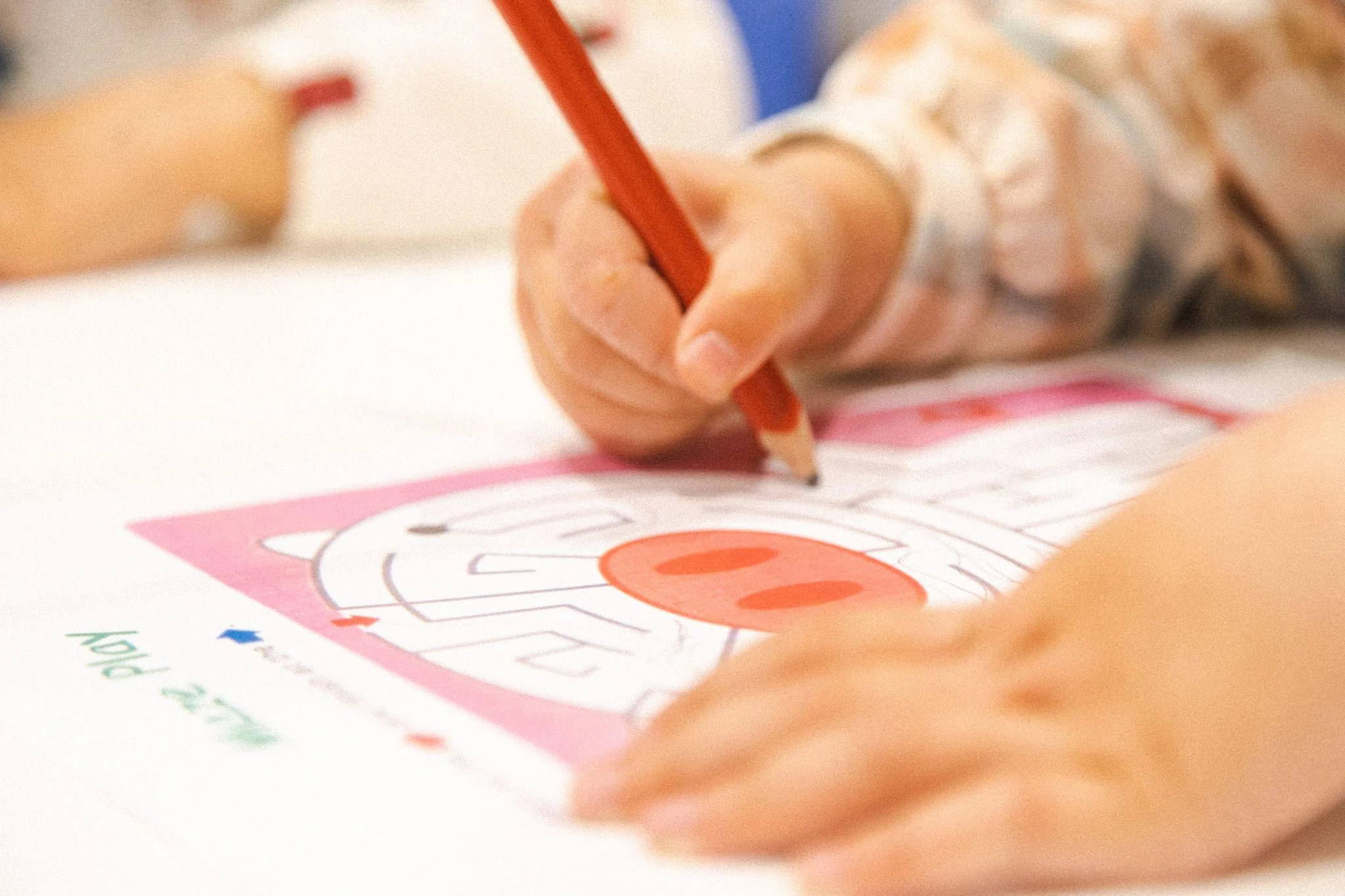
Image by Shichida Australia: A preschooler completes a maze activity, building hand-eye coordination, visual tracking, pencil control and problem-solving skills.
What Is Crossing the Midline?
Imagine an invisible line running from the top of your child’s head down through the centre of their body. This is the body’s midline.
Crossing the midline means using one hand, foot, or eye on the opposite side of the body. For example, reaching the right hand across to pick up a toy on the left side requires crossing the midline.
Although it looks like a simple movement, it is actually an important brain skill. Both sides of the brain must communicate efficiently through the corpus callosum, the bundle of nerve fibres connecting the two hemispheres.
This communication supports hand dominance, smoother handwriting, coordinated movement, reading across a page, and many aspects of learning.
The Link Between Crossing the Midline and Hand-Eye Coordination
Hand-eye coordination and midline crossing in child development are closely connected because both depend on strong visual-motor integration.
Children who avoid crossing the midline may also experience challenges with catching balls, drawing, cutting, or manipulating small objects. Likewise, children with weaker hand-eye coordination sometimes find midline crossing more difficult because both skills rely on the brain integrating vision and movement efficiently.
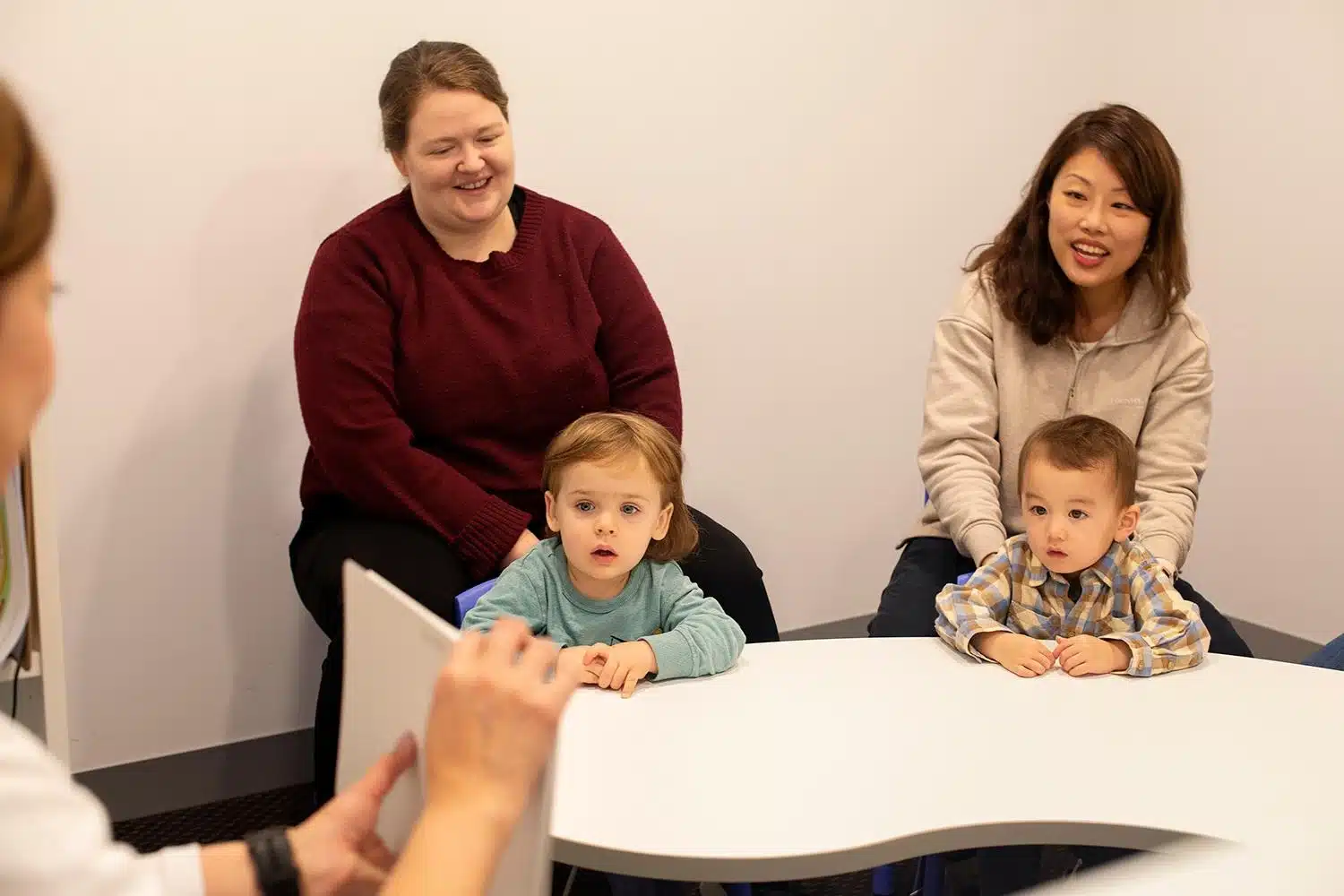
In the classroom, this can show up in subtle ways. A child may reach only with the hand closest to an object, swap hands during a drawing activity, or move their whole body instead of reaching across. Teachers observe this, take note, and gently create more opportunities for the child to cross the body through songs, rhythm activities, matching games, movement, drawing and hands-on tasks.
Why It’s a Brain Skill, Not Just a Body Skill
Crossing the midline strengthens communication between both sides of the brain. This supports more than physical movement.
Efficient communication between the brain’s hemispheres also contributes to attention, sequencing, bilateral coordination, reading fluency, and problem-solving. As children practise movements that naturally cross the body, they strengthen these important neural connections through play.
Key Insight: If your child consistently switches hands halfway across a page when drawing or rotates their whole body instead of reaching across, they may be avoiding the midline.
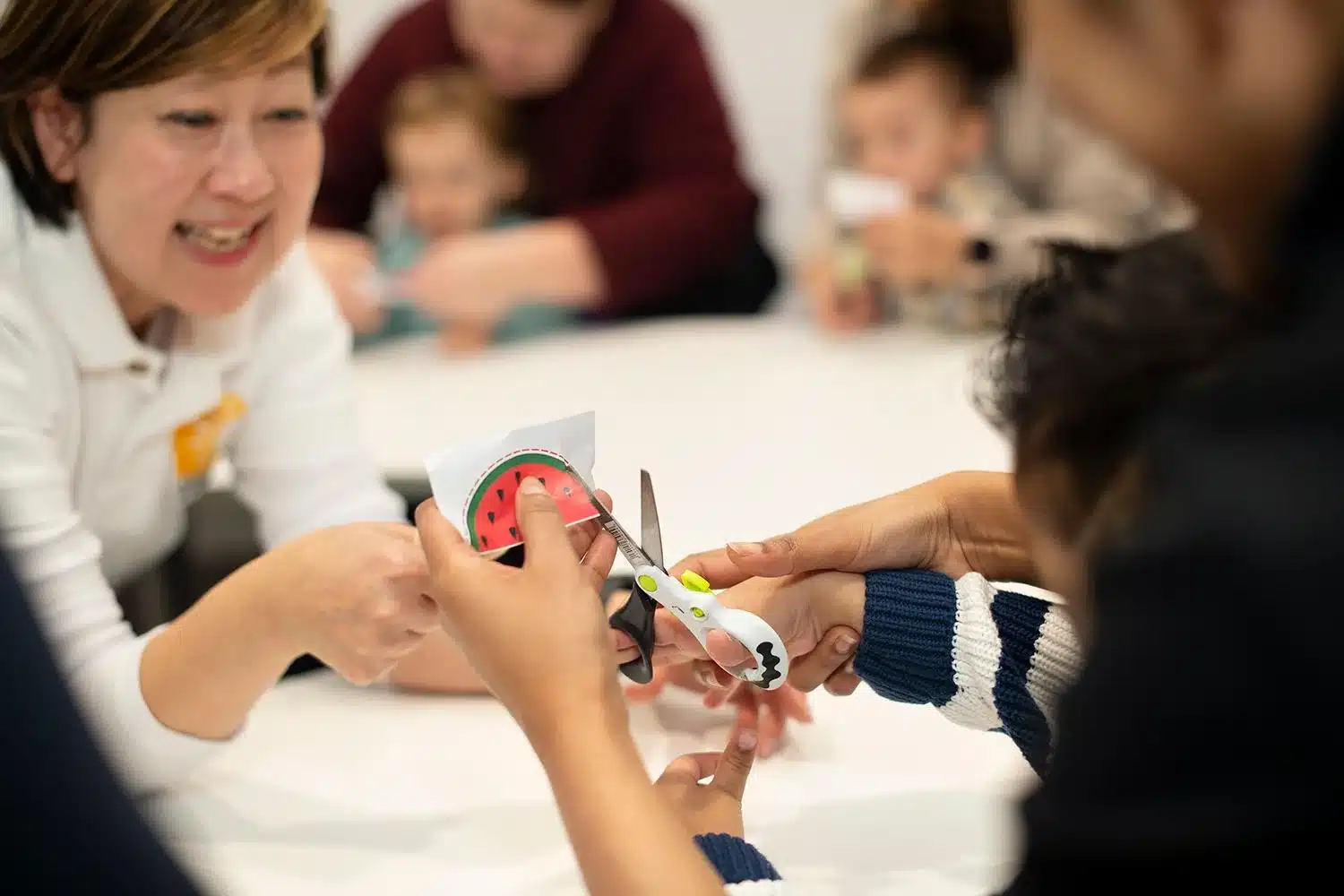
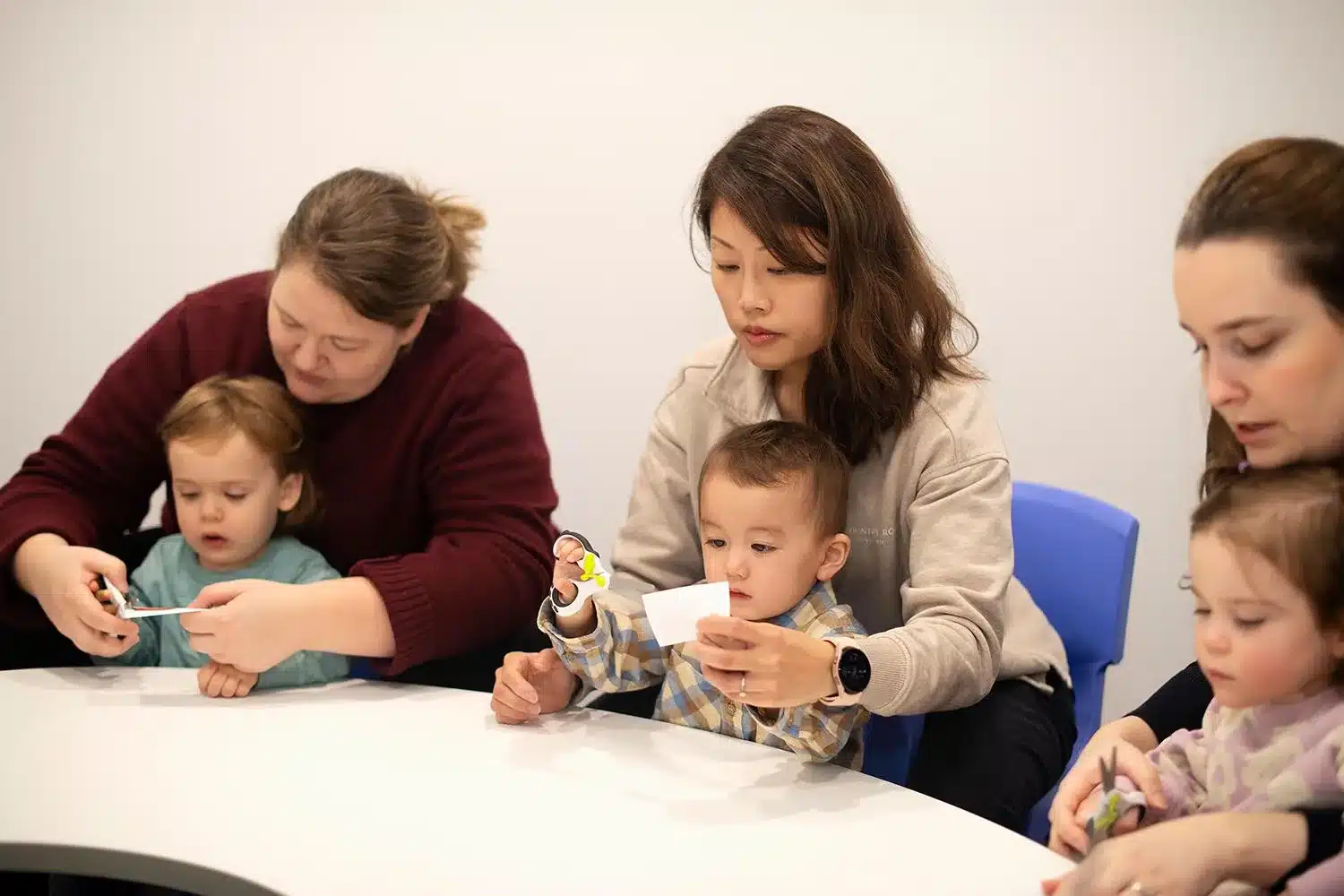
Image by Shichida Australia: A toddler practises cutting a curved circle shape with support from his mum and teacher, building hand-eye coordination, fine motor control and early visual-motor skills.
Other Visual and Spatial Skills That Work Together
Hand-eye coordination develops alongside several other important visual and cognitive skills.
Visual Tracking
Visual tracking is the ability to smoothly follow a moving object with the eyes. Babies begin developing this skill from birth by following faces and high-contrast objects held about 20 to 30 centimetres away. Strong visual tracking activities later support reading, catching balls, and copying from a whiteboard.
Visual Discrimination
Visual discrimination is the ability to notice similarities and differences between shapes, letters, colours, and patterns. It becomes particularly important during the preschool years as children prepare for reading, writing, and early maths. Many visual discrimination activities for preschoolers involve matching, sorting, and identifying differences through play.
Spatial Perception
Spatial perception helps children understand where objects are in relation to themselves and to other objects. It allows them to judge distances, fit puzzle pieces together, navigate playground equipment, and organise objects on a page.
Object Permanence
Object permanence is the understanding that something still exists even when it cannot be seen. Most babies develop this between six and nine months. Simple object permanence activities, such as peekaboo and hiding toys under a cloth, strengthen early memory, attention, and problem-solving.
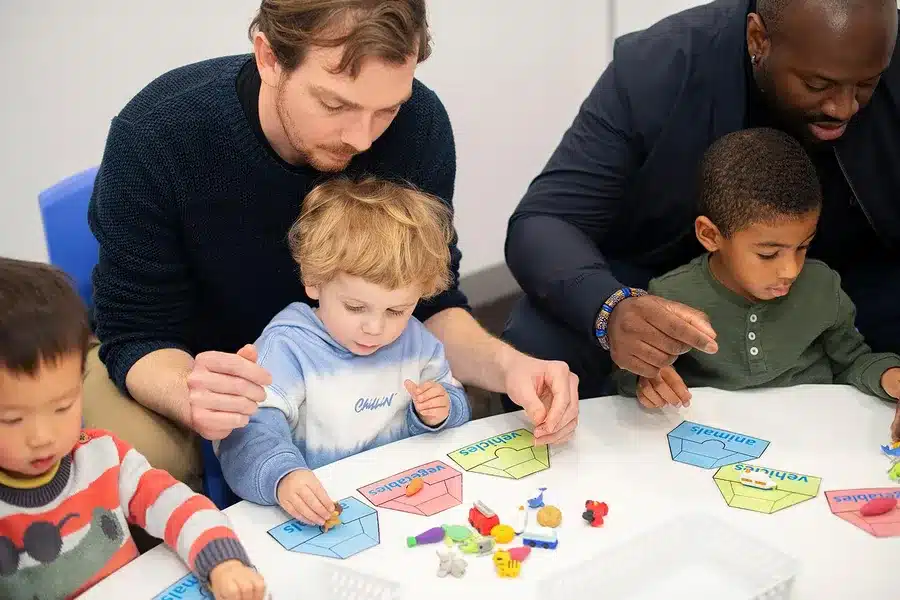
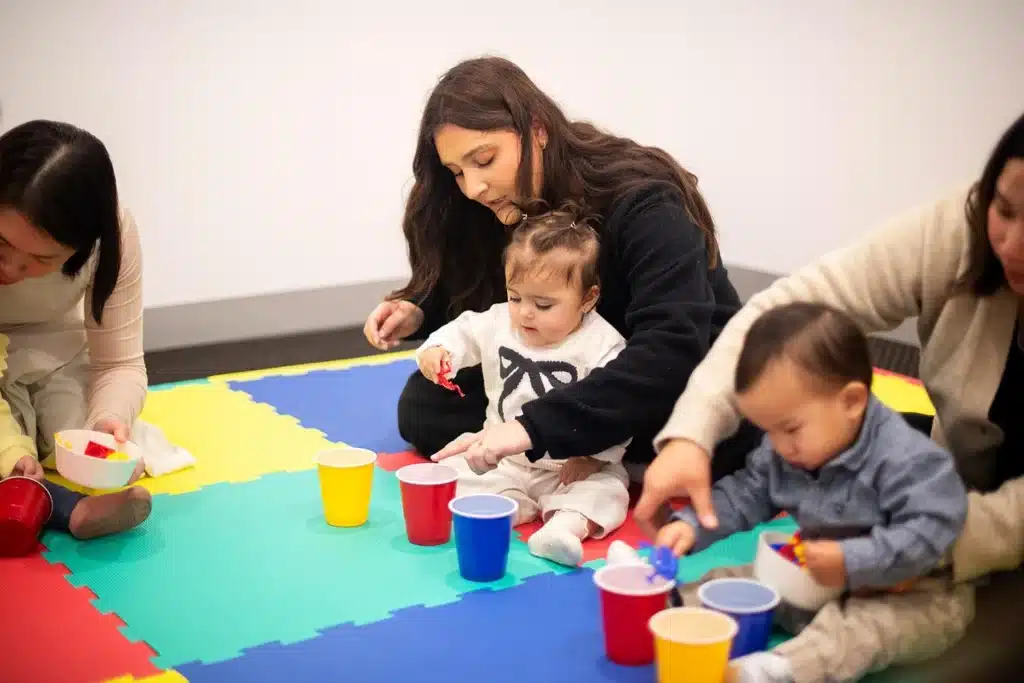
Image by Shichida Australia: Sorting activities help children build hand-eye coordination, fine motor skills, visual discrimination, critical thinking and vocabulary through hands-on play.
Shichida Teacher Observations
One thing we see clearly in Shichida classes is that children do not build coordination through one activity alone. They build it through repeated, varied experiences. A child may practise visual tracking during flashcards, fine motor control during a matching task, rhythm and bilateral movement during songs, and concentration during a memory game. The variety is important because young children learn best when the same foundation skill is revisited in many different ways.
Hand-Eye Coordination Activities by Age
Children develop at different rates, so focus on activities that match your child’s current abilities rather than comparing them with others.
0-6 Months: Tracking and Reaching
- Hold high-contrast cards or toys about 20 to 30 centimetres from your baby’s face and slowly move them from side to side to encourage visual tracking.
- Hang a lightweight mobile or soft dangling toy within reach so your baby begins making intentional reaching movements.
- Shake a rattle gently on either side to encourage your baby to follow the sound and movement before attempting to swipe or grasp.
- During tummy time, place your baby in front of an unbreakable mirror so they can practise lifting their head while tracking facial expressions. These activities pair naturally with tummy time and help build the early foundations for reaching and coordination.
In Shichida baby classes, these early skills are also supported through high-contrast images, gentle songs, teacher-led visual tracking and parent-child activities that encourage babies to watch, reach and respond.
6-12 Months: Grasping and Object Permanence
- Play peekaboo or hide favourite toys beneath a tea towel to encourage object permanence and early memory skills.
- Offer soft blocks to stack and knock down, helping your baby practise grasping, releasing, and visual judgement.
- Provide safe posting activities by dropping large balls or blocks into a container, encouraging visual motor integration.
- Encourage self-feeding with soft finger foods such as ripe banana or pear, allowing your baby to coordinate vision with grasping and hand-to-mouth movements.
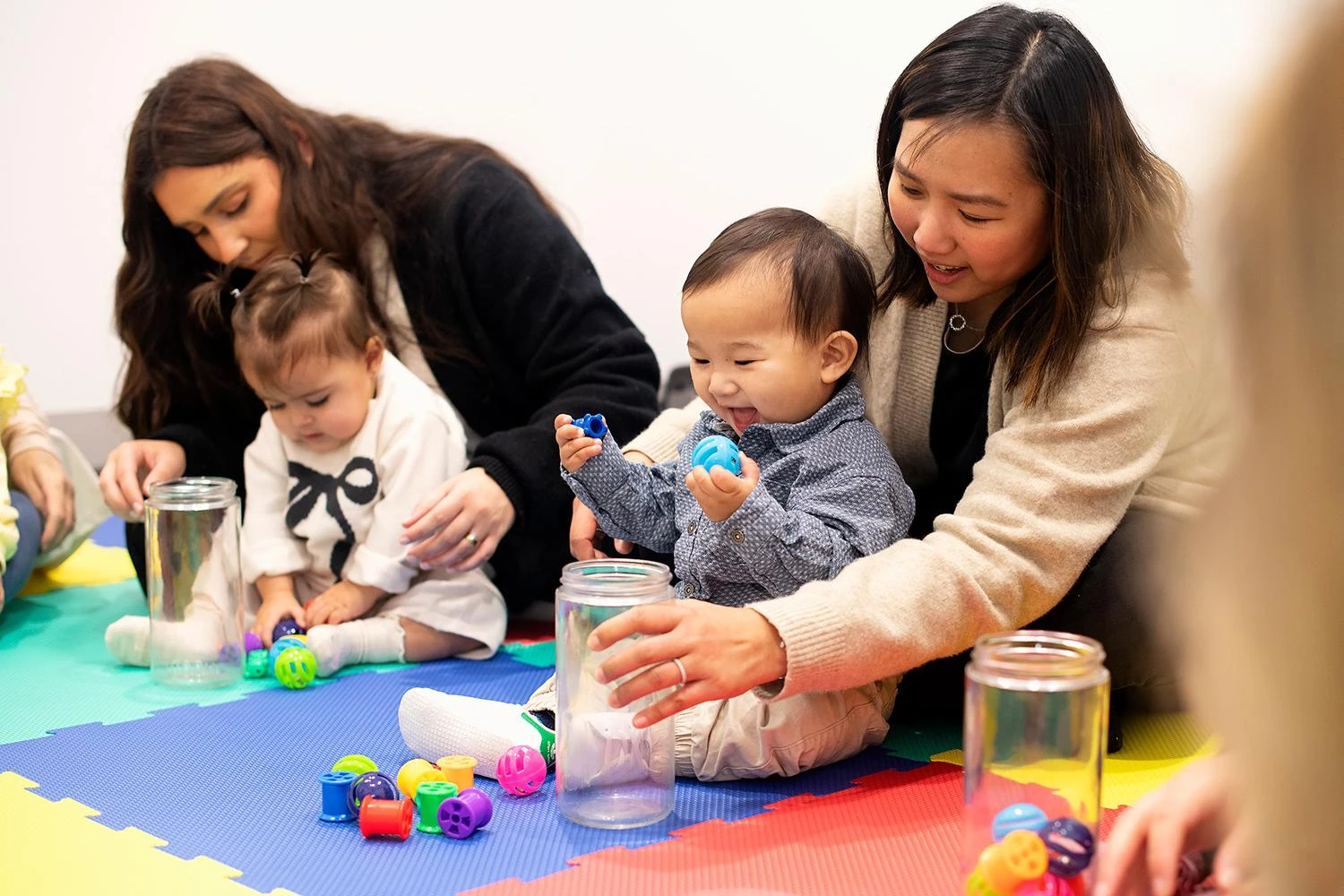
Image by Shichida Australia: Babies place small items into narrow jars, practising hand-eye coordination, grasping, visual judgement and early problem-solving through hands-on play.
1-2 Years: Manipulating and Bilateral Play
- Roll a soft ball back and forth across the floor to encourage tracking, reaching, and timing.
- Introduce simple shape sorters that encourage matching and problem-solving.
- Offer chunky crayons for early scribbling on large sheets of paper.
- Play with pop beads that pull apart and push together to strengthen finger muscles.
- Enjoy drumming games using both hands to build early bilateral coordination activities while developing rhythm and body awareness.
This is also why rhythm and song activities are used so often in Shichida classes: they help young children coordinate both sides of the body while listening, watching and moving at the same time.

Image by Shichida Australia: Toddlers post colour cards into matching slots, building hand-eye coordination, colour recognition, visual discrimination and fine motor control.
2-3 Years: Tool Use and Pretend Play
- Thread large beads onto thick string to strengthen coordination and concentration.
- Play with playdough by rolling, pinching, squeezing, and using child-safe cutters.
- Practise pouring water between cups during bath time or outside on warm days.
- Throw beanbags into a bucket at different distances to improve aiming and depth perception.
- Sticker activities are another excellent way to build fine motor control while encouraging visual planning.
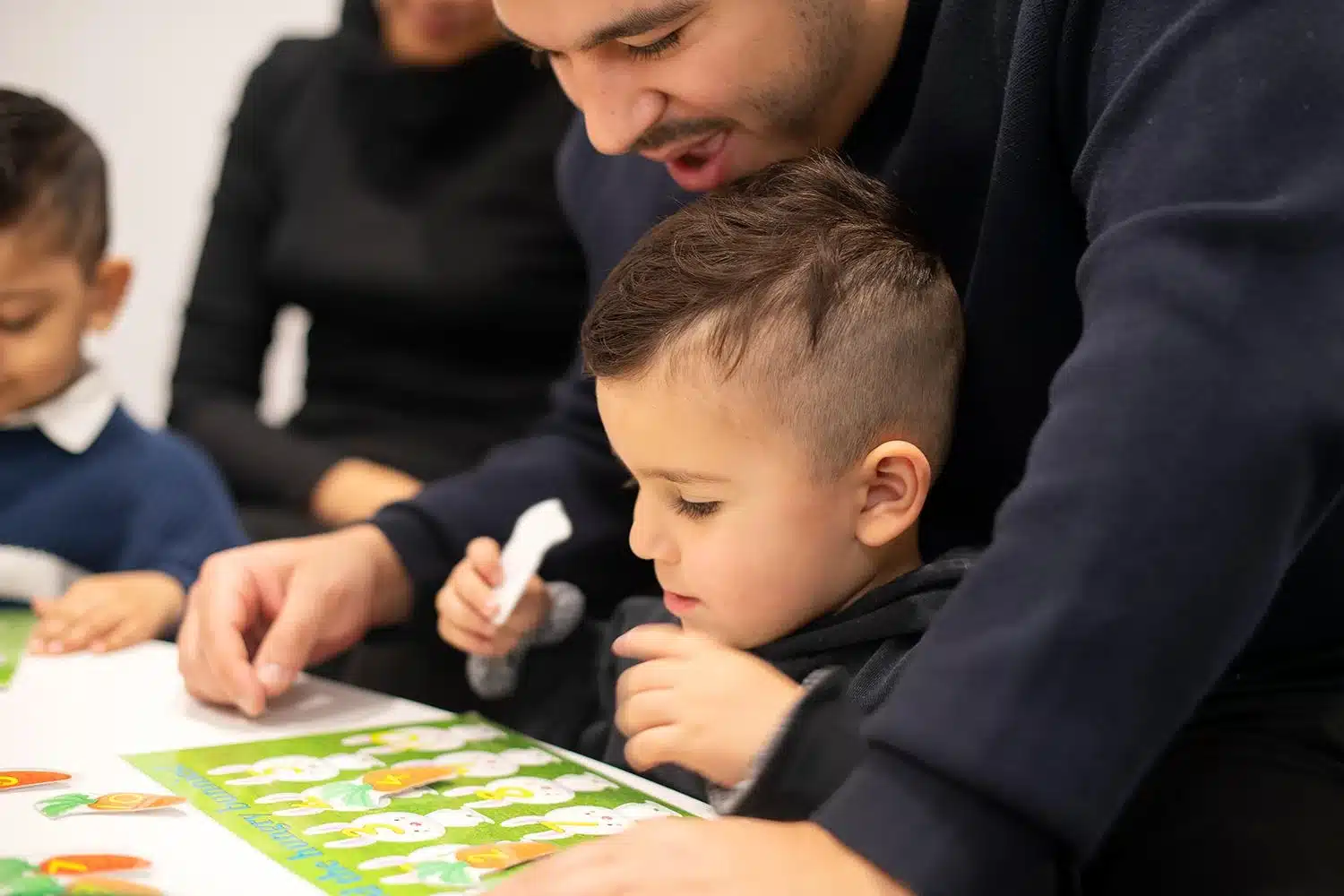
Image by Shichida Australia: A toddler matches numbered carrot cutouts to rabbits with the same numbers, building hand-eye coordination, number recognition, visual discrimination and early problem-solving skills.
3-5 Years: Precision and School Readiness
As children prepare for school, they begin refining the precision needed for writing, drawing, and independent self-care.
- Practise cutting along thick lines with child-safe scissors to strengthen control and bilateral coordination.
- Build towers, vehicles, or simple structures with lego or duplo to encourage planning, visual motor integration, and problem-solving.
- Play catching games, beginning with a large soft ball before progressing to smaller balls as coordination improves.
- Encourage drawing simple shapes such as circles, crosses, squares, and triangles before moving on to copying letters and numbers.
- Pegboards and simple jigsaw puzzles also provide excellent opportunities to develop visual discrimination, spatial awareness, and fine motor control.
For preschool and kinder children, Shichida activities often combine coordination with memory, observation, speed, sequencing and problem-solving, so children are not only using their hands but also strengthening the thinking skills behind the movement.
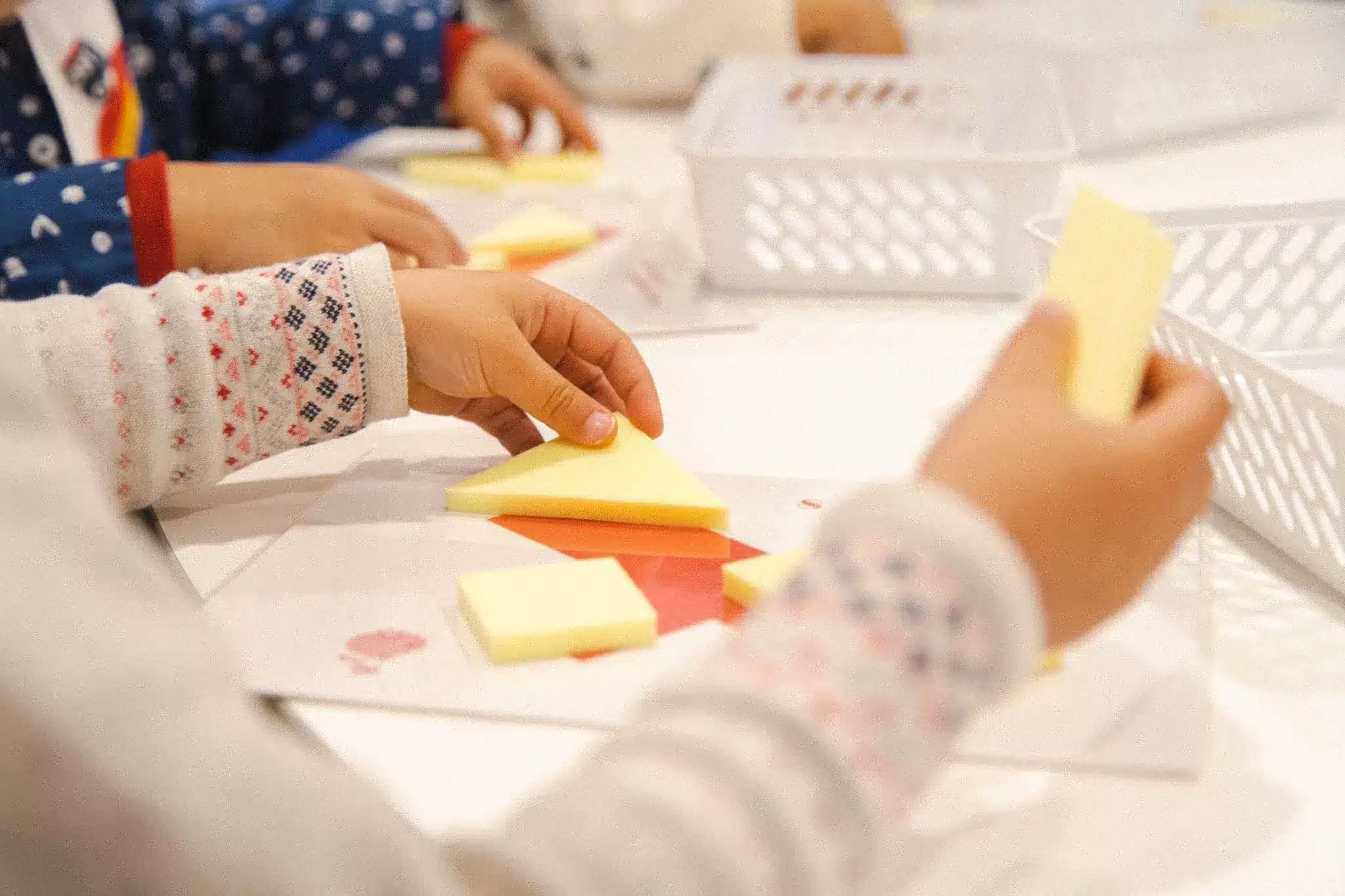
Image by Shichida Australia: Preschoolers solve a tangram puzzle challenge, building hand-eye coordination, spatial awareness, visual discrimination and problem-solving skills.
5+ Years: Refinement and School Skills
School-age children continue refining coordination through increasingly complex activities.
- Skipping, hopscotch, and ball-bouncing patterns challenge rhythm, balance, and coordination.
- Mazes, dot-to-dot activities, and handwriting practice improve pencil control and visual planning.
These playful experiences continue building the confidence children need both inside and outside the classroom.
Need resources like flashcards and worksheets? Shichida has plenty! Explore our free resources here.
Crossing the Midline Activities
Crossing the midline exercises can fit naturally into everyday play and family routines.
Activities for Babies and Toddlers
- Offer toys slightly across your baby’s body so they naturally reach with one hand across the centre line.
- Sing action songs such as Pat-a-Cake or clap along to nursery rhymes, encouraging both hands to work together.
- Sit on the floor and roll a ball back and forth, allowing your toddler to reach across their body as they play.
Activities for Preschoolers
- Draw large figure eights or rainbow arcs on butcher’s paper taped to the floor or wall. Encourage your child to use one hand to complete the entire movement.
- Ask your child to wipe a table using one hand in long side-to-side motions.
- Play Twister or similar movement games that naturally encourage reaching across the body.
- Try cross-crawl marching by touching the right elbow to the left knee, then alternating sides.
Activities for School-Age Children
- Practise drawing large infinity loops on a whiteboard or outside with chalk.
- Include stretching activities and yoga poses such as Thread the Needle that encourage gentle rotational movement across the body.
Key Insight: Many crossing midline activities also strengthen core stability, balance, and attention, helping children sit comfortably and concentrate during learning.
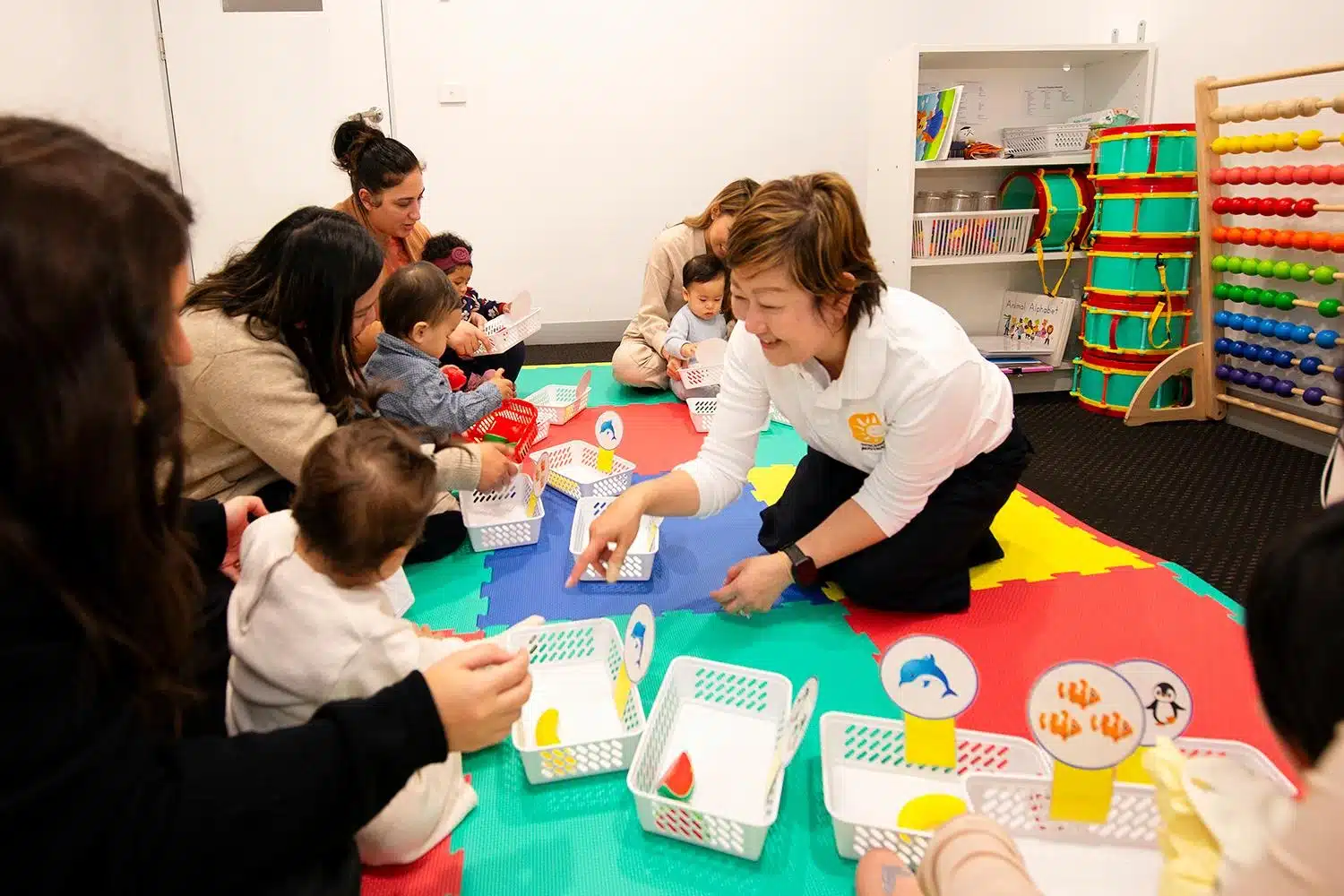
Image from Shichida Australia: At Shichida Australia, children explore hand eye coordination activities through hands-on matching games that support visual discrimination, coordination, and whole-brain development.
Visual Tracking and Visual Discrimination Activities for Preschoolers
These skills become increasingly important as children prepare for reading and writing.
Visual Tracking Activities
- Blow bubbles and encourage your child to follow each one with their eyes before popping it.
- Play balloon volleyball, allowing extra time for visual tracking before making contact.
- During story time, run your finger beneath each line of text to demonstrate smooth left-to-right eye movements.
In Shichida classes, visual tracking and field of vision activities are part of every lesson because children need strong visual awareness before they can confidently read, write, copy, remember and process information quickly. Parents often see these activities in class and then repeat simple versions at home.
Visual Discrimination Activities
- Play “spot the difference” games together.
- Sort buttons, pasta, beads, or blocks by colour, shape, or size.
- Use matching card games to strengthen memory and visual recognition.
- Enjoy I Spy games, simple pattern puzzles, and shape matching.
High-speed flashcards, a well-known feature of The Shichida Method, also strengthen visual attention, recognition, and rapid information processing through enjoyable, age-appropriate learning experiences.
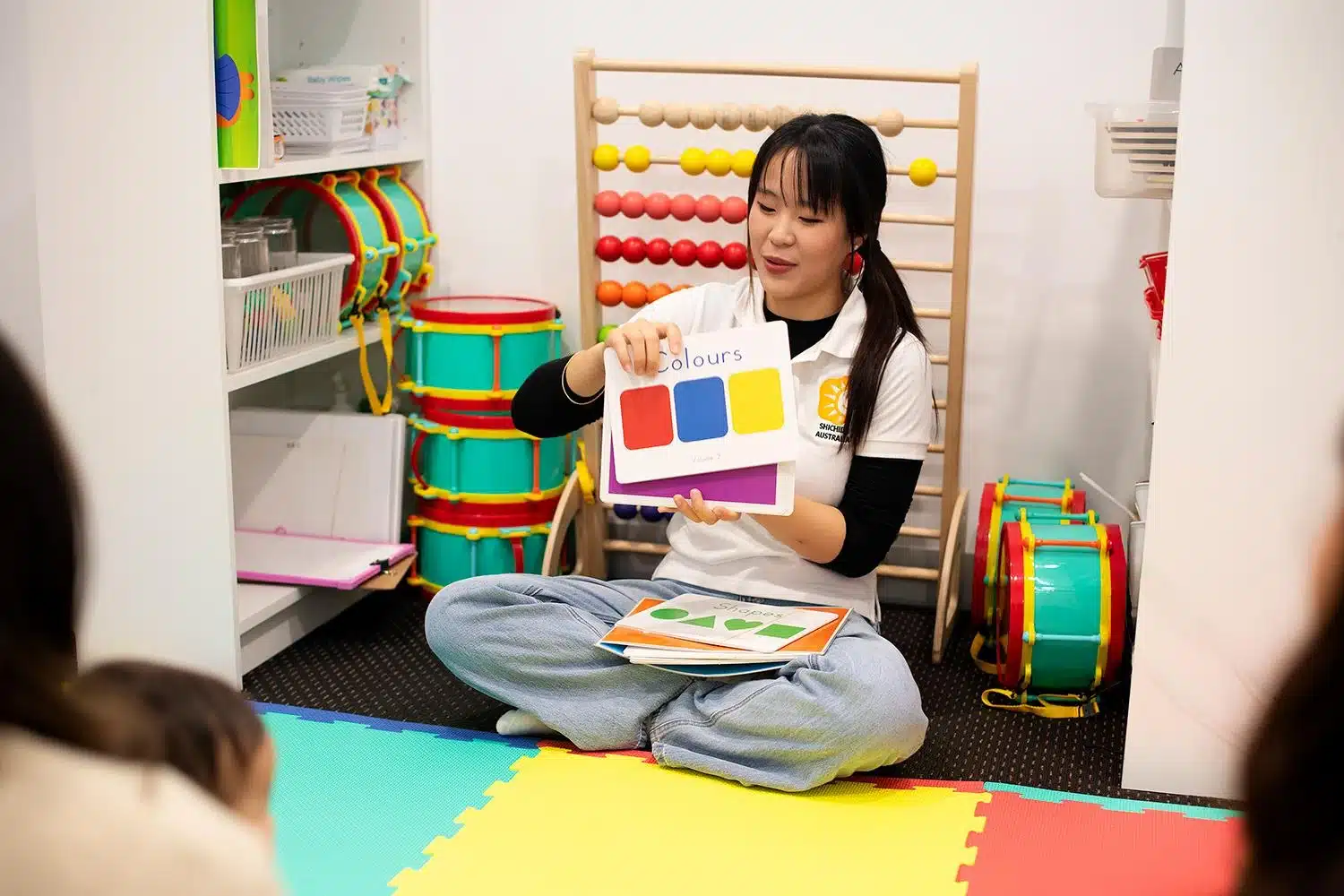
Image from Shichida Australia: In a Shichida baby class, colourful flashcards introduce colours, shapes and emotions while supporting visual tracking, attention and early learning foundations.
What We Notice in Shichida Classes
In Shichida classes, coordination skills often develop quietly in the background. Parents may come in focused on reading, memory, maths or concentration, but many of the activities also require children to watch carefully, use both hands, cross the body, copy patterns, match images, turn cards, place objects, draw, gesture, clap, tap and move with rhythm.
Teachers often notice progress in small changes. A child who once needed help placing pieces into a puzzle may begin doing it independently. A toddler who watched quietly may start joining in with actions. A preschooler who avoided drawing may become more willing to try mazes, shapes or writing preparation tasks.
These changes matter because early learning is not only about what a child knows. It is also about how confidently they can use their body, eyes, hands, attention and memory together.
Everyday Ways to Build Coordination in Children
Everyday routines provide countless opportunities to practise activities to improve hand-eye coordination.
Invite your child to pour cereal, stir pancake batter, knead dough, or help wash fruit and vegetables. Encourage them to hang washing with pegs, thread shoelaces, sweep with a child-sized broom, wash the car with a sponge, or fold tea towels. Each task strengthens fine motor skills while naturally encouraging visual planning, coordination, and midline crossing.
Signs Your Child May Need Extra Support
Every child develops at their own pace, and variation is completely normal. However, some patterns are worth mentioning to a health professional.
In Babies (0-12 Months)
Speak with your GP or child health nurse if your baby is not visually tracking objects by around three months, is not reaching for toys by around five months, or consistently favours one hand before twelve months.
In Toddlers (1-3 Years)
You may wish to seek advice if your toddler remains significantly clumsier than peers, avoids self-feeding or using simple tools, or shows little interest in stacking, posting, or scribbling activities.
In Preschoolers (3-5 Years)
Watch for frequent hand switching while drawing, avoiding crossing the body’s midline, difficulty catching a large ball from close range, or reluctance to participate in puzzles, colouring, scissors, or construction activities.
Who to Talk To
If you have concerns, begin by speaking with your GP, child health nurse, or a paediatric occupational therapist. Early support is widely available throughout Australia, and seeking advice does not necessarily mean something is wrong. Sometimes parents simply benefit from personalised strategies that fit their child’s stage of development.
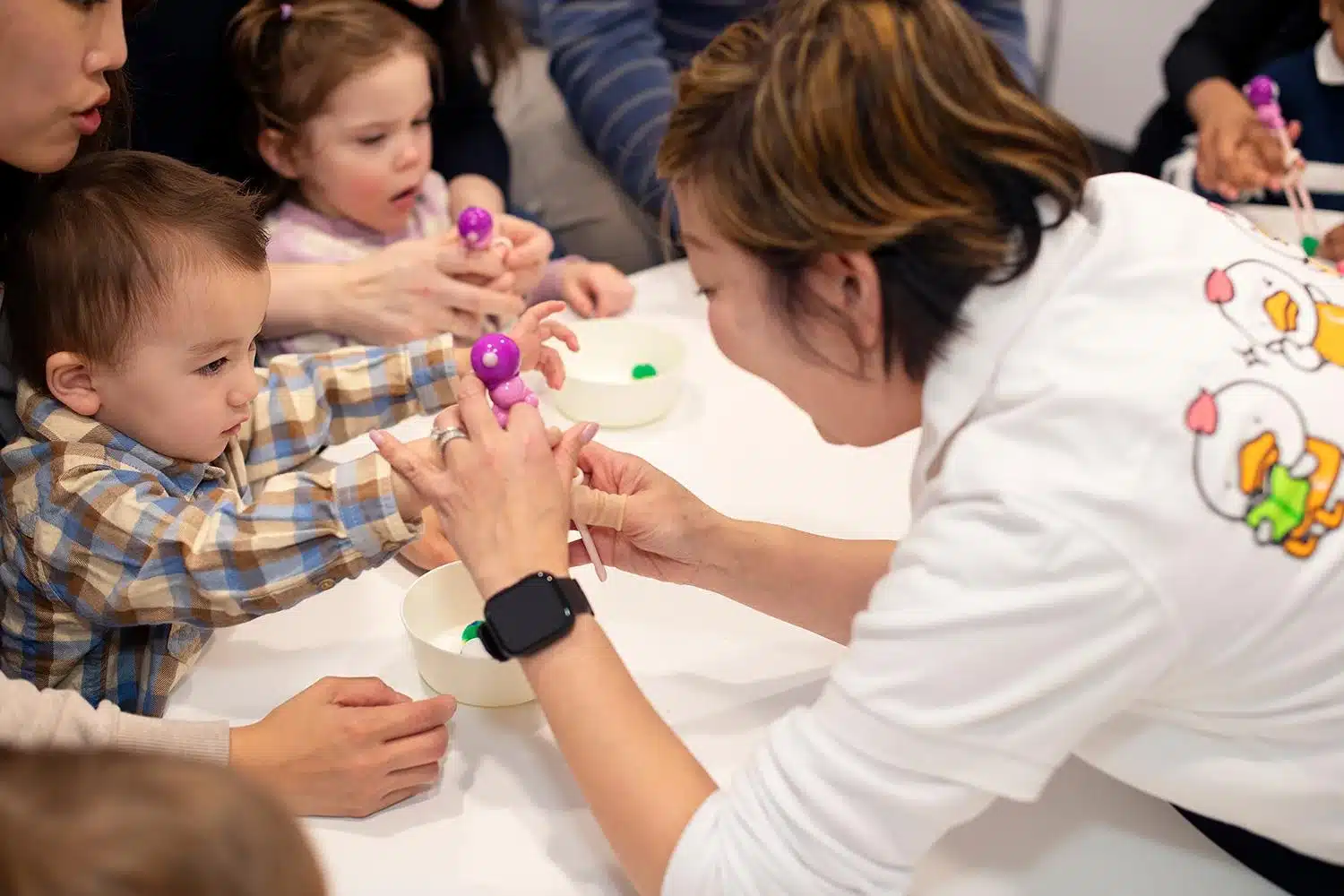
Image from Shichida Australia: A teacher helps toddlers use chopsticks to pick up small objects, building hand-eye coordination, fine motor control, concentration and visual-motor skills.
Supporting Whole-Brain Development with Shichida
The activities in this guide show that children develop hand-eye coordination and crossing the midline through repeated, meaningful experiences rather than isolated exercises.
This is also how these skills are supported in Shichida classes. Within one lesson, children may move from flashcards to rhythm, memory activities, fine motor tasks, matching games, drawing, songs, puzzles and image-based learning. Each activity is short, engaging and purposeful, giving children many chances to connect what they see, hear, feel and do.
Every child develops at their own pace, and the right support can make all the difference. Book a trial class at Shichida Australia to experience how The Shichida Method helps children build the confidence, coordination, and learning foundations that support success both in school and beyond.
FAQs About Hand Eye Coordination Activities for Kids
Hand-eye coordination begins developing from birth through visual tracking and continues throughout childhood. The most rapid development occurs during the first five years as children gain experience reaching, grasping, drawing, building, and playing.
Common signs include difficulty catching or rolling a ball, avoiding self-feeding, struggling with stacking toys, limited interest in drawing, or appearing much clumsier than other children of a similar age.
Crossing the midline means using one side of the body across the centre line. It supports hand dominance, reading, writing, bilateral coordination, and efficient communication between both sides of the brain.
Some children naturally compensate by switching hands or turning their whole body instead. If this pattern continues beyond the preschool years or affects daily activities, it is worth discussing with a paediatric occupational therapist.
Matching games, puzzles, sorting activities, I Spy, memory cards, and identifying differences between pictures all help strengthen visual discrimination while keeping learning enjoyable.
Peekaboo, hiding toys under a blanket, posting toys into containers, and simple treasure hunts all encourage babies to understand that objects continue to exist even when they cannot be seen.
No. Visual tracking refers to following objects with the eyes, while hand-eye coordination combines visual information with hand movements. The two skills work closely together but develop as separate abilities.
Consider seeking professional advice if your child consistently avoids age-appropriate activities, frequently switches hands during tasks, struggles with everyday self-care, or appears significantly behind peers in coordination skills.
Yes. Regular play, everyday routines, sport, creative activities, and purposeful movement all help strengthen hand-eye coordination over time.
Simple activities such as drawing large figure eights, cross-crawl marching, wiping a table with one hand, playing Twister, and rolling a ball across the body are all effective, fun, and easy to include in daily routines.