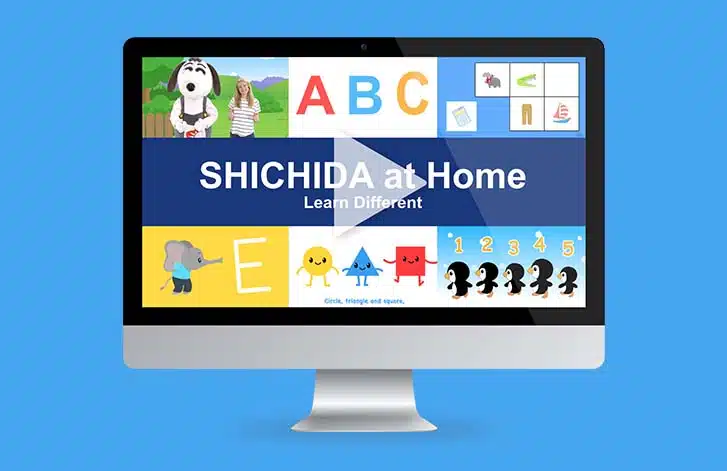
Memory practice is a recurring part of Shichida classes. Children recognise and recall pictures, words, objects, sequences and numbers, with activities becoming more complex as they progress.
How This Looks in a Shichida Class
The Shichida curriculum brings together visual, verbal and sequential memory practice through purposefully selected games, silly stories and challenges. Distinctive activities include linked-image exercises and Musical Pi, with instructors guiding participation and offering repeated opportunities to practise as the material becomes more complex.
The Learning Principle
Memory involves encoding information, maintaining it and retrieving it when needed. Recognition involves identifying something encountered before, while recall involves bringing information to mind with fewer external cues.
Retrieving previously learned information can support retention. Strategies such as rehearsal, imagery, association and grouping offer different ways to organise material, although their usefulness varies with the child’s age, the task and the support provided.
Progress may include recalling more details, remembering a sequence with less help or recognising familiar material after a longer gap. Expectations remain appropriate to each child’s development.
Research Behind This Practice
Research examines how children recognise, retain and retrieve information, and how memory develops throughout childhood. Studies of retrieval practice support opportunities to recall learned material, while research on illustrated story reading examines connections between pictures, adult–child interaction and recall.
Mendonça and Ekuni (2022) · Avances en Psicología Latinoamericana · Systematic review of 41 articles
Leonard and colleagues (2019) · Journal of Speech, Language, and Hearing Research · Experimental study
Leonard and colleagues (2019) · Journal of Speech, Language, and Hearing Research · Experimental study
Greenhoot, Beyer and Curtis (2014) · Frontiers in Psychology · Experimental study
Simmering, Miller and Bohache (2015) · Attention, Perception, & Psychophysics · Developmental experiments and computational modelling
Sala and Gobet (2020) · Psychonomic Bulletin & Review · Meta-analysis
Miller, McCulloch and Jarrold (2015) · Frontiers in Psychology · Experimental study